
Top 3 picks at a glance
Best Center Channel Speakers for Clear Dialogue
The best center channel speakers for clear dialogue are models with controlled horizontal dispersion, a cabinet that fits your placement, and a tonal match for your left and right speakers—not simply the largest drivers or the highest power rating. For many rooms, the KEF Q6 Meta is a strong fit for broad seating, while the slim ELAC Debut 3.0 DC53 suits low-clearance installations and the Klipsch RP-500C II works well when sensitivity and output matter.
Quick comparison
| Speaker | Approx. cabinet height | Design | Best fit | Typical U.S. price range |
|---|---|---|---|---|
| KEF Q6 Meta | About 8.3 in | Three-way, Uni-Q coaxial array | Several seats spread across the room | Usually $700–$900 |
| ELAC Debut 3.0 DC53 | About 6.7 in | Three-way, slim cabinet | Low-clearance shelves and TV stands | Usually $350–$500 |
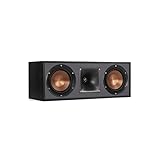
| Klipsch RP-500C II | About 6.8 in | Two-way, horn-loaded tweeter | High output and compatible Klipsch systems | Usually $400–$600 |
| Polk Audio Reserve R350 | About 4.3 in | Slim, four-driver design | Very tight space below a screen | Usually $500–$700 |
Dimensions and prices are approximate; check the manufacturer’s current specifications and local listings before buying. A speaker’s listed frequency response or driver count cannot tell you how even dialogue will sound across your particular row of seats.
As an Amazon Associate we earn from qualifying purchases at no extra cost to you.
Choose by seating layout first
A center speaker carries much of the spoken dialogue in a conventional surround mix. Its horizontal dispersion—how consistently sound spreads to the left and right—matters because listeners off the centerline hear the speaker from a different angle. Some designs maintain a stable tonal balance across a wide row; others can sound more nasal, dull, or uneven off-axis.
- One main seat: Prioritize a tonal match with the left and right speakers and a cabinet that fits the stand. A conventional center can work well if aimed at ear level.
- A wide sofa: Favor a coaxial or otherwise well-controlled dispersion design, such as the KEF Q6 Meta. Its tweeter sits at the center of the midrange driver, helping sound arrive from a similar point across the listening area.
- A broad row with limited height: Consider the slim Polk Reserve R350 or ELAC DC53, then check reviews or listening measurements for off-axis performance. A short cabinet alone does not guarantee clear dialogue at the end seats.
- An off-center primary seat: Aiming the speaker toward that seat can help, but it may make the opposite end of the sofa less consistent. If the room has one favored seat, optimize for it; if all seats matter equally, prioritize wide dispersion.
Shortlist by cabinet and tonal match
KEF Q6 Meta: broad seating and a matched KEF system
The Q6 Meta’s three-way Uni-Q arrangement places the tweeter within the midrange driver rather than separating them across a horizontal front baffle. That geometry can reduce the strong off-axis lobing that some traditional horizontal two-way centers produce. It is a sensible candidate for a shared sofa, especially when paired with compatible KEF Q-series left and right speakers. Measure its roughly 8.3-inch height carefully: it may cover the bottom of a TV or require a higher shelf.
ELAC Debut 3.0 DC53: a lower cabinet with a conventional front layout
The DC53 combines a slim profile with a three-way design, making it easier to fit beneath many screens than taller centers. Its height is about 6.7 inches, so it is not ultra-flat, but it offers a useful compromise between clearance and a dedicated center-speaker cabinet. It is most straightforward to timbre-match with speakers from the same ELAC range. As with any non-coaxial horizontal design, compare off-axis listening impressions if the sofa is especially wide.
Klipsch RP-500C II: efficient output in a compact footprint
The RP-500C II uses a horn-loaded tweeter and is designed to work naturally with Klipsch Reference Premiere speakers. Its roughly 6.8-inch height is manageable for many stands, and its sensitivity-oriented design can be appealing in a system that needs strong output without demanding as much amplifier power. Horn directivity can be useful when the speaker is aimed at a defined seating area, but the best result depends on the room and seating angles. Match it with compatible Klipsch left and right speakers where possible.
Polk Reserve R350: when every inch of height matters
At about 4.3 inches tall, the R350 is the shortlist option for a narrow gap beneath a display. That low profile can solve a physical installation problem, but it should not be treated as a guarantee of the widest or most even coverage. If dialogue must reach a long row of listeners, pay close attention to horizontal off-axis performance and whether the speaker can be angled toward the seats. It is an obvious timbre match for Polk Reserve left and right speakers.
Check fit, angle, and amplifier load before ordering
Measure the space the speaker actually has, not just the gap between the stand and TV. Allow room for the cabinet depth, cable bend, ventilation around nearby electronics, and any feet or grille that add to the dimensions. If the speaker will sit inside a cabinet, confirm that the opening is wide and tall enough and that the manufacturer permits the intended placement. Front ports are not a substitute for adequate clearance.
A basic height calculation helps prevent a common mistake. Suppose the opening beneath a TV is 7 inches tall. Subtract about half an inch for fitting tolerance: the practical maximum speaker height is roughly 6.5 inches. That rules out the 6.7-inch ELAC DC53 unless the stand or display can be raised, and it leaves the 4.3-inch Polk R350 with more room for adjustment. This calculation addresses physical fit only; it does not establish which model will sound best.
When possible, place the center at the front edge of the shelf rather than far behind it. A shelf lip or cabinet wall can reflect sound and blur dialogue. If the speaker is below the screen, tilt it upward toward seated ear height; if it is above, tilt it downward. A small change in aim can matter more than a modest difference in rated power.
Match tone, not just the logo
The left, center, and right speakers handle much of the front soundstage. When they have noticeably different tonal balance, a voice or sound moving across the screen can change character as it passes from one speaker to another. The safest choice is usually a center from the same product series as the front left and right speakers. Sharing a brand is not enough: manufacturers often sell lines with different drivers, crossovers, and voicing.
If your current speakers have no matching center, do not replace them automatically. First look for a center with a similar overall sound and compatible output, then confirm that your receiver supports its impedance and crossover needs. A subwoofer can handle deep bass, allowing the center to be crossed over at a practical frequency; around 80 Hz is a common starting point, not a universal rule.
Set up the center for clearer speech
- Run receiver calibration, then verify the result. Automatic setup can get distance and level close, but check that the center was detected and assigned a sensible crossover rather than relying on an implausibly low bass setting.
- Start with an 80 Hz crossover. If the center sounds strained at louder volumes or sits in a small enclosure, try 100–120 Hz and let the subwoofer reproduce more bass. If the speaker is capable and clean at lower frequencies, the lower setting may blend better. Change one setting at a time.
- Confirm polarity and level. A reversed wire connection can weaken the front image. If dialogue is still hard to hear, raise the center level by 1–2 dB, listen to several scenes, and avoid large boosts that make voices unnaturally prominent.
- Check sightline and aim. Make sure the cabinet is not recessed behind a shelf edge. Tilt it toward seated ears, then compare speech from the center seat and the farthest seat you want to serve.
- Use dialogue enhancement sparingly. Receiver modes that boost the center channel or speech frequencies can help at low listening levels, but strong processing may make voices harsh. Test it with both dialogue and music before leaving it enabled.
Which one should you choose?
For a wide seating area, start with the KEF Q6 Meta and confirm that its taller cabinet fits. For a lower shelf and a conventional matching ELAC setup, consider the Debut 3.0 DC53. For a very tight gap, the Polk Reserve R350 is unusually shallow in height, but check coverage for the seats at the ends. If your front speakers are Klipsch Reference Premiere or you value efficient output, the RP-500C II is the natural candidate to audition or compare.
The best center channel speakers are ultimately the ones that combine even dialogue across the seats you use, a tonal match to your front speakers, and a placement that lets the drivers face the listeners without obstruction. Measure first, match the series where practical, and treat aiming and receiver setup as part of the purchase—not afterthoughts.


