
The best PA speakers for most people are the QSC K12.2 for a versatile main system, the Yamaha DXR12mkII for high output and vocal clarity, and the EV ZLX-12P for a lighter, more affordable event setup.
The right choice depends less on the largest wattage number than on maximum SPL, coverage pattern, cabinet construction, portability, and how the speaker behaves when speech, vocals, and instruments compete for attention. The models below are active powered speakers, so they include their own amplifier and do not require a separate power amp.
As an Amazon Associate we earn from qualifying purchases at no extra cost to you.
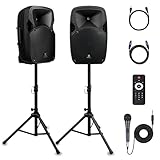


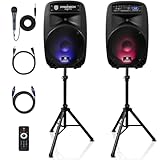
Top 3 picks at a glance
Best PA speakers compared
| Speaker | Max SPL | Coverage | Approx. weight | Cabinet | Typical market range |
|---|---|---|---|---|---|
| QSC K12.2 | 132 dB | 75° conical | 17.7 kg | Polypropylene | $900–$1,100 |
| Yamaha DXR12mkII | 134 dB | 90° × 60° | 19.3 kg | Polypropylene | $900–$1,100 |
| RCF ART 912-A | 130 dB | 100° × 60° | 19 kg | Polypropylene | $800–$1,000 |
| JBL PRX915 | 133 dB | 90° × 50° | 22.4 kg | Wood composite | $1,100–$1,400 |
| JBL EON715 | 128 dB | 90° × 60° | 16.9 kg | Polypropylene | $600–$800 |
| EV ZLX-12P | 127 dB | 90° × 60° | 15.6 kg | Polypropylene | $500–$700 |
| Yamaha DBR12 | 131 dB | 90° × 60° | 15.8 kg | Polypropylene | $550–$700 |
Maximum SPL figures are manufacturer ratings under specified test conditions, not a promise that every speaker will sound clean at that level. In practice, a speaker operated several decibels below its limit usually sounds more controlled and leaves useful headroom for musical peaks.
Our top choices by use case
Best all-rounder: QSC K12.2
The QSC K12.2 is one of the safest choices for mobile DJs, presenters, bands, schools, and small venues. Its 75-degree conical pattern produces relatively even horizontal coverage, while the 12-inch woofer provides enough low-mid authority for vocals, keyboards, and recorded music without making the cabinet excessively large.
Its rear panel includes flexible digital presets, input control, and useful configuration options for floor monitors, main speakers, and subwoofer use. The polypropylene cabinet keeps it manageable at about 17.7 kg. Choose the K12.2 when one speaker may need to perform several jobs and you value predictable operation over the lowest possible price.
Best for maximum output and live music: Yamaha DXR12mkII
The Yamaha DXR12mkII reaches a rated 134 dB and has a 90-by-60-degree horn. That combination makes it a strong choice for live bands, DJs, and outdoor events where the system must project over a larger audience or compete with drums and amplified instruments.
The cabinet is polypropylene rather than plywood, but the speaker is built for professional portable use and weighs about 19.3 kg. Its sound is typically assertive in the midrange, which helps vocals remain intelligible. A matching subwoofer becomes sensible when you need loud dance music or electronic bass rather than just speech and acoustic instruments.
Best value for general events: EV ZLX-12P
The EV ZLX-12P offers a practical balance of price, weight, onboard processing, and sound quality. Its 127 dB maximum SPL is lower than the premium choices, but that is still enough for speeches, presentations, rehearsal spaces, small parties, and modest live performances.
The 15.6 kg polypropylene cabinet is easy for one person to carry. It is a particularly good fit when clear speech matters more than deep bass or extreme volume. For a large audience, use two units in stereo or as left-and-right mains rather than expecting one cabinet to cover the entire room at high level.
Best for a wide audience: RCF ART 912-A
The RCF ART 912-A uses a wide 100-by-60-degree dispersion pattern. This can be valuable in a shallow room where the audience sits broadly to the sides of the speaker rather than far down a narrow hall. Its 12-inch woofer and 130 dB rating make it suitable for vocals, playback, and small-to-medium live performances.
Wide coverage is not automatically better: it can send more sound toward reflective side walls. Select this model when audience width is the priority, and avoid pointing it directly at nearby hard surfaces.
Best rugged higher-end option: JBL PRX915
The JBL PRX915 is a powerful 15-inch active speaker with a 133 dB rating and a 90-by-50-degree coverage pattern. The larger woofer produces more low-frequency weight than most 12-inch cabinets, making it useful for DJs, full-range music, and events where a subwoofer is not practical.
Its wood-based enclosure contributes to a more substantial cabinet and a weight of roughly 22.4 kg. That is less convenient for frequent stair carrying, but advantageous when you want a full-range main speaker with strong output. The narrower vertical pattern also helps control sound in some rooms and outdoor setups.
How to match a speaker to the audience
| Situation | Recommended approach | Why |
|---|---|---|
| Speech for up to 100 people indoors | One 10- or 12-inch speaker on a stand | Speech needs midrange clarity, not extreme bass |
| 100–250 people or a wide room | Two 12-inch speakers, placed left and right | Improves coverage and reduces the level required from each cabinet |
| Small acoustic band | Two quality 12-inch speakers | Provides stereo coverage and headroom for vocals and instruments |
| DJ or bass-heavy music | Two 12- or 15-inch speakers plus a subwoofer | Moves demanding low bass away from the full-range cabinets |
| Frequent solo transport | EV ZLX-12P, Yamaha DBR12, or JBL EON715 | Lower weight reduces setup time and lifting strain |
| Outdoor event | Higher-SPL models such as DXR12mkII or PRX915 | Open air provides little boundary reinforcement and requires more headroom |
Why maximum SPL is more useful than amplifier wattage
Powered PA specifications often advertise peak amplifier power, but wattage alone does not tell you how loud the finished speaker will be. Driver efficiency, limiter behavior, cabinet design, and distortion all matter. Maximum SPL is a more useful starting point for comparing complete systems.
Every 3 dB increase requires approximately twice the acoustic power under comparable conditions. A speaker rated at 134 dB therefore has about 3 dB more theoretical headroom than one rated at 131 dB. That is noticeable, but it is not twice as loud to human hearing. Also remember that doubling the distance from the speaker can reduce direct sound by roughly 6 dB in free field. Moving an audience from 5 metres to 10 metres can consume more headroom than the difference between two similarly priced speakers.
For speech, aim to operate well below the rated limit. A practical target is often an average audience level around 75–85 dB with peaks 10–15 dB higher, depending on the room and event. The speaker should remain clear when those peaks arrive rather than triggering aggressive limiting.
Cabinet material and portability
Polypropylene cabinets are common because they are light, moisture-resistant, and less costly to manufacture. They are well suited to mobile presentations, weddings, classrooms, and small bands. Their lighter weight makes them easier to place on stands, but they can be more susceptible to cosmetic damage from repeated transport.
Plywood or wood-composite cabinets are usually heavier and can feel more substantial at high output. They are attractive for touring, permanent installation, and demanding live music, where impact resistance and cabinet rigidity are priorities. The trade-off is clear: a speaker that weighs 22 kg may sound excellent, but moving two of them up stairs is a real part of ownership.
For any full-range speaker, use a sturdy stand that raises the horn above the audience’s head level. Do not place the speaker on the floor for speech unless it is being used as a monitor; floor placement wastes high-frequency coverage and increases reflections.
Settings that improve speech and music
- Start with the high-pass filter: Set it around 80–100 Hz for speech and around 60–80 Hz for full-range music. This removes rumble and leaves amplifier headroom for the frequencies listeners need.
- Reduce muddy low mids: If voices sound boxy, try a small cut of 2–3 dB around 200–350 Hz rather than boosting treble heavily.
- Control feedback with placement first: Keep the microphone behind the speaker’s coverage area and point the microphone’s least-sensitive side toward the cabinet. Equalization cannot fully rescue poor placement.
- Leave gain structure: Set the mixer output near its normal operating level, raise the speaker input until the required volume is reached, and avoid red clipping indicators. Digital clipping before the speaker cannot be repaired by turning down the loudspeaker.
- Add a subwoofer for bass, not just more top-box volume: If the system sounds strained during kick drums or bass drops, a subwoofer with an appropriate crossover around 80–100 Hz is usually more effective than pushing the 12- or 15-inch mains harder.
Frequently asked questions
Do I need one PA speaker or two?
One speaker can work for speech to up to 100 people indoors, especially when placed on a stand. For 100–250 people, a wide room, a small acoustic band, or a large audience, two 12-inch speakers placed left and right generally improve coverage and reduce the level required from each cabinet.
Should I use a subwoofer with these speakers?
A subwoofer is most useful for DJ sets, electronic music, or other bass-heavy programs where deep low frequencies are important. Two 12- or 15-inch speakers plus a subwoofer can move demanding low bass away from the full-range cabinets. For speech, acoustic instruments, or moderate recorded music, a subwoofer may not be necessary.
How high should I place a PA speaker?
Place a full-range speaker on a sturdy stand with its horn above the audience’s head level. This helps distribute high frequencies more effectively. Avoid placing it on the floor for speech unless it is being used as a monitor, because floor placement wastes high-frequency coverage and increases reflections.
Can one speaker cover an outdoor event?
One speaker may work for a small outdoor gathering, but outdoor spaces require more headroom because they provide little boundary reinforcement. Higher-SPL models such as the Yamaha DXR12mkII or JBL PRX915 are suitable examples from the article. For a larger audience, two speakers can improve coverage and reduce the level demanded from each cabinet.
What should I do if speech sounds muddy or feedback starts?
For muddy speech, try a small cut of 2–3 dB around 200–350 Hz instead of heavily boosting treble. For feedback, improve microphone placement first: keep the microphone behind the speaker’s coverage area and point its least-sensitive side toward the cabinet. Equalization cannot fully correct poor placement.
Final buying advice
Choose the QSC K12.2 if you need the most adaptable all-purpose PA speaker. Choose the Yamaha DXR12mkII when clean high output and live-music headroom are the priority. Choose the EV ZLX-12P or Yamaha DBR12 for a lighter system at a lower market price. Choose the RCF ART 912-A for wide audience coverage, and the JBL PRX915 when stronger full-range bass and high output justify extra weight.
For clear, powerful sound, buy enough coverage and headroom for the room, then position the speakers correctly. Two moderate speakers used at comfortable levels will usually sound more even and intelligible than one larger speaker pushed to its limiter.


