
Top 3 picks at a glance
Best party speakers for most gatherings
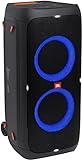
The best party speakers for most people are portable Bluetooth models with a sturdy handle, clear sound at high volume, practical water resistance, and controls that make pairing and playback quick. Choose the JBL PartyBox Club 120 for a balance of sound, lighting, battery power, and portability; the JBL PartyBox Stage 320 for larger spaces and longer outdoor sessions; or the Sony ULT Tower 10 when you want a powerful, mains-powered speaker for a big room. The right pick depends less on headline wattage than on how far sound needs to travel, how long the party lasts, and whether you can keep the speaker near an outlet.
Quick comparison
| Model | Best fit | Battery | Water resistance | Setup and standout feature |
|---|---|---|---|---|
| JBL PartyBox Club 120 | Small-to-medium indoor or outdoor parties | Up to 12 hours, depending on use | IPX4 splash-resistant | Portable, built-in light effects, replaceable battery |
| JBL PartyBox Stage 320 | Larger gatherings where portability still matters | Up to 18 hours, depending on use | IPX4 splash-resistant | Wheels and handle; can pair with another compatible PartyBox |
| Sony ULT Tower 10 | Large indoor parties with access to power | No built-in battery | No outdoor water-resistance rating | Mains-powered; ULT bass modes, lighting, and microphone input |
| Soundboks 4 | Outdoor events where loud, durable sound is the priority | Up to 40 hours at low-to-moderate volume; less at high output | IP65-rated cabinet | Battery-powered, rugged build, expandable with compatible speakers |
| Bose S1 Pro+ | Small events needing speech, music, or live instruments | Up to 11 hours, depending on use | No stated water-resistance rating | Compact PA-style design with mixer and wireless microphone options |
Battery figures are manufacturer maximums, not guarantees at party volume. Bass-heavy tracks, bright lighting, wireless features, and high volume can all shorten runtime. Check the current model specifications before buying, since included accessories and regional versions can differ.
As an Amazon Associate we earn from qualifying purchases at no extra cost to you.


Choose by party size and setting
| Your situation | Good starting point | Why it fits | What to watch for |
|---|---|---|---|
| Apartment, kitchen, or small patio | JBL PartyBox Club 120 | Portable size, splash resistance, and lighting without needing an outlet | Keep bass and volume moderate in shared buildings |
| Medium-to-large backyard gathering | JBL PartyBox Stage 320 | Wheels help with transport, while its larger enclosure suits open space better than a compact speaker | IPX4 covers splashes, not immersion or exposure to heavy rain |
| Large outdoor event or noisy crowd | Soundboks 4 | Designed for high output and a more demanding outdoor setting | It is bulky, and sustained loud playback reduces battery life |
| Indoor party near a power outlet | Sony ULT Tower 10 | No battery-runtime trade-off; bass modes and lighting suit a room-focused setup | Its size and lack of a water-resistance rating make it a poor poolside choice |
| Speech, karaoke, or live music in a compact space | Bose S1 Pro+ | PA-style controls and inputs are more useful for voices and instruments than party lights | It is not a waterproof party speaker; protect it from spills and weather |
What matters beyond the headline specs
Bass output: prioritize usable bass, not just a big number
Deep bass can make dance music feel fuller, but turning it up too far can muddy vocals, drain a battery, and bother neighbors. A larger cabinet generally has an advantage in low-frequency output, while smaller portable speakers may rely more on electronic bass enhancement. If you expect people to talk over the music, favor a model that remains clear at moderate volume rather than one chosen only for maximum bass. Bass-boost modes are best treated as an occasional setting, not a requirement to run all night.
Battery life: calculate for your actual listening level
Manufacturers’ “up to” figures are usually measured under less demanding conditions than a loud party. A practical planning estimate is to start with the published maximum and allow for roughly half to two-thirds of it at lively volume with lighting enabled. This is a planning buffer, not a guaranteed performance figure.
Example: If a speaker is rated for 12 hours, plan for about 6–8 hours of party use. For a seven-hour event, that leaves only 0–1 hour of margin at the low end. If you expect heavy bass, maximum lighting, or cold outdoor conditions, choose a longer-runtime model, bring a charged spare battery if supported, or arrange access to power. A USB charging port on a speaker may also charge a phone slowly; it should not be treated as a dependable power bank during a long event.
Lighting and wireless features: useful extras, with limits
Built-in lights reduce setup work and can make one speaker the visual focal point. They generally do not light an entire yard, so use them as an effect rather than as outdoor illumination. For wireless playback, check whether the speaker supports the connection you actually need: Bluetooth is simplest for one phone, while a companion app may offer EQ, light controls, or stereo pairing. Bluetooth pairing between separate speakers is not universal across brands or model generations. Verify compatibility before planning a multi-speaker setup.
Water resistance: splash-resistant is not waterproof
IPX4-rated speakers are designed to handle splashes from different directions, which can help with light spills or brief exposure to spray. That rating does not make them suitable for submersion, hosing down, or being left in heavy rain. Keep the speaker elevated from wet ground, close covers over unused ports, and move it indoors if weather turns. Models without a water-resistance rating, including the Sony ULT Tower 10 and Bose S1 Pro+, should stay in dry conditions.
Setup speed: check placement and controls before guests arrive
For a quick start, charge the speaker, install or update its companion app in advance if needed, and pair the main phone before the gathering. Place the speaker on a stable surface with its front clear; corners can exaggerate bass, while a tight corner or alcove may make sound uneven. Outdoors, raise the speaker off the ground and point it toward guests. Test the connection and volume before handing over the playlist. If you need a microphone, confirm the correct input or wireless accessory beforehand rather than assuming Bluetooth audio and microphone connections work the same way.
Price and value
Party speakers span from a few hundred dollars for portable battery-powered models to several hundred dollars or more for larger, louder, or more feature-rich systems. Prices vary by region, sales, and included batteries or accessories. Compare the cost of replacement batteries, microphones, stands, and protective covers—not just the speaker itself. If you only host occasionally, a compact model may be better value than paying for extreme output you rarely use. For frequent outdoor events, durability and replaceable power can matter more over time.
Frequently asked questions
Can I use these speakers for a karaoke party?
Yes, but the best choice depends on the setup. The Sony ULT Tower 10 includes a microphone input, while the Bose S1 Pro+ has PA-style controls and inputs that suit speech, karaoke, or live instruments. For either model, confirm the correct input or wireless accessory before guests arrive rather than assuming microphone and Bluetooth audio connections work the same way.
Can I connect speakers from different brands for more sound?
Usually, you should not assume that speakers from different brands will pair together. Bluetooth pairing between separate speakers is not universal across brands or model generations. Check compatibility before planning a multi-speaker setup. The JBL PartyBox Stage 320 can pair with another compatible PartyBox, while the Soundboks 4 can expand with compatible speakers.
Where should I place a party speaker outdoors?
Place it on a stable surface, raise it off the ground, and point it toward guests. Keeping the front clear helps playback, while a corner can exaggerate bass and a tight corner or alcove may make sound uneven. If weather turns, move the speaker indoors, especially when it has no stated water-resistance rating.
How should I prepare a speaker before guests arrive?
Charge the speaker, install or update its companion app if needed, and pair the main phone before the gathering. Test the connection and volume in advance, then check any microphone input or wireless accessory. This reduces setup work during the party and helps confirm that the controls and connections you need are ready.
Which speaker is best if people need to hear speech clearly?
The Bose S1 Pro+ is the most suitable option when speech matters because its PA-style controls and inputs are more useful for voices and instruments than party lights. Regardless of the model, avoid choosing only for maximum bass: excessive bass can muddy vocals. A speaker that remains clear at moderate volume may work better for conversation and announcements.
Bottom line
For a flexible all-around choice, start with the JBL PartyBox Club 120. Step up to the JBL PartyBox Stage 320 when the crowd and outdoor area are larger, or consider the Soundboks 4 when outdoor volume and a rugged cabinet matter most. Choose the Sony ULT Tower 10 for a powerful indoor setup near an outlet, and the Bose S1 Pro+ when speech or live performance takes priority over lighting. Match the speaker to your space, plan battery life conservatively, and treat water resistance as protection from splashes—not permission to leave it out in the rain.


