
The best TV headphones for most viewers are the Sennheiser RS 175 for balanced sound and reliable low-latency wireless, while the Sennheiser RS 195 is the better choice when clear dialogue and hearing adjustment matter more than price.
TV headphones are not judged by music performance alone. The important questions are whether they work with your television, keep speech understandable over background sound, stay synchronized with the picture, reach your seat without dropouts, and remain comfortable through a two-hour film. The right choice depends on your listening habits and the audio outputs available on your TV.
As an Amazon Associate we earn from qualifying purchases at no extra cost to you.


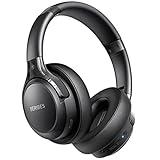
Top 3 picks at a glance
Best TV headphones at a glance
| Model | Wireless method | Advertised range | Battery life | Best for |
|---|---|---|---|---|
| Sennheiser RS 175 | Proprietary RF transmitter | Up to 100 m line of sight | About 18 hours | Most living rooms and general TV listening |
| Sennheiser RS 195 | Proprietary RF transmitter | Up to 100 m line of sight | About 18 hours | Speech-focused listening and hearing adjustment |
| Avantree HT5009 | Bluetooth transmitter and headphones | About 30 m typical advertised range | Up to about 40 hours | Long battery life and broad TV compatibility |
| Sennheiser TV Clear Set 2 | Bluetooth-based TV transmitter and earbuds | Room-scale wireless range | Up to about 15 hours with charging case | People who prefer lightweight earbuds and speech enhancement |
| Sony WH-1000XM6 | Bluetooth | About 10 m typical Bluetooth range | Up to about 30 hours, depending on settings | TV plus travel, music, and noise cancellation |
Advertised range is measured under favorable conditions. Walls, neighboring wireless devices, metal furniture, and the transmitter’s position can reduce usable range. Dedicated RF systems generally offer more dependable whole-room coverage than ordinary Bluetooth headphones.
Best overall: Sennheiser RS 175
The RS 175 is a strong all-round choice because its dedicated transmitter avoids many of Bluetooth’s TV-compatibility problems. The charging stand connects to the television, and the headphones receive audio through a separate wireless link. Its digital and analog connection options suit many modern TVs, older sets, soundbars, and receivers.
Its surround and bass modes are optional rather than essential. For dialogue, start with both effects disabled. Extra bass can make explosions more impressive but may mask consonants, while simulated surround can make voices seem less centered. The RS 175 is most convincing when used as a clear, uncomplicated stereo TV headset.
- Choose it for a viewing distance that may exceed normal Bluetooth range.
- Expect roughly 18 hours of listening per charge.
- Use the physical volume controls when you want independent headphone volume.
- Look elsewhere if you need strong hearing-profile customization or very light earbuds.
Best for dialogue adjustment: Sennheiser RS 195
The RS 195 is designed for viewers who find television speech difficult to follow, especially when music, effects, and voices are mixed at similar levels. Its listening modes and balance controls let you emphasize speech and adjust the left-right balance more precisely than typical Bluetooth headphones.
This does not mean it can repair a badly mixed program. It can make speech easier to hear, but excessive emphasis may make voices sound thin or unnatural. Begin with the most neutral speech mode, then increase speech emphasis only until dialogue becomes comfortable. If one ear hears differently from the other, use the balance control rather than raising the overall volume.
The RS 195 is usually more expensive than the RS 175, but the price difference is justified for a regular viewer who otherwise turns the TV volume high enough to disturb other people. It is also a better fit when multiple family members have different hearing preferences, although the headset is intended primarily for one listener at a time.
Best value with long battery life: Avantree HT5009
The Avantree HT5009 combines a Bluetooth transmitter with over-ear headphones, making it a practical package for shoppers who want a complete setup without separately solving transmitter compatibility. Its major advantages are long battery life, straightforward pairing, and support for low-latency Bluetooth modes on compatible equipment.
Bluetooth performance depends more heavily on the television and transmitter settings than the dedicated Sennheiser systems. If both devices support a low-latency codec such as aptX Low Latency, lip-sync can be very good. If the TV only sends standard Bluetooth audio or uses a different codec, delay may become noticeable.
At a typical television bit rate of roughly 256–384 kilobits per second, bandwidth is not the difficult part: even basic Bluetooth has ample capacity for stereo TV audio. The problem is buffering and codec delay. A 100-millisecond delay means sound arrives one-tenth of a second after the picture, enough to notice on mouth movements. Low-latency modes reduce that buffer, but only when the entire audio chain supports them.
Best lightweight option: Sennheiser TV Clear Set 2
The TV Clear Set 2 uses small earbuds rather than a heavy over-ear headset. That makes it attractive for viewers who dislike warm ear cushions, wear glasses, or want to move around without a headband. Its TV transmitter is intended to simplify low-delay listening, and the earbuds include controls aimed at making speech easier to follow.
Earbuds do not block outside sound as completely as closed over-ear headphones. That can be helpful if you need to hear a doorbell or conversation, but it also means more room noise reaches your ears. Fit is critical: an imperfect seal reduces bass and can make voices seem distant. Check whether the included ear-tip sizes provide a stable, comfortable seal before judging sound quality.
Best if you also want travel headphones: Sony WH-1000XM6
The Sony WH-1000XM6 is a better multipurpose purchase than a dedicated TV headset if you also want active noise cancellation for flights, offices, or commuting. It offers strong noise reduction, comfortable over-ear listening, and a mature Bluetooth feature set.
For TV use, its weakness is setup dependency. Your television must support Bluetooth audio, and the TV may not provide a useful low-latency codec. Some televisions also disable their internal speakers when Bluetooth headphones connect, while others introduce a delay that cannot be corrected from the headphones. If your TV has no Bluetooth audio output, you need a compatible external transmitter.
Do not choose ordinary Bluetooth headphones solely because they advertise a long wireless range. Their range claims are usually measured in open space, and a dedicated RF TV system is often more reliable through several rooms.
Choose by your television and listening habits
| Your situation | Recommended type | Reason |
|---|---|---|
| You sit in the same room and want the simplest reliable setup | Dedicated RF headset, such as RS 175 | Low synchronization risk and a purpose-built transmitter |
| Dialogue is consistently difficult to understand | Speech-focused headset, such as RS 195 | More useful voice modes and independent balance adjustment |
| You want one headset for TV, travel, and music | Bluetooth noise-cancelling headphones, such as WH-1000XM6 | More versatile away from the television |
| You dislike over-ear heat or wear glasses | TV earbuds, such as TV Clear Set 2 | Less head pressure and lower weight |
| You need very long battery life at a moderate cost | Bluetooth transmitter bundle, such as HT5009 | Long runtime and usually broad connection support |
| Your TV has optical output but unreliable Bluetooth | Dedicated RF system | Optical audio bypasses the TV’s Bluetooth implementation |
Check these connections before buying
Look at the back or side of the TV for one of these outputs:
- Optical digital output: usually the best connection for a dedicated transmitter. Set the TV’s digital audio format to PCM or stereo if the headset produces no sound.
- 3.5 mm headphone output: simple and widely compatible, but some TVs mute their speakers or control headphone volume separately.
- RCA analog output: works with red-and-white stereo cables and is useful on older televisions.
- Bluetooth audio: convenient, but codec support and lip-sync vary by television. Pair the headphones directly only if the TV supports Bluetooth audio output, not merely Bluetooth remote controls.
- HDMI ARC or eARC only: the TV may need an audio extractor or a transmitter designed for ARC. Do not assume an HDMI port can send audio directly to every headphone base.
How to reduce dialogue problems and lip-sync delay
- Set the TV output to PCM stereo. Many headphone transmitters cannot decode Dolby Digital or multichannel bitstreams. PCM removes that compatibility problem.
- Disable audio processing in the TV first. Turn off artificial surround, voice effects, and extra sound enhancement before evaluating the headset. Multiple processing stages can add delay and make voices unnatural.
- Use the headset’s dialogue mode sparingly. Increase speech emphasis until consonants are clear, then stop. Too much boost can make sibilants harsh.
- Place the transmitter in the open. Keep it away from the TV’s rear panel, Wi-Fi router, metal shelves, and enclosed cabinets. This improves radio reliability more effectively than simply increasing volume.
- Adjust the TV’s audio delay only when necessary. If voices arrive before the picture, add delay to the audio. If the picture leads the sound, reduce processing or use a lower-latency connection. The exact menu name varies by TV.
- Test a familiar speaking scene. News presenters and close-up dialogue reveal lip-sync errors more clearly than action scenes with rapid cuts.
Comfort matters more than maximum specifications
For long sessions, look for a moderate clamping force, deep ear cushions that do not touch your ears, and controls that can be found without removing the headset. Over-ear models generally provide better isolation, while earbuds reduce heat and weight but depend more on fit.
A practical runtime calculation helps avoid disappointment. If a headset claims 18 hours and you watch three hours nightly, the theoretical interval is 18 ÷ 3 = six nights. Real-world aging, higher volume, and wireless conditions reduce that figure, so charging every four or five nights is a more realistic routine. A charging stand is valuable not because it increases battery life, but because it prevents the headset from being misplaced or left empty.
Frequently asked questions
Can other people watch the TV normally while I use wireless headphones?
Yes, wireless headphones can let one person listen without raising the television volume for everyone else. The Sennheiser RS 175 connects through its own transmitter and provides independent headphone volume controls. The Sennheiser RS 195 is also useful when one viewer needs more speech emphasis or a different balance, although it is intended primarily for one listener at a time.
Will these headphones work with a soundbar or receiver?
The Sennheiser RS 175 can work with many soundbars and receivers because its transmitter supports digital and analog connections. Check whether the soundbar or receiver provides a compatible optical, 3.5 mm, or RCA output. The television or connected audio equipment may need its digital audio format set to PCM or stereo if the headset produces no sound.
Which option is best if I wear glasses?
The Sennheiser TV Clear Set 2 may be the better fit if you wear glasses because its earbuds avoid the head pressure of an over-ear headband. Earbuds also produce less warmth around the ears. Their performance depends on a stable, comfortable ear-tip seal, so an imperfect fit can reduce bass and make voices seem distant.
Can I use these headphones if my TV has no Bluetooth?
Yes, you can use a dedicated transmitter-based system with a TV that lacks Bluetooth audio output. The Sennheiser RS 175 and RS 195 use proprietary RF transmitters, while the Avantree HT5009 includes a Bluetooth transmitter. Before buying, check whether the TV has optical digital, 3.5 mm headphone, or RCA analog output for connecting the transmitter.
Why might audio still be delayed with Bluetooth headphones?
Bluetooth audio can be delayed because of buffering and codec processing, rather than because television audio needs high bandwidth. Low-latency performance depends on the entire audio chain supporting a compatible mode such as aptX Low Latency. If the TV sends standard Bluetooth audio or uses a different codec, voices may arrive noticeably after the picture.
Bottom line
Choose the Sennheiser RS 175 for the safest all-purpose TV purchase, the RS 195 when dialogue adjustment is the priority, the Avantree HT5009 for long battery life and value, and the Sennheiser TV Clear Set 2 when lightweight earbuds are more comfortable than over-ear headphones. Pick the Sony WH-1000XM6 only when travel and general Bluetooth use are as important as television listening. The best TV headphones are ultimately the ones that match your TV’s audio outputs and keep speech synchronized without becoming uncomfortable before the program ends.


