
The best powered subwoofers combine genuinely low extension, clean peak output, useful crossover controls, and a cabinet that suits your room rather than simply quoting the largest wattage number.
As an Amazon Associate we earn from qualifying purchases at no extra cost to you.

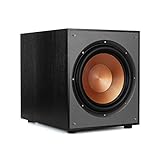
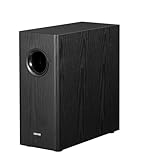

Top 3 picks at a glance
Quick picks by room and use
| Best fit | Recommended model or class | Useful real-world target | Typical market range |
|---|---|---|---|
| Small room, music and compact home theater | SVS SB-1000 Pro | Sealed cabinet, roughly 20–25 Hz extension, app-based DSP | Usually $500–$700 |
| Medium room, movies and games | SVS PB-1000 Pro | Ported cabinet, roughly 17–20 Hz extension, higher output than a compact sealed model | Usually $600–$900 |
| Music-first system with controlled bass | Rythmik Audio L12 | Sealed design with servo-controlled low-frequency behavior | Usually $600–$800 |
| Premium compact installation | KEF KC62 | Very small cabinet, sophisticated DSP, useful output for its size | Usually $1,200–$1,700 |
| Large room or demanding cinema playback | 12-inch high-output ported class, such as Monoprice Monolith 12 | High 20–40 Hz output and substantial headroom | Usually $700–$1,100 |
| Live sound and mobile PA | Powered 15-inch PA subwoofer, such as Yamaha DXS15mkII | High output, rugged enclosure, balanced professional connections | Usually $1,300–$2,000 |
These are starting points, not universal winners. A small sealed sub can be the better choice in a compact apartment, while a large ported model may be necessary for clean cinema-level bass in an open-plan room.
What to measure before buying
Low-frequency extension
Extension describes how low the subwoofer can reproduce bass before its output falls substantially. A model rated to 20 Hz reaches deeper than one rated to 28 Hz, but the measurement conditions matter. Look for a frequency-response tolerance, such as “20–200 Hz ±3 dB,” rather than an impressive single-number claim with no tolerance.
For music, useful output into the mid-20 Hz region covers the fundamentals of most bass guitars, kick drums, pipe organs, and electronic music. Movie soundtracks can contain meaningful content below 25 Hz, where ported subwoofers with large enclosures generally produce more output per watt than compact sealed designs.
Peak output and headroom
Peak output is more important than amplifier wattage by itself. A subwoofer rated at 500 watts is not automatically louder than one rated at 300 watts: driver efficiency, enclosure volume, port tuning, excursion limits, and DSP protection all affect the result.
Prioritize maximum output figures measured at 20, 25, 31.5, and 40 Hz. If a manufacturer provides only one maximum SPL number, treat it as incomplete. Bass below 30 Hz requires far more cone movement than bass around 60 Hz, so a subwoofer can sound powerful with kick drums while running out of headroom during deep effects.
Cabinet size and room placement
Cabinet volume is a practical performance specification. A large ported enclosure usually delivers deeper, louder bass than a compact sealed enclosure, but it needs floor space and can dominate a small room visually. A sealed subwoofer is often easier to place near furniture and may integrate smoothly for music, although it may need more amplifier power and excursion for the same deep-bass level.
Do not choose based on room area alone. An open doorway, stairwell, or adjoining kitchen makes the acoustic load much larger. A 12-inch subwoofer that is adequate in a sealed 250-square-foot room may struggle to produce the same cinema impact in a connected 500-square-foot space.
Crossover controls and phase
For an AV receiver with a dedicated subwoofer output, set the receiver’s speakers to “Small” and begin with an 80 Hz crossover. Set the subwoofer’s low-pass filter to its highest or bypass position so the receiver controls the crossover. A crossover around 60 Hz can suit larger main speakers, while 100–120 Hz can help small satellite speakers.
For a stereo amplifier without bass management, choose a subwoofer with an adjustable low-pass filter and, ideally, high-level inputs. Start at 70–80 Hz, then lower the setting if male vocals or upper bass seem to come from the subwoofer. Use the phase control to improve the transition around the crossover: play bass near the crossover frequency, switch between 0 and 180 degrees, and keep the setting that produces the stronger, more even bass at the listening position.
Connectivity
- RCA/LFE input: Standard for AV receivers, processors, and many stereo preamps.
- Left and right line inputs: Useful with stereo preamplifiers and integrated amplifiers that provide variable outputs.
- High-level speaker inputs: Helpful when the amplifier has no subwoofer output. Confirm that the subwoofer accepts the amplifier’s output format before connecting it.
- Balanced XLR inputs: Valuable in longer professional or studio cable runs, especially when equipment has balanced outputs.
- Wireless connectivity: Convenient, but check whether the wireless system adds latency or requires a separate transmitter.
- App-based DSP: Useful for adjusting volume, phase, low-pass behavior, and room compensation from the listening position.
Head-to-head: sealed, ported, and PA subwoofers
Sealed subwoofers: precise and placement-friendly
Sealed models such as the SVS SB-1000 Pro and Rythmik Audio L12 use an airtight cabinet. Their gradual low-frequency roll-off can work well with room gain, and the lack of a port avoids port noise and port-tuning behavior. They are strong choices for music, nearfield listening, and rooms where a large enclosure is impractical.
The trade-off is output. For the same driver size, a sealed subwoofer often needs more amplifier power and cone travel to match a ported model’s deep-bass level. If you watch action movies loudly or sit far from the subwoofer, consider two sealed units or a larger driver.
Ported subwoofers: more output below the crossover region
Ported designs such as the SVS PB-1000 Pro and Monoprice Monolith 12 use a tuned opening to increase efficiency over a specific low-frequency range. They can deliver greater impact in the 20–40 Hz region, which is especially useful for movies, games, and large-room listening.
They are physically larger and can sound uneven if placed in a room mode. Below the port tuning frequency, output falls rapidly and the driver may have less protection, so avoid using aggressive equalization to force a ported model far below its intended tuning.
Powered PA subwoofers: output and connection flexibility
Models such as the Yamaha DXS15mkII are designed for live sound rather than discreet home theater installation. They typically provide balanced inputs and outputs, high maximum SPL, rugged cabinets, and controls intended to integrate with powered tops. They are the right category for DJs, bands, venues, and outdoor events.
A PA subwoofer is not automatically the best living-room choice. Its cabinet may be large, its fan or amplifier noise may be noticeable, and its tuning may emphasize output over the subtle integration preferred for stereo music.
A practical sizing calculation
Suppose your main listening position is 3 meters from the subwoofer and you want occasional peaks around 105 dB at the seat. Free-field sound loses approximately 6 dB whenever distance doubles. Compared with a 1-meter specification, 3 meters costs roughly 9.5 dB before room reflections are considered.
That means a subwoofer producing 112 dB at 1 meter may deliver only about 102.5 dB at 3 meters in free field. Room boundaries can restore some energy, but an open-plan layout removes part of that benefit. For this target, select a model with documented peak output comfortably above 105 dB at the frequencies you care about, or use two subwoofers to distribute the load.
Two identical subwoofers do more than add output. When placed at different locations, they can reduce room nulls and produce more consistent bass across several seats. They do not guarantee a perfect response, but they are often a better upgrade than replacing one capable subwoofer with a slightly more powerful single unit.
Decision matrix for the best powered subwoofers
| Your situation | Prioritize | Avoid | Best direction |
|---|---|---|---|
| Apartment or small sealed room | Compact cabinet, adjustable DSP, low noise | Oversized PA enclosure and excessive output | Compact sealed 10- or 12-inch model |
| Movies in a medium room | 20–30 Hz output, ported efficiency, limiter behavior | Choosing only by amplifier wattage | 12-inch ported model |
| Music with floor-standing speakers | Adjustable crossover, phase, low distortion | Fixed high crossover or boomy placement | Sealed or servo-controlled model |
| Open-plan living room | Headroom, multiple-sub capability, room correction | Small subwoofer operated near its limit | Large ported model or two capable sealed models |
| Band, DJ, or venue | Balanced I/O, maximum SPL, rugged portability | Home-theater-only RCA connectivity | Powered 15-inch or 18-inch PA subwoofer |
Setup steps that matter more than the badge
- Start near the front wall. Place the subwoofer beside the main speakers, then try a side-wall position if bass is weak at the seat.
- Set the crossover correctly. With an AV receiver, use 80 Hz and bypass the subwoofer’s own low-pass filter. With stereo equipment, begin around 70–80 Hz.
- Set gain conservatively. Begin around one-quarter to one-third of the subwoofer’s volume range and let room correction measure it. Excessive gain can make the system appear powerful while reducing headroom.
- Check phase at the listening position. Compare 0 and 180 degrees, or adjust continuously if available, using bass around the crossover frequency.
- Measure before adding equalization. A phone app can reveal broad peaks, but a calibrated USB microphone and software such as Room EQ Wizard provide more reliable results. Cut large peaks rather than boosting deep nulls.
Frequently asked questions
Is a higher wattage rating always better for a powered subwoofer?
No. Amplifier wattage alone does not determine how loud or capable a subwoofer will be. Driver efficiency, enclosure volume, port tuning, cone excursion limits, and DSP protection also affect performance. Peak output figures at 20, 25, 31.5, and 40 Hz provide more useful information than choosing only the largest wattage number.
Should I buy one large subwoofer or two smaller ones?
Two identical subwoofers can be the better choice when you want more consistent bass across several seats. Placing them in different locations can reduce room nulls and distribute the workload. They do not guarantee a perfect response, but two capable units may improve coverage more effectively than replacing one subwoofer with a slightly more powerful single model.
Where should I place a subwoofer in an open-plan room?
Placement should account for the entire connected acoustic space, not just the room where you sit. An open doorway, stairwell, or adjoining kitchen makes the acoustic load larger and can reduce the benefit of room boundaries. In an open-plan layout, prioritize headroom and consider multiple-sub capability rather than sizing only by the main room’s floor area.
Can a subwoofer work with a stereo amplifier that has no subwoofer output?
Yes, if the subwoofer provides an adjustable low-pass filter and, ideally, high-level inputs. Start the low-pass setting around 70–80 Hz, then lower it if male vocals or upper bass seem to come from the subwoofer. Confirm that the subwoofer accepts the amplifier’s output format before making any high-level connection.
Is a powered PA subwoofer suitable for a living-room stereo system?
It can work, but it is designed primarily for live sound rather than discreet home theater installation. PA models typically offer balanced connections, high maximum SPL, rugged cabinets, and controls for powered tops. Their larger cabinets, possible fan or amplifier noise, and output-focused tuning may be less suitable for subtle stereo integration in a living room.
Bottom line
The best powered subwoofers are selected by frequency-specific output, not by watts or driver diameter alone. Choose a compact sealed model for controlled music in a small room, a ported 12-inch model for deeper and louder home-theater bass, and a balanced-input PA subwoofer for live sound. If your room is large, open, or shared by multiple listeners, budget for headroom or two subwoofers—and leave enough adjustment range to integrate them properly.


