
The best smart speakers in 2026 are the Sonos Era 100 for balanced multiroom listening, Apple HomePod (2nd generation) for Apple households, Amazon Echo Studio for powerful sound and Alexa control, and Google Nest Audio for affordable Google Assistant routines.
As an Amazon Associate we earn from qualifying purchases at no extra cost to you.



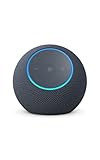
Top 3 picks at a glance
Best smart speakers at a glance
| Speaker | Best for | Sound profile | Assistant | Multiroom | Typical market range |
|---|---|---|---|---|---|
| Sonos Era 100 | Flexible multiroom music | Detailed, spacious, strong bass for its size | Alexa, Sonos Voice Control | Excellent within Sonos | Usually $200–$250 |
| Apple HomePod (2nd generation) | Apple Music and iPhone users | Rich, room-filling, bass-forward | Siri | Excellent with HomePod speakers | Usually $250–$350 |
| Amazon Echo Studio | Powerful playback and Alexa routines | Large, energetic, immersive | Alexa | Strong within Echo and Fire TV systems | Usually $180–$250 |
| Google Nest Audio | Google services and affordable stereo pairs | Warm and clear for speech and everyday music | Google Assistant | Good with Google speaker groups | Usually $70–$100 |
| Sonos Era 300 | Immersive and spatial music | Wide, highly separated, room-filling | Alexa, Sonos Voice Control | Excellent within Sonos | Usually $400–$500 |
Choose by your home, not just by sound quality
| Your situation | Best fit | Why | Main compromise |
|---|---|---|---|
| You use iPhone, Apple Music, and HomeKit | HomePod (2nd generation) | Strong Siri integration, automatic room tuning, AirPlay, and HomeKit control | Siri is less flexible than Alexa or Google Assistant for some general queries |
| You want several rooms on one dependable music system | Sonos Era 100 | Reliable grouping, broad streaming support, and a mature multiroom app | Voice features and ecosystem integrations are not as broad as Alexa |
| You already use Alexa plugs, lights, or Fire TV | Echo Studio | Excellent Alexa compatibility and the largest soundstage in this group | It is physically larger and more expensive than a basic Echo |
| You mainly need timers, routines, news, and occasional music | Nest Audio | Clear voice pickup, useful Google routines, and modest pricing | Less detailed and less expandable than premium music-focused speakers |
| You want the most spacious music from one speaker | Sonos Era 300 | Multiple drivers create an unusually wide presentation, including supported spatial formats | High price, and the best results depend on suitable room placement |
Sound quality: what the specifications do not tell you
Sonos Era 100 and Era 300
The Era 100 is the safer all-round music purchase. Its stereo presentation and room correction make it sound larger than a typical compact smart speaker, while a pair can create a convincing left-right image. It also includes Bluetooth, AirPlay 2, and a USB-C line-in option with the appropriate adapter, which makes it more flexible than many voice-first speakers.
The Era 300 is aimed at listeners who value scale and immersion more than value. Its driver arrangement is designed to spread sound around the room, but placement matters: leave clear space around the speaker rather than putting it tightly into a shelf. Spatial music is not automatically better mastered, so regular stereo tracks may still be the more satisfying choice.
Apple HomePod (2nd generation)
The HomePod delivers a full, polished sound with particularly substantial bass for its enclosure. Its room-sensing and computational audio adjust playback to the space, reducing the need to manually tune it. Two HomePods can form a stereo pair, but remember that a stereo pair is tied to Apple’s ecosystem and is not the same as two independent speakers placed anywhere in the home.
Amazon Echo Studio
The Echo Studio is the strongest choice here when you want one speaker to fill a larger room. It supports high-resolution music services and spatial formats, and it works especially well as part of an Alexa-centered home. Its larger enclosure gives it more authority at higher volume than compact models, although it takes up more shelf space.
Google Nest Audio
Nest Audio is tuned for a pleasant balance between spoken content and music. It is a good kitchen, bedroom, or office speaker, especially when price matters. It does not compete with the Era 300 or Echo Studio for bass extension and scale, but a stereo pair is an economical upgrade for a small room.
Voice assistant accuracy and everyday control
Assistant performance depends on microphone placement, background noise, account permissions, and the wording of a request. No platform wins every category.
- Alexa: Usually the strongest option for named routines, broad third-party smart-home support, shopping lists, timers, and device-specific commands. Echo Studio is the natural choice if Alexa is already central to your home.
- Google Assistant: A good fit for Google Calendar, Maps-related information, YouTube Music, and household questions. Nest Audio is most useful when your phones and services already use Google accounts.
- Siri: Convenient for Apple Music, calls, messages, AirPlay, and HomeKit scenes. HomePod works best when everyone in the household uses Apple devices and the home is built around HomeKit-compatible accessories.
- Sonos Voice Control: Fast for playback and volume commands without sending those requests to a general-purpose cloud assistant. Add Alexa when you need broader smart-home control.
For any platform, place the speaker at least 20–30 centimeters from walls where possible, keep the microphone openings unobstructed, and avoid positioning it directly beside a television. These simple changes often improve command recognition more than upgrading to a larger speaker.
Multiroom support and the network calculation
Multiroom systems differ in how much they lock you into one brand. Sonos offers the most cohesive dedicated experience. HomePod is excellent for AirPlay 2 households. Echo speakers group easily through Alexa, while Google speakers use speaker groups in Google Home.
Lossless audio sounds demanding on paper, but the raw data rate is manageable. For uncompressed stereo 24-bit/48 kHz audio:
2 channels × 24 bits × 48,000 samples per second = 2.304 Mbps.
After protocol overhead, buffering, and multiple simultaneous streams, planning for about 3 Mbps per active lossless stream is sensible. Four rooms therefore need roughly 12 Mbps of sustained audio capacity before other household traffic is counted. A modern 100 Mbps broadband connection is more than adequate; the common problem is weak Wi-Fi coverage, not internet speed. If several speakers lose sync, move the router or add a properly positioned access point before changing speakers.
Privacy controls: compare the practical differences
- Microphone hardware switches: Echo, Nest, HomePod, and Sonos models provide a way to disable microphones. A physical switch or button is preferable because its state is visible.
- Voice-history controls: Alexa, Google, and Siri ecosystems provide settings for reviewing or deleting voice interactions, though retention and personalization options vary.
- Local commands: Sonos Voice Control handles many playback commands locally. Apple also processes some requests on-device or with privacy protections, but broader requests may use Apple services.
- Account separation: Create individual household profiles where available, and review music, calendar, contacts, and purchasing permissions before enabling personal results.
- Smart-home permissions: Give the assistant access only to the rooms and devices it needs. A speaker in a guest room does not need permission to unlock a door or open a garage.
For a privacy-focused setup, disable purchasing by voice, turn off personalized results on shared-room speakers, and use a microphone switch whenever recording is not needed. This preserves voice control for deliberate sessions without leaving every microphone active all day.
Smart-home compatibility
Compatibility is more than the number of supported brands. Look for the standards and platforms already used by your accessories. HomePod is the clearest choice for a HomeKit and Matter household. Echo speakers support Alexa routines and a wide range of accessories, with many devices also using Matter. Google Nest speakers are a strong match for Google Home and Matter devices.
Sonos is primarily a music platform rather than a universal smart-home hub. Era speakers can still participate in Alexa and compatible control setups, but buyers wanting extensive lighting, security, and appliance routines should compare Sonos with an Echo or Nest speaker before purchasing several units.
How to get the best result after buying
- Start with one speaker in the room where you listen most. This reveals whether the assistant, streaming service, and ecosystem suit you before you spend on a whole-home setup.
- Run room calibration if available. HomePod and Sonos use the phone or speaker microphones to compensate for room reflections. Re-run calibration after moving the speaker substantially.
- Set a sensible maximum volume. A limit around 80–90% prevents accidental late-night blasts while leaving headroom for normal listening.
- Group speakers only after fixing Wi-Fi coverage. Test one room at a time, then add rooms. This identifies whether a problem is a particular speaker, a network dead zone, or a service issue.
- Use stereo pairs only with matching models. Two different speakers can play together in some ecosystems, but matching units provide more consistent timing, tonal balance, and volume.
Final verdict
Choose the Sonos Era 100 if music and dependable multiroom playback are your priorities. Choose the Apple HomePod (2nd generation) for an Apple-centered home, the Echo Studio for powerful sound and Alexa control, and the Google Nest Audio for affordable Google Assistant routines. If immersive spatial playback is worth the premium, the Sonos Era 300 is the most ambitious option, provided you can place it properly and use services that support the formats you want.


