The phrase “fitness watch” covers two quite different products, and mixing them up is the most common way to waste money. A slim fitness band counts steps, tracks sleep, and lasts days or weeks on a charge. A GPS sports watch maps your run, estimates recovery, and asks for a charger far more often. The decision this guide helps with is simple: how much of your training do you want recorded on the wrist, and how much are you happy leaving to a phone?
It is written for walkers building a daily habit, gym regulars who want heart rate zones, and runners deciding whether built-in GPS justifies a higher tier. The seven models below run from a budget pedometer band to a premium GPS watch, and each is judged only on what its listing states. If you are shopping in 2026 and want a tracker that fits your routine rather than an impressive spec sheet, start with the selection criteria and then jump to the scenarios near the end.
Our Top Picks
Top 3 picks at a glance
Quick Picks
As an Amazon Associate we earn from qualifying purchases at no extra cost to you.


| Product | Best for | Key spec from the title |
|---|---|---|
| Garmin Vivoactive 5 | Runners and all-round trainers | 42mm GPS, 24/7 health monitoring, sleep coach |
| 1.10-inch AMOLED Fitness Tracker | Compact, screen-first tracking | 1.10 inch AMOLED, heart rate, blood pressure, sleep |
| 1.69-inch Full Touch Fitness Smart Watch | Large-screen budget buyers | 1.69 inch touch screen, IP68, iPhone and Android |
| Fitbit Inspire 3 | Simple habit tracking | 24/7 heart rate, sleep tracking, stress management |
| Apple Watch SE 3 | iPhone users wanting GPS | GPS, 40mm, fitness, sleep and cycle tracking |
| Samsung Galaxy Fit 3 | Long battery on Android | 1.6 inch AMOLED, IP68, 14 days battery, 100+ exercise modes |
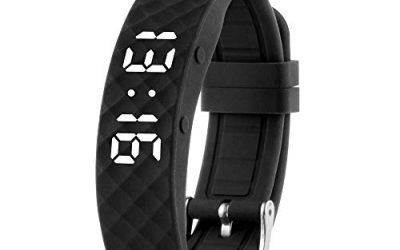
| Slim Pedometer Fitness Tracker | Step counting on a minimal budget | Step, distance and calorie counter, IP68 |
How to Choose
Decide whether you need built-in GPS
Built-in GPS is what separates a watch that records a route from one that guesses distance from arm swing. If you run, hike, or cycle outdoors and want pace and route maps without a phone, GPS is worth the move to a higher tier. If your routine is walking, gym classes, or home workouts, a band without GPS records everything you care about and usually lasts much longer between charges.
Battery life: days, not claims
For a tracker you want to wear overnight for sleep data, aim for at least a week of battery life. Models with brighter AMOLED screens and GPS drain faster, so a listing that states a number of days is more useful than one that only lists milliamp-hours. Charging habits matter too: a watch that tops up while you shower is easier to live with. A watch that needs charging every night often ends up skipped during sleep, which defeats the purpose.
Sensors and honest health metrics
Continuous heart rate and sleep staging are the baseline. Beyond that, look for stress tracking, cycle tracking, or an energy score if those metrics matter to you. Be cautious about blood pressure features on low-cost bands, which should be treated as rough trends rather than medical readings. Water resistance is another detail to check: IP68 handles sweat, showers, and splashes, but swimming needs a stated swim rating.
Comfort, app, and where budget models cut corners
A fitness watch is worn for sleep and workouts, so weight and strap material matter more than a long feature list. The companion app is where budget models often fall behind, with clunky data views or limited export. Ignore claims of 100+ workout modes; most people use three or four. Prioritize an app you will actually open and a strap that does not irritate your skin. Reading a few weeks of your own data is what makes any tracker useful, so choose the one you will keep wearing.
The 7 Best Options
Garmin Vivoactive 5
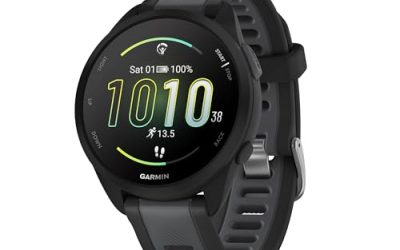
The listing describes a 42mm GPS smartwatch with 24/7 health monitoring, built-in sports apps, a sleep coach, and Body Battery energy monitoring. It is sold in more than one color, and this review covers the shared specification. For runners and all-round trainers who want one watch for workouts and recovery, the feature set reads as a clear step above generic trackers.
- Strength: Built-in GPS and sports apps handle outdoor workouts without a phone.
- Strength: Sleep coach and Body Battery monitoring add recovery guidance beyond raw heart rate.
- Trade-off: It belongs to the premium tier and costs far more than band-style trackers.
Skip it if you only count steps and sleep, since you would be paying for features you may never open or use regularly. A simpler tracker covers that need at a much lower tier.
1.10-Inch AMOLED Fitness Tracker
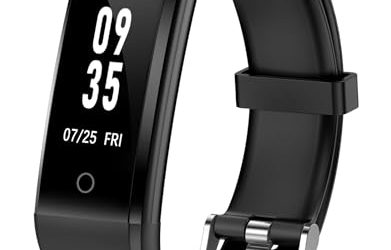
This compact tracker leads with a 1.10 inch AMOLED touch screen and lists 24/7 heart rate, blood pressure, and sleep monitoring, a step counter, and water resistance. It is a budget pick for someone who wants a bright, readable display in a smaller form factor than a full smartwatch.
- Strength: An AMOLED panel gives better contrast than the basic screens common in cheap bands.
- Strength: A small footprint suits slim wrists and overnight wear.
- Trade-off: The blood pressure reading is best treated as a rough trend, not medical data.
Skip it if you need GPS routes or a larger screen for reading messages and viewing workout details at a glance. People with larger wrists may also find the small face limiting.
1.69-Inch Full Touch Fitness Smart Watch
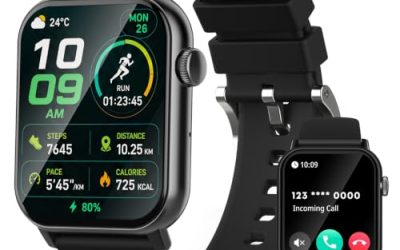
Aimed at buyers who want a larger screen on a budget, this listing names a 1.69 inch full touch display, IP68 waterproofing, Bluetooth, and heart rate tracking, with compatibility for iPhone, Samsung, and other Android phones. It straddles the line between a tracker and a basic smartwatch, which suits people who like seeing notifications as well as steps.
- Strength: A 1.69 inch screen is easier to read mid-workout than a small band display.
- Strength: Cross-platform support works for both iPhone and Android users.
- Trade-off: Without GPS, outdoor distance relies on the phone or on estimates.
Skip it if you want a well-known brand with long software support or serious running metrics. Shoppers who plan to keep the watch for several years should weigh that uncertainty.
Fitbit Inspire 3
The Inspire 3 is a slim tracker built around simple habits. The listing mentions stress management, sleep tracking, 24/7 heart rate, and a three-month trial of a Google health subscription, and it ships with small and large bands. It suits people who want clear daily numbers and gentle nudges rather than a dense training dashboard.
- Strength: Stress, sleep, and heart rate tracking are bundled together in a lightweight band.
- Strength: Both small and large bands are included, which helps with fit.
- Trade-off: The title does not list built-in GPS, so route tracking depends on a connected phone.
Skip it if you want a full watch face with apps, or if premium analytics are locked behind a subscription you do not want. Read what stays free after the trial ends.
Apple Watch SE 3
For iPhone owners who want GPS and a full smartwatch rather than a band, the SE 3 is the entry route. The listing names a 40mm GPS case with fitness, sleep, and cycle tracking, plus heart rate, vitals, and safety features. It works as a daily watch as much as a workout companion, which is why it sits in the mid-range to premium tier.
- Strength: Built-in GPS records outdoor workouts without carrying the phone.
- Strength: Sleep, cycle, and safety features cover health tracking beyond exercise.
- Trade-off: It only makes sense for iPhone owners.
Skip it if you use Android or want a battery that lasts a week or more between charges. Its smartwatch features come with a frequent charging routine.
Samsung Galaxy Fit 3
The Galaxy Fit 3 is the long-battery option for Android users. The listing states a 1.6 inch AMOLED display, IP68 water resistance, a 14 day battery life, 100+ watch faces, and 100+ exercise modes, in a 40mm form factor. It is built for people who dislike nightly charging and still want a vivid screen.
- Strength: A 14 day battery claim means sleep tracking rarely gets interrupted by charging.
- Strength: The 1.6 inch AMOLED screen is a clear step up from basic LCD bands.
- Trade-off: The title does not list built-in GPS, so outdoor routes rely on the phone.
Skip it if you use an iPhone or need GPS-based running analysis from the wrist. Runners who want pace and route data without the phone should look at a GPS model instead.
Slim Pedometer Fitness Tracker
This is the no-frills pick for step counting. The title lists a step, distance, and calorie counter, a heart rate monitor, a slim watch style, IP68 water resistance, and sleep monitoring, for women and men alike. It targets people starting a walking habit who care more about a daily total than about sports analysis.
- Strength: Pedometer, distance, and calorie tracking cover the core of a walking routine.
- Strength: A slim style makes it easy to wear all day and night.
- Trade-off: As a budget model, expect a basic app and limited features.
Skip it if you want GPS, detailed training data, or a polished ecosystem. Anyone planning structured training will outgrow its basic reporting and app within a few months.
Which One Fits Your Situation
You are training for a 10K or half marathon
The Garmin Vivoactive 5 is the strongest match, since it lists GPS and a sleep coach to pair training with recovery.
You want to hit a daily step goal and sleep better
The Fitbit Inspire 3 fits this plan with sleep tracking, heart rate, and stress management in a slim band.
You use an Android phone and hate charging
The Samsung Galaxy Fit 3 states a 14 day battery life and an AMOLED screen, which makes it the practical choice.
You carry an iPhone and want GPS in a full watch
The Apple Watch SE 3 lists GPS along with sleep and cycle tracking, making it the neat fit for an iPhone-centric routine.
Common Mistakes
- Buying GPS you will never use. Gym-only exercisers get little value from it.
- Ignoring battery life. A watch left on the charger at night cannot record sleep.
- Trusting blood pressure readouts from budget trackers as medical advice.
- Choosing on workout-mode counts when you will use only a handful.
- Skipping the strap check. A rubbing band ends the habit before the data matters.
Related guides
- When I Turn On Record Game In Background On Gamebar. Gamebar Crashes, What Do I Do?
- How To Reduce Background Noise On A Streaming Microphone
- Poly Computer Accessories Company Streaming Evaluation
Frequently Asked Questions
Is a fitness tracker or a smartwatch better for workouts?
A tracker is lighter and lasts longer, while a smartwatch adds notifications and bigger screens. If workouts and sleep are the priority, a tracker is usually enough.
How accurate is wrist heart rate?
Wrist sensors work well for resting and steady-state exercise and are less reliable during intervals or strength sessions. A chest strap remains the better choice for precision.
Do I need a subscription?
Some brands bundle a trial period for premium health features and then ask for a recurring fee. Read the listing to see what works without a subscription.
Can I swim with an IP68 watch?
IP68 covers showers and splashes but is not a swim rating. Look for a stated swim-proof or ATM figure before getting in the pool.