Loud is the easiest feature to advertise and the hardest to verify. Almost every portable speaker claims big power, yet the difference between a speaker that fills a living room and one that carries across a park comes down to driver count, subwoofer design, and how the maker states its numbers. A buyer shopping for a loud Bluetooth speaker is really asking a narrower question: how do I fill a big space, outdoors or in a crowded room, without buying a full PA system?
This guide is for people hosting backyard parties, tailgates, job sites, and beach days, where a small speaker disappears under conversation. The six products below were selected because their titles state loud-class specs such as peak wattage, subwoofer output, or decibel figures, and each one adds weatherproofing or long playtime on top. They are compared on listed specifications only, which is the honest way to shop for 2026 when marketing numbers vary wildly.
Our Top Picks

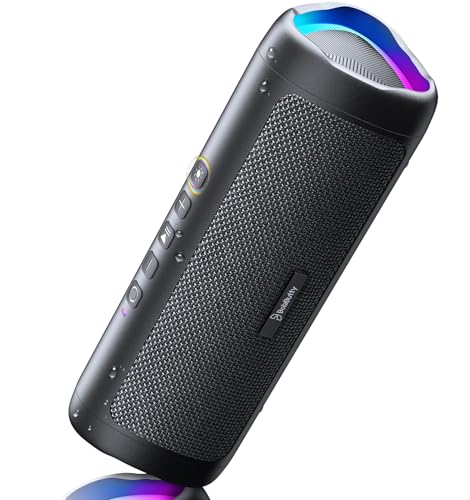
Top 3 picks at a glance
Quick Picks
As an Amazon Associate we earn from qualifying purchases at no extra cost to you.


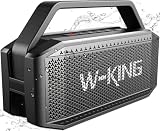
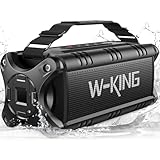
| Product | Best for | Key spec from the title |
|---|---|---|
| ANCOON 80W Jobsite Speaker | Workshops and rough use | 80W peak, 20H, IPX6 |
| W-KING 120W Boombox | Maximum bass and volume | 120W peak, 70W subwoofer, 4 drivers, 42H |
| Soundcore Boom 2 | Pool and beach with app control | 80W, IPX7, 24H, floatable |
| W-KING 100W Boombox | Rugged outdoor party use | 100W peak, 108dB, IPX7, floating |
| W-KING 90W Boombox | Big bass with flexible inputs | 90W max, 105dB, dual 50W subwoofers, 40H |
| 65W BT5.4 Outdoor Speaker | Long playtime and light shows | 65W, IPX7, 40H, 6000mAh |
How to Choose
Treat wattage as a rough sorting tool
Peak or max wattage is the number printed biggest on the box, and it is not a measure of continuous loudness. Still, a 100W-class figure tends to belong to a larger enclosure with bigger drivers than a 20W figure, so use wattage to separate speaker classes rather than to rank two similar models. A decibel figure such as 105dB or 108dB can be a more useful hint, though it depends on how the manufacturer measured it. Ignore any loudness claim that comes with no spec at all.
Drivers, subwoofers, and bass that survives open air
Loud speakers need physical size to move air. Look for multiple drivers, a dedicated subwoofer or passive radiators, and a body large enough to hold them. Bass disappears fast outdoors, so features like BassUp modes or a custom EQ are not gimmicks; they let you restore low end when there are no walls to reinforce it. If you also care about clarity at high volume, prefer products that list separate bass and treble drivers over a single full-range cone.
Playtime, battery, and charging
Loud playback drains batteries quickly, so the playtime figure printed on the listing is usually measured at moderate volume. As a rule, look for 20 hours or more and expect a real-world figure well below the claim at full blast. A 6000mAh-class battery or a 40-hour rating gives more breathing room for all-day events. Check whether the speaker can play while charging, and whether the port is USB-C, which is easier to replace on the go.
Waterproofing, inputs, and where budget models cut corners
IPX6 handles splashes and rain, while IPX7 survives short immersion, which matters at a pool. Floating designs make dropped speakers recoverable. For flexibility, listings that mention AUX, TF card, or USB drive inputs help when a phone dies or Bluetooth is unreliable. Budget and mid-range loud speakers often cut corners on enclosure rigidity and software, so rattling at high volume and basic EQ are common trade-offs. Premium models invest in distortion control and app support.
The 6 Best Options
ANCOON 80W Jobsite Speaker
The ANCOON is built for rough environments. The title lists 80W peak power, bass emphasis, 20 hours of playtime, IPX6 waterproofing, and a large jobsite speaker design for work, outdoor, and workshop use. It suits contractors and weekend builders who want a loud speaker that tolerates dust and bumps. It is also a decent backyard option for buyers who value toughness over styling. Think of it as the loud speaker you can leave on a tailgate, a workbench, or a patio table without worrying much about scuffs, a priority that fancier party speakers rarely share.
- Strength: Rugged construction suits garages, workshops, and construction areas.
- Strength: IPX6 resists rain and splashes.
- Trade-off: 20 hours of playtime and an 80W peak figure sit below the larger W-KING boomboxes in this list.
Skip it if you want the highest power figure or a pool-ready immersion rating.
W-KING 120W Boombox
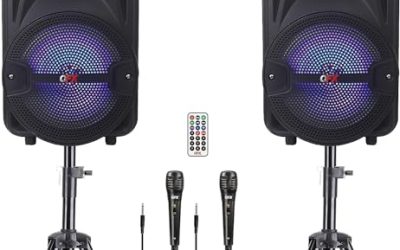
This is the most powerful speaker on the list by listed specs. The title mentions 120W peak output, a 70W subwoofer, four drivers, stereo pairing, deep bass, IPX6, Bluetooth 5.4, an EQ, 42 hours of playtime, and RGB lighting. It fits buyers who want a true party boombox and plan to use it outdoors regularly. Stereo pairing, listed in the title, also gives a path to doubling up later if one box is not enough for a large lawn or a hall. The long playtime figure makes it the natural pick for multi-day camping trips where charging is awkward.
- Strength: Four drivers plus a subwoofer is the most elaborate driver setup here.
- Strength: 42 hours of listed playtime is the longest among the loud-class models.
- Trade-off: IPX6 is a step below the IPX7 rating on several competitors, so avoid dunking it.
Skip it if the speaker will live at the water’s edge or if you want something compact.
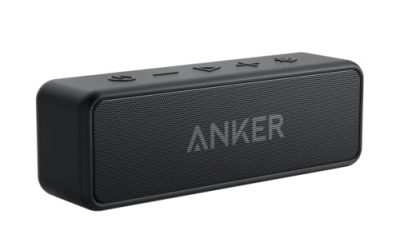
Soundcore Boom 2
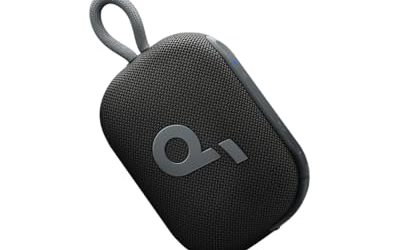
The Boom 2 balances loudness with smart features. The title lists 80W output, 24 hours of playtime, IPX7 waterproofing, BassUp 2.0, a floatable body, RGB lights, USB-C, and EQ control via an app. It suits buyers who want a loud speaker that is also easy to tweak and pool-safe. It is the one to look at if you like adjusting sound to the room or the yard, since the app EQ lets you shape bass and treble to suit the space. USB-C charging is also friendlier than older barrel plugs when you are traveling with other devices.
- Strength: App-based custom EQ lets you tune bass for open-air use.
- Strength: IPX7 and a floating design make it forgiving around water.
- Trade-off: Listed power and playtime are modest compared with the biggest W-KING models.
Skip it if you only care about raw maximum output.
W-KING 100W Boombox
This rugged boombox lists 100W peak power and a 108dB figure, along with IPX7 waterproofing and a floating design. The title also lists a 60W party speaker class. It is aimed at buyers who want party-level volume plus real water resistance in one product. It makes sense for pool houses, beach gatherings, and campgrounds where a lot of people need to hear the music at once. Expect to carry a larger, heavier unit than a compact speaker, which is the price of loudness.
- Strength: A 108dB claim is the highest decibel figure listed in this guide.
- Strength: IPX7 with a floating design suits pool and beach settings.
- Trade-off: Large boombox bodies are heavier and less pocketable than compact speakers.
Skip it if portability and weight matter more than output.
W-KING 90W Boombox
The 90W model aims at bass lovers. The title lists 90W max power, IPX7 waterproofing, two 50W subwoofers, 40 hours of playtime, EQ, TF card, AUX, and U-disk inputs, plus a 105dB figure. It suits buyers who want deep bass and several ways to play music without relying on Bluetooth alone. It is a good fit for DJs-for-a-day at family events, garage gatherings, and anyone who keeps a stash of music on a USB drive or memory card for a dependable backup. The wired and card inputs also help when a crowded venue clutters the wireless spectrum.
- Strength: Dual subwoofers target low-end punch that smaller speakers lack.
- Strength: AUX, TF, and USB drive inputs add flexibility when Bluetooth fails.
- Trade-off: As a large boombox it is sized for volume, not for slipping into a bag.
Skip it if you want app control or a compact body.
65W BT5.4 Outdoor Speaker
This unbranded-style listing combines 65W loud sound with Bluetooth 5.4, IPX7 waterproofing, 40 hours of playtime, and a 6000mAh battery, plus RGB lighting. It suits buyers who want long playtime and a modern Bluetooth standard without paying for a big-brand name. It suits campers, weekend travelers, and families who want a reliable battery size for long afternoons outdoors. Because the brand is not named in the title, buyers should read the listing details closely for warranty and support information.
- Strength: 6000mAh battery and 40 hours of playtime support all-day use.
- Strength: IPX7 gives real splash and immersion tolerance.
- Trade-off: At 65W it sits at the lower end of the loud-class group in this guide.
Skip it if maximum volume is your only priority.
A note on what was left out: compact 12W and 20W portable speakers also appear in these search results, but their listed power puts them in a different class, so they are not ranked here. If your space is a desk, a bedroom, or a small balcony, a smaller speaker may serve you better and cost less than any boombox above. Likewise, if you mostly listen in a quiet apartment, an oversized boombox will spend its life turned down to a fraction of its capability, which wastes both money and shelf space.
Which One Fits Your Situation
You want the loudest, bassiest option
The W-KING 120W Boombox lists the biggest power figure, a 70W subwoofer, and four drivers, which puts it at the top of the group for pure output.
You spend time at the pool or beach
The Soundcore Boom 2 and the W-KING 100W Boombox both list IPX7 and a floating body, so either handles splashes and accidental drops into the water.
You work on a job site
The ANCOON 80W Jobsite Speaker is built for rough environments and lists IPX6 protection.
You need all-day party playtime
The 65W BT5.4 Outdoor Speaker and the W-KING 90W Boombox both list 40 hours of playtime, enough to cover long events without recharging.
Common Mistakes
- Ranking speakers by peak wattage alone. Use it to sort classes, then compare drivers and enclosure size.
- Believing playtime numbers at full volume. Claims are usually measured at moderate levels.
- Ignoring the IP rating. IPX6 and IPX7 are not interchangeable if the speaker meets water.
- Skipping wired inputs. A speaker with AUX or card playback is useful when Bluetooth acts up.
- Placing the speaker on the ground. Raising it up improves how far the sound carries outdoors.
Related guides
- When I Turn On Record Game In Background On Gamebar. Gamebar Crashes, What Do I Do?
- How To Reduce Background Noise On A Streaming Microphone
- Poly Computer Accessories Company Streaming Evaluation
Frequently Asked Questions
Is 100W always louder than 80W?
Not necessarily, because peak wattage is a marketing figure. Drivers, enclosure, and tuning matter as much, so treat wattage as a rough class indicator.
What does the decibel figure tell me?
A figure such as 105dB or 108dB is meant to show maximum output, but test methods vary by manufacturer. It is more helpful when comparing within one brand than across brands.
Can I pair two loud speakers?
Several listings mention stereo pairing or TWS support, which links two identical speakers. Pairing works best between matching models, so decide up front whether you plan to add a second speaker later and buy the same one both times.
Are loud speakers a problem for neighbors?
They can be. Large boombox-class speakers carry sound a long way, so keep local noise rules in mind and use volume limits when hosting at night.