A Bluetooth speaker budget of under 100 dollars sounds generous until you realize how wide the field is. At that cap you can land a pocket-sized unit that clips to a backpack, a mid-sized cylinder that fills a patio, or a loud outdoor box with lights and wireless charging. The real decision is not which speaker is “best” in the abstract. It is which trade you are willing to make between size, battery life, loudness and water protection, because no speaker under the cap maxes out all four.
This guide is written for buyers who want one speaker for several jobs: kitchen playlists, a weekend at the beach, a workshop radio, a gift for a college student. We compare seven listings using only what the product titles state, such as wattage claims, playtime, IP codes, Bluetooth version and pairing features. Where a title is vague, we say so, and we point out which numbers deserve a skeptical look before you commit in 2026.
Our Top Picks

Top 3 picks at a glance
Quick Picks
As an Amazon Associate we earn from qualifying purchases at no extra cost to you.


| Product | Best for | Key spec from the title |
|---|---|---|
| Anker Soundcore 2 | All-around compact use | 24-hour playtime, IPX7, 12W stereo |
| Monster S620 | Outdoor gatherings | 60W true wireless stereo, IPX8, Bluetooth 5.4 |
| Wilody 100W | Loud parties with lights | 100W claim, IPX7, floatable, wireless charge |
| ANCOON 80W Jobsite | Workshops and job sites | 80W peak, IPX6, rugged build, 20H |
| JBL Go 4 | Pocket carry and travel | Waterproof and dustproof, 7-hour battery |
| 20W IPX5 speaker (unbranded) | Casual home and camping use | 20W, IPX5, up to 24H, TWS pairing |
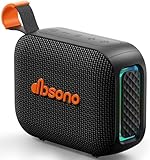
| IPX5 LED gift speaker (unbranded) | Desk, office and gifting | IPX5, up to 24H, LED light, TWS |
How to Choose
Match water protection to where the speaker will live
The IP code tells you more than any marketing adjective. IPX5 means the speaker survives water jets, so rain and splashes are fine but dunking is not. IPX6 handles heavier jets. IPX7 survives temporary submersion, and IPX8 is rated for longer submersion under conditions the maker defines. If the speaker will sit by a pool or ride in a kayak bag, aim for IPX7 or better. For a desk or kitchen counter, IPX5 is plenty. Also check whether dust is mentioned, because sand at the beach causes more failures than water does. Finally, watch for odd labels such as “IP7” with no X or digit pair; the standard codes are IPX5, IPX7, IP67 and so on, and a non-standard label deserves a second look before you trust it near water.
Treat watt numbers as a ceiling, not a promise
Listings in this price band use wildly different wattage conventions. A “100W” or “80W (Peak)” figure is a momentary burst rating, while a plain “12W” is usually closer to continuous output. Do not assume the 100W listing is eight times louder than the 12W one. Instead, look at whether the speaker is a single driver or a stereo pair, and whether it supports pairing two units for wider sound. For a small room, 12W to 20W is enough. For a yard or a garage, look for the larger claims plus a rugged body. Bass is the other trap: small drivers cannot move much air, so “bass boost” modes mostly reshape the tone rather than add true low-end weight, and they can make vocals sound muddy at higher volume.
Read battery claims against the use case
Twenty hours or more suits all-day outings and multi-day trips, and a seven-hour battery suits commutes and short sessions. Remember that playtime figures are normally quoted at moderate volume. Lights, RGB effects and bass boost modes all shorten runtime. If you plan to charge only once a week, favor the listings that state 20H or 24H, and if you want a speaker that doubles as a phone charger pad, look for wireless charging in the title.
Check the Bluetooth version and pairing features
Bluetooth 5.x gives better range and a steadier connection than older versions, and TWS or “dual pairing” means you can link two identical speakers for stereo separation. Ignore vague phrases like “HD sound” because they have no measurable meaning. Budget units cut corners on codec support, app control and spare parts. A name-brand speaker usually costs more per watt but tends to have a clearer warranty path. Another place budget models trim is the charging port and microphone: a built-in mic for calls is rarely mentioned, and a charging cable may be the only accessory in the box. If you will use the speaker for video calls or voice assistants, confirm that a mic is actually listed.
The 7 Best Options
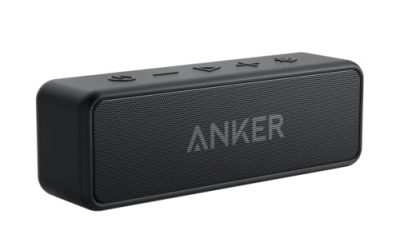
Anker Soundcore 2
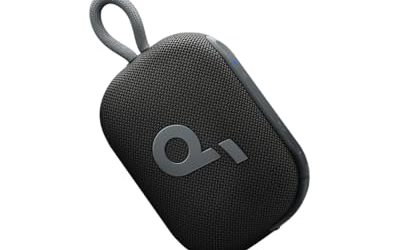
This compact speaker is aimed at buyers who want a dependable everyday unit without paying for extra features. The title promises 24-hour playtime, an IPX7 water code, 12W stereo output, wireless stereo pairing, BassUp and Bluetooth 6.
- Strength: the combination of a 24-hour battery claim and IPX7 protection covers travel, shower use and poolside listening.
- Strength: wireless stereo pairing lets you add a second unit later for a wider soundstage.
- Trade-off: 12W is modest, so a big backyard party will outgrow it.
Skip it if you want a speaker that shouts over crowds or doubles as a light show. It suits students, commuters and anyone who wants one small speaker to carry everywhere.
Monster S620
The S620 targets people who host outdoors and want a larger voice. The title lists 60W true wireless stereo, IPX8 waterproofing, dual pairing and Bluetooth 5.4, plus a portable outdoor build.
- Strength: IPX8 is the highest water code in this group, which is reassuring around pools and boats.
- Strength: Bluetooth 5.4 and dual pairing point to a modern, stable connection and a stereo-pair option.
- Trade-off: the title does not state battery hours, so runtime is a question mark.
Skip it if you need a pocketable speaker or a confirmed all-day battery figure. It fits patio hosts and beach groups who care more about volume than size.
Wilody 100W
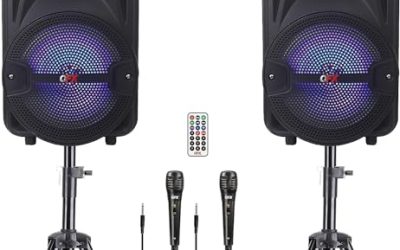
Wilody packs the longest feature list here: 100W claim, bass emphasis, IPX7, floatable body, 20H playtime, wireless charging, TWS and RGB lighting. It is built for party-minded buyers.
- Strength: floatable plus IPX7 makes it a sensible companion for lake and pool days.
- Strength: TWS pairing and wireless charging add flexibility few rivals list.
- Trade-off: the 100W figure is almost certainly a peak claim, and RGB lighting will drain the 20-hour battery faster.
Skip it if you prefer subtle design or a small footprint. It suits birthday gatherings, tailgates and anyone who likes visual effects.
ANCOON 80W Jobsite
This one is pitched at tradespeople and garage tinkerers. The title advertises an 80W (peak) output, bass, 20H runtime, a rugged shell, IPX6 waterproofing and a large size meant for work, outdoor and workshop settings.
- Strength: the rugged, large format suits dusty or noisy environments where a small speaker would be drowned out.
- Strength: IPX6 handles hosing off and heavy rain.
- Trade-off: IPX6 stops short of submersion, so it is not a pool or floating speaker.
Skip it if you want a travel speaker, since its size works against portability. It fits shop radios, patios and construction breaks, where a loud, tough box matters more than a refined sound signature.
JBL Go 4
The Go 4 is the smallest option here and the clearest choice for pocket carry. The title lists ultra-portable size, waterproof and dustproof protection, punchy bass and a 7-hour built-in battery.
- Strength: the dustproof and waterproof claim covers beach bags and hiking packs.
- Strength: a recognized audio brand brings a clearer support and warranty route.
- Trade-off: seven hours is the shortest battery claim in this roundup.
Skip it if you need long runtimes or room-filling volume. It suits commuters, travelers and anyone who wants a speaker small enough to forget in a jacket pocket.
20W IPX5 speaker (unbranded)
This listing leads with a 20W HD sound claim, IPX5 splash protection, up to 24 hours of playtime and TWS pairing. The title targets home, party, outdoor, camping and beach use.
- Strength: a 24-hour claim and TWS pairing give it more endurance than its small size suggests.
- Strength: 20W is a sensible mid-point between pocket speakers and large boxes.
- Trade-off: no brand name appears in the title, so support and long-term reliability are harder to judge.
Skip it if brand reputation matters or if you plan to submerge it. It suits budget buyers who want decent loudness for camping and casual gatherings.
IPX5 LED gift speaker (unbranded)
Marketed as a gift for office and travel, this listing offers up to 24H playtime, HD sound, IPX5 protection, an LED light and TWS pairing in a black finish.
- Strength: the 24-hour claim and TWS support match speakers that cost more.
- Strength: the LED light adds ambience for a desk, dorm or bedside table.
- Trade-off: the title gives no wattage or Bluetooth version, so you cannot compare output with rivals.
Skip it if you want measurable specs or serious volume. It fits gift-givers and office desks.
Which One Fits Your Situation
You want one speaker for travel and daily use
Pick the Anker Soundcore 2 for its balance of a 24-hour battery claim and IPX7 protection, or the JBL Go 4 if pocket size matters more than runtime. A traveler who charges nightly can live happily with seven hours, while someone camping for a weekend will want the longer figure.
You host outdoor get-togethers
The Monster S620 or the Wilody 100W gives you bigger claims and pairing options. Choose the S620 for IPX8 and a current Bluetooth version, and the Wilody for lights and wireless charging. If your gatherings are larger than a dozen people, plan on buying two matched units and using TWS pairing rather than relying on a single box.
You work in a garage or on job sites
The ANCOON 80W Jobsite is built for exactly that, with a rugged shell and IPX6 resilience against dust and hosing off.
You are buying a low-risk gift
The IPX5 LED gift speaker and the 20W IPX5 speaker keep the spend modest while offering 24-hour playtime claims, though the Soundcore 2 is the safer brand choice.
Common Mistakes
- Comparing peak wattage claims across brands as if they used the same measurement.
- Buying IPX5 for pool use, when IPX7 or IPX8 is the sensible minimum for submersion.
- Ignoring the battery figure and then discovering that lights and bass boost cut runtime sharply.
- Choosing a large speaker for commuting, where a compact model would actually get carried.
- Skipping pairing features, then wishing you could add a second speaker for stereo sound.
Related guides
- When I Turn On Record Game In Background On Gamebar. Gamebar Crashes, What Do I Do?
- How To Reduce Background Noise On A Streaming Microphone
- Poly Computer Accessories Company Streaming Evaluation
Frequently Asked Questions
Is a higher wattage number always louder?
No. Peak wattage claims depend on how the maker measures them, so a 100W listing may not outplay a well-built 20W speaker. Compare driver layout, body size and whether stereo pairing is available.
What does IPX7 actually protect against?
IPX7 covers temporary submersion in shallow water, so a drop in a pool is survivable. It does not mean the speaker is meant for daily swimming, and saltwater or soap should be rinsed off.
Can I pair two different speakers together?
Usually not. TWS and stereo pairing features typically work only between two identical units of the same brand and model, so buy a matched pair if stereo sound matters.
Which battery claim should I trust?
Treat any playtime figure as a best case at moderate volume with lights off. A 20H or 24H claim leaves room for real-world drop-off, while a 7-hour claim leaves less margin.