A cap of under 200 dollars for bookshelf speakers creates an awkward fork in the road. Spend it on a passive pair and you still need an amplifier or receiver, which can eat a big slice of the budget before a single note plays. Spend it on a powered pair and the amplifier is built in, but you give up the freedom to upgrade the electronics later. The decision behind the search “bookshelf speakers under 200” is not really which brand sounds best. It is whether your cap covers the whole system or only the speakers, and how much of the rest of your setup you already own.
This guide is for first-time stereo builders, desk listeners, and anyone replacing a worn-out pair of shelf speakers in a bedroom, office, or apartment living room. Seven models are compared below, ranging from a powered desktop monitor pair to passive designs from well-known and budget-focused makers. Everything here is judged from the specifications in the product titles, so treat it as a shortlist to confirm against the current listing, especially for whether a listing covers one speaker or a matched pair. A model that looks perfect in 2026 specs can still miss your cap once you add speaker wire or an amplifier.
Our Top Picks
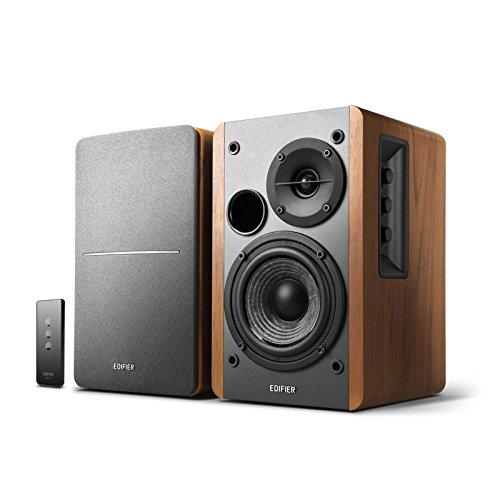 Edifier R1280T Powered Bookshelf Speakers -2.0 Near Field6.9 x 9.5 x 5.8 Inches10.8 PoundsCheck on Amazon

Top 3 picks at a glance
Quick Picks
As an Amazon Associate we earn from qualifying purchases at no extra cost to you.


| Product | Best for | Key spec from the title |
|---|---|---|
| Klipsch R-15M | Buyers who want an established brand in a pair | Bookshelf speaker, sold as a pair |
| Klipsch R-41M | Buyers stepping up within the Klipsch Reference line | Reference bookshelf speakers, pair, black |
| Edifier R1280T | Desk setups with no receiver | Powered 2.0, wooden enclosure, 42 watts |
| Pyle 6.5-inch 2-Way | Larger woofer on a tight budget | 6.5″ woofer, 1″ silk dome tweeter, 240W max |
| Pyle 5.25-inch 2-Way | Mid-size passive speaker for small rooms | 5.25″ woofer, 1″ silk dome tweeter, 200W max |
| Pyle 4-inch Mini Cube | Compact shelf and home theater sound | 4″ paper cone driver, 8 ohm, video shielding |
| Elimavi Passive | Entry-level passive with horn tweeter | 4″ woofer, 1″ silk horn tweeter, needs amplifier |
How to Choose
Decide between passive and powered before anything else
Passive speakers have no amplifier. They need a stereo receiver, an integrated amplifier, or a compact amp, and that component usually costs as much as the speakers themselves. Powered speakers such as the Edifier listing include the amplifier and accept input from a computer or phone directly. If you already own a receiver or an amp, passive models stretch your cap much further. If you do not, count the amplifier as part of the under-200-dollar budget, or the real total will land well above your target. This is the single most common reason a bargain shelf pair turns into an expensive project.
Treat watt ratings with suspicion
Several listings advertise 200W or 240W max power. Those figures describe the most input a speaker can handle before damage, not how loud it plays or how good it sounds. A speaker’s sensitivity and impedance tell you far more. The 8-ohm impedance listed on one model is a standard load that most receivers drive comfortably. Match your amplifier’s rated power per channel to the speaker’s capabilities rather than chasing the biggest number. A modest amp feeding a well-designed speaker usually beats an overpowered setup with weak drivers.
Look at driver size, tweeter type, and enclosure
Woofer sizes in this group run from 4 inches to 6.5 inches. Larger woofers generally reach lower, but they also need more shelf space and room to breathe. A 1-inch silk dome tweeter, listed on several models, is the common choice for smooth highs, while a horn-loaded tweeter shapes dispersion differently and can sound more forward. Enclosure material matters too: a wooden cabinet, as on the Edifier, resists resonance better than thin plastic. Binding posts, such as the gold-plated five-way type on the Pyle models, let you connect bare wire, banana plugs, or spade connectors, which makes setup easier.
Check the pair, the placement, and the cap
Some listings say “pair” in the title, while others describe a single product and leave quantity unclear. Confirm exactly what is included before you count costs. Placement is the next hurdle: a bookshelf speaker needs breathing room from the wall and ideally sits at ear height on a stand, not buried on a crowded shelf. Budget models usually cut corners on cabinet bracing, crossover quality, and grille attachment, so expect more coloration at high volume. For a desk, near-field designs reduce room effects. For a living room, a larger woofer helps fill the space.
The 7 Best Options
Klipsch R-15M
The title identifies this as a Klipsch R-15M bookshelf speaker sold as a pair. It is the best-known name on the list and a natural choice for anyone who prefers an established speaker brand over an unfamiliar one. Because the listing is spare, you will need to rely on the maker’s reputation and the model line.
- Strength: sold as a pair, so the quantity question is already settled.
- Strength: a recognized brand makes resale, replacement parts, and future matching speakers easier.
- Trade-off: it is passive, so an amplifier or receiver is a separate purchase that may strain your cap.
Skip it if you have no amplifier and want sound straight from a computer or phone.
Klipsch R-41M
The R-41M carries the Reference label and is sold as a pair in black. It sits one step up in the same family as the R-15M, which suits buyers who already lean toward Klipsch and want to see how far the cap stretches. Without specifications in the title, treat details as something to verify on the listing page.
- Strength: the Reference line positioning signals a more serious design than generic passive models.
- Strength: sold as a pair, in a neutral black finish that blends with most rooms.
- Trade-off: the listing says little beyond the model line, and an amplifier plus wire can push the total past the cap.
Skip it if you need a complete system for a single capped budget.
Edifier R1280T
This is the only powered pair in the group, described as a 2.0 active near-field studio monitor in a wooden enclosure with 42 watts of power. It is built for desks and small rooms where you want to plug in a source and hear music without buying extra gear. It suits students, home-office workers, and casual listeners.
- Strength: the built-in amplifier means no receiver is required.
- Strength: a wooden enclosure suggests better resonance control than plastic cabinets at this tier.
- Trade-off: 42 watts and a near-field design are best for desks and small rooms rather than large living spaces.
Skip it if you want to build around a receiver or plan to upgrade the amplifier later.
Pyle 6.5-inch 2-Way
This passive model lists a 6.5-inch composite woofer, a 1-inch silk dome tweeter, a 240W max rating, and gold-plated five-way binding posts. The woofer is the largest among the bookshelf-style entries here, which is the headline for buyers who want more low-end presence without moving to floor-standing speakers.
- Strength: the 6.5-inch woofer is the biggest in this comparison, suited to larger rooms.
- Strength: five-way binding posts accept several connector types for easy hookup.
- Trade-off: the max power rating is a ceiling, not a quality claim, and an external amplifier is required.
Skip it if shelf space is tight, since the larger cabinet needs room.
Pyle 5.25-inch 2-Way
A step smaller than its sibling, this passive speaker lists a 5.25-inch composite woofer, a 1-inch silk dome tweeter, a 200W max rating, and the same gold-plated five-way binding posts. It suits bedrooms and small living rooms where the 6.5-inch version feels oversized.
- Strength: a mid-size woofer balances bass reach with a manageable cabinet footprint.
- Strength: silk dome tweeter is the same smooth-treble design as the larger Pyle.
- Trade-off: it still requires an amplifier or receiver to make any sound.
Skip it if you want a powered, plug-and-play pair for a desk.
Pyle 4-inch Mini Cube
The smallest speaker here lists a 4-inch paper cone driver, 200W of power handling, 8-ohm impedance, and video shielding, with home theater and stereo applications. Video shielding matters if the speaker sits near a television, because it limits interference with the picture. It is a space-saver for small shelves and TV-adjacent placement.
- Strength: video shielding makes it a safer fit beside a TV.
- Strength: the small cube footprint fits cramped shelves and desks.
- Trade-off: a 4-inch driver will not reach as low as the 5.25-inch or 6.5-inch speakers.
Skip it if you want strong bass or fill for a large room.
Elimavi Passive Bookshelf Speakers
The title states plainly that a receiver or amplifier is required. It lists a 2-way design with a 4-inch woofer and a 1-inch silk horn tweeter. The honest labeling is helpful for newcomers who might otherwise assume the speakers work straight from a phone.
- Strength: the horn tweeter adds a distinct treble character compared with the dome designs.
- Strength: clear labeling avoids confusion about amplification.
- Trade-off: a 4-inch woofer limits bass, and the listing gives few other details to judge by.
Skip it if you do not own an amplifier or want a larger woofer.
Which One Fits Your Situation
You have nothing but a laptop and a desk
The Edifier R1280T is the only choice here that works without extra equipment. The built-in amplifier and near-field design are matched to desktop listening, and your whole budget goes to the speakers.
You already own a receiver and want a name brand
Choose the Klipsch R-15M, or the R-41M if your amplifier is capable and the cap allows. Both are sold as pairs and come from a maker with a long track record in shelf speakers.
You want the most woofer for the least outlay
The Pyle 6.5-inch 2-Way gives the largest driver on the list, with the Pyle 5.25-inch as a more compact alternative. Both assume you already have an amplifier.
Your speakers sit beside a television
The Pyle 4-inch Mini Cube lists video shielding and a small footprint, making it the practical option for a TV stand or tight media shelf.
Common Mistakes
- Forgetting the amplifier. Passive speakers do nothing alone, and the amp often costs as much as the pair.
- Buying on the max watt number. Power handling is a limit, not a measure of volume or quality.
- Assuming every listing is a pair. Verify quantity before comparing totals against the cap.
- Pushing the speakers against a wall or into a bookcase. Rear ports and boxed-in placement muddy the bass.
- Ignoring wire and stand costs. Cable and stands are small items that add up when the cap is tight.
Related guides
- When I Turn On Record Game In Background On Gamebar. Gamebar Crashes, What Do I Do?
- How To Reduce Background Noise On A Streaming Microphone
- Poly Computer Accessories Company Streaming Evaluation
Frequently Asked Questions
Do I need an amplifier for bookshelf speakers?
For passive models, yes: you need a receiver or an amplifier to drive them. Powered models such as the Edifier R1280T include one and connect directly to a source.
Is a bigger woofer always better?
Not always. A larger woofer reaches lower and fills bigger rooms, but it also needs more space and a capable amplifier. In a small room or on a desk, a smaller driver often sounds tighter and less boomy.
What does 8-ohm impedance mean?
Impedance describes the electrical load a speaker presents to the amplifier. Eight ohms is a common standard that most receivers drive without trouble, so it is a safe match for typical home amplifiers.
Can I put these speakers next to a television?
Magnets in unshielded speakers can interfere with older displays. A model that lists video shielding, such as the Pyle mini cube, is designed to avoid that, and modern flat panels are generally less sensitive.