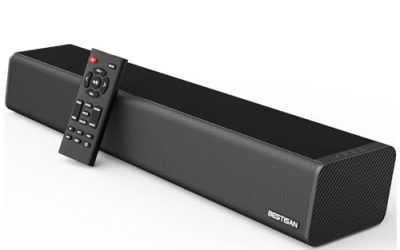
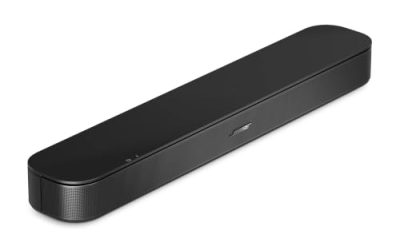
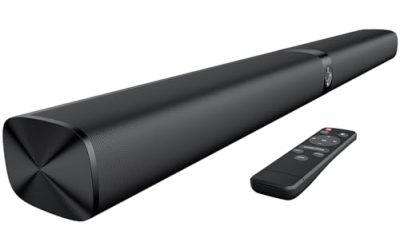
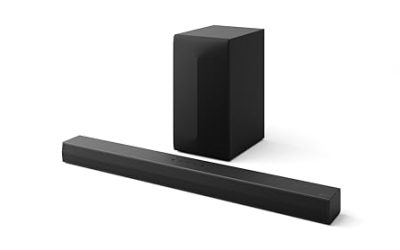
A home theater soundbar is a different purchase from a plain TV speaker upgrade. The keyword points at a bar that ships with a wireless or separate subwoofer and, in most cases, rear speakers, so the real decision is how many channels you want and how much floor space and cable routing you are willing to accept. A 2.1 bar is one slim box on the media console; a 5.1 or 7.1 package turns the living room into a small speaker project with satellites to place and power.
This guide is for buyers who watch movies and play console or PC games on a TV and want sound that moves behind the couch instead of just making dialogue louder. Everything below is judged from the listed specs of 2026 models, so use it to build a shortlist, then confirm your TV’s HDMI ARC or optical output and the distance from your seats to the nearest outlet before you order anything.
Our Top Picks
 LG S40TR 4.1 ch. Home Theater Soundbar with2.5 Inches3.4 x 28.4 x 2.5 inches12.9 PoundsCheck on Amazon


Top 3 picks at a glance

Quick Picks
As an Amazon Associate we earn from qualifying purchases at no extra cost to you.



| Product | Best for | Key spec from the title |
|---|---|---|
| LG S40TR | Entry-level true rear surround | 4.1 ch with rear speakers and wireless subwoofer |
| Sony HT-S40R | Simple 5.1 setup from a known brand | 5.1ch home theater system |
| LG S6FTR | Step-up 5.1 with TV integration | 5.1 ch, Dolby Audio, TV Synergy |
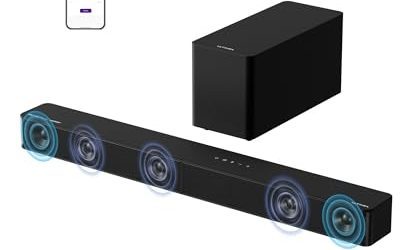
| ULTIMEA 7.1ch | Maximum speaker count | 7.1ch with 4 surround speakers, app control |
| Sony BRAVIA Theater System 6 | Object-based movie audio | 5.1ch, Dolby Atmos and DTS:X |
| ULTIMEA 5.1 | Adjustable surround placement | 320W peak power, app control |
| ULTIMEA 2.1ch | Small rooms and desk setups | Built-in subwoofer, 132W peak, Bluetooth 5.4 |
How to Choose
Channel count versus room layout
Channel numbers describe speaker count: the digit before the decimal is full-range speakers, the digit after is the subwoofer. A 4.1 or 5.1 system with real rear speakers needs a power outlet or a wire run behind the seating area, so measure that distance first. If your couch sits against a wall, a 2.1 bar with a built-in subwoofer is the realistic ceiling, and a 7.1 kit will only add clutter without adding believable rear sound.
Surround formats that matter
Dolby Audio is the baseline decoder. Dolby Atmos and DTS:X add height or object-based mixing and only pay off when the content carries those formats, such as many disc releases and premium streaming tiers. If you mostly watch sitcoms, sports, and YouTube, a plain Dolby Audio system covers you, and paying extra for object-based decoding would go unused for most of your viewing hours.
Connections you can verify
Look for HDMI ARC or eARC on the bar, because most current TVs expect it, then confirm optical and AUX as fallbacks for older sets and consoles. Bluetooth is convenient for phone music but adds latency, so keep game and video audio on a wired input. App control is a convenience for tweaking bass and treble, not a quality feature, so do not let it decide the purchase.
What to ignore and where budgets cut corners
Peak power wattage is a marketing figure and says little about clarity or distortion at volume. Budget bars often shrink the subwoofer driver and lean on virtual processing to imitate rear channels. Ignore stickers promising room-filling sound; compare channel type, decoders, input list, and whether the rear speakers are physical hardware or simulated by software.
The 7 Best Options
LG S40TR
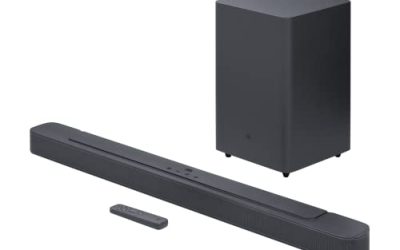
The S40TR is a 4.1 channel package with rear surround speakers and a wireless subwoofer, which makes it the most approachable way to get speakers physically behind you. The listing also names Dolby Audio, AI Sound Pro, and the WOW Interface for setup, so it targets buyers who want a guided, low-fuss installation in a medium living room.
- Strength: real rear speakers rather than purely virtual surround.
- Strength: wireless subwoofer keeps long cable runs out of the room.
- Trade-off: 4.1 means no dedicated center channel, so dialogue relies on the bar itself.
Skip it if you want Atmos or DTS:X, or if you cannot place two rear speakers within reach of power. Renters in open-plan rooms may also find the rear placement awkward, since the wire or power run has to look acceptable once the novelty wears off.
Sony HT-S40R
Sony’s HT-S40R is listed as a 5.1ch home theater soundbar system, so it targets buyers who want a full surround layout from a single brand without wading through a long feature list. The short title suggests a straightforward package for someone upgrading from built-in TV speakers who mainly cares about movie nights and does not plan to tinker with app menus.
- Strength: 5.1 channel layout with a dedicated subwoofer.
- Strength: a recognizable brand and an uncluttered spec sheet.
- Trade-off: the listing names no advanced formats such as Atmos, so check the manual for decoders.
Skip it if you want a long list of smart features, app-based tuning, or object-based audio. Buyers who plan to push the system with a gaming console should also verify the input list, because the title mentions none.
LG S6FTR
The S6FTR moves up to 5.1 channels with Dolby Audio, rear speakers, a wireless subwoofer, and TV Synergy, a feature meant to tie the bar to compatible LG televisions. It suits buyers already living in that ecosystem who would like one remote and a clean on-screen setup rather than a separate learning curve for a new brand.
- Strength: 5.1 layout with wireless rear and bass components named in the title.
- Strength: AI Sound Pro and the WOW Interface for adjustments.
- Trade-off: TV Synergy only helps if your television supports it.
Skip it if your TV is another brand and you want Atmos-level height effects. Without a compatible set, the TV Synergy line in the title is simply unused, and the money is better spent on a format-rich alternative.
ULTIMEA 7.1ch
This ULTIMEA kit lists 7.1 channels, a subwoofer, and four surround speakers, with optical, AUX, and Bluetooth inputs plus app control. It carries the highest speaker count in the group and is aimed at buyers who want the fullest layout on paper and are comfortable positioning several satellites around a bigger room.
- Strength: four surround speakers for wide coverage across several seats.
- Strength: app control and a useful spread of input types.
- Trade-off: the title says virtual surround, so channel numbers describe processing as much as hardware.
Skip it if you dislike running wires to four satellite speakers or want premium brand tuning. A small room will also leave most of those speakers with little to do, so match the layout to your actual square footage.
Sony BRAVIA Theater System 6
The Theater System 6 is a 5.1ch package with a subwoofer, rear speakers, a center channel, Dolby Atmos, DTS:X, and Bluetooth. It is the most format-rich option here and fits buyers who stream films and want the decoder list to match what premium releases carry, with a dedicated center speaker handling speech.
- Strength: Atmos and DTS:X support named in the title.
- Strength: dedicated center channel for dialogue.
- Trade-off: it sits in the premium tier, so the spend is higher than the compact picks.
Skip it if you mostly watch broadcast TV and never touch content with object-based audio. Anyone sensitive to spend should also compare it with the mid-range 5.1 options, since the extra cost buys decoders rather than extra speakers.
ULTIMEA 5.1
This is a 5.1 virtual surround bar for smart TVs with a listed 320W peak power, adjustable surround speakers, and a subwoofer, plus app control. The adjustable placement helps in awkward rooms where a straight line of speakers is not an option, such as open-plan apartments or L-shaped lounges.
- Strength: adjustable surround speakers for irregular layouts.
- Strength: app control for quick tweaks from the couch.
- Trade-off: peak wattage is a marketing figure, not a guarantee of clean volume.
Skip it if you want a recognized-brand ecosystem or Atmos decoding. Because the surround is virtual, buyers who expect pinpoint rear effects should keep expectations modest and focus on how well it fills a typical living room.
ULTIMEA 2.1ch
The 2.1ch model has a built-in subwoofer, a listed 132W peak power, a 16 inch body, and Bluetooth 5.4, and the title says it works with a PC. It is the compact choice for desks, dorms, and bedrooms where a full surround kit would be absurd, and it doubles as a computer speaker.
- Strength: tiny footprint with no separate subwoofer to place.
- Strength: Bluetooth 5.4 and PC use make it flexible.
- Trade-off: only 2.1 channels, so there are no rear speakers at all.
Skip it if the goal is true home theater surround in a living room. It also makes little sense for a big open space, where a single compact bar will struggle to cover every seat evenly.
Which One Fits Your Situation
Living room with a couch against the wall
Go with the ULTIMEA 2.1ch or the LG S40TR. The 2.1 keeps everything in front and avoids rear wiring, while the S40TR is the lighter way to add rear speakers if you can run power behind the seats.
Movie nights with streaming and discs
The Sony BRAVIA Theater System 6 is the logical pick because it names Dolby Atmos, DTS:X, and a center channel, which is what dialogue-heavy films and big action mixes reward.
You own an LG television
The LG S6FTR pairs with the TV Synergy feature named in its title and gives you a 5.1 layout in one purchase, with a setup interface designed to feel familiar.
Large room, many seats
The ULTIMEA 7.1ch spreads four surround speakers around the room, so more seats get rear sound instead of only the center sweet spot.
Common Mistakes
- Buying on peak wattage instead of channel layout and decoders.
- Ignoring where rear speakers will physically sit and how power reaches them.
- Expecting Atmos from a bar whose listing names only Dolby Audio.
- Streaming game audio over Bluetooth and then blaming the bar for lag.
- Skipping the check for HDMI ARC or optical output on the TV before ordering.
Related guides
- When I Turn On Record Game In Background On Gamebar. Gamebar Crashes, What Do I Do?
- How To Reduce Background Noise On A Streaming Microphone
- Poly Computer Accessories Company Streaming Evaluation
Frequently Asked Questions
Do I need rear speakers?
They are what separate a home theater package from a bar that simulates width. If your seating allows it, rear speakers make a noticeable difference in movies and games. If not, a 2.1 bar is more honest about its limits.
Is a 7.1 system better than 5.1?
Not automatically. More channels help in large rooms, but most source material is mixed for 5.1, and virtual processing can blur the extras. Judge the hardware you can actually place.
What connection should I use?
HDMI ARC or eARC is usually the cleanest path, with optical as a fallback. Use Bluetooth for music, not for video sync, because the added delay shows up in dialogue.
Are budget soundbars worth it?
For small rooms and casual viewing, yes, especially for dialogue clarity. They tend to cut corners on subwoofer depth and surround realism, so set expectations accordingly and prioritize inputs and layout.