Choosing a JBL soundbar is rarely about the brand alone. The lineup runs from a compact two-channel bar that simply replaces weak TV speakers to a seven-piece Dolby Atmos system with detachable rear speakers, and the gap between those extremes is wide. The real decision is how much of your room you want the bar to fill: a stereo upgrade for a bedroom, a 5.0 or 5.1 setup for a living room, or a full surround rig that behaves like a small home theater.
This guide is for buyers who already settled on JBL and want to sort the models by channel count, subwoofer type, and surround format before spending anything. Everything below is based on the listed specs in each product title, and the picks follow the room and the content you watch rather than the biggest wattage number. In 2026 most TVs ship with HDMI ARC or eARC, so the fit question has shifted from “will it connect” to “will it match my room.”
Our Top Picks

Top 3 picks at a glance
Quick Picks
As an Amazon Associate we earn from qualifying purchases at no extra cost to you.


| Product | Best for | Key spec from the title |
|---|---|---|
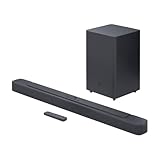
| JBL Bar 2.1 Deep Bass (MK2) | Bass-first TV upgrade | 2.1 channel, wireless 6.5-inch subwoofer, 300W max output |
| JBL Bar 2.0 All-in-one (MK2) | Small rooms and desks | Compact 2.0 channel design |
| JBL Bar 500MK2 | Mid-size living rooms | 5.1 channel, Dolby Atmos, 750W with 10-inch sub |
| JBL Bar 300MK2 | Atmos without a separate sub | 5.0 channel all-in-one, Dolby Atmos, MultiBeam 3.0 |
| JBL Bar 700 | Real rear speakers on a mid-range budget | 5.1 channel, detachable surround speakers, Dolby Atmos |
| JBL Bar 1000MK2 | Large rooms and movie nights | 7.1.4 channel, Dolby Atmos and DTS:X, 480W RMS with 10-inch sub |
| JBL Bar 1300XMK2 | Flagship-level home theater | Detachable Bluetooth surrounds, wireless 12-inch sub, DTS:X |
How to Choose
Match the channel count to the room
A 2.0 bar produces left and right sound and nothing else, which is fine for dialogue clarity in a bedroom. A 2.1 bar adds a subwoofer for bass. Moving to 5.0 or 5.1 adds center and side channels, and the 7.1.4 layout adds rear and height channels. As a rough guide, rooms under about 150 square feet rarely benefit from more than 5.1, while larger rooms with a back wall for rear speakers can justify the bigger systems.
Decide on subwoofer size and type
The titles list subwoofers at 6.5, 10, and 12 inches. A 6.5-inch wireless sub fits an apartment and keeps neighbors calmer; 10 to 12 inches reach lower but need floor space and a power outlet. Models called all-in-one skip the separate sub entirely, which saves space but limits low-end punch.
Check the surround formats
Dolby Atmos adds overhead effects and is common across the midrange and up. DTS:X appears on the larger models and matters mainly if your discs or streaming apps carry it. If you mostly watch broadcast TV, a format checklist is less important than a clean center channel for voices, which is what the PureVoice feature in the titles targets.
Look at the connection and app support
Confirm your TV has an HDMI ARC or eARC port, because that single cable carries audio back to the bar and lets one remote control volume. Models that mention the ONE app and voice assistant support add room calibration and streaming, but you can ignore those if you only want plug-and-play. Peak wattage numbers are measured differently across products, so compare RMS figures where given and treat max output as marketing shorthand.
The 7 Best Options
JBL Bar 2.1 Deep Bass (MK2)
This is the entry point for buyers who want real bass without building a surround system. The title lists a 2.1 channel layout, a wireless 6.5-inch subwoofer, 300W max output, and Bluetooth. That combination suits a bedroom or small living room where a bar-only setup sounds thin and where a long cable run across the floor would be a nuisance. It is the sensible first step up from TV speakers when movies and music both matter.
- Strength: a wireless subwoofer means no cable run across the floor.
- Strength: Bluetooth lets you stream music without touching the TV.
- Trade-off: stereo layout only, so no Atmos height effects or true surround.
Skip it if you want movie-style overhead effects or live in a large open room.
JBL Bar 2.0 All-in-one (MK2)
The simplest model in the group, listed as a compact 2.0 channel soundbar. It targets shelves, small TV stands, and desks where a separate sub would be clutter. Buyers upgrading from built-in TV speakers should notice mostly clearer voices and a wider stereo spread, and the one-piece form means almost nothing to arrange. It makes sense for a guest room, a dorm, or a secondary TV that sees light use.
- Strength: compact footprint fits tight furniture.
- Strength: one-piece design means a quick setup.
- Trade-off: no subwoofer, so low bass is limited by the bar size.
Skip it if you watch action films at volume or want a room-filling presence.
JBL Bar 500MK2
The 500MK2 is a 5.1 channel system with Dolby Atmos, MultiBeam 3.0, PureVoice 2.0, and a 750W total with a 10-inch subwoofer. It is a strong match for a medium living room where you want movies to feel wider than the TV itself. Easy Sound Calibration is listed, which helps adapt the output to the room instead of leaving you to guess at settings.
- Strength: Atmos plus a large 10-inch sub in one package.
- Strength: the calibration feature helps tune placement.
- Trade-off: no detachable rear speakers, so surround is virtual rather than physical.
Skip it if you have a very small room or want real rear speakers.
JBL Bar 300MK2
A 5.0 channel all-in-one with Dolby Atmos, MultiBeam 3.0, PureVoice 2.0, and the ONE app. It is meant for people who want spatial effects from a single bar without adding a subwoofer, and voice assistant compatibility appears in the title as well. In a compact living room or a bedroom with a mounted TV, it delivers a wider soundstage while keeping the setup to a single device and a single cable.
- Strength: Atmos support in a single, clutter-free bar.
- Strength: app control and room calibration are listed.
- Trade-off: no separate sub, so deep bass is lighter than the 500MK2.
Skip it if low-end rumble matters more to you than a tidy setup.
JBL Bar 700
The Bar 700 is a 5.1 channel bar with detachable surround speakers and Dolby Atmos. Detachable rears are its signature: you place real speakers behind the couch rather than relying on wall reflections. It suits living rooms with a layout that allows rear placement, and it is the logical pick for buyers who read about virtual surround and still want physical speakers behind them without jumping to the largest system.
- Strength: physical surround speakers improve rear imaging.
- Strength: Dolby Atmos support across the system.
- Trade-off: the rears need positioning, which adds fuss compared with a single bar.
Skip it if the couch sits against a wall with no space for rear units.
JBL Bar 1000MK2
This 7.1.4 channel system pairs detachable surround speakers with MultiBeam 3.0, Dolby Atmos, DTS:X, and 480W RMS with a 10-inch sub. It is aimed at larger rooms and movie lovers who want height effects and physical rears together. The RMS figure in the title is a more meaningful power number than a peak rating, which makes comparisons with other systems easier for buyers who care about headroom.
- Strength: both Atmos and DTS:X are listed.
- Strength: RMS output is stated, a more honest power figure.
- Trade-off: more pieces mean more setup and more floor space.
Skip it for small rooms, where the extra channels will go unused.
JBL Bar 1300XMK2
The top model in this group, listed with Dolby Atmos, detachable speakers, a wireless 12-inch subwoofer, DTS:X 3D audio, and portable Bluetooth surrounds. The detachable surrounds can double as portable speakers, a rare extra at this level that makes the system more flexible than a fixed home theater. It belongs in a big, dedicated room with a large TV and a buyer ready to place several components properly.
- Strength: the largest listed subwoofer in the lineup at 12 inches.
- Strength: removable Bluetooth surrounds add flexibility beyond the TV.
- Trade-off: a premium-tier choice that only pays off in a large space.
Skip it if you share a small apartment or rarely turn the volume up.
Which One Fits Your Situation
You live in an apartment and want fewer cables
The JBL Bar 2.1 Deep Bass (MK2) gives you a wireless sub without a surround-speaker maze, which keeps the setup simple and neighbors happier at night. If space is even tighter, the JBL Bar 2.0 All-in-one is the fallback, since it needs only a shelf and a single connection to the TV.
You want Atmos but hate clutter
The JBL Bar 300MK2 delivers Dolby Atmos from one bar and avoids extra speakers on the floor. Step up to the JBL Bar 500MK2 if you later decide that a real 10-inch subwoofer is worth the additional box in the living room.
You want real rear speakers
The JBL Bar 700 is the entry route to physical surrounds with Dolby Atmos support. The JBL Bar 1000MK2 goes further, with height channels, DTS:X, and a bigger sub, and fits wider rooms with proper rear placement options.
You are building the full home theater
The JBL Bar 1300XMK2 is the choice when the room is large, the TV is big, and the portability of the surround speakers matters. Pair that with a TV that has eARC, and the system becomes a single-remote setup.
Common Mistakes
- Buying on watt numbers alone without checking whether the figure is max output or RMS.
- Choosing a 7.1.4 system for a small room that cannot place the rear speakers.
- Forgetting to check that the TV has an HDMI ARC or eARC port.
- Expecting an all-in-one bar to match the bass of a model with a 10 or 12-inch subwoofer.
- Placing the subwoofer in a tight corner, which usually makes the bass boomy rather than tight.
Related guides
- When I Turn On Record Game In Background On Gamebar. Gamebar Crashes, What Do I Do?
- How To Reduce Background Noise On A Streaming Microphone
- Poly Computer Accessories Company Streaming Evaluation
Frequently Asked Questions
Do I need Dolby Atmos?
Not for everyday TV. Atmos helps with movies and streaming shows that carry it, adding overhead effects, but a good stereo or 2.1 bar already improves on built-in TV speakers.
Is a separate subwoofer worth it?
If you watch action films or listen to music, yes. The listed 6.5, 10, and 12-inch subs extend the low end far beyond what a slim bar can reproduce, though they do need floor space.
Can I use these with a gaming console?
Generally yes, through the same HDMI ARC or eARC connection as the TV. Plan on the console feeding the TV, which then sends audio to the bar, rather than expecting a direct input.
Which model suits a small room best?
The compact JBL Bar 2.0 All-in-one or the JBL Bar 2.1 Deep Bass (MK2), depending on whether you want a subwoofer. Larger Atmos systems are overkill for tight spaces.