Powered bookshelf speakers answer a simple question: how do you get real stereo sound on a desk, a shelf, or beside a TV without buying a separate amplifier? The amplifier lives inside one of the two cabinets, so you connect a source, plug in power, and play. The catch is that every cabinet in this category makes a different trade between inputs, power, size, and tuning, which is why the decision comes down to what you will plug in and where the speakers will sit.
This guide is for desktop listeners, record-player owners, and TV audio upgraders shopping in 2026 who want a pair that works out of the box. The eight listings below include three Edifier studio-style monitors, two Saiyin Bluetooth pairs, a pair of Klipsch powered models, and a compact desktop set, so you can weigh wooden cabinets and horn tweeters against budget wattage and wireless convenience.
Our Top Picks
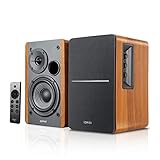
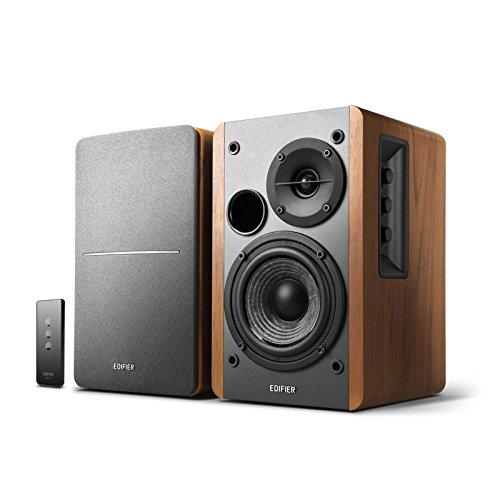 Edifier R1280T Powered Bookshelf Speakers -2.0 Near Field6.9 x 9.5 x 5.8 Inches10.8 PoundsCheck on Amazon
Top 3 picks at a glance
Quick Picks
As an Amazon Associate we earn from qualifying purchases at no extra cost to you.





| Product | Best for | Key spec from the title |
|---|---|---|
| Edifier R1280T | Wired desktop listening | 42 watts, wooden enclosure |
| Saiyin 40W x 2 | TV and turntable setups | 4 inch woofer, sub out, optical |
| Klipsch Reference R-40PM | Detailed, dynamic sound | Tractrix horn, linear travel suspension |
| NSY Audio 60W | PC and phone use | Bluetooth 5.3, USB-C, AUX, RCA |
| Edifier R1280DBs | Wireless plus optical | Bluetooth, optical input, 42W RMS |
| Saiyin 30W x 2 | Small rooms | 3.75 inch woofer, Bluetooth, optical |
| Klipsch R-51PM | Bluetooth convenience | Powered Bluetooth speaker |
| Edifier R1280Ts | Adding a subwoofer later | 42W RMS, subwoofer line out |
How to Choose
Match the inputs to your sources
List every device you want to connect before you compare cabinets. RCA covers turntables with a preamp and most media players, optical suits TVs and many consoles, 3.5mm AUX covers phones and laptops, and Bluetooth covers wireless streaming. A pair with only RCA input cannot take a TV optical feed without an adapter. Check that the speaker you pick has at least one input you will use daily, not just one that sounds good on the spec sheet.
Read watts as headroom, not loudness
Figures such as 42W RMS or 40W per channel describe how much power the built-in amplifier can deliver. For a desk, 20 to 40 watts per channel is usually plenty. Larger rooms or open-plan spaces benefit from more headroom, but the speaker driver size matters just as much. A 4 inch woofer will not shake a living room regardless of its wattage number, and RMS ratings are more meaningful than peak numbers. A modest, clean amplifier will sound better at normal volume than an overdriven high-wattage one, so do not chase the largest figure on the page.
Consider driver size and cabinet material
Woofer sizes in this group run from 3.75 inches up. Bigger cones move more air and give fuller bass, but they need more shelf depth. Wooden enclosures, like the ones described for the Edifier models, tend to resonate less than thin plastic. Cabinets that are too small will sound thin without a subwoofer, so look for a sub out if you want to expand later.
Plan for the placement of the powered cabinet
Only one speaker connects to the wall, and a cable runs from it to its partner. Measure how far apart you will place the pair and compare it with the included cable. Where budget models cut corners: connector quality, volume knob smoothness, hiss at idle, and the length of the speaker cable between the two cabinets.
The 8 Best Options
Edifier R1280T
The R1280T is the classic wired desktop pair. The title describes a 2.0 near field studio monitor with a wooden enclosure and 42 watts. It suits listeners who sit close to the speakers, such as people at a desk, and who value tidy stereo imaging over wireless convenience. Think of a writer, programmer, or video editor who spends eight hours a day at a screen and wants neutral, fatigue-free sound at modest volume.
- Strength: a wooden enclosure helps keep the cabinet from adding unwanted coloration.
- Strength: a studio monitor style suits near-field desk placement.
- Trade-off: the title lists no Bluetooth, so streaming needs a separate receiver.
Skip it if you want wireless streaming built in, or if you need a subwoofer connection.
Saiyin 40W x 2 Bluetooth Bookshelf Speakers
This larger Saiyin pair offers 40 watts per channel, a 4 inch woofer, and a long input list: Bluetooth, optical, auxiliary, RCA, and a subwoofer out. It names TV, turntable, record player, and PC use in the title, making it a good family-room utility pair. A subwoofer output lets you add bass later. For a shared living space where the same pair must serve movie night, a vinyl hour, and background playlists, this is the sort of flexible utility speaker that avoids a second purchase.
- Strength: the input list covers almost every common source.
- Strength: the sub out gives you an upgrade path.
- Trade-off: the brand is less established than Edifier or Klipsch.
Skip it if you want a proven brand and long-term support.
Klipsch Reference R-40PM
Klipsch is known for horn-loaded tweeters, and this model’s title highlights a 90-degree by 90-degree Tractrix horn and linear travel suspension, with a sleek modern look. It targets listeners who want a lively, detailed presentation and a more premium feel than typical computer speakers. Buyers who already own good headphones and want that same sense of clarity from speakers in a quiet room are the likely audience, and the horn design keeps the focus on directional, precise imaging.
- Strength: a Tractrix horn is designed to deliver high frequencies efficiently.
- Strength: a sleek design looks at home on a shelf or media console.
- Trade-off: the title lists no input types, so check ports before buying.
Skip it if you prefer a warm, relaxed sound, since horn designs can be bright.
NSY Audio Powered Computer Speakers 60W
NSY packs 60 watts, Bluetooth 5.3, USB-C, AUX, and RCA inputs into a black desktop pair. The title calls out computer and music use, which suggests a compact stereo for a desk or small studio apartment. It is the modern-connection pick for people who stream from phones and laptops. A student or remote worker who switches between a laptop on weekdays and a phone playlist on weekends can leave these connected and move between sources without swapping cables.
- Strength: Bluetooth 5.3 and USB-C cover current devices.
- Strength: 60 watts is the highest figure in this group.
- Trade-off: it is an unfamiliar brand with thin track record.
Skip it if you want a known name or an optical input for a TV.
Edifier R1280DBs
The DBs adds Bluetooth, an optical input, and a subwoofer line out to the R1280 formula, with 42W RMS and a wood grain finish. It fits a buyer who wants wireless streaming and a TV connection from one speaker pair, with room to add a sub later. If the speakers will sit beside a TV and also serve as a desktop pair when the family is out, the mix of inputs removes most cabling headaches.
- Strength: optical input suits TV and console connections.
- Strength: Bluetooth plus a sub out gives broad flexibility.
- Trade-off: the speaker is listed as a wireless studio monitor but still needs a power cable.
Skip it if you only need a single wired input and want to save money.
Saiyin 30W x 2 Bluetooth Bookshelf Speakers
The smaller Saiyin reduces power to 30 watts per channel and the woofer to 3.75 inches, but keeps Bluetooth, optical, auxiliary, and RCA inputs. It suits bedrooms, dorms, and compact desks, where space matters more than raw volume. A smaller cabinet also sits more easily on a crowded nightstand or a narrow shelf, and the lower wattage is less likely to bother neighbors through a thin wall.
- Strength: it keeps the full input set in a smaller cabinet.
- Strength: it is a practical turntable or TV companion.
- Trade-off: no subwoofer output is listed, so bass is limited.
Skip it if you need to fill a large living room.
Klipsch R-51PM
The R-51PM is described simply as a powered Bluetooth speaker in black. The short title gives little detail, but the Klipsch name and powered Bluetooth design point to a premium wireless pair. It suits buyers who stream music and want a recognized audio brand. Because the listing is so brief, treat it as a candidate to confirm against the manufacturer’s page for inputs, power, and cabinet size before you commit to a place for it in your room.
- Strength: a known audio brand with a powered design.
- Strength: Bluetooth support lets you stream without cables.
- Trade-off: the title lists no inputs or wattage, so details must be confirmed.
Skip it if you want published power figures up front.
Edifier R1280Ts
This updated 2.0 stereo active monitor lists 42W RMS and a subwoofer line out. It suits buyers who want the R1280 sound but plan to add a sub later, or who simply value a conventional wired design that is easy to understand. It makes sense in a studio corner or a home office where one wired source feeds the speakers and nothing else needs to connect.
- Strength: a subwoofer output expands the system.
- Strength: active near field monitors suit desk setups.
- Trade-off: no Bluetooth or optical input is named.
Skip it if you stream from a phone.
Which One Fits Your Situation
A desk with a PC and a record player
The Saiyin 40W x 2 handles both through RCA and offers extra inputs, so it covers the combination best.
A TV with an optical output
The Edifier R1280DBs gives you optical input, Bluetooth, and a subwoofer out in one pair.
A listener who wants lively, detailed sound
The Klipsch R-40PM is the pick if you want a horn-loaded presentation and a premium look.
A phone-first apartment setup
The NSY Audio 60W with Bluetooth 5.3 and USB-C is the easiest fit for streaming from modern devices.
Common Mistakes
- Buying for wattage alone and ignoring woofer size.
- Forgetting that a turntable needs a phono preamp unless the speaker has one.
- Choosing a pair without the input you use every day, such as optical for TV.
- Leaving too little distance between the two speakers for the included cable.
- Placing speakers against a wall without leaving room for the rear port.
Related guides
- When I Turn On Record Game In Background On Gamebar. Gamebar Crashes, What Do I Do?
- How To Reduce Background Noise On A Streaming Microphone
- Poly Computer Accessories Company Streaming Evaluation
Frequently Asked Questions
What does powered mean for bookshelf speakers?
The amplifier is built into one cabinet, so you do not need a separate receiver. You connect your source directly and plug the speakers into the wall.
Do I need a subwoofer?
Not for desk listening. Small cabinets lose deep bass, so a sub out is helpful for movies and bass-heavy music.
Can I connect a TV?
Yes, if the speaker has an optical or compatible input and your TV has a matching output. Check ports before you buy.
Is Bluetooth good enough for music?
For casual listening, yes. A wired RCA or optical connection avoids compression and tends to be more stable.