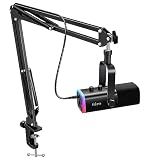
The best microphones for acoustic guitars on a streaming or recording PC are small-diaphragm condensers such as the Rode M5 matched pair and the AKG P170, because they capture the pick attack and body of the guitar without the boom of a large vocal mic. If you want plug-and-play USB, the Audio-Technica AT2020USB-X or the Rode NT1 5th Generation skips the audio interface. How you place the mic and treat the room matters as much as the model you buy.
Our Top Picks
 Audio-Technica AT2020 Cardioid Condenser Studio XLR Microphone09.6 x 9.6 x 2.6 inches1.3 poundsCheck on Amazon
 Audio-Technica AT2020 Cardioid Condenser Microphone Bundle with XLR18 x 11 x 6.25 inchesCheck on Amazon
 Audio-Technica AT2020USB+ Cardioid Condenser USB MicrophoneBlack6.4 x 2 x 2 inches2.34 poundsCheck on Amazon

As an Amazon Associate we earn from qualifying purchases at no extra cost to you.
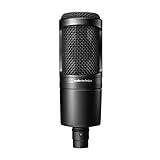


Top 3 picks at a glance
Key takeaways
- XLR condenser microphones need an audio interface with 48 V phantom power; USB microphones plug straight into the PC.
- Aim a small-diaphragm cardioid mic at the 12th fret or where the neck meets the body, roughly 6 to 12 inches away, then adjust by ear.
- Do not use a voice noise-suppression filter on guitar; it can chop sustained notes. Use a gentle gate or fix the room noise instead.
- For stereo, two matched mics are one pair of ears; keep the second mic at least three times as far from the first as it is from the guitar.
Quick Comparison: Best Microphones for Acoustic Guitars
| Microphone | Type | Connection | Best setup | Price tier |
|---|---|---|---|---|
| Rode M5 (matched pair) | Small-diaphragm condenser, cardioid | XLR | Stereo recording of one guitar | Mid |
| AKG P170 | Small-diaphragm condenser, switchable attenuation | XLR | Single-mic recording on a budget | Low to mid |
| Shure SM81-LC | Cardioid condenser for instruments | XLR | Gigging and studio use, loud sources | Upper |
| Behringer C-2 (matched pair) | Small-diaphragm condenser, cardioid | XLR | Lowest-cost stereo pair | Low |
| Rode NT1 5th Generation | Large-diaphragm condenser | XLR and USB-C | Vocals plus guitar for streamers | Mid to upper |
| Audio-Technica AT2020USB-X | Large-diaphragm condenser, USB | USB-C | Plug-and-play streaming | Mid |
| Shure SM57 | Dynamic, cardioid | XLR | Noisy rooms and close miking | Low to mid |
Why Acoustic Guitar Is Harder to Record Than It Sounds
An acoustic guitar is a big resonating box with sound coming from the soundhole, the top, and the strings at the same time. A microphone placed in one spot hears only one version of that sound. Point it at the soundhole and you hear boomy low end; point it at the bridge and you hear thin, bright detail. The sweet spot is usually in between, and finding it is part of recording.
For a gaming or streaming PC the problem has extra layers. A computer fan, a mechanical keyboard, a monitor buzz, and room echo all arrive in the microphone at the same time as the guitar. A mic with a tight pickup pattern and a quiet signal path helps, but so does physical placement and a few simple room fixes.
How We Chose These Microphones
This is a research-based guide. We did not record with these microphones ourselves. Picks come from maker specification pages, retailer listings, and published reviews in music and recording magazines. Where a listing gives a number (capsule size, self-noise, sample rate), we use it. We favoured microphones that:
- Have a cardioid or similar pattern, so the room is rejected better than the guitar.
- Come from brands with a long record of use on acoustic guitar.
- Cover a range from matched pairs for stereo to USB mics for plug-and-play streaming.
- Are easy to mount on a standard stand or boom arm.
Small-Diaphragm vs Large-Diaphragm vs Dynamic for Guitar
| Type | Sound on acoustic guitar | Room pickup | Needs phantom power | Best use |
|---|---|---|---|---|
| Small-diaphragm condenser | Fast, detailed, natural attack | Moderate with cardioid | Yes (48 V) | Studio and stream recording of the guitar |
| Large-diaphragm condenser | Fuller, warmer, flattering | Higher; picks up more room | Yes (48 V), or USB | Voice and guitar from one mic |
| Dynamic | Focused, less detail, less room noise | Low | No | Noisy rooms, close miking, live |
Small-diaphragm condensers are the usual first choice because their light capsule responds quickly to the guitar’s attack. Large-diaphragm models are warmer but also hear more of the room. Dynamic microphones reject a noisy room best but give up high-frequency detail.
1. Rode M5 Matched Pair: Best Stereo Pair for One Guitar
- Compact 1/2 inch condenser capsules, cardioid
- Sold as a matched pair with WS5 windscreens, per the listing
- XLR outputs; needs 48 V phantom power
- Listing quotes 19 dB-A self-noise for the M5 pencil mic pair
Best for: Players who want a stereo image of one guitar, such as one mic aimed at the 12th fret and one near the bridge. Matched pairs give consistent sound between the two channels, which makes stereo recording easier.
Skip if: You only need one mic or have a single-input interface. A pair needs two interface channels.
Pros:
- Matched capsules for stereo work
- Small and easy to place near the guitar
- Windscreens included
- Strong value for a matched pair
Cons:
- Needs a two-channel interface with phantom power
- Pencil mics can sound thin on very bright guitars
2. AKG P170: Best Budget Single Mic
- All-metal small-diaphragm condenser
- Switchable attenuation (pad) for loud sources, per the maker
- XLR connection, 48 V phantom power
- Instrument-focused design
Best for: A first condenser for acoustic guitar. It is simple, affordable, and the pad switch lets you handle strong strumming without distortion.
Skip if: You want a stereo pair out of the box, or a particularly warm, flattering tone.
Pros:
- Low cost and rugged metal body
- Attenuation switch for loud passages
- Easy to place
Cons:
- Single mic only, so stereo needs two purchases
- Not as warm as large-diaphragm designs
3. Shure SM81-LC: Best for Gigging and Loud Strumming
- Cardioid condenser instrument microphone
- Listed for guitar, piano and cymbals
- Includes a swivel adapter
- XLR; needs 48 V phantom power
Best for: Players who record and perform with the same microphone. The SM81 is a long-standing choice for instruments, and its listing describes it as suited to loud sources.
Skip if: You are on a tight budget. It costs several times more than entry-level small-diaphragm mics.
Pros:
- Trusted, proven design for instruments
- Handles loud strumming well, per Shure
- Rugged and consistent
Cons:
- High price for one mic
- Needs an interface with phantom power
4. Behringer C-2 Matched Pair: Best Lowest-Cost Stereo Pair
- Small-diaphragm cardioid condensers, matched pair
- 20 Hz to 20 kHz response, per the listing
- XLR; 48 V phantom power
- Sold in several bundles with cables and stands
Best for: A beginner who wants to try stereo recording without spending much. It lets you learn mic placement before investing in better mics.
Skip if: You want a refined tone or a long-term mic you will not replace. Entry-level capsules cannot match higher-end models.
Pros:
- Matched pair at a very low cost
- Bundles with cables available
- Good learning tool
Cons:
- Build and noise performance trail premium mics
- May sound thin or bright on some guitars
5. Rode NT1 5th Generation: Best Hybrid XLR and USB Mic for Voice and Guitar
- Large-diaphragm studio condenser
- XLR and USB-C outputs in one mic, per the listing
- Ultra-low noise capsule, per the maker
- Shock mount and pop filter in the box
Best for: Streamers who sing and play. You can start with USB-C and move to XLR later when you buy an interface, so the mic grows with the setup.
Skip if: Your room is echoey. Large-diaphragm mics pick up more of the room than small cardioid pencil mics.
Pros:
- Two connection types in one mic
- Warm, full sound for voice and guitar
- Low noise, per the maker
- Accessories included
Cons:
- Higher cost than basic USB mics
- Room treatment matters more with this mic
6. Audio-Technica AT2020USB-X: Best Plug-and-Play USB Mic for Streaming
- Cardioid condenser USB microphone
- 24-bit/96 kHz sampling, USB-C output, per the listing
- Mute button on the mic
- No interface or phantom power required
Best for: Gamers and streamers who want to play an acoustic guitar on stream with a minimal setup. Plug it into the PC, select it in OBS or Discord, and you are ready.
Skip if: You plan to expand to stereo or multiple mics. USB mics are one at a time.
Pros:
- No extra hardware needed
- Mute button for quick control
- Simple setup for streaming
Cons:
- Limited upgrade path
- A large-diaphragm design that hears the room
7. Shure SM57: Best for Noisy Rooms and Close Miking
- Cardioid dynamic instrument microphone
- XLR; no phantom power needed
- Rugged and widely used on stage and in studios
- Also sold as a two-pack and with the SM58
Best for: Streaming from a room with fans, a loud PC, or an untreated space. Its tight pickup and lack of high-frequency boost reject much of the room.
Skip if: You want the open, detailed sound of a condenser. An SM57 on acoustic guitar is focused and mid-forward.
Pros:
- Strong rejection of room noise
- No phantom power
- Very durable
Cons:
- Less detail and air
- Needs to be close to the guitar
Also Consider
- sE Electronics sE7 Matched Pair: A matched pair of small-diaphragm condensers positioned between budget and premium.
- Samson C02 Pencil Condensers: A supercardioid stereo pair with shock mounts for lower-cost stereo work.
- Audio-Technica AT4041: A small-diaphragm cardioid condenser with a higher-end finish.
- Neumann KM 184: A top-tier small-diaphragm cardioid for those with a large budget.
Placement: Where to Put the Mic on an Acoustic Guitar
| Position | Distance | Sound | Good for |
|---|---|---|---|
| 12th fret, aimed at the body | 6 to 12 inches | Balanced, natural | Default starting point |
| Where the neck meets the body | 8 to 12 inches | Bright, with some body | Fingerstyle and detail |
| Near the bridge | 8 to 10 inches | Thin, bright | Blend with a second mic |
| Aimed at the soundhole | 12 inches or more | Boomy, low-end heavy | Avoid as a main mic |
| Stereo pair (spaced or XY) | Neck mic and body mic, at least three times apart | Wide, natural image | Solo guitar recording |
The three-to-one rule says that if one mic is 8 inches from the guitar, the second mic should be at least 24 inches from the first to avoid phase cancellation. If the two mics are closer, flip the polarity on one channel and listen for a fuller sound.
Buying Guide: How to Choose a Microphone for Acoustic Guitar
Decide between USB and XLR
USB microphones plug into the PC and need no interface. They are simple, but you can use only one at a time and the microphone’s internal converter is fixed. XLR microphones need an audio interface or a mixer with phantom power. They cost more in total but can be upgraded, paired, and used in a studio later.
Check the polar pattern
Cardioid is the default: it picks up from the front and rejects the back, which helps in a noisy room. Omnidirectional picks up all around and is natural but needs a quiet room. Supercardioid is tighter still but can be touchy about placement.
Look at self-noise and sensitivity
Self-noise is the hiss the microphone makes on its own. Lower is better, especially for quiet fingerstyle. A figure around 15 to 20 dB-A is typical for budget condensers, and lower is found in studio models. The Rode NT1 5th Generation and similar models advertise ultra-low noise.
Match the interface
- Single mic: any interface with one XLR input and 48 V phantom power.
- Stereo pair: two XLR inputs with phantom power.
- Vocals plus guitar: two inputs, or a hybrid mic like the NT1 for one source.
Improve the room before the mic
An inexpensive microphone in a treated corner can sound better than an expensive one in a bare, echoey room. Use rugs, curtains, bookcases, and thick blankets to absorb reflections. Place the mic so the guitar is between it and the open room, with the soft furnishings behind the mic.
Streaming Setup: Recording Guitar and Streaming at the Same Time
- Mount the mic on a boom arm or stand and keep it off the desk surface to reduce keyboard thumps.
- Use a shock mount and a pop filter if you sing. Many mics include them.
- Set the interface gain while playing your loudest part, leaving headroom before clipping.
- Add the mic in OBS as an audio input, and set the sample rate to match the interface (48 kHz is common).
- Turn off noise suppression on the guitar mic. Filters designed for speech can chop sustained notes.
- Use a gentle noise gate only if needed, with a slow release so notes can ring out.
- Monitor on headphones to avoid feedback. If you hear a delay, use the interface’s direct monitoring.
- Record a short sample and listen back before going live.
Common Problems and Fixes
| Problem | Likely cause | Fix |
|---|---|---|
| Boomy, muddy sound | Mic too close to the soundhole | Move it toward the 12th fret and back off a few inches |
| Thin, harsh sound | Mic near the bridge or too bright | Move toward the body and rotate the mic slightly |
| Fan noise from the PC | Mic picks up the computer | Use a cardioid or dynamic mic, point the null at the PC |
| Notes cut off on stream | Noise suppression or gate too aggressive | Turn off suppression; lengthen the gate release |
| Hollow stereo sound | Phase cancellation between two mics | Flip polarity on one channel or move one mic |
| Distorted loud passages | Gain too high | Lower gain or engage the mic pad |
Worked Example: Disk Space and Sample Rate for a Guitar Stream
Recording audio on a gaming PC costs very little CPU, but the files add up. Uncompressed audio size is the sample rate times the bit depth in bytes times the number of channels. At 48 kHz and 24-bit, one mono channel is 48,000 samples per second times 3 bytes, which is 144,000 bytes per second, or about 8.6 megabytes per minute.
| Setup | Rate and depth | Per minute | Per hour |
|---|---|---|---|
| One mic, mono | 48 kHz, 24-bit | about 8.6 MB | about 520 MB |
| Stereo pair | 48 kHz, 24-bit | about 17.3 MB | about 1.04 GB |
| One mic, mono | 96 kHz, 24-bit | about 17.3 MB | about 1.04 GB |
| Stereo pair | 96 kHz, 24-bit | about 34.6 MB | about 2.07 GB |
For a typical three-hour guitar stream with a stereo pair at 48 kHz, expect roughly 3 GB of audio. That is trivial on a modern drive, but if you also record gameplay video, record the audio as a separate track so you can fix the guitar level later. Higher sample rates such as 96 kHz double the file size and bring little audible benefit for an acoustic guitar, so 48 kHz is the sensible default for streaming and video.
Room Fixes That Matter More Than the Microphone
On a gaming desk, the biggest sound problems are reflections from bare walls, a window or a monitor behind the player, and the PC itself. These fixes cost little and often change the recording more than a new microphone.
- Move the PC. Put the tower on the floor, away from the microphone, or place it under the desk with the fans pointed away from the mic. Fan noise is a steady hiss that cardioid pickup patterns can partly ignore if the PC sits behind the mic.
- Put soft material behind the guitar. A thick curtain, a bookshelf, or a rug hung on the wall breaks up the reflections that make an acoustic guitar sound boxy.
- Use a boom arm. Mounting the microphone on a boom arm lifts it away from keyboard and mouse vibration. A shock mount adds another layer of isolation.
- Turn off other audio. Close browser tabs, mute game audio, and silence notifications before you start playing.
- Check the window. A bare window is a strong reflector and lets in traffic noise. Close the curtains or place a thick blanket nearby while you record.
- Keep the mic out of the corner. Corners boost low frequencies and make the guitar sound boomy. A spot a few feet from a wall is usually better.
A simple test is to clap in the room while recording and listen back. A long ringing tail means more absorption is needed. A short, dry click means the room is controlled enough for a close cardioid microphone.
Gain, Levels and Headroom for Loud Strumming
Acoustic guitar peaks can be sharp, especially when you strum hard. Digital recording clips at 0 dBFS, and there is no recovering a clipped peak, so leave headroom. A practical target is to set the gain so that your loudest strum peaks around minus 12 to minus 6 dBFS on the meter. In 24-bit audio, there is plenty of resolution to spare at those levels, and you can raise the volume later.
- Strum your loudest part for ten seconds while watching the meter.
- Raise the gain until peaks reach about minus 6 dBFS, then back off slightly.
- Leave the gain alone once set; adjusting it mid-stream makes the sound jump.
- Use the microphone pad, if there is one, when strumming is very loud or the mic is close.
If the stream software has a limiter on the microphone channel, set it just below 0 dB so that unexpected peaks do not distort. A gentle compressor can also even out the difference between quiet fingerpicking and loud chords, but start with a low ratio so the guitar still sounds natural.
Frequently Asked Questions
What is the best microphone for acoustic guitar?
For recording, a small-diaphragm cardioid condenser is the most common choice, such as the Rode M5 pair or the AKG P170. For plug-and-play streaming, a USB condenser like the Audio-Technica AT2020USB-X is simpler.
Do I need an audio interface?
For XLR microphones, yes. You need an interface or mixer with phantom power. USB microphones such as the AT2020USB-X do not need one.
Can I use a vocal microphone on acoustic guitar?
You can, and a large-diaphragm condenser often sounds warm and flattering on guitar. It will also pick up more room noise, so treat the room or use a dynamic microphone if the space is loud.
How far should the mic be from the guitar?
Start about 6 to 12 inches away, aimed at the 12th fret or where the neck meets the body. Move closer for more bass and presence, and farther for a more natural, roomy sound.
Should I record in mono or stereo?
Mono is simpler and fits easily into a mix or a stream. Stereo adds width on a solo guitar but needs two channels and careful placement. For streaming, mono is usually enough.
Is a dynamic microphone good enough for acoustic guitar?
A dynamic like the SM57 works when the room is noisy, and it needs no phantom power. It sounds more focused and less airy than a condenser, which is fine for many streams.
Will a noise gate help my guitar stream?
A gentle gate with a slow release can help in a quiet room. Use it sparingly because a fast gate cuts the natural decay of the notes.
Which One Should You Buy?
- Stereo recording of one guitar: Rode M5 matched pair.
- First condenser on a budget: AKG P170.
- Gigging and loud strumming: Shure SM81-LC.
- Cheapest stereo experiment: Behringer C-2 matched pair.
- Voice and guitar from one mic, with upgrade path: Rode NT1 5th Generation.
- Plug-and-play streaming: Audio-Technica AT2020USB-X.
- Noisy room: Shure SM57.
If you are unsure, choose one small-diaphragm condenser on an XLR interface. It is the simplest route to a good acoustic guitar tone, and a second mic can be added later for stereo.
Sources
Rode product pages; AKG product pages; Shure product pages; Audio-Technica product pages; Behringer product pages; retailer listings and published recording-magazine guides on acoustic guitar microphone technique.
Last updated: October 2026
Related guides
More from Amazon
Programs that pair well with the guide above. Offers and eligibility are set by Amazon and may change.
Free shipping on eligible items, Prime Video and more. Eligible new members can start with a free trial.
Start a Prime free trialAd-free music streaming. Eligible new subscribers can start with a free trial.
Try Music Unlimited freeA Prime membership for ages 18-24 with a trial period. Eligibility is set by Amazon.
See Prime for Young AdultsAudiobooks and podcasts to listen to on the go. Eligible new members can start with a free trial.
Try Audible freeAs an Amazon Associate we earn from qualifying purchases.