Our Short List of 3

- Best for: Players stepping down from a heavier mouse who want the least risky shape in the category.
- Weight: 60 grams
- Sensor: HERO 2 sensor, 44K DPI
- Report rate: 8kHz
- Switches: LIGHTFORCE hybrid switches

- Best for: Claw and fingertip players who want a focused 53-gram symmetrical mouse.
- Weight: 1.87 oz (53 g)
- Shape: Symmetrical, medium size
- Sensor: PAW3395 sensor, 26000 DPI
- Switch: Optical switch

- Best for: Fingertip players who have already tried a 50-gram mouse and want to go further.
- Weight: 1.23 oz (35g)
- Sensor: XS-1 sensor, 32000 DPI
- Tracking speed: 750 IPS
- Switch: Optical switch
All 4 Picks at a Glance
| Product | Specs | Action |
|---|---|---|
| Logitech G PRO X Superlight 2 |
| Check price on Amazon |
| Pulsar X2 v2 |
| Check price on Amazon |
| Pulsar X2 Crazylight |
| Check price on Amazon |
 Logitech G PRO X Superlight 2 DEX |
| Check price on Amazon |
Dropping from a standard gaming mouse to one under 60 grams changes how aiming feels in a way no sensor upgrade can copy: wide sweeps take less effort, stopping on a target takes less braking force, and your wrist does less work across a long session. The real decision is not whether lighter helps, but how light you can go before the mouse starts feeling twitchy in your hand, and whether the shape still supports the grip you actually use when a round gets tense.
This shortlist suits competitive FPS players on low or medium sensitivity, fingertip and claw grippers with small to medium hands, and palm grippers who want a light mouse without giving up a filled-out shell. Every pick below was chosen from its Amazon listing name and specifications, and each one states its weight directly in the listing, from 35 grams at the extreme end to 60 grams at the safer end.
Our Top Picks
- Logitech G Pro X Superlight 2 Lightspeed WirelessClassic1.57 x 2.5 x 4.92 inches0.1 poundsCheck on Amazon
Top 3 picks at a glance
Quick Picks
As an Amazon Associate we earn from qualifying purchases
| Product | Best for | Key spec from title |
|---|---|---|
| Razer Viper V3 Pro | Symmetrical FPS play at a proven weight | 54g Lightweight |
| Logitech G PRO X Superlight 2 | Players who want the safe, familiar shape | 60g Pro-Grade |
| Pulsar X2 v2 | A simple symmetrical shell under flagship tier | Ultra Lightweight 1.87 oz (53 g) |
| Pulsar X2 Crazylight | Fingertip players chasing the lowest weight | Ultra Lightweight 1.23 oz (35g) |
| Logitech G PRO X Superlight 2 DEX | Right-handed palm and relaxed claw grips | 60g pro-Grade Right-Handed Mouse |
How to Choose
Weight: pick a floor, not just a ceiling
Most players land happily somewhere between 50 and 60 grams, where the mouse feels noticeably lighter than a standard model yet still settles when you stop a swipe. Going below 40 grams, as the Crazylight in this list does, removes almost all inertia, which fingertip players love and some claw players find skittish for the first week. If you have never used an ultralight mouse, start near 55 to 60 grams rather than jumping straight to the lightest shell sold, because control habits built on a heavier mouse take time to recalibrate.
Shape and grip matter more than grams
A symmetrical shell with a low, centered hump suits fingertip and claw grips and lets either hand position work, while an asymmetrical right-handed shell fills the palm and supports a relaxed claw or full palm hold. Two mice at the same weight can feel completely different depending on where the hump sits and how wide the waist is. Match the outline to your grip first, then compare weights inside that shape family, instead of buying the lightest mouse and hoping your hand adapts to an outline it dislikes.
Polling rate and the dongle question
Standard wireless mice report position 1,000 times per second, and several models here list 8K polling, meaning 8,000 reports per second for smoother cursor movement on high-refresh monitors. Check how that rate is reached before buying: on some mice the high polling rate needs a specific dongle that may be included or sold separately, and running it drains the battery far faster than the headline battery figure suggests. If you play on a 144Hz or lower monitor, the practical gain shrinks, so treat polling as a tiebreaker rather than the headline reason to choose one mouse.
Battery claims assume gentle settings
The long battery figures in these listings are measured at default settings, typically 1,000Hz polling with any lighting off. Raise the polling rate and the same mouse can last a fraction as long between charges, which turns a monthly charging habit into a weekly one. Look at whether the mouse charges over USB-C, whether it can be used wired while charging, and whether a wireless charging system is supported if that matters to your desk routine, rather than comparing the biggest hour count in isolation.
The 5 Best Options
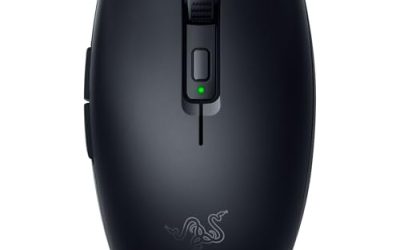
Razer Viper V3 Pro
The Viper V3 Pro is the reference point for this category: a symmetrical 54-gram wireless mouse built around fast flicks and a shape that stays neutral in the hand. It fits medium hands using claw or fingertip grips especially well, and its weight sits in the band most players adapt to within a day or two. Choose it if you want the balanced option that does not force an extreme in any direction, with high polling available when your setup can use it.
Specs
- Weight: 54 grams (Black)
- Shape: Symmetrical
- Sensor: 35K DPI optical sensor
- Polling: 8K polling
- Switches: Gen-3 optical switches
- Buttons: 8 programmable buttons
- Battery life: 95 hours
- Model number: RZ01-05120100-R3U1
- In the box: Razer HyperPolling Wireless Dongle, grip tape, USB Type A to USB Type C cable
Best for: Competitive FPS players who want a proven symmetrical shape at 54 grams.
Watch out for: The white version is listed at 55 grams under a separate listing, so confirm the color and weight on the exact listing you open.
ASIN: B0CW25XR5R
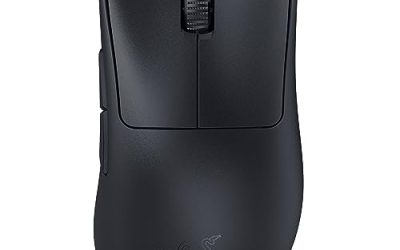
Logitech G PRO X Superlight 2
- Best for: Players stepping down from a heavier mouse who want the least risky shape in the category.
- Weight: 60 grams
- Sensor: HERO 2 sensor, 44K DPI
- Report rate: 8kHz
- Switches: LIGHTFORCE hybrid switches
Players stepping down from a heavier mouse who want the least risky shape in the category.
At 60 grams it is the joint heaviest mouse here, so committed fingertip players may find it less dramatic a change than expected.
Logitech’s Superlight 2 keeps the symmetrical outline that made the line popular and pairs it with the HERO 2 sensor and hybrid switches at 60 grams. That weight makes it the gentlest step down for players coming from a heavier mouse, and the shape is deliberately inoffensive, with a safe profile that rarely fights any grip style. Pick it when you value a mature, widely supported platform with USB-C charging and long battery life over chasing the lowest possible number on a scale.
Pulsar X2 v2
- Best for: Claw and fingertip players who want a focused 53-gram symmetrical mouse.
- Weight: 1.87 oz (53 g)
- Shape: Symmetrical, medium size
- Sensor: PAW3395 sensor, 26000 DPI
- Switch: Optical switch
Claw and fingertip players who want a focused 53-gram symmetrical mouse.
The listing describes 1 ms wireless operation, so check the listing carefully if higher polling rates are a priority for your setup.
The X2 v2 takes a simpler route to 53 grams: a symmetrical medium shell, an optical switch, and the PAW3395 sensor, without loading the listing with extras. Its appeal is focus. The shape is a familiar low-profile outline that claw and fingertip players read instantly, and the specification covers what competitive play actually uses. Consider it if the flagship models feel like more than you need and you would rather have a clean, light symmetrical mouse from a brand that builds only for this niche.
Pulsar X2 Crazylight
- Best for: Fingertip players who have already tried a 50-gram mouse and want to go further.
- Weight: 1.23 oz (35g)
- Sensor: XS-1 sensor, 32000 DPI
- Tracking speed: 750 IPS
- Switch: Optical switch
Fingertip players who have already tried a 50-gram mouse and want to go further.
The 35-gram figure belongs to this specific variant, and other colors or sizes of the same model can weigh more, so verify the variant on the listing before ordering.
At 35 grams, the Crazylight is in a different weight class from everything else here, and that is the entire point of it. The listing pairs that shell with the XS-1 sensor, 32,000 DPI, and 8K compatibility, so the speed is not bought by giving up current hardware. It suits fingertip players and small to medium hands that move the mouse with the fingers rather than the arm. Treat it as a deliberate specialist choice, not a default first ultralight, because there is nowhere lighter left to go.
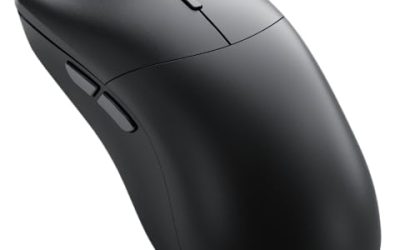
Logitech G PRO X Superlight 2 DEX
- Best for: Right-handed palm and relaxed claw players who want support without extra weight.
- Weight: 60 grams (2.12 ounces)
- Shape: Right-handed ergonomic shape
- Sensor: HERO 2 sensor, 44k DPI, up to 888 IPS and 88 g-force acceleration
- Polling: Up to 8 kHz polling
Right-handed palm and relaxed claw players who want support without extra weight.
The asymmetrical shell is right-handed only, so left-handed players and anyone who swaps hands should choose a symmetrical model instead.
The DEX takes the Superlight 2 formula and rebuilds it as an asymmetrical, right-handed shell, which changes who it suits more than any internal part does. Palm grippers and relaxed claw players get thumb support and a fuller contact area while staying at 60 grams, and the HERO 2 sensor with up to 8 kHz polling carries over. It is the pick here for players who tried a symmetrical ultralight, found it too flat or cramped, and want the ergonomic alternative without returning to a heavy mouse.
Which One Fits Your Situation
You play tactical shooters with low sensitivity and big arm sweeps
The Viper V3 Pro at 54 grams is the natural fit, because wide, repeated swipes are exactly where a lighter symmetrical mouse reduces effort without changing your grip. Its 8K polling also suits the high-refresh monitors common in this genre. If 54 grams sounds like a big jump from your current mouse, the Superlight 2 at 60 grams gives you most of the benefit with a smaller adjustment period.
Your hand is small and you steer mostly with your fingertips
Start with the X2 Crazylight, whose 35-gram shell and compact intent match a fingertip style better than any standard-size mouse here. The X2 v2 at 53 grams is the fallback if the Crazylight sounds too extreme, since its medium symmetrical shape still keeps the weight off your fingers while leaving more shell to rest against during slower, deliberate movements between fights.
You palm the mouse and every ultralight you tried felt hollow
The Superlight 2 DEX was made for this complaint. Its right-handed ergonomic shape fills the hand the way a conventional mouse does, yet it stays at 60 grams, so long sessions do not bring back the wrist load you were trying to escape. Avoid the symmetrical models in this list if support matters more to you than ambidextrous flexibility, because their flatter profiles will likely repeat the same problem.
You want one safe purchase and no experiments
Buy the Logitech G PRO X Superlight 2. The shape is the most conventional here, the weight reduction is real but not radical, and the platform is mature, with USB-C charging and POWERPLAY support in the wider lineup. It is rarely the most exciting option in a comparison, but it is the one least likely to be returned over fit, which matters more than a few grams either way for a first ultralight.
Common Mistakes
- Buying the lightest mouse available first, then discovering that sub-40-gram shells feel unstable for a grip built on a much heavier mouse.
- Comparing battery hours between listings without noticing those figures assume default polling, so the ranking reverses once 8K polling is switched on.
- Ignoring shape because two mice share a weight, when hump position and waist width decide comfort more than a five-gram difference does.
- Assuming every color or size of the same model weighs the same, when listings often quote a different weight for white versions or mini variants.
- Forgetting to check what the high polling rate requires, including whether a specific dongle is in the box or an extra purchase.
Frequently Asked Questions
How light does a gaming mouse need to be to count as ultralight?
The term is generally used for mice around 60 grams or less, and every mouse in this guide states a weight between 35 and 60 grams in its Amazon listing. Below that band the differences get smaller in practice, so shape, grip fit, and sensor behavior matter more than shaving off another few grams once you are already under 60.
Is a lighter mouse always better for aiming?
No. A lighter mouse reduces the effort needed to start and stop a movement, which helps low-sensitivity players making large sweeps, but some players overshoot more with a very light shell until they adjust. Most people adapt within days. If you play at high sensitivity with tiny movements, the benefit is smaller and a shape that fits your hand matters more.
Does 8K polling make a visible difference?
It can smooth cursor motion on high-refresh-rate monitors, since the mouse reports position 8,000 times per second instead of 1,000. The trade-off is battery life, which drops sharply at higher polling rates on wireless models. On a 60Hz or 144Hz display the difference is much harder to notice, so it should not be the only reason you pick one mouse over another.
Should palm grippers avoid ultralight mice?
Not necessarily, but they should choose the shape carefully. Symmetrical ultralight mice often feel flat under a full palm, while an asymmetrical model such as the Superlight 2 DEX keeps a supportive right-handed outline at the same 60-gram weight. Palm grippers with large hands should also check the listed dimensions, because many ultralight shells are medium or small by design.
Related guides
More from Amazon
Programs that pair well with the guide above. Offers and eligibility are set by Amazon and may change.
Free shipping on eligible items, Prime Video and more. Eligible new members can start with a free trial.
Start a Prime free trialAd-free music streaming. Eligible new subscribers can start with a free trial.
Try Music Unlimited freeA Prime membership for ages 18-24 with a trial period. Eligibility is set by Amazon.
See Prime for Young AdultsAudiobooks and podcasts to listen to on the go. Eligible new members can start with a free trial.
Try Audible freeAs an Amazon Associate we earn from qualifying purchases.