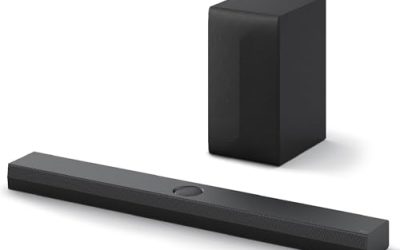
Once you move past entry-level bars, the question stops being “will this beat my TV speakers” and becomes “what do I want my living room to sound like.” High-end soundbars compete on three things that cheaper models barely address: genuine height channels for Dolby Atmos, a platform that can grow into a multi-room or multi-speaker system, and finishing that suits a nicely furnished room. Spending at the top of the category only makes sense if you will use those strengths, so the first step is deciding whether you are buying a movie machine, a music system that also does TV, or a design piece with good manners.
This guide is for buyers who already know they want Dolby Atmos and are willing to spend in the premium tier. It covers six bars from Sonos, Sennheiser, KEF and Bose, selected because their listings describe real height-capable layouts or a premium ecosystem rather than a basic stereo bar. Two compact Bose TV Speaker models appeared in the same search but sit in the entry tier, so they are left out. Everything below is judged from the listed specs, as of 2026, without claims about how any model sounds in a particular room.
Our Top Picks

Top 3 picks at a glance
Quick Picks
As an Amazon Associate we earn from qualifying purchases at no extra cost to you.


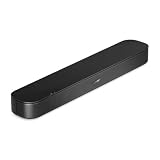
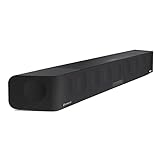

| Product | Best for | Key spec from the title |
|---|---|---|
| Sonos Arc Ultra | Expandable Atmos home theater | 9.1.4 surround, works with Sonos Sub 4 and Era 300 |
| Sonos Beam Ultra | Smaller rooms with premium features | 9 drivers, multiroom audio, Dolby Atmos |
| Sennheiser AMBEO Soundbar | Maximum channel count in one bar | 5.1.4 channel, Dolby Atmos and DTS:X |
| KEF XIO | Design-led music and movies | Dolby Atmos 5.1.2, Bluetooth |
| Bose Smart Dolby Atmos Soundbar | Voice assistants and dialogue clarity | A.I. Dialogue Mode, Alexa built in, AirPlay |
| Bose New Lifestyle Ultra | Wireless setups and room-wide surround | Dolby Atmos, wireless home soundbar |
How to Choose
Channel layouts: what the numbers mean
The three-number format tells you how many speakers are built into the bar. In a label like 5.1.4, the first number is horizontal channels, the second is the subwoofer channel, and the last is upward-firing height channels. The Sennheiser AMBEO is listed at 5.1.4 and the Sonos Arc Ultra at 9.1.4, while the KEF XIO is 5.1.2. More height channels generally give a taller sound field for Atmos content, but the benefit depends on a flat ceiling of ordinary height, since overhead effects rely on reflections. Rooms with high vaulted or heavily textured ceilings may blunt that effect, in which case the extra channels deliver less than the numbers suggest.
Format support: Atmos, DTS:X and streaming ecosystems
Every bar here lists Dolby Atmos. Only the Sennheiser names DTS:X as well, which matters if you collect discs or use a player that outputs it. For streaming, look at which voice assistants and wireless standards are named: the Sonos models mention Alexa and multiroom, the Bose Smart bar lists Alexa, Bluetooth and AirPlay, and the KEF lists Bluetooth. These matter if you want to push music from a phone without touching the TV, or if you want to add speakers in other rooms later.
Expandability and what you can add later
A premium bar is often a starting point rather than the full system. The Sonos Arc Ultra is listed as working with Sonos Sub 4 and Era 300, meaning a separate subwoofer and rear speakers can be added later. The Beam Ultra names Sonos Sub Mini. If you plan to build up over time, a bar that supports add-ons spreads the cost; if you want a single purchase and done, favor a bar with enough built-in channels, like the Sennheiser or KEF, that you will not feel the urge to expand.
Where premium models still compromise
Even at this tier, trade-offs exist. Compact bars cannot match large systems for bass without a separate subwoofer, so check whether one is included or only supported. Voice assistant features can be a convenience or an irritation depending on how you feel about microphones in the living room. And a premium finish can mean a wider or taller bar that collides with a TV stand or the bottom of a wall-mounted screen. Measure the available space under the TV before ordering, and ignore marketing terms that do not translate into a number, like “room-filling.”
One last filter is how you will actually listen. A household that mostly streams series at moderate volume gains more from dialogue processing and a clean interface than from the biggest channel count. A household that screens films on weekends at higher levels benefits from the extra drivers, and from a subwoofer, far more. Write down your two most common uses before you shortlist; it tends to eliminate half of any premium list immediately.
The 6 Best Options
Sonos Arc Ultra
The Arc Ultra is the flagship in this lineup, listing Dolby Atmos with 9.1.4 surround for TV and music, Alexa and Sound Motion. It is aimed at buyers who want a serious movie setup that can grow, since the title names the Sonos Sub 4 and Era 300 as compatible additions. That makes it a sensible foundation for someone who expects to start with the bar alone and add a subwoofer or rear speakers as the budget allows, rather than paying for a full system in one go.
- Strength: The highest channel count listed in the group.
- Strength: Clear expansion path with a subwoofer and rear speakers.
- Trade-off: Full performance expects extra Sonos purchases beyond the bar itself.
Skip it if your room is small or you want a self-contained system with no ecosystem upgrades.
Sonos Beam Ultra
The Beam Ultra packs 9 drivers, Dolby Atmos, multiroom audio, AI Speech Enhancement and voice control in a smaller form. It suits apartments and mid-size rooms where a full-width bar would overpower the space, and it lists compatibility with the Sonos Sub Mini. Because it shares the multiroom approach of its larger sibling, it also works as the first piece of a house-wide music setup, with the TV bar doing double duty as a speaker for everyday playlists.
- Strength: Atmos support in a more compact format.
- Strength: AI Speech Enhancement targets dialogue.
- Trade-off: Fewer drivers than the larger sibling, so the height effect is more modest.
Skip it if you want the widest possible soundstage for a large living room.
Sennheiser AMBEO Soundbar
This one lists 5.1.4 channels with both Dolby Atmos and DTS:X, which is the broadest format support among these bars. It is for buyers who prefer a single bar to handle full surround without adding rear speakers. A buyer with a disc player or a console that can output DTS:X gets a format match here that several other bars in this group do not list, and the four height channels point to a bar designed around overhead effects rather than treating them as an afterthought.
- Strength: Both major object-audio formats are named.
- Strength: Four height channels built into the bar.
- Trade-off: The title mentions no voice assistant or streaming features.
Skip it if you want a smart-speaker feature set or multi-room control.
KEF XIO
The KEF is a Dolby Atmos 5.1.2 bar in Silver Grey, described as delivering premium room-filling sound for home theater with Bluetooth connectivity. It suits design-conscious buyers who want a distinctive finish and a hi-fi brand heritage. It is a natural fit for a listener who plays albums as often as films and wants the bar to look at home on a sideboard rather than disappear under the television.
- Strength: Atmos 5.1.2 layout covers surround and height without extra boxes.
- Strength: Bluetooth lets you play music from a phone directly.
- Trade-off: Two height channels is the smallest count among the Atmos-focused bars here.
Skip it if you want expansion options or an Alexa-style voice assistant.
Bose Smart Dolby Atmos Soundbar
This all-in-one bar has Dolby Atmos, A.I. Dialogue Mode, voice control and Alexa built in, with Bluetooth and AirPlay support named. It fits households that want spoken-word clarity and a simple smart-home tie-in. Anyone who struggles with muffled dialogue in streaming dramas and wants to ask the soundbar for a song by voice, without reaching for a remote, is the person this one is written for.
- Strength: A.I. Dialogue Mode specifically targets speech.
- Strength: Bluetooth and AirPlay both listed for streaming from phones.
- Trade-off: The title gives no channel count, so layout size is unclear.
Skip it if you prefer a spec-heavy channel layout you can compare numerically.
Bose New Lifestyle Ultra Soundbar
Described as a wireless home soundbar with Dolby Atmos and surround sound, the Lifestyle Ultra targets buyers who value a tidy, wireless-first setup. It fits an open-plan living room where cable clutter is a concern. Because the listing is light on numbers, it is best treated as a lifestyle-driven purchase: read the full specification page for channel and connection details before deciding.
- Strength: Wireless positioning supports a cleaner installation.
- Strength: Dolby Atmos and surround both named.
- Trade-off: Few concrete specs appear in the title, such as channels or drivers.
Skip it if you need verifiable channel counts before you buy.
Which One Fits Your Situation
A dedicated movie room with a flat ceiling
The Sonos Arc Ultra and the Sennheiser AMBEO are the two highest-channel options. Choose the Sonos if you may add a subwoofer later, and the Sennheiser if you want DTS:X support as well.
An apartment living room
The Sonos Beam Ultra gives Atmos support in a more compact form, with the Sub Mini named as a possible add-on.
A design-forward space where the bar is visible
The KEF XIO brings a distinctive finish and Atmos 5.1.2 layout, while the Bose New Lifestyle Ultra emphasizes a wireless, tidy setup.
A home that relies on voice control and clear dialogue
The Bose Smart Dolby Atmos Soundbar lists A.I. Dialogue Mode, Alexa and AirPlay, making it the logical fit for people who talk to their devices and watch plenty of speech-driven shows.
Common Mistakes
- Paying for height channels in a room with a very high or sloped ceiling.
- Assuming the subwoofer is included when the title only says the bar is compatible with one.
- Skipping a measurement of the shelf or wall space before buying a wide bar.
- Choosing by brand alone without comparing the channel layout.
- Expecting Dolby Atmos from a source that is not sending Atmos content.
Related guides
- When I Turn On Record Game In Background On Gamebar. Gamebar Crashes, What Do I Do?
- How To Reduce Background Noise On A Streaming Microphone
- Poly Computer Accessories Company Streaming Evaluation
Frequently Asked Questions
Is Dolby Atmos worth the extra spend?
It is when you have a suitable ceiling and watch content mastered in Atmos. For stereo TV shows alone, the benefit is smaller, and a good non-Atmos bar may be enough.
Do I need a separate subwoofer?
Not required for all listings, but compact bars cannot reproduce deep bass as well as a standalone sub. Sonos and similar systems let you add one later.
What is the difference between 5.1.2 and 5.1.4?
Both have five horizontal channels and a subwoofer channel. The last number is upward-firing height channels, two versus four, which affects how tall the sound field feels.
Can I use these for music?
Yes. Several listings name Bluetooth, AirPlay, Alexa or multiroom audio, and the Sonos entries are marketed for music as well as TV.