
The best home theater subwoofers are chosen by matching measured low-frequency extension and maximum output to your room—not by buying the largest driver or the highest wattage number.
Top 3 picks at a glance
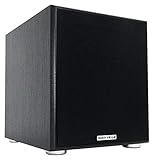
Quick recommendations by room and priority
| Situation | Best-fit subwoofer type | Useful target | Models to consider |
|---|---|---|---|
| Small room, apartment, music and movies | Compact sealed or low-output ported | 25–30 Hz extension; 105–110 dB peak at the listening position | SVS SB-1000 Pro, KEF KC62, REL HT/1205 MKII |
| Medium room, one main listening row | 12-inch ported or powerful sealed | 18–22 Hz extension; 112–116 dB peak | SVS PB-1000 Pro, HSU VTF-2 MK5, RSL Speedwoofer 10S MKII |
| Large room or dedicated theater | High-output ported, preferably two units | 15–20 Hz extension; 115 dB or more peak capability | HSU VTF-3 MK5 HP, Rythmik FVX12, Monolith M-12 V2 |
| Limited placement space | Compact sealed or shallow cabinet | Prioritize dimensions and output at 30–50 Hz | KEF KC62, SVS SB-1000 Pro, REL HT/1205 MKII |
These targets are practical buying ranges rather than laboratory guarantees. Room gain, listening distance, crossover settings, and placement can change the result substantially. For a large room, two moderate subwoofers usually produce smoother bass than one huge subwoofer, even when the single unit has similar total output.
As an Amazon Associate we earn from qualifying purchases at no extra cost to you.
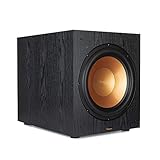
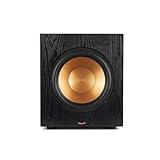

What specifications actually matter
Measured extension
“Frequency response to 20 Hz” is not enough information unless you know the tolerance. A response rated “20–200 Hz” might mean 20 Hz at a steeply reduced level. Look for an extension figure at approximately -3 dB or -6 dB, and distinguish that from a room-corrected result.
For movie effects, output below 25 Hz matters: explosions, deep synthesizer notes, and large-scale sound-design effects can contain energy from 15–25 Hz. A subwoofer that reaches 18 Hz cleanly is more convincing than one that reaches 10 Hz only at a whisper. For ordinary music, strong, low-distortion output from 25–80 Hz is often more valuable than extreme infrasonic extension.
Maximum output
Maximum output is the subwoofer’s ability to play loudly without excessive distortion or compression. It should be considered at several frequencies, not as a single “watts” number. A subwoofer may produce impressive 20 Hz output while running out of headroom at 50 Hz, or the reverse.
As a useful rule, aim for roughly 6 dB of headroom above your usual listening level. Bass falls quickly with distance, and a listener several meters from the subwoofer needs substantially more capability than someone sitting close to it. Two identical subwoofers can provide roughly 6 dB more acoustic output in the ideal case, while also reducing seat-to-seat variation.
Cabinet size and driver size
Large cabinets are not automatically better, but deep bass requires moving air. A larger driver, longer stroke, and ported cabinet can produce more output with less excursion. A compact sealed subwoofer can still sound excellent, especially when room gain helps the lowest octave, but it generally reaches its limits sooner in a large room.
Cabinet dimensions also determine placement. Measure the subwoofer’s full depth, including grille and cable clearance. A front-firing port needs breathing room at the port opening; a rear-facing port should not be pushed tightly against a wall unless the manufacturer permits it.
Sealed versus ported: which design should you buy?
Choose sealed when flexibility and compactness matter
Sealed subwoofers have no bass port, so they are easier to place near walls and often have smaller cabinets. Their natural roll-off is gradual, which can work well with room gain. The SVS SB-1000 Pro and KEF KC62 are examples of compact sealed approaches, while larger sealed models can deliver considerably more output.
The trade-off is efficiency. At the same cabinet size and amplifier power, a sealed design usually cannot match a ported design’s output around the port tuning frequency. If you watch action films at high volume in a large room, you may need a larger sealed unit or a pair of them.
Choose ported when cinema impact is the priority
Ported subwoofers use an enclosure opening tuned to reinforce a low-frequency range. They commonly deliver more output per dollar and per cabinet volume, making them strong choices for home theater. The SVS PB-1000 Pro, HSU VTF-2 MK5, and RSL Speedwoofer 10S MKII represent this category at different sizes and price levels.
Near its tuning frequency, a ported subwoofer can produce powerful bass with relatively low driver movement. Below that frequency, output drops rapidly and the driver can move farther, so avoid sending excessive low-frequency boost below the port tune. Many models include a sealed mode or adjustable tuning that trades some extension for protection and control.
Room size is a better buying guide than wattage
Room volume matters more than floor area. Multiply length, width, and ceiling height to estimate cubic volume. A 12-by-18-foot room with an 8-foot ceiling is 1,728 cubic feet. If it opens into a hallway, kitchen, or another room, treat the combined space as larger because the subwoofer must pressurize a less-contained volume.
For that 1,728-cubic-foot example, a capable 10- or 12-inch ported subwoofer is a sensible starting point for one listening row. If the seating is more than 10 feet away, playback is frequently loud, or the room opens into another area, step up to a high-output 12- or 15-inch model—or use two smaller units.
A compact sealed subwoofer is more appropriate when the room is below roughly 1,200 cubic feet, listening levels are moderate, or the cabinet must fit beside furniture. These are guidelines, not hard limits: room gain can help a small sealed subwoofer, while open-plan rooms can overwhelm a much larger model.
Placement and setup determine the final result
Use the subwoofer crawl
- Place the subwoofer temporarily at the main listening position.
- Play a repeating bass sweep or familiar bass-heavy track at moderate volume.
- Walk around the room perimeter and listen for locations where bass sounds even, not merely loud.
- Put the subwoofer at one of those locations, then recheck from every seat.
This works because bass response is controlled by room modes. A corner often gives more output, but it can also exaggerate one note. Moving the subwoofer by a foot or two can eliminate a deep cancellation that no amount of receiver equalization can fully repair.
Starting settings
- Set the AV receiver’s speakers to “Small,” even if the front speakers are physically large.
- Start with an 80 Hz crossover for typical bookshelf and tower speakers. Use 100–120 Hz for small satellite speakers.
- Set the subwoofer’s low-pass filter to its highest setting or bypass it when the receiver controls the crossover.
- Begin phase at 0 degrees. Try 180 degrees, or adjust the variable phase control, while listening near the crossover region.
- Set the subwoofer gain around one-third to one-half before receiver calibration; avoid running the receiver trim at its minimum or maximum.
- Run room correction, then check that the subwoofer trim remains within a reasonable range and that bass was not turned down excessively.
The 80 Hz crossover is a starting point because it sends bass below that frequency to the subwoofer while reducing localization. A higher crossover can improve integration with small speakers, but may reveal the subwoofer’s location if placement or phase is poor.
Head-to-head buying choices
SVS SB-1000 Pro versus PB-1000 Pro
The SB-1000 Pro is the compact sealed choice: easier to fit, less visually imposing, and well suited to small or medium rooms. The PB-1000 Pro uses a substantially larger ported cabinet and is the better pick for movie output and deeper bass in a medium room. Choose the SB model when cabinet size is the constraint; choose the PB model when impact and extension matter more.
RSL Speedwoofer 10S MKII versus HSU VTF-2 MK5
Both are practical ported options, but the HSU’s larger enclosure and adjustable tuning make it the stronger candidate for a bigger room or higher playback levels. The RSL is easier to accommodate and can be a compelling value for a modest room. Compare cabinet dimensions before ordering: a subwoofer that must be hidden in a corner cannot perform well if its port or controls are obstructed.
KEF KC62 versus a conventional 12-inch subwoofer
The KC62 is unusually compact and offers impressive output for its size, making it attractive for apartments, design-sensitive rooms, and difficult furniture layouts. A conventional 12-inch ported subwoofer generally delivers more output per dollar and more headroom in the deep bass, but requires much more floor space. Buy the KC62 for placement freedom; buy the larger ported design for theater scale.
How much should you spend?
Compact sealed and entry-level ported models usually occupy the $400–$700 range. Stronger 12-inch ported subwoofers commonly cost about $600–$1,000, while high-output 12- and 15-inch models often range from $900 to $1,800 or more. Two affordable, well-placed subwoofers can be a better investment than one premium unit if your room has uneven bass.
When comparing prices, reserve space in the budget for isolation feet if the floor transmits vibration, a long subwoofer cable, and possibly a second subwoofer later. The most useful upgrade is not always more bass; it is smoother bass across the seats.
Frequently asked questions
Do I need one subwoofer or two?
Two subwoofers are usually preferable in a large room because they can produce smoother bass across seats than one huge subwoofer. Two identical units can provide roughly 6 dB more acoustic output in the ideal case while reducing seat-to-seat variation. In smaller or moderate rooms, one capable subwoofer may be a sensible starting point, depending on listening distance and playback level.
Can a subwoofer be placed inside a cabinet or tightly against a wall?
A subwoofer should not be placed tightly against a wall unless the manufacturer permits it, especially when it has a rear-facing port. Measure the full depth, including the grille and cable clearance, before choosing a location. A front-firing port needs breathing room at its opening, while sealed models are generally easier to place near walls.
Why should my receiver speakers be set to Small if they are large?
Set the receiver speakers to Small so bass below the crossover is redirected to the subwoofer, even when the front speakers are physically large. Begin with an 80 Hz crossover for typical bookshelf and tower speakers. This is a starting point that can improve integration; small satellite speakers may work better with a 100–120 Hz crossover.
What should I do if room correction makes the subwoofer very quiet?
Check the receiver’s subwoofer trim after running room correction, because bass may have been turned down excessively. Before calibration, set the subwoofer gain around one-third to one-half and avoid setting it at the receiver’s minimum or maximum. If the result is unsuitable, review the gain and placement, then run room correction again.
Does a higher wattage rating mean a subwoofer will play louder?
No, wattage alone does not determine how loudly a subwoofer will play. Maximum output should be considered at several frequencies because a model may have strong 20 Hz output but limited headroom at 50 Hz, or the reverse. Measured extension, distortion, compression, driver movement, cabinet design, listening distance, and room volume also affect the result.
Bottom line
Choose the best home theater subwoofers by working backward from room volume, listening distance, desired loudness, and available placement. Select sealed for compactness and flexible placement, ported for maximum cinema output, and two units when multiple seats need consistent bass. Favor independently measured extension and maximum output over amplifier wattage alone, then spend time on placement, crossover, phase, and calibration. Those decisions often make a larger audible difference than moving up one product tier.


