
Overhead microphone placement solves a familiar room problem: you need the capsule above a drum kit, choir row, piano strings, or seated performer without putting a stand directly in the sightline. But a heavy microphone changes the equation. A long arm can amplify sag, a light base can feel unsettressed, and a poorly placed counterweight can turn a clean recording setup into a trip hazard.
The best overhead boom arms for heavy microphones combine a substantial base, useful reach, stable locking hardware, and a design that suits the room. In a home studio, foldability and storage may matter most. In a rehearsal room or tracking space, rolling mobility and extreme height can be more valuable. For this 2026 roundup, we ranked the options below by their practical overhead-studio design, reach, base style, portability, and overall value for buyers planning to use larger microphones.
As an Amazon Associate we earn from qualifying purchases at no extra cost to you. Product prices and availability are accurate as of the date shown and are subject to change.




Top 3 picks at a glance
Quick Picks
| Product | Best for | Price |
|---|---|---|
| LyxPro SMT-1 Professional Microphone Stand | Dedicated studio overhead placement | $169.99 |
| Frgyee Mic Boom Arm | Budget-minded users with popular broadcast mics | $52.99 |
| K&M König & Meyer 21021.500.55 Overhead Microphone Stand | Travel-friendly professional setups | $169.99 |
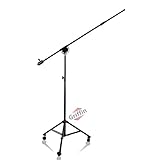
| GRIFFIN 11FT Tall Rolling Mic Boom Stand | Tall rooms and overhead drum recording | $78.95 |
| InnoGear Mic Stand Floor Microphone Stand with Boom Arm | Simple floor-stand vocal duties | $42.99 |
| LyxPro Professional 90” Rolling Overhead Boom Stand | Large studios that need mobility | $179.99 |
| GRIFFIN Rolling Studio Mic Boom Stands with Wheels, 2 Pack | Multi-mic overhead setups | $140 |
| Amazon Basics Sturdy Portable Microphone Boom Arm Stand | Affordable portable recording setups | $23.99 |
How We Picked
We prioritized designs that make sense for overhead use rather than desktop podcasting. That means looking first at boom length, maximum stated height where provided, tripod footprint style, counterweight provisions, and whether the stand is intended to roll or remain fixed. A longer arm is useful for reaching over a kit or grand piano, but it also places greater demands on the base and locking points.
We also considered room workflow. Folding tripod legs are helpful in compact home studios, while casters are appealing when stands must move between vocal, drum, and ensemble positions. Because manufacturers do not provide a comparable microphone weight rating for every model listed here, we did not invent capacity figures or claim identical heavy-mic performance across them. Before purchasing, confirm the current load guidance and use sensible counterweighting for your particular microphone, shock mount, and cable.
The 8 Best Picks
1. LyxPro SMT-1 Professional Microphone Stand Heavy Duty 93” Studio Overhead Boom Stand
The LyxPro SMT-1 is our top pick for a buyer building a dedicated overhead recording position rather than adapting an ordinary vocal stand. Its stated 93-inch studio-overhead format and 76-inch extra-long telescoping arm offer the kind of placement flexibility that is useful above drums, percussion, piano, or a small vocal group. Foldable tripod legs help make a large-format stand more manageable between sessions, while the adjustable counterweight is especially relevant when the arm is extended away from the center of the base.
- Pro: 93-inch overhead design offers substantial vertical reach.
- Pro: 76-inch telescoping arm and adjustable counterweight support flexible positioning.
- Con: At $169.99, it is a premium purchase for a single fixed-position stand.
Skip it if you mainly record at seated-vocal height or need a stand that can be rolled frequently around the room.
2. Frgyee Mic Boom Arm with Heightened Extension Riser
The Frgyee Mic Boom Arm is the value-oriented choice for creators using familiar large-format mics such as the Shure SM7B, Blue Yeti, or HyperX QuadCast S. Its heightened extension riser is the defining feature: it is intended to provide more overhead-oriented adjustment than a basic low floor stand, making it a practical bridge between desktop-style recording and room-based placement. At $52.99, it costs considerably less than the specialist studio overhead stands in this lineup.
- Pro: Designed with compatibility for several popular microphone models in mind.
- Pro: Heightened extension riser adds flexibility for elevated placement.
- Con: It does not advertise the extreme reach or rolling base of larger studio boom stands.
Skip it if your work depends on placing a microphone far out over a drum kit, large instrument, or choir.
3. K&M König & Meyer 21021.500.55 Overhead Microphone Stand
The K&M König & Meyer 21021.500.55 is the polished professional pick for engineers who value a compact, transport-friendly overhead stand. Its long boom arm, T-bar locking mechanism, heavy-duty folding tripod base, and compact storage focus make it particularly appealing for location recording, schools, houses of worship, and studios where stands cannot stay assembled permanently. German-made construction is part of its positioning, and its $169.99 price puts it alongside the LyxPro SMT-1 rather than in entry-level territory.
- Pro: T-bar locking mechanism is designed for secure adjustment.
- Pro: Folding tripod base and compact storage focus suit mobile work.
- Con: It lacks the stated caster mobility offered by rolling alternatives.
Skip it if you need to reposition an overhead setup continually during a session without lifting and resetting the stand.
4. GRIFFIN 11FT Tall Rolling Mic Boom Stand
The GRIFFIN 11FT Tall Rolling Mic Boom Stand is the standout for rooms where normal overhead height simply is not enough. Its 11-foot extended-height design, telescopic arm, tripod base, and rolling format are well suited to overhead drums, choirs, and vocal recording in larger spaces. At $78.95, it is notably more accessible than many dedicated overhead models, making it an attractive option for a rehearsal room, project studio, or venue that needs substantial reach without a premium price.
- Pro: 11-foot height is ideal for high placement applications.
- Pro: Rolling design makes large-room repositioning easier.
- Con: Casters are less appealing than a stationary base when you need one permanent setup.
Skip it if ceiling height is limited or your recording area is too tight to comfortably maneuver a tall rolling tripod stand.
5. InnoGear Mic Stand Floor Microphone Stand with Boom Arm for Singing
The InnoGear floor microphone stand is the straightforward budget choice for singers, speech recording, and general-purpose mic duties. At $42.99, it is less expensive than the specialized overhead stands here and makes the most sense when your “overhead” requirement is occasional rather than central to your setup. The conventional floor-stand-and-boom format is familiar, quick to understand, and useful for a home studio that also needs a regular vocal stand.
- Pro: Affordable price for a basic boom-equipped floor stand.
- Pro: Flexible fit for singing and everyday microphone placement.
- Con: It is not presented as a dedicated tall overhead studio boom stand.
Skip it if you need a microphone consistently suspended high above drums, a choir, or a large acoustic instrument.
6. LyxPro Professional 90” Rolling Overhead Boom Stand
Choose the rolling LyxPro Professional stand when overhead reach and studio mobility are equally important. It combines a 90-inch studio-overhead design with an 87-inch extra-long telescoping arm, rolling caster wheels, foldable tripod legs, and an adjustable counterweight. That combination is especially practical in a recording room where you may move from drum overheads to piano, room mic, or ensemble use without disassembling the entire stand. At $179.99, it is the most expensive individual model in this list, but its mobility-focused specification helps justify the step up.
- Pro: 87-inch telescoping arm provides exceptional placement reach.
- Pro: Caster wheels make it easier to move between recording positions.
- Con: Costs more than the fixed-base LyxPro SMT-1.
Skip it if the stand will stay in one small room location and rolling capability would go unused.
7. GRIFFIN Rolling Studio Mic Boom Stands with Wheels, 2 Pack
The GRIFFIN Rolling Studio Mic Boom Stands two-pack is the best value for buyers who need matched overhead positions rather than a single stand. With two extended-height rolling stands, 11-foot telescoping arms, tripod bases with casters, and mic holders, this set is tailored to stereo drum overheads, paired room microphones, or multiple choir positions. The $140 package price makes it compelling for a school, rehearsal space, production room, or new studio outfitting more than one recording station at once.
- Pro: Two matching rolling stands support paired microphone setups.
- Pro: 11-foot telescoping-arm format suits high overhead work.
- Con: A two-pack is unnecessary if you only need one boom stand.
Skip it if storage is tight or your setup calls for one premium stand with a dedicated counterweight system instead.
8. Amazon Basics Sturdy Portable Microphone Boom Arm Stand
The Amazon Basics Sturdy Portable Microphone Boom Arm Stand is the entry-level pick for creators who want a conventional, portable boom stand at the lowest price in this roundup. It reaches up to 85.75 inches and includes cable management plus a foldable tripod base, useful details for a cleaner temporary recording setup. At $23.99, it is an easy option for backup duty, casual vocal tracking, rehearsal spaces, or beginners learning microphone placement before investing in a purpose-built overhead stand.
- Pro: Up to 85.75 inches of stated height at a very low price.
- Pro: Cable management and foldable tripod base aid portability.
- Con: It is less specialized for extended, heavy overhead applications.
Skip it if you need extreme boom reach, caster mobility, or a stand dedicated to demanding overhead recording positions.
Buying Guide
Prioritize Reach, Then Check Your Ceiling
Start with the microphone’s intended destination, not the stand’s appearance. A drum overhead, choir mic, and piano mic can all require different vertical and horizontal reach. The 11-foot GRIFFIN designs are made for especially tall placement, while the LyxPro models emphasize long telescoping arms of 76 inches and 87 inches. Measure your ceiling and leave enough room to adjust the boom without forcing it into an awkward angle.
Match the Base to Your Workflow
A folding tripod base is a strong choice for home studios and temporary setups because it can be stored when the room needs to serve another purpose. Caster-equipped models make more sense when you regularly move microphones across an open tracking room. Rolling stands should be positioned carefully before recording so the boom, base, cable path, and performers all have clear space.
Plan for the Complete Microphone Assembly
Do not evaluate a stand based on the microphone alone. Add the shock mount, clip, wind protection, cable, and any adapter to your planning. Long boom extension shifts leverage outward, which is why counterweight-equipped models deserve special attention for heavier assemblies. Confirm the manufacturer’s current load guidance, keep the tripod legs fully deployed, route cables without pulling on the boom, and avoid leaving a fully extended stand unattended.
Our Verdict
For the most complete dedicated overhead setup, the LyxPro SMT-1 earns the top spot thanks to its 93-inch format, 76-inch telescoping arm, foldable tripod legs, and adjustable counterweight. If mobility matters more, the rolling LyxPro Professional 90-inch stand is the better premium choice. Buyers working in tall rooms should look closely at the 11-foot GRIFFIN rolling stand, while the GRIFFIN two-pack is the smart purchase for stereo or multi-mic applications. For occasional use and tighter budgets, the Frgyee and Amazon Basics options are more approachable starting points.
FAQ
What makes an overhead boom arm suitable for heavy microphones?
Look for a stable tripod base, reliable locking hardware, useful boom reach, and a counterweight provision where available. The complete microphone assembly matters more than the microphone body alone, because mounts and cables add leverage when the arm is extended.
Should I choose a rolling or fixed tripod microphone stand?
Choose rolling casters when you need to reposition stands around a larger studio, rehearsal room, or venue. Choose a fixed folding tripod base when the stand will mostly remain in one recording position or when compact storage is a priority.
How high should an overhead microphone stand be for drums?
The right height depends on ceiling clearance, drum layout, microphone type, and the sound you want. Tall models such as the 11-foot GRIFFIN are useful for rooms that can accommodate them, but a lower position may be more appropriate in a compact home studio.
Can a regular vocal boom stand work as an overhead stand?
It can work for light-duty or occasional elevated placement, but it may not offer the reach, counterweighting, or specialized geometry of a dedicated overhead stand. For a heavy microphone positioned far from the center of the base, a purpose-built overhead model is the safer, more practical choice.
Related guides
- Best Nvme Enclosures for Editing Footage: Tested and Ranked: 8 Tested (2026)
- Best Compact Xlr Interfaces for Ipad Recording: Tested and Ranked: 4 Tested (2026)
- Best Usb Dynamic Microphones for Untreated Rooms: Tested and Ranked: 8 Tested (2026)
- Acoustic Foam vs Bass Traps for Voice Recording: Which Is Right for Your Home


