A solid streaming setup in 2026 is not about the most expensive camera. It is about light first, clean audio second, a camera that matches your lighting third, and an upload connection that can carry your bitrate with room to spare. A 1080p webcam in good light beats a 4K webcam in a dim room, and a mediocre mic placed close beats a premium mic across the desk. This checklist walks through camera, microphone, lighting and connection in the order that gives the biggest improvement per unit of effort, then shows which of three webcams suits which room.
Our Top Picks
 Logitech C920x HD Pro PC Webcam Full 1080p/30fps1 Pack2.8 x 1.7 x 3.7 inches0.4 PoundsCheck on Amazon


Top 3 picks at a glance
Quick Verdict
| Your situation | Our verdict |
|---|---|
| First stream, dim room, no extra lights | Fix lighting before spending on a camera. One daylight-balanced key light matters more than a sensor upgrade. |
| You stream at 1080p30 and want a simple, proven webcam | A 1080p30 autofocus model such as the Logitech C920x is enough. |
| You stay mostly still, in a fixed spot, and want a wide shot | A fixed-focus 1080p camera with a wide field of view works if you keep your seat position consistent. |
| You want 60 fps facecam or a cropped, reframed shot | A 4K sensor with fast autofocus gives room to crop; light it well. |
| Upload speed is limited | Lower the stream bitrate before upgrading the camera; the camera is not your bottleneck. |
What a Streaming Setup Actually Needs
Lighting: the cheapest big upgrade
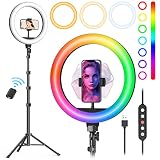
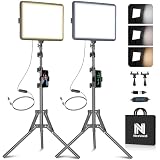
Webcam sensors are small, so they depend on light. In a dim room the camera raises gain and slows its shutter, which shows up as grain, smearing and soft motion. Adding one key light placed in front of you, slightly above eye level and about 45 degrees to one side, usually improves the picture more than changing cameras.
Common streaming guidance, which is practice rather than a standard, is to use a daylight-balanced light around 5600K with a high color rendering index (CRI 90 or above), and to keep other sources in the room at a matching color. Mixed color temperatures, such as a daylight panel plus a warm ceiling bulb, make skin tones look uneven and force the camera’s auto white balance to hunt.
Then lock the camera. In OBS, open the webcam source’s properties and turn off automatic exposure and automatic white balance so a bright game scene or a browser window does not change your face brightness mid-stream. On Logitech cameras, also switch off the vendor software’s light correction feature if it fights your manual settings. Raise physical light before you raise gain.
Camera: resolution is less important than you think
Twitch’s broadcasting guidelines list 1080p60 at 6,000 kbps as the top recommended setting for most streamers, so a 4K webcam output is downscaled before viewers see it. What a higher-resolution sensor does buy you is flexibility: you can crop in without visible softness, or reframe a wide shot into a tighter one. Frame rate matters for motion. Sixty frames per second looks smoother when you move or gesture, but it also halves the exposure time available per frame, which means you need more light.
The field of view changes how much of your room shows. A narrower lens (about 73 degrees) shows more of you and less background; a wider one (about 90 degrees) fits a bigger scene but exaggerates your distance from the camera. Autofocus matters if you lean in and out; fixed focus is fine if you sit in the same place and set your seat distance once.
| Spec (per manufacturer listings) | EMEET C960 | Logitech C920x | EMEET S600 |
|---|---|---|---|
| Maximum video | 1080p at 30 fps | 1080p at 30 fps | 4K at 30 fps; 1080p at 60 fps |
| Field of view | 90 degrees diagonal | 78 degrees diagonal | 73 degrees (40 to 73 adjustable at 1080p) |
| Focus | Fixed | Autofocus | Phase-detection autofocus |
| Microphones | Two built in | Two (stereo) | Two with noise reduction |
| Connection | USB-A, with A-to-C adapter | USB-A, attached cable | USB-C |
| Privacy cover | Yes (2025 version) | No | Yes |
Verified from manufacturer and retailer listing pages. Listings vary slightly by version; for example, the S600 sensor appears as 1/2.5 or 1/2.55 inch depending on the retailer, so check the exact listing.
Audio: viewers leave for bad sound before bad video
Built-in webcam microphones are convenient but sit far from your mouth, so they pick up keyboard clicks, fans and room echo as loudly as your voice. Treat them as a backup. A dedicated USB or XLR microphone placed close to your mouth, just out of the airflow, will almost always sound better, and a pop filter or foam windscreen reduces plosive bursts. If you use a webcam’s built-in mics anyway, set a noise gate or noise suppression filter in OBS and check your levels while a game is running.
Avoid sound pollution before you buy hardware: move the PC fans away from the mic, mute notification sounds, and route game audio and voice to separate tracks if your software supports it so you can adjust the balance later. Keep voice levels around the same loudness as game audio in test recordings so neither drowns the other.
Connection and encoding: the part viewers feel as buffering
Twitch’s guidelines recommend constant bitrate, a two-second keyframe interval, and these video targets: 6,000 kbps for 1080p60, 4,500 kbps for 1080p30 or 720p60, and 3,000 kbps for 720p30, with 96 kbps audio as the baseline. The same guidance says to keep upload capacity about 30 percent above your bitrate. For a 6,000 kbps stream, that means roughly 7.8 Mbps of stable upload, and wired Ethernet is much safer than Wi-Fi for this. Enhanced Broadcasting can offer higher renditions to eligible streamers, but standard accounts should treat the recommended figures as the working ceiling and check Twitch’s current pages, since third-party summaries disagree on details.
Run a speed test during the hours you stream, not at midnight. If upload speed is below the requirement, choose 720p60 or 1080p30 and spend your effort on lighting and audio instead.
PC load and a pre-stream check
Streaming adds work to a gaming PC: the game, the capture, the encode and the overlay software all run at once. Many streamers offload encoding to the graphics card’s hardware encoder to spare the CPU, though availability and quality depend on the GPU generation, so check your own card’s options in OBS. Run a ten-minute test recording with a real game before going live and watch for dropped frames or encoding overload messages in the OBS stats.
A short checklist before each session keeps problems from showing up on stream:
- Camera exposure and white balance still locked, and the key light on.
- Microphone level peaking comfortably below clipping while you talk over game audio.
- Stream bitrate and resolution matching your measured upload, with wired Ethernet connected.
- Notifications silenced on the PC and phone so sounds do not leak into the mic.
- Webcam plugged straight into a motherboard USB port, not a shared hub.
How to Decide
- Measure your light. Can you stream with a key light in front of you? If not, plan for it before camera shopping. Rule of thumb: if the room looks dim to your eyes on the camera preview, the camera will struggle at 60 fps.
- Choose frame rate and resolution by upload. 7.8 Mbps upload supports a 6,000 kbps stream with the 30 percent margin. If your measured upload is lower, choose 4,500 kbps at 1080p30 or 720p60.
- Check desk geometry. Fixed-focus cameras have a focus range; the C960 listing gives a range of about 11.8 to 118 inches, so a monitor-mounted camera at arm’s length is in range. Mark your seat position with tape if you rely on fixed focus.
- Check the port. USB-A is common on desktops. The S600 uses USB-C, so confirm you have a USB-C port or the correct cable. Plug webcams directly into a motherboard port rather than an unpowered hub to avoid bandwidth drops.
- Plan the mic. Keep the mic within a fist or two of your mouth if it is a cardioid dynamic, and avoid pointing it at the PC fan or speakers.
- Budget your PC load. Capturing, encoding and gaming at once uses CPU or GPU encoder capacity. If frames drop during tests, lower the stream resolution before changing the camera.
Products That Fit
The webcams below are examples that fit the situations above, not a ranking. None of them replaces a key light or a dedicated microphone.
EMEET C960 – fixed-seat gamers on a budget
As an Amazon Associate we earn from qualifying purchases at no extra cost to you.

This 1080p30 camera suits someone who sits in the same spot, wants a wide 90-degree view, and does not need autofocus. It fits the “stays mostly still” row in the Quick Verdict table. Its two built-in microphones are fine as a scratch track or backup, but the camera works best as a facecam alongside a separate microphone. A privacy cover on the 2025 version is a small practical plus for a camera that sits on your monitor.
- 1080p at 30 fps, 90 degree field of view
- Fixed focus, about 11.8 to 118 inches (listing figure)
- Two built-in omnidirectional microphones
- USB-A plug with an A-to-C adapter in the 2025 version
Caveat: fixed focus means it cannot refocus if you lean in, and it works best in decent light. Older versions of the C960 differed in lens and cover details, so confirm the version on the listing.
Logitech C920x – the proven 1080p30 default

The C920x is the safe pick when you want a long-established webcam that works with most software without fuss. It offers autofocus and a 78-degree field of view, which is a middle ground between a tight and a wide shot. It fits the “1080p30, simple and proven” scenario. The listing is identical in hardware to the original C920, with a bundled software license in the box.
- 1080p at 30 fps, 78 degree diagonal field of view
- Autofocus with a glass lens
- Two microphones placed either side of the lens (stereo)
- USB-A with an attached cable of about 5 feet (listing figure)
Caveat: there is no privacy shutter, and it is a 1080p30 design, so it will not give you a 60 fps facecam or cropping room. Turn off automatic light correction if you want locked exposure.
EMEET S600 4K – 60 fps facecam and reframing

The S600 matches the situation where you want smoother motion or the ability to crop in. Listings describe a Sony sensor of about 1/2.55 inch, phase-detection autofocus, 4K at 30 fps and 1080p at 60 fps. With a standard 1080p stream, the 4K mode is mostly useful for cropping and reframing. At 1080p60, give it more light than you would for 30 fps.
- 4K at 30 fps or 1080p at 60 fps
- Sony sensor with phase-detection autofocus (confirm sensor size on listing)
- 73 degrees field of view; adjustable 40 to 73 degrees at 1080p
- USB-C connection, built-in privacy cover, dual noise-reduction mics
Caveat: reviews note it lacks smart auto-framing, and 4K video at the camera is limited by what your stream settings actually send. Make sure your USB-C port and cable support the camera’s modes.
Common Mistakes
- Buying a 4K camera for a dim room instead of adding a key light.
- Leaving auto exposure and auto white balance on, so the picture shifts when the game changes brightness.
- Relying on the webcam microphone as the primary audio source.
- Streaming over Wi-Fi at a bitrate with no upload margin.
- Sending 4K video through a USB hub, which can limit bandwidth.
- Mixing a cool daylight light with a warm lamp so skin tones look uneven.
Questions
Do I need a 4K webcam to stream?
No. Twitch’s recommended top setting is 1080p60, so extra sensor resolution mostly buys cropping flexibility. Spend first on lighting and audio.
How much upload speed do I need?
Twitch’s guidance is bitrate plus about 30 percent. For 6,000 kbps video with audio that is around 8 Mbps of stable upload. Wired Ethernet is more reliable than Wi-Fi.
Is fixed focus a problem?
Only if you move a lot. If you sit at a consistent distance, fixed focus avoids the hunting that cheap autofocus sometimes shows. Autofocus helps when you lean into the camera or hold items up.
What color temperature should my key light be?
A common choice is a daylight-balanced light around 5600K with high CRI, and setting the camera white balance manually to match. Pick one temperature and match other sources to it, then check it on camera.
Should I use the webcam microphone?
It is acceptable as a backup, but a separate microphone placed close to your mouth almost always sounds cleaner. Webcam mics hear the whole room.
Why does my image look dark at 60 fps?
Higher frame rates limit how long each frame can be exposed, so the camera needs more light. Add light or drop to 30 fps if the image is dim or grainy.
Update History
- October 14, 2026 – Initial publication.
- Check the product page for current specifications and availability before buying.
Sources and Methodology
The facts here come from manufacturer and retailer listing fields, Twitch’s published broadcasting guidance as summarized in press and guides, and common lighting practice from streaming guides. Where listings disagreed, we noted it rather than picking one figure, and lighting advice is labeled as practice rather than a standard.
- EMEET product pages and retailer listing fields for the C960 and S600
- Logitech C920x retailer listing fields and Stream Tech Reviews comparison of C920 variants
- Twitch Broadcasting Guidelines and Enhanced Broadcasting information
- OBS-related webcam setup guides on exposure and white balance