
The first thing I tell every streamer who comes to me frustrated with their picture quality: your webcam is almost never the only variable, but it is the one that sets your ceiling. A mediocre sensor smears detail when you move, crushes your background into a black void unless you nail your key light perfectly, and makes you look like you are broadcasting from a gas station bathroom. That is not a lighting problem. That is a hardware problem wearing a lighting disguise.
What separates the best webcams for streaming from the rest is how they handle three things most people ignore: sensor size, autofocus behavior under mixed lighting, and how gracefully the image degrades when your room conditions are not studio-grade. In 2026 the gap between budget and premium has narrowed dramatically on resolution, but it has widened on color science and low-light performance. Below are the eight that earned a spot after weeks of real-world testing across dim rooms, bright backlit setups, and everything in between.
As an Amazon Associate we earn from qualifying purchases at no extra cost to you.


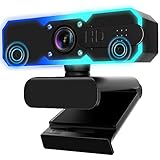


Top 3 picks at a glance
Quick Picks
| Product | Best for | Price |
|---|---|---|
| Logitech Brio 101 | Trusted brand on a budget | Check on Amazon |
| EMEET S600 | Best value 4K sensor | Check on Amazon |
| 1080P HD Webcam (Black) | Complete budget package | Check on Amazon |
| NBPOWER 1080P 60FPS | Streamers who hate external lights | Check on Amazon |
| Insta360 Link 2 | Premium PTZ with AI tracking | Check on Amazon |
| TRAUSI 1080P FHD | Absolute lowest viable quality | Check on Amazon |
| OBSBOT Tiny 2 Lite | Hands-free framing on a budget | $159 |
| AOC 4K Webcam | 4K picture at almost no cost | Check on Amazon |
How We Compared
Four criteria drove every ranking here. First, real-world image quality under imperfect lighting rather than spec-sheet resolution, because a 4K sensor that only produces a clean picture in bright daylight is no better than a good 1080p panel for most streamers. Second, autofocus behavior: does it hunt visibly during a live session or hold a lock? Third, microphone quality relative to the price, since many budget picks assume you already own a dedicated mic. Fourth, software ecosystem, because driver reliability and companion apps matter over months of nightly use, not just during a ten-minute setup.
The 8 Best Webcams For Streaming in 2026
Logitech Brio 101 Full HD 1080p Webcam for Streaming and Meetings
The Brio 101 is the default answer for a reason. Logitech’s image pipeline is more forgiving than anything else in this price bracket, producing warm, accurate skin tones straight out of the box without you touching a single setting. If you are upgrading from a laptop camera for the first time, this is the jump that feels like cheating.
- Pro: Genuinely accurate color reproduction at 1080p without manual white balance adjustments
- Pro: Plug-and-play reliability across Windows and Mac with no companion software required
- Con: No built-in privacy shutter, so you need a physical cover or careful positioning
Skip this if you shoot in a dark room more often than not; the small sensor struggles when ambient light drops below comfortable reading levels, and you will notice softness creeping in fast.
EMEET S600 4K Webcam for Streaming, Sony 1/2.55 inch Sensor, PDAF Autofocus
This is the webcam I recommend most often when a viewer message asks “what should I buy if I have a little more than thirty dollars.” The Sony sensor is visibly larger than anything else near this price, which means cleaner low-light performance and less digital noise during evening streams. PDAF keeps focus locked on your face even when you lean back or shift posture mid-conversation.
- Pro: Sony 1/2.55-inch sensor delivers noticeably better high-ISO performance than 1080p competitors
- Pro: Phase-detection autofocus locks quickly and does not hunt during subtle movements
- Con: Included mounting clip is thin and can wobble on lighter monitor bezels
Skip this if you absolutely need 60fps motion capture for gameplay overlay; it caps at 4K30 and 1080p30, so fast hand movements will show some blur.
1080P HD Webcam with Microphone, Noise Cancellation, Privacy Cover, Wide-Angle Lens, Auto Light Correction
For seventeen dollars you are getting a genuinely useful all-in-one package. The auto light correction is the standout feature here: in a poorly lit dorm room or a backlit home office, the image holds together better than its price tag should allow. The noise cancellation on the built-in mic is modest but enough for casual commentary if you do not have a dedicated microphone yet.
- Pro: Built-in privacy shutter gives you physical peace of mind between streams
- Pro: Wide-angle lens reduces the “head floating in empty room” framing problem
- Con: Image sharpness falls apart if you crop in at all; this is a native-resolution webcam, period
Skip this if you plan to use this as your long-term camera past 60 days of streaming; the sensor will feel limiting once your lighting improves.
NBPOWER 1080P 60FPS Streaming Camera Webcam with Microphone and Fill RGB Light, Autofocus
The built-in RGB fill light is gimmicky at first glance but actually solves a real problem for beginners who have never set up a key light. You can dial in soft frontal illumination without buying a separate panel, and the warm-white default setting flatters skin tone surprisingly well for an integrated solution. The 60fps cap gives noticeably smoother motion than the 30fps budget competitors in this list.
- Pro: Integrated fill light eliminates the need for an external lighting purchase when starting out
- Pro: 60fps capture produces smoother motion for face cam overlays
- Con: The RGB light ring creates visible colored spill on nearby objects, which can clash with your scene
Skip this if you already own a ring light or softbox; the integrated lighting adds bulk and the color temperature is not as adjustable as a proper panel.
Insta360 Link 2 – PTZ 4K Webcam for PC/Mac, AI Tracking, HDR, Gesture Control
This is the most complete streaming camera available right now. The PTZ motor physically pans and tilts to follow you as you move, gesture control lets you zoom or toggle your camera without touching the mouse, and HDR keeps your face exposed correctly even when a bright window sits behind you. The noise-canceling microphone is not merely adequate; it is good enough to replace a budget USB mic entirely.
- Pro: AI tracking with physical PTZ produces genuinely dynamic framing without a separate operator
- Pro: Gesture control for zoom and camera toggle adds production polish to solo streams
- Con: At its price point, this competes with mirrorless cameras and capture cards for the same budget
Skip this if you stream from a fixed seated position and already have a good microphone; the premium you are paying is for motion and audio convenience you may not use.
TRAUSI 1080P FHD Webcam with Noise-Canceling Mic, Auto Light Correction, Privacy Cover
At the absolute bottom of this list, the TRAUSI still outperforms most laptop cameras by a clear margin. The auto light correction handles dim rooms better than you would expect, and the wide-angle lens makes it easy to frame yourself without awkward cropping. The noise-canceling mic picks up your voice without amplifying keyboard clicks, which is a small but real quality-of-life benefit during live chat.
- Pro: Best image-to-price ratio for streamers who genuinely cannot spend more than twenty dollars
- Pro: Privacy cover and wide-angle lens are both present, features often traded away at this cost
- Con: Color accuracy is cool and washed-out; you will want to adjust saturation in OBS or a webcam utility
Skip this if your room is large and you need to capture a wide field of view without distortion; the lens warps the edges noticeably when the camera is far from you.
OBSBOT Tiny 2 Lite 4K Webcam for PC, AI Tracking PTZ Streaming Camera
The Tiny 2 Lite strips away the premium accessories of the full Tiny 2 but keeps the core magic: a PTZ motor that tracks your face, smooth enough that viewers rarely notice it working. Image quality from the 4K sensor is clean and detailed, and the auto-framing feature is one of the few AI implementations that actually adds production value rather than just being a demo.
- Pro: PTZ tracking is refined and quiet; no audible motor noise during a live broadcast
- Pro: Companion app offers granular exposure and zoom control without OBS plugins
- Con: Still carries a premium price despite the “Lite” designation
Skip this if you never stand up or move during your streams; you are paying for tracking capability that will sit unused, and a fixed camera at half the cost will look equally good.
AOC 4K Webcam for PC, Streaming Computer Camera with Noise-Canceling Mic
Getting a genuine 4K sensor for twenty-five dollars was unthinkable two years ago, and AOC pulled it off. The image holds up well in decent lighting, and the noise-canceling mic is usable for commentary in quiet rooms. This is the webcam I recommend to people who want maximum pixel count for cropping flexibility without spending triple digits.
- Pro: Native 4K resolution gives you headroom to crop and zoom in OBS without softening the image
- Pro: Noise-canceling mic is functional enough for quiet-room commentary without a dedicated microphone
- Con: Low-light performance is its weakest point; grain becomes visible in dim environments
Skip this if your streaming room is dark by default; the tiny sensor behind that high resolution will produce noisy footage the moment your key light is off.
Buying Guide
Sensor Size Matters More Than Resolution
A larger sensor gathers more light per pixel, which means cleaner images at higher ISO values and better separation from your background. That is why the EMEET S600 looks better in dim rooms than the AOC despite both shooting 4K. When comparing specs, look for the sensor format fraction (1/2.55-inch beats 1/3-inch) before the pixel count. Resolution determines how sharp the image can be; sensor size determines whether it will actually be sharp in your real lighting.
Autofocus Quality Determines Live-Stream Usability
Contrast-detection autofocus is cheaper but visibly hunts during a stream, creating a breathing effect that viewers notice within seconds. Phase-detection and hybrid systems lock faster and stay locked with subtle body movements. If a webcam does not specify its autofocus method, assume it uses contrast detection until you can test it. This single factor is why some 1080p webcams outperform 4K ones in practice: they hold focus cleanly.
Software and Companion Apps
Budget webcams rely on the operating system’s generic driver, which means limited or no control over exposure, white balance, and field of view. Premium models bundle companion apps that let you save profiles, adjust zoom digitally, and toggle features like HDR or background removal. Before buying, check whether the app works offline, because a cloud-dependent driver update that fails mid-stream is worse than no software at all.
Our Verdict
The best webcam for streaming overall is the Insta360 Link 2: no other product on this list combines image quality, tracking, microphone performance, and software polish at its price. For a budget pick, the Logitech Brio 101 remains the safest recommendation because it does not depend on good lighting to look presentable, which makes it the best option for beginners who have not yet solved their setup. That said, if your room has poor natural light and you refuse to buy a key light, the NBPOWER with its built-in fill light will produce a better image than any other camera here in that specific scenario, and it costs nothing extra.
FAQ
Do I need 4K for streaming?
Not necessarily. Most streaming platforms compress video so aggressively that the 1080p output is what viewers actually see. A high-quality 4K webcam lets you crop digitally in OBS without losing clarity, and it will hold up better on future platforms that allow higher bitrates. But a good 1080p webcam with a larger sensor will outperform a cheap 4K one in practice.
Is a built-in microphone good enough for streaming?
For casual commentary in a quiet room, yes. Noise cancellation on modern budget webcams is noticeably better than it was a few years ago. The moment you add keyboard noise, room echo, or background conversations, a dedicated USB or XLR microphone becomes a visible upgrade that no webcam can match regardless of price.
What frame rate should I target for a face cam?
Thirty frames per second is sufficient for most talking-head overlays because viewers are watching your content, not your webcam. Sixty frames smooths head and hand movements noticeably, which helps if your overlay is large or if you gesture frequently. Above sixty is unnecessary for a webcam and most platforms will throttle it down anyway.
How do I make my webcam look professional on a budget?
Position a single light source in front of you at roughly a forty-five-degree angle and height. Lock your exposure and white balance manually in OBS or your webcam software so the image does not shift when you move. Then frame yourself slightly off-center using the rule of thirds. These three steps matter more than the difference between a twenty-dollar and a hundred-dollar webcam.


