The best acoustic panels for a streaming room for most people are the Foroomaco Slash Acoustic Foam Panels, a 12-pack of 12 by 12 inch black tiles that are 2 inches thick. The extra thickness over the common 1 inch foam matters because thicker foam absorbs a wider range of the echo and flutter that make voices sound hollow on a microphone. If you have a larger room and want maximum coverage for the effort, the Saiqiang 56 Pack and the Focusound 52 Pack deliver the most square footage in this guide. For a streaming backdrop that looks like furniture instead of a recording booth, the JaneTech wood slat panels and the TONOR wood wall panels are the more decorative direction. Keep one expectation in check: foam and slat panels treat echo inside the room, they do not block noise from leaking through walls, and they do little for deep bass. For a typical desk setup, that is exactly the problem to solve.
Our Top Picks

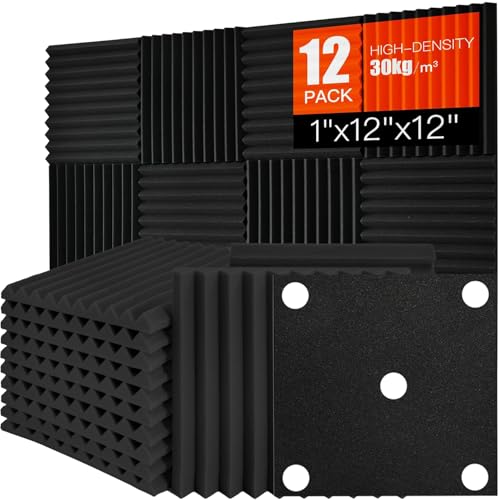


Top 3 picks at a glance
Top 3 Picks
Best Overall: Foroomaco Slash Acoustic Foam Panels, 2 Inch, 12 Pack
The Foroomaco panels are 2 inches thick, which gives them a better chance of taming the mid-range echo that makes a bare room sound boxy. The 12-pack covers about 12 square feet, enough to treat the wall behind a desk and a pair of side reflection points in a small streaming corner.
Best Budget and Coverage: Saiqiang 56 Pack Acoustic Foam Panels
This 56-piece set of 1 inch by 12 by 12 inch tiles covers roughly 56 square feet, and the listing mentions fire-resistant foam. It is the lowest-effort way to cover a lot of wall when you are working with a large, echoey room or you want to build a recording-style space.
Best Decorative Option: JaneTech 6 Pack Wood Acoustic Panels
The JaneTech set uses wood-look slat panels that stick on with nano glue, per the listing, and are described as sound-absorbing for studios, offices and conference rooms. It suits streamers who want treatment that also looks like a design choice on camera.
Quick Comparison
| Product | Best for | Key specs |
|---|---|---|
| Focusound 52 Pack Foam Panels | Covering a large room | 52 wedge tiles, 1 x 12 x 12 in |
| Saiqiang 12 Pack Foam Panels | Small desk corner | 12 tiles, 1 x 12 x 12 in, high density |
| Foroomaco Slash Foam Panels | Best overall, thicker foam | 12 tiles, 12 x 12 x 2 in, black, linear slash pattern |
| Saiqiang 56 Pack Foam Panels | Maximum coverage | 56 tiles, 1 x 12 x 12 in, fire-resistant per listing |
| TDHLYJHF 52 Pack Wedge Foam | Studio look in black and blue | 52 wedge tiles, 1 x 12 x 12 in, black/blue |
| 24 Pack Pyramid Acoustic Foam | Thicker foam in mid quantity | 24 pyramid tiles, 2 in thick |
| TONOR Wood Wall Panels | Decorative wall treatment | 4 panels, 47.2 x 23.6 in each |
| 12in Acoustic Panels for Walls | Simple high-density tiles | 12 inch panels, high density, check pack count |
| JaneTech 6 Pack Wood Acoustic Panels | Good-looking treatment for cameras | 6 wood-look panels, nano glue backing |
| Decorative Acoustic Wall Art 6 Pack | Design-forward wall panels | 6 decorative sound-absorbing panels |
How We Chose
We evaluated these products by reading each listing’s stated dimensions, thickness, pack count, materials and installation method, and by checking them against well-established acoustic principles. We did not run any acoustic measurements of our own, so none of the numbers here are measured results. The criteria were thickness and shape, because those drive how much of the audible range a panel can absorb; square footage per pack, which tells you how much of a real wall you can cover; the look on camera, since streamers show their room; mounting method and the risk to paint or walls; any fire-resistance wording in the listing; and how clearly the listing describes what it is. When a listing leaves out details such as the exact core material or rating, we describe the spec class and ask you to confirm it on the product page.
1. Focusound 52 Pack Acoustic Foam Panels – Best for Covering a Large Room
As an Amazon Associate we earn from qualifying purchases at no extra cost to you.

The Focusound set contains 52 wedge-style foam panels that each measure 1 inch by 12 inches by 12 inches, so the pack covers about 52 square feet when laid edge to edge. The listing frames them for home offices, recording spaces and noise reduction, which makes them a natural fit for a streaming room where you want to cut echo around the microphone and camera. It suits a streamer with a bare room, hard floors and a big set of walls to treat, who needs quantity more than premium thickness.
Key specs
- Pack: 52 panels
- Size per panel: 1 x 12 x 12 inches
- Coverage: about 52 square feet
- Shape: wedge profile for added surface area
- Intended use: home office, recording and studio spaces, per the listing
At 1 inch thick, foam of this type works mostly on higher frequencies, including the sharp, bright reflections that make speech sound harsh or hollow. It does less for the low-mid range, and almost nothing for deep bass. That is a normal limit of thin foam and not a flaw specific to this set. A good plan is to cover the wall behind you, the wall in front of you and two side reflection points, then add more tiles as needed.
Installation usually uses adhesive spray, double-sided tape or removable mounting squares. Foam is light, so removable products are the safer option when you rent or care about your paint. Some foam arrives compressed and has a faint smell at first, so unpack it a day before you hang it and let it air out in a ventilated space. Foam can burn, so keep it away from space heaters and bright lamps unless the listing clearly states a flame rating, and confirm that rating on the product page.
Who should skip it: anyone who wants a tidy, furniture-like room, since a wall of wedge foam reads as a recording booth, and anyone hoping to quiet a loud household. Before installing, lay the tiles on the floor in the pattern you plan to hang, then photograph the layout so you can copy it onto the wall. Mark a level line with a pencil first, because a crooked grid is the first thing viewers notice behind you. Leave a few inches around light switches, outlets and vents, and confirm the density, thickness and any flame rating on the product page.
Pros
- Large quantity covers a lot of wall
- Wedge profile adds surface area for better treatment of high frequencies
- Easy to cut and shape with a sharp blade
- Good for rooms that need broad coverage
Cons
- Thin 1 inch foam does little for bass and low-mids
- Does not block sound from leaking through walls
- Foam look is studio-like rather than decorative
- Adhesive can mark paint if you use the wrong product
Compared with the TDHLYJHF 52 pack, the Focusound set offers the same quantity and thickness, so the decision is mostly about color and appearance. Against the Saiqiang 56 Pack, you get four fewer tiles. If you want thicker foam in fewer pieces, look at the Foroomaco 2 inch panels or the 24 Pack pyramid foam.
2. Saiqiang 12 Pack Acoustic Foam Panels – Best for a Small Desk Corner

The Saiqiang 12 Pack gives you twelve 1 inch by 12 by 12 inch tiles, or about 12 square feet of treatment, and the listing calls the foam high density and aimed at noise reduction on walls. It suits a streamer in a bedroom or apartment who wants to start small by treating the wall directly behind the microphone and one side reflection point, without turning the room into a studio.
Key specs
- Pack: 12 panels
- Size per panel: 1 x 12 x 12 inches
- Coverage: about 12 square feet
- Material: foam described as high density
The tile count is the thing to think about. Twelve tiles will not transform a full room, but they can make a clear difference on a small area. A practical layout is a 3 by 4 grid of tiles behind your chair, or two smaller blocks at the first reflection points on your left and right. Those are the places where sound from your voice and speakers bounces off a wall and returns to the microphone a fraction of a second late. Treating those spots is more effective than spreading twelve tiles thinly across an entire wall.
With a 12-pack, you can also experiment before committing to a bigger set. Hang the tiles with removable strips, record a short voice sample before and after, and listen for how much room echo remains. If the improvement is clear but incomplete, buy a larger pack from the same family so the look stays consistent. Confirm the thickness, density and any fire-resistance wording on the product page before you decide.
Who should skip it: anyone with a large room, because twelve tiles will be stretched thin, and anyone who wants better mid-range control from a single pack. A neat approach is to place the tiles in two columns of six on either side of your monitor, at head height, so they flank your voice and the camera view. Re-record a short sample phrase after hanging them and listen for ringing on hard consonants. If the sound improves but a slap remains, add tiles to the wall opposite the first group, since echo bounces between facing surfaces.
Pros
- Low-commitment pack size for first-time treatment
- Enough tiles to cover key reflection points
- Lightweight and easy to hang
- Same tile size as larger sets, so you can expand later
Cons
- Only 12 square feet of coverage
- 1 inch thickness limits low-frequency absorption
- Does not soundproof against outside noise
- Basic appearance
Beside the Foroomaco 12-pack, this Saiqiang set is thinner but similar in coverage, so the Foroomaco is the better pick when absorption quality matters more than the look. Beside the Saiqiang 56 Pack, the choice is purely about room size: the 56 pack covers a full wall, while this one handles a corner.
3. Foroomaco Slash Acoustic Foam Panels – Best Overall Thicker Foam

Foroomaco’s Slash panels are 12 by 12 by 2 inches, sold as a 12 pack in black, and the listing describes a linear, slash-style surface that absorbs sound and reduces echo. The headline is the 2 inch thickness. In general, thicker porous absorbers like foam work lower into the frequency range than thin ones, because sound waves need depth to lose energy as they pass through the material. That makes these a more capable option than the 1 inch tiles for the boxy, mid-heavy sound that bare rooms give to voices.
Key specs
- Pack: 12 panels
- Size per panel: 12 x 12 x 2 inches
- Coverage: about 12 square feet
- Color: black
- Surface: linear slash pattern
The black finish also helps on camera. Black foam disappears into the background, reflects less light and looks tidy next to a monitor, while bright or colored foam can pull focus. The slash surface adds texture and surface area, so the panels look more like a deliberate design than a pile of egg crates. Twelve square feet is modest, but it is enough for the main reflection points behind and beside a desk, which is where streamers gain the most.
A practical layout is to place four tiles on the wall behind your head height, then two on each side wall at ear height, then a couple above the monitor to reduce the bounce from a ceiling or desk. If you also use speakers, the first reflection points sit about halfway between you and each speaker on the side walls. A simple trick is to have a friend slide a hand mirror along the wall while you sit in position and mark where you can see the speaker in the mirror. Foam should be mounted with removable adhesive, and the product page should be checked for fire-resistance and material details.
Who should skip it: players with big rooms on a tight plan, since twelve tiles only go so far, and anyone who needs bass control. If you need to expand, buy a second pack in the same pattern so the surfaces match. Mount with removable strips at the corners of each tile, press for the time the strip maker recommends, and leave a few millimeters of gap so tiles can be lifted off later without tearing. Thick foam also helps behind a desk, where reflections from the monitor and the desk surface build up. Confirm the density and any flame wording on the product page.
Pros
- 2 inch thickness absorbs more of the mid-range than 1 inch tiles
- Black finish looks clean on camera
- Textured surface looks more refined than basic wedges
- Good coverage for the key reflection points in a small room
Cons
- Only 12 panels, so large rooms need more packs
- Thicker foam sticks out further from the wall
- Still limited for deep bass
- Does not block noise leaking through walls
The closest alternative is the 24 Pack 2 inch pyramid foam, which doubles the quantity in a similar thickness. Choose the Foroomaco when you prefer the cleaner linear look and a smaller footprint, and the pyramid set when you need more tiles. Compared with the 1 inch Saiqiang and Focusound sets, it trades quantity for better absorption per tile.
4. Saiqiang 56 Pack Acoustic Foam Panels – Best for Maximum Coverage
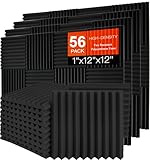
This Saiqiang set contains 56 foam panels at 1 inch by 12 by 12 inches, which adds up to roughly 56 square feet, and the listing highlights a fire-resistant claim and a noise-cancelling, sound-dampening purpose. It is the biggest pack in the guide, so it suits a streamer with a large or very echoey room, a converted garage or basement, or anyone who wants to cover multiple walls without buying several smaller packs.
Key specs
- Pack: 56 panels
- Size per panel: 1 x 12 x 12 inches
- Coverage: about 56 square feet
- Claim: fire resistant, per the listing; confirm the exact rating on the product page
To see how far 56 square feet goes, picture a typical 10 by 12 foot room with 8 foot ceilings. The total wall area is about 352 square feet. Covering 56 square feet treats roughly 16 percent of the walls, which is a sensible amount for a streaming room where most of the echo comes from a few hard surfaces. Many acoustic guides recommend covering somewhere around 15 to 30 percent of wall area for a room used for speech, so this pack lands near the lower end of that range, and you can add more later.
The thin foam works best on higher frequencies, so it is excellent for taking the sizzle and slap out of a bare room but will not cure a boomy corner. If you notice a thumping bass resonance when you speak or play music, you will need dedicated bass traps in the corners instead of more thin tiles. Wear a dust mask when cutting foam, and cut slowly with a sharp blade to avoid ragged edges. Foam should not be used as a soundproofing measure to keep neighbors from hearing you.
Who should skip it: anyone with a small bedroom, where 56 tiles would overwhelm the walls, and anyone after a refined look. If you do use the whole pack, avoid covering a single wall edge to edge. Instead, split the tiles between the wall behind you, the wall facing you and the two side walls, leaving gaps. That spreads absorption and avoids the dead, closed-in feeling that heavy treatment can produce on one side of a room. Cut tiles to fit around windows and doors, and always confirm the fire-resistance wording and rating on the product page before relying on it.
Pros
- The largest pack in this guide at 56 tiles
- Fire-resistant wording in the listing, subject to confirmation
- Enough to treat a full wall or several reflection points
- Simple, uniform look when installed in a grid
Cons
- 1 inch thickness limits low-frequency absorption
- Time-consuming to install across a large area
- Adhesive removal can damage paint
- Studio look may not suit a living area
It is the natural step up from the Saiqiang 12 Pack, using the same tile size. Against the Focusound 52 Pack, you receive four extra tiles and a stated fire-resistance claim. If you want better absorption instead of more tiles, step to the 2 inch Foroomaco or pyramid sets.
5. TDHLYJHF 52 Pack Acoustic Foam Panels – Best for a Studio Look in Black and Blue

The TDHLYJHF set includes 52 wedge-style foam panels at 1 inch by 12 by 12 inches in a black and blue color mix, according to the listing. At 52 square feet of coverage, it competes directly with the Focusound pack, but the two-tone color is the distinguishing feature. It suits a streamer who wants the room to look intentionally themed, such as a gaming wall with blue accents, while still gaining the sound benefits of a large quantity of wedge foam.
Key specs
- Pack: 52 panels
- Size per panel: 1 x 12 x 12 inches
- Coverage: about 52 square feet
- Color: black and blue option
- Shape: wedge profile
Color can be used as a design tool. Arranging the tiles in a checkerboard or stripe pattern lets you create a backdrop that looks designed rather than improvised, and it can match the lights and accessories in a gaming setup. Remember that the camera sees only the area behind you, so you can concentrate the more decorative layout there and use plain black tiles, or a bare wall, in places the camera cannot see.
The wedge profile increases surface area compared with flat foam, helping with the higher frequencies that cause harshness. Do not expect it to work miracles for bass. A common mistake is to cover one wall completely with foam while leaving the opposite wall bare, which can leave a ringing, flutter echo between hard parallel surfaces. A better approach is to spread tiles across opposing walls, with extra attention to the wall behind your microphone and the wall in front of you.
Handle foam gently, as it tears and crumbles if pulled hard. If you use adhesive spray, try a small patch in an unseen area to see how the paint reacts. Because the product is a lesser-known brand, check the product page for fire rating, thickness tolerance and warranty before you decide.
Who should skip it: anyone who prefers a neutral room, or whose camera shows the wall in frame and wants a subtle backdrop. Strong colors can also shift how skin tones look on camera because they reflect tinted light. If you like the two-tone idea, try a small trial patch behind your chair and check the video preview under your normal lights. Keep the tiles clear of hot lamps and heaters, and check that the supplied adhesive, if any, is safe for your wall type. Details such as fire rating and warranty should be checked on the product page.
Pros
- Large 52 tile pack with wedge profile
- Two-tone color option adds visual interest
- Good coverage for a full wall
- Same tile size as other 12 inch foam, so it mixes easily
Cons
- Thin foam leaves bass untreated
- Blue accents may clash with some room styles
- Offers no soundproofing against outside noise
- Details such as fire rating need confirmation on the product page
It is nearly identical to the Focusound 52 Pack in size and thickness, so choose on color and the listing details you prefer. If you want a calmer, all-black look, the Foroomaco panels or the Saiqiang packs are the better visual match.
6. 24 Pack 2 Inch Thick Pyramid Acoustic Foam – Best for Thicker Foam in a Mid-Size Pack

This listing is for 24 pyramid-profile foam panels that are 2 inches thick, sold for use on walls. Pyramid foam is the classic look people picture when they imagine a home studio: rows of small peaks that add surface area and scatter reflections. The 2 inch depth puts it in the same thickness class as the Foroomaco, but at double the quantity. If your room is mid-sized and you want better absorption than 1 inch tiles can give, it is a balanced option.
Key specs
- Pack: 24 panels
- Thickness: 2 inches, per the listing name
- Shape: pyramid profile
- Likely tile size: about 12 x 12 inches; confirm on the product page, since the listing name does not state it
If the tiles measure 12 by 12 inches, 24 of them cover 24 square feet, enough for a wall of about 6 by 4 feet. That is plenty to surround a monitor and microphone position: one block behind the desk, one on each side and a smaller strip above the camera. Thicker foam helps with the lower-mid frequencies that make a voice sound hollow or muddy, and the pyramid shape adds a bit of diffusion, so reflections arrive scattered rather than as clean echoes.
The peaks also catch dust more than flat panels, so plan to vacuum them gently with a soft brush attachment every few weeks. Because the tiles are deeper, use mounting that can hold their weight and keep them off hot surfaces. Foam of any shape can burn, so avoid placing it close to lamps, heaters or the exhaust vents on PC cases. Check the product page for any stated flame rating, density and tile dimensions before purchasing.
Who should skip it: anyone who wants a polished, modern backdrop, since pyramid foam strongly signals home studio, and anyone with a very small desk area where deep tiles would crowd the monitor. For setup, hang the tiles with the peaks facing out and stagger the rows so the pyramids interlock, which makes a neat pattern. Dust the surface with a soft brush every month, and keep the tiles dry. If you plan to mix them with flat foam from another brand, use a single thickness on any one wall so the surface looks even.
Pros
- 2 inch thickness for broader absorption
- 24 tiles cover a meaningful amount of wall
- Classic studio look scatters reflections
- Good balance between quantity and performance
Cons
- Listing name gives little detail on size and density
- Peaks collect dust
- Thicker tiles protrude farther into the room
- Does not stop sound leaking to other rooms
Compared with the Foroomaco 12 pack, it doubles the tile count but looks busier and less polished. Compared with the 56 Pack Saiqiang, it covers less than half the area but absorbs better per square foot. For a small room, the Foroomaco is neater; for a mid-size room, this set is the more efficient choice.
7. TONOR Wood Wall Panels – Best for Decorative Wall Treatment

The TONOR Wood Wall Panels come as a 4 pack, with each panel measuring 47.2 inches by 23.6 inches according to the listing, and they are sold as interior wall decor. TONOR is better known for microphones and audio gear, so streamers may already recognize the name. Each panel covers about 7.7 square feet, so the four-pack spans nearly 31 square feet, a sizable chunk of wall for a set of only four pieces. It suits a streamer who wants a wood-paneled backdrop and would be happy with some acoustic benefit as a bonus.
Key specs
- Pack: 4 panels
- Size per panel: 47.2 x 23.6 inches (about 7.7 square feet)
- Total coverage: about 31 square feet
- Style: wood wall panels for interior decor
The listing title frames these as decor, not as a rated acoustic product, so treat any sound-absorbing benefit as a modest extra. Slatted wood panels with a felt or fabric backing can reduce reflections and break up flat surfaces, which helps a room sound less bare, but they do not match the thickness and density of foam or purpose-built acoustic panels. Confirm the backing material, the core thickness and any absorption rating on the product page before you count on them for echo control.
Where they shine is the camera. A warm wood backdrop looks finished, hides cables and plain walls and makes a stream look like a designed studio. If you combine them with foam at the first reflection points, you get both appearance and function. Installation usually involves adhesive or screws, so measure the wall, find studs where needed, and check that your wall can support the weight of the panels.
Who should skip it: anyone relying on the panels for serious echo control, and renters who cannot drill or use strong adhesive. These are large panels, so measure your wall, plan the layout with painter’s tape before mounting and have a second person help hold them. Heavy panels need proper fixings, and in a rented space you may prefer a removable hanging system rated for the weight. Confirm the core, backing, mounting hardware and any sound absorption rating on the product page, then pair them with foam at the side reflection points if echo remains.
Pros
- Large panels cover a lot of wall with few pieces
- Wood look is attractive on camera
- Fewer seams and quicker installation than many small tiles
- Recognizable audio brand
Cons
- Listed as decor, so acoustic performance is not specified in the title
- Likely less absorbent than thick foam
- Larger size is harder to move and mount
- Mounting may require tools and wall anchors
Next to the JaneTech wood acoustic panels, the TONOR set offers much bigger individual panels, while JaneTech explicitly markets sound absorption. Choose TONOR for a bold backdrop and JaneTech if absorption is the priority. Next to foam, expect a better look and a weaker effect on echo.
8. 12in Acoustic Panels for Walls – Best for Simple High-Density Tiles

This listing is titled 12in Acoustic Panels for Walls, High Density Soundproof Wall Panels, and the name gives only a few facts: a 12 inch size and a high-density construction. It does not state the pack count, thickness or material in the title, so the right way to treat it is as a general-purpose 12 inch panel and to read the full product page before buying. For streamers who want straightforward tiles without a lot of branding, it can be a practical option once those details are confirmed.
Key specs
- Size: 12 inch panels, per the listing name
- Construction: high density, per the listing name
- Pack count, thickness and core material: confirm on the product page
Density matters in acoustic panels. Very light, thin foam absorbs mostly high frequencies, while denser and thicker material can absorb more of the mid-range. If these panels use dense foam or polyester fiber, they may hold up better to handling and look tidier on the wall. If the product page lists a thickness of 1 inch, treat it like the other thin foam sets; if it lists 2 inches or more, it should handle more of the mid-range.
The word soundproof in a listing title is worth reading carefully. Wall-mounted absorbers reduce reflections inside a room, which makes recordings clearer, but real soundproofing requires mass, sealed gaps and decoupled walls, which a panel stuck to drywall does not provide. If your goal is to keep a noisy stream from disturbing a roommate, plan for door seals, rugs, heavy curtains and perhaps a different room, then use panels only for the sound inside.
Who should skip it: shoppers who like to compare pack counts and thicknesses at a glance, because this title leaves those details out. Before buying, check the product page for the number of panels, the thickness, the core material and any flame rating, and look for a stated absorption figure such as an NRC. A panel with an NRC around 0.5 or higher for its thickness is doing real work, while one with no rating is a guess. If the details check out and fit your plan, treat it like any other 12 inch tile and mount it at the reflection points.
Pros
- Straightforward 12 inch format
- High-density wording suggests a sturdier panel
- Can mix with other 12 inch tiles in a layout
- Useful for filling gaps in an existing setup
Cons
- Listing name omits pack size, thickness and material
- Soundproof wording may overstate what wall panels can do
- Limited decorative appeal
- Details need checking before you buy
Compared with the Saiqiang 12 Pack, it is similarly simple but less specific in the title. Compared with the Foroomaco panels, it lacks a stated 2 inch thickness. If you want clearer specifications, choose one of the better-documented foam sets; if the product page confirms thickness and quantity that fit your plan, it can work as a quiet filler option.
9. JaneTech 6 Pack Wood Acoustic Panels – Best for Good-Looking Treatment on Camera

The JaneTech set contains six wood acoustic panels described as decorative and sound absorbing, with a nano glue backing for mounting, and the listing targets recording studios, home offices and conference rooms. Wood slat panels with an acoustic backing have become popular because they solve two problems at once: they soften reflections and they make a plain wall look intentional. For a streamer who is more concerned about how the room appears than how it looks in a studio magazine, they are the most appealing style in this guide.
Key specs
- Pack: 6 panels
- Style: wood-look decorative acoustic panels
- Mounting: nano glue, per the listing name
- Intended spaces: recording studio, home office, conference room
- Panel size and core thickness: confirm on the product page
Slatted wood panels usually work by letting sound pass through narrow gaps into a felt or foam layer behind them, where it loses energy. The result is mild-to-moderate absorption in the mid and high ranges, often with a diffusing effect from the slat pattern. Because the exact size, felt thickness and rating are not given in the title, ask what coverage six panels deliver once you confirm the dimensions. If each panel is around 2 feet by 1 foot, six cover roughly 12 square feet, similar to a 12-tile foam pack.
Nano glue is a reusable adhesive-style backing that sticks to smooth, clean surfaces. It is convenient because it avoids drilling and spray adhesive, but it works best on flat, dry, dust-free walls and may not hold well on textured or freshly painted surfaces. Press each panel firmly, wait for the recommended set time and avoid hanging heavy panels on weak surfaces. For a rented space, try a hidden area first, since any adhesive can lift paint when removed.
Who should skip it: anyone with a large room who needs lots of coverage, since six panels cannot treat much surface, and anyone who needs bass control. Check the panel dimensions and the felt thickness, then plan where they go. Hanging them in a clean row behind your head gives a tidy on-camera backdrop, while staggering them at different heights can look more casual. Clean the wall first with a dry cloth, because dust and grease weaken nano glue. Keep the panels away from humid spots and direct sun, which can warp wood-look materials.
Pros
- Attractive wood look suits a camera background
- Marketed explicitly as sound absorbing
- Nano glue backing avoids drilling
- Works as both decor and treatment
Cons
- Listing title does not state dimensions or thickness
- Less absorption per square foot than thick foam
- Adhesive performance depends on wall surface
- Only six panels, so coverage may be limited
Compared with the TONOR set, the JaneTech panels are described as acoustic, while the TONOR listing leans on interior decor. Compared with foam, you give up some absorption for a much nicer finish. A common pairing is to hang the wood panels behind you where the camera sees them, then add a few discreet foam tiles at the side reflection points out of frame.
10. Decorative Acoustic Wall Art 6 Pack – Best for Design-Forward Wall Panels

This listing is titled Soundproofing Panels, Decorative Acoustic Wall Art, Sound Absorbing, 6 Pack. The title tells you three things: it is a set of six, it is meant to look like wall art, and it claims to absorb sound. It does not give a size, thickness or material, so it is the least documented product in this guide. It suits a streamer who wants a stylish accent wall and is willing to confirm the specifics before buying.
Key specs
- Pack: 6 panels
- Style: decorative acoustic wall art
- Claim: sound absorbing, per the listing name
- Size, thickness and core material: confirm on the product page
Decorative acoustic panels are typically fabric-wrapped boards with a core of mineral wool, fiberglass or polyester fiber, sometimes printed with an image. When built with a thick, dense core, they can be effective, and they hang like a picture frame. When built with a thin felt layer, they offer light absorption and mostly act as decoration. The difference is in the core and the thickness, so those two details deserve your attention. As a rule of thumb, a panel around 2 inches thick with a dense core will do far more than a thin decorative board.
Because the product is described as art, it is also easy to integrate into a streaming setup. Hang the panels behind you as a backdrop or beside the monitor where they catch the light. If you use RGB lighting, remember that light-colored fabric will reflect colors more strongly than black foam. Choose a hanging method that suits the weight, which could be adhesive strips, hooks or wall anchors, and check that the backing is secure before you leave the panels unattended.
Who should skip it: anyone who needs predictable acoustic results or a documented rating, since the title offers no size, core or rating. Ask what the product page says about the core and whether the panels are fabric wrapped, felt, foam or fiber. Hang them where you would put any panel: behind the microphone, beside the monitor and at the side reflection points. If the first set helps but not enough, add dedicated acoustic panels with a stated thickness and density rather than assuming more decorative boards will fix it. Keep them dry and away from heat, and confirm the hanging hardware included.
Pros
- Looks like wall art rather than studio foam
- Six panels give flexible layouts
- Marketed as sound absorbing
- Easy to blend into a living space
Cons
- Listing title lacks dimensions, thickness and core material
- Performance depends heavily on the unstated core
- Soundproofing wording should not be taken literally
- Coverage per pack is probably limited
The nearest alternative is the JaneTech wood panel set, which has more detail in its title and a clearer acoustic focus. Compared with the Foroomaco foam, this set trades dependable, documented absorption for a better look. If you cannot confirm a thick, dense core, use it as decoration and rely on foam or thicker panels for the real echo control.
How to Choose Acoustic Panels for a Streaming Room
Start with the situation you are in, then work out how much material you need. The matrix below maps common streamer setups to the best match from this guide.
| Your situation | Best match | Reason |
|---|---|---|
| Small bedroom desk, minimal effort | Foroomaco Slash 12 Pack | 2 inch black tiles for the key reflection points |
| Large echoey room or basement | Saiqiang 56 Pack or Focusound 52 Pack | Most square footage per pack |
| Want a themed color scheme | TDHLYJHF 52 Pack black and blue | Color mix for a gaming look |
| Mid-size room, want thicker foam | 24 Pack 2 inch pyramid foam | Thicker tiles at a mid quantity |
| Care most about how the backdrop looks | JaneTech wood panels or TONOR wood panels | Wood finish that reads as decor |
| Starting small and experimenting | Saiqiang 12 Pack | Low-commitment starter set |
| Want wall art that hides treatment | Decorative Acoustic Wall Art 6 Pack | Picture-like panels, confirm the core |
Absorption is not soundproofing
Acoustic panels and soundproofing are different jobs. Absorption reduces reflections inside the room, which tames echo and makes your voice sound closer and cleaner on a microphone. Soundproofing keeps sound from passing through walls, and it needs mass, airtight seals and decoupling. Thin foam stuck on drywall adds almost nothing to isolation. If neighbors or family hear your stream through the wall, add a solid-core door, door sweeps, heavy rugs and curtains, and perhaps a bookshelf full of books on the shared wall.
Thickness and shape decide what you absorb
Porous absorbers like foam work best when their thickness is a meaningful fraction of the wavelength of the sound. A 1 inch tile does well above roughly 1,000 to 2,000Hz, which covers the sharp consonants and hiss in a voice. A 2 inch tile reaches lower, into the range where the room makes a voice sound boxy. Deep bass below about 200Hz needs thick bass traps, usually 4 inches or more of dense mineral wool or foam placed in corners. Wedge, pyramid and slash shapes add surface area and some scattering, but thickness is the main driver of performance.
Worked example: how much do you need?
Take a room that is 10 feet by 12 feet with 8 foot ceilings.
- Wall area: 2 x (10 + 12) x 8 = 352 square feet
- Target coverage for speech: about 15 to 25 percent of wall area, or roughly 53 to 88 square feet
- A 52 pack of 12 inch tiles covers 52 square feet, or about 15 percent
- A 56 pack covers 56 square feet, about 16 percent
- A 24 pack of 12 inch tiles covers 24 square feet, about 7 percent
- Four 47.2 by 23.6 inch wood panels cover about 31 square feet, about 9 percent, using 47.2 x 23.6 / 144 = 7.7 square feet each
As a rough estimate of the effect, Sabine’s formula says reverberation time equals 0.161 times room volume in cubic meters divided by total absorption. The room volume is 960 cubic feet, or about 27 cubic meters, and the surfaces total about 55 square meters. If the bare room averages an absorption coefficient of 0.1, total absorption is about 5.5 sabins and reverberation is roughly 0.8 seconds. Adding 4.8 square meters of foam with an average coefficient of 0.5 for speech raises total absorption to about 7.4 sabins, and the reverberation drops to roughly 0.6 seconds. These are estimates and not measurements, but they show why the first 50 square feet makes the biggest difference.
Where to place panels
- The wall behind the microphone, so your voice does not bounce off it
- The wall behind the camera or monitor, to reduce reflections arriving from the front
- Side-wall reflection points at ear height, found with the mirror trick
- Above the desk if the ceiling is low and hard
- Corners, if you add bass traps later
Safety, mounting and materials
Foam is flammable unless it is made with flame-retardant additives, so look for clear fire-rating statements and confirm them on the product page. Keep it away from heaters, bright lamps and PC exhaust. Use removable adhesive strips when you rent, and try a hidden spot first. New foam can smell for a day or two, so air it out. Wood and fabric panels are heavier, so use anchors that suit your wall type, and never hang heavy panels above a bed or a seat without proper fixings.
Common mistakes
- Covering one wall completely and leaving the opposite wall bare
- Treating the whole room with 1 inch foam and expecting the bass to disappear
- Placing tiles at random heights instead of at mouth and ear level
- Buying a decorative panel without checking its core thickness
- Expecting a panel to stop neighbors from hearing the stream
Frequently Asked Questions
Do acoustic foam panels soundproof a room?
No. Foam absorbs reflections inside the room, which reduces echo, but it does not stop sound from passing through walls. For real isolation you need added mass, airtight seals and often a decoupled wall.
How many panels do I need for a streaming room?
A common target is to cover 15 to 25 percent of the wall area in a room used for speech. In a 10 by 12 foot room with 8 foot ceilings, that is roughly 53 to 88 square feet. Start with the reflection points behind and beside your microphone and add more if you still hear echo.
Is 1 inch foam enough, or should I choose 2 inch?
One inch foam handles sharp high-frequency reflections, while 2 inch foam reaches further into the mid-range where voices can sound boxy. If you can only afford one thickness and your room is small, 2 inch tiles are usually the better choice. For deep bass, you need dedicated bass traps.
Will acoustic panels damage my walls?
They can if you use strong adhesive on paint or wallpaper. Removable mounting strips or putty are gentler, but they may hold less weight. Try a small hidden spot first, and consider pins or hooks for heavier wood panels.
Are foam panels a fire hazard?
Standard foam can burn, and some types burn quickly. Look for listings that state a flame-retardant rating and confirm it on the product page. Keep foam away from heaters, hot lamps and exhaust vents, and do not cover smoke detectors.
Where exactly should I place panels for a microphone?
Treat the wall behind the microphone, the wall behind you if the microphone faces it, and the side walls at mouth height. Cardioid microphones reject sound from behind them, so the wall that the microphone points toward matters most. Moving the microphone closer to your mouth also reduces how much room sound it picks up.
Do wood slat panels work as well as foam?
Often they absorb less per square foot than thick foam, but they look much better and also scatter sound. How well they work depends on the felt or core behind the slats, which the product page should describe. Many streamers use wood panels in view of the camera and foam out of frame.
Can I use panels and still have good lighting for the camera?
Yes. Dark matte foam absorbs light and avoids glare, while light panels can reflect colored light. If you use RGB lighting, try a small area first to see how the panel color reacts to your lights.
Our Recommendation by Situation
If you have a small room and want the most effective pack, choose the Foroomaco Slash 2 inch panels. If the room is large or very echoey, pick the Saiqiang 56 Pack or the Focusound 52 Pack and spread the tiles across opposing walls. For a themed look, the TDHLYJHF black and blue set fits a gaming wall. If appearance on camera matters most, go with the JaneTech or TONOR wood panels and consider adding a few foam tiles out of frame. Whatever you choose, confirm the thickness, density and fire rating on the product page and keep your expectations realistic: panels improve how your voice sounds inside the room, they do not silence the room for the neighbors.