
Shopping for an Azul board game means choosing between a standalone core set, a portable mini edition, two full standalone sequels, an expansion, and a two-player duel version—plus a handful of look-alike tile-placement games that are not actually part of the Azul line. Buyers often land on the wrong product because the titles and component counts look nearly identical in search results, and a $25 purchase that should have been a $40 standalone leaves a family disappointed on game night.
What separates the right choice from the wrong one is straightforward once you match the product to your situation: Do you already own the original Azul and want more depth, or are you starting fresh? Do you regularly play with exactly two people, or does your group skew toward three or four? Is portability a deal-breaker because you travel or store games in tight quarters? This roundup from 2026 covers every current entry in the Azul system plus two frequently confused alternatives so you can pick with confidence.
As an Amazon Associate we earn from qualifying purchases at no extra cost to you. Product prices and availability are accurate as of the date shown and are subject to change.




Top 3 picks at a glance
Quick Picks
| Product | Best for | Price |
|---|---|---|
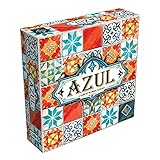
| Azul Mosaic Tile-Placement Strategy Board Game | First-time buyers who want the definitive version | $31.99 |
| Azul Mini Board Game | Travelers and tight-storage households | $24.98 |
| Azul Stained Glass of Sintra Expansion | Original Azul owners seeking extra scoring layers | $35.99 |
| Azul Summer Pavilion Board Game | Families wanting a fresh standalone experience | $40.49 |
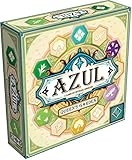
| Azul Queen’s Garden Board Game | Groups that prefer longer, deeper sessions | $40.49 |
| Azul Duel Board Game | Couples and consistent two-player tables | $24.49 |
| USAOPOLY Flip 7 Card Game | Players who want push-your-luck in a card format | $7.97 |
| MindWare Qwirkle with Trays | Families wanting a simpler tile-matching alternative | $29.99 |
How We Picked
We compared every current Azul-line product and the two most commonly cross-shopped alternatives against four criteria: component quality relative to price, standalone versus dependent (does it require another game to play?), replayability based on owner feedback, and player-count flexibility. A game that demands you already own a different box scores lower for first-time buyers, while a standalone with strong owner satisfaction and broad age appeal earns a top slot.
The 8 Best Azul Board Game in 2026
Azul Mosaic Tile-Placement Strategy Board Game
This is the gateway into the Azul system and the one to buy if you own none of the others. The core loop—drafting tiles from market rows and placing them on pattern lines—is elegant enough for a first play yet deep enough that owners report hundreds of sessions before the novelty fades. Pros: the tile factories and drafting logic create meaningful tension every round, and the component tray system doubles as a clean storage solution. Con: expansion fans will find the base scoring rules less varied than the sequels. Skip it if you already own Summer Pavilion or Queen’s Garden, since those are full standalones with additional scoring paths that make this redundant.
Asmodee Azul Mini Board Game
Azul Mini shrinks the entire core experience into a travel-friendly footprint without gutting the strategy. It is the same drafting-and-placement puzzle in a box that slides into a backpack or fits on a crowded shelf. Pros: genuinely portable at a fraction of the standard box size, and it plays at the same speed and depth with 2-4 players. Con: the smaller tiles and trays feel less tactile during long table sessions compared to the full-size original. Skip it if you are buying your very first Azul and want the complete sensory experience; get the standard edition instead.
Asmodee Azul Stained Glass of Sintra Expansion
Important distinction: Sintra is an expansion, not a standalone. You need the original Azul board game to play it. That said, it adds wall layers, new scoring tiles, and additional pattern lines that meaningfully increase depth for owners who felt the base game plateaued. Pros: the dual-sided wall boards introduce a second placement puzzle on top of the familiar pattern lines, and setup time stays reasonable. Con: the price sits close to full standalone sequels like Summer Pavilion, so it offers less total content per dollar if you have not already bought the original. Skip it if you do not own the base game yet.
Asmodee Azul Summer Pavilion Board Game
Summer Pavilion is a complete standalone that replaces the factory-drafting step with a pavilion-drafting mechanism and adds end-of-round bonus scoring based on completed sets. It is the best entry point for someone who wants something different from the original without needing to buy two boxes. Pros: the pavilion drafting system changes the decision space enough to feel fresh, and it supports the same 2-4 player count with the same 30-45 minute runtime. Con: owners who already love the original sometimes find the bonus tiles add analysis paralysis in 4-player games. Skip it if you want the purest, simplest Azul experience; stick with the base game.
Asmodee Azul Queen’s Garden Board Game
Queen’s Garden is the deepest standalone in the line, extending playtime to 45-60 minutes and raising the age recommendation to 10+. It introduces a garden path mechanic where tiles travel across the board before reaching your wall, adding a spatial puzzle layer on top of the familiar drafting. Pros: the path system rewards long-horizon planning and creates more interaction between players, and the extended runtime suits groups that feel the other entries end too quickly. Con: the added complexity can overwhelm casual or younger players, making it a poor choice for families with an 8-year-old who handles the simpler versions well. Skip it if your group prefers quick, low-stress games.
Asmodee Azul Duel Board Game
Azul Duel is designed exclusively for two players and condenses the drafting mechanic into a head-to-head race to fill three pattern rows. The smaller footprint and faster decision-making make it ideal for couples or roommates who rarely get a third or fourth player to the table. Pros: the two-player-specific design eliminates the pass-around downtime that dilutes tension in larger groups, and the price is the lowest in the Azul line. Con: it is strictly two-player, so if your group size ever expands beyond two, you need a different box. Skip it if you play with three or four people most nights.
USAOPOLY Flip 7 Card Game
Flip 7 is not an Azul product and does not use tile placement, but it appears constantly in Azul board game search results because it targets the same family-strategy audience. It is a push-your-luck card game where you draw numbered cards to build the highest total without flipping a previously drawn number. Pros: the rules are learnable in under two minutes, the price is the lowest here, and it fits in a jacket pocket. Con: it lacks the spatial puzzle and visual satisfaction that define the Azul experience, so it is a poor substitute if you specifically want tile-based strategy. Skip it if you are committed to the drafting-and-placement genre.
MindWare Qwirkle with Trays
Qwirkle is another frequent cross-shop result. It is a tile-placement game matching shapes and colors on a shared grid, somewhat similar in visual appeal but fundamentally different in mechanics—no drafting phase, no pattern lines, no wall-filling objective. Pros: the wooden tiles feel substantial, the rules are accessible to younger players, and the shared grid encourages a different kind of spatial reasoning. Con: owners describe it as having less strategic depth and fewer meaningful decisions per turn compared to any Azul entry. Skip it if you want the specific Azul drafting tension; it is a different game wearing a similar coat.
Buying Guide
Standalone Versus Expansion
The single most important distinction in this category is whether a box requires another box to function. Stained Glass of Sintra is the only expansion in this list; every other Azul product is fully standalone. If you are buying your first Azul-line game, expansion pricing gets you nothing because you lack the base system it attaches to. Check the title for the word “Expansion” and confirm you already own the prerequisite before purchasing.
Player Count and Frequency
Azul Duel is locked to exactly two players. Summer Pavilion, Queen’s Garden, the Mini, and the original all support 2-4. If your household regularly hits three or four, Duel is a dead end. If it is almost always just two, Duel’s tighter design and lower price beat buying a 4-player game where half the seats sit empty. Be honest about your typical table size before choosing.
Playtime and Complexity Tolerance
All entries except Queen’s Garden fit within 30-45 minutes. Queen’s Garden extends to 45-60 minutes and raises the age floor to 10+. If your window is a quick evening game and your youngest player is 8, the extra half hour and added scoring layers in Queen’s Garden may create frustration rather than satisfaction. Match runtime to attention span, not ambition.
Our Verdict
The top pick for most buyers is the Azul Mosaic Tile-Placement Strategy Board Game at $31.99: it is the definitive starting point, works standalone, supports 2-4 players, and has the deepest well of owner reviews confirming long-term replay value. The budget pick is Flip 7 at $7.97, which delivers solid family fun at a fraction of the cost if you are flexible on genre. Queen’s Garden becomes the winner when your group consistently has an hour to play, prefers richer scoring systems, and has players who are 10 or older.
FAQ
Do I need to own the original Azul before buying Summer Pavilion or Queen’s Garden?
No. Both are fully standalone games that use the same core drafting-and-placement family of mechanics but do not require any other box to play. You can start with either one independently.
Is Azul Mini just a smaller box or a different game?
It is the same core game in reduced physical dimensions, so you get the identical rules and strategic decisions. You lose the larger tactile trays and tile surface area, which some owners note makes long sessions less visually satisfying.
Can Azuls be played cooperatively?
No entry in this list supports cooperative play. Every product is competitive, with each player scoring independently against the others. The Duel is the most directly head-to-head because it only has two seats.
Is Stained Glass of Sintra worth buying separately from the original?
Only if you already own the original Azul. Without it, Sintra is unplayable. If you do own the original and want extra scoring variety, it adds meaningful depth for a modest price increase over the base rules alone.


