A network streamer only earns its place in a hi-fi rack if it can pull a genuinely lossless feed from the services you already use and hand that signal to your amplifier intact. The real decision is not whether a box streams, but which services and file formats its listing actually names, whether its DAC and outputs match the inputs on your amp, and whether it reaches your network by cable or by air.
This guide is for listeners adding streaming to an existing amplifier or powered speakers, for owners of large FLAC and DSD libraries stored on a NAS or drive, and for households planning multiroom playback. The four streamers below were chosen from their Amazon product pages, using the services, formats, DAC chips and connection lists named on those pages, so every claim here can be checked against the listing itself before you order.
Our Top Picks
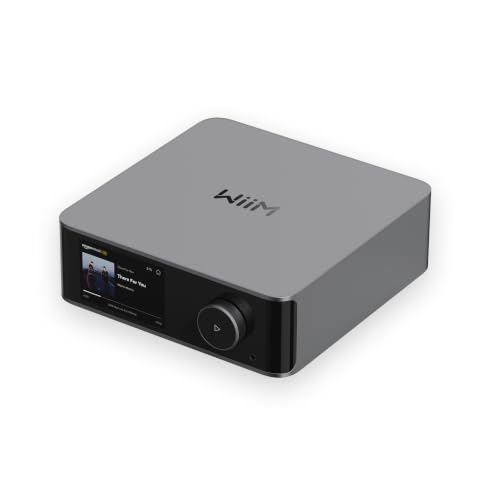 WiiM Ultra Hi-Res Music Streamer with Touchscreen &8.3 x 7.87 x 2.83 inches8.3 x 7.87 x 2.83 inches3.13 poundsCheck on Amazon
 Cambridge Audio MXN10 Compact HiFi Network Audio Streamer8.4 x 7.5 x 2 inches4.7 poundsCheck on Amazon

Top 3 picks at a glance

Quick Picks
As an Amazon Associate we earn from qualifying purchases.
| Product | Best for | Key spec from title |
|---|---|---|
| WiiM Ultra | A streamer and digital preamp in one box for a music and TV rack | 3.5-inch touchscreen with HDMI ARC and phono input |
| Bluesound NODE | Multiroom homes already invested in the BluOS ecosystem | ESS ES9039Q2M DAC with THX AAA headphone amplification |
| Eversolo DMP-A6 | Listeners whose libraries live on drives as much as on services | PCM up to 768kHz/32-bit and DSD512 with balanced XLR outputs |
| Cambridge Audio MXN10 | Half-width shelves and desktop systems with an amp you already like | ESS ES9033Q DAC with playback up to 768kHz 32-bit PCM |
How to Choose
Match the Named Services to Your Own Subscriptions
A streamer only plays losslessly from a service if that service is named on its listing and offers a lossless tier to send. The four units here name different mixes: the WiiM Ultra lists Spotify, Amazon Music and TIDAL, the NODE works inside the BluOS service library, the DMP-A6 names TIDAL Connect among its features, and the MXN10 lists Spotify Connect, TIDAL Connect, Amazon Music, Qobuz and Deezer. Before anything else, find your own subscriptions in the listing text. If your main service is absent, no DAC specification further down the page will fix that gap.
Decide Whether the Built-In DAC or Your Own Gear Does the Converting
Every unit here can work two ways: through its own DAC into an analog input, or as a digital transport feeding an external DAC. The WiiM Ultra converts through an ESS ES9038Q2M and also offers optical, coaxial and USB digital outputs. The NODE uses an ESS ES9039Q2M, the MXN10 an ESS ES9033Q, and the DMP-A6 adds balanced XLR analog outputs for amplifiers that accept them. Decide which path you will actually wire up, then check that the exact socket you need, RCA, XLR, optical or coaxial, appears in the listing.
Choose Ethernet or Wi-Fi on Purpose, Not by Default
All four streamers offer both a wired Ethernet port and Wi-Fi, but they are not equal wirelessly: the WiiM Ultra lists Wi-Fi 6E, while the NODE and MXN10 list dual-band Wi-Fi 5. A wired connection removes dropouts from the equation entirely and suits fixed racks near a router or switch, which is where high-resolution files up to 768kHz or DSD512 put the most data on your network. Wi-Fi earns its keep when the system sits across the room from any cable run. Pick based on where the rack actually stands, not on which connection sounds more audiophile.
Check the App and Multiroom Ecosystem Before You Commit
Day to day, you will live inside the control app, not the spec sheet. WiiM streamers run through the WiiM Home app, the NODE through BluOS, the MXN10 through StreamMagic, and the DMP-A6 through Eversolo’s own control app, with a 6-inch touchscreen as a second way in. Multiroom grouping only works inside one ecosystem, so a house with BluOS speakers in other rooms points straight at the NODE, while Google Cast and AirPlay 2 support, both named on the WiiM Ultra and MXN10 listings, suit households that cast from phones instead.
The 4 Best Options
WiiM Ultra
The WiiM Ultra suits listeners who want one compact box to act as streamer, DAC and digital preamp at the center of a music and TV setup. Its listing names Spotify, Amazon Music and TIDAL, with Google Cast and Alexa compatibility, and the hardware reaches beyond streaming: an HDMI ARC input takes TV sound, a phono input takes a turntable, and a headphone output covers late-night listening. The 3.5-inch touchscreen and volume knob mean basic control works without reaching for a phone, which keeps it friendly for shared living-room systems.
Specs
- Display: 3.5-inch touchscreen
- DAC: ESS ES9038Q2M
- Streaming named on listing: Spotify, Amazon Music, TIDAL; Google Cast and Alexa compatible
- Inputs: HDMI ARC, phono input, line input, optical input
- Outputs: RCA line out, optical, coaxial, USB audio, headphone output, subwoofer output
- Network: Wi-Fi 6E and Ethernet port
- Bluetooth: 5.3
Best for: A single streamer-preamp hub feeding an amplifier or powered speakers, with TV and turntable sources in the same rack.
Watch out for: The HDMI input is ARC for TV audio, not a video passthrough, and there are no balanced XLR outputs if your amplifier expects them.
ASIN: B0D41YCLW8
Bluesound NODE
The NODE is the natural pick when multiroom playback matters as much as the main listening room, because it runs on BluOS, the platform shared with Bluesound speakers and soundbars across a home. Its listing highlights an ESS ES9039Q2M SABRE DAC, a THX AAA headphone amplifier behind a full-size 6.3mm jack, and DSD playback support alongside FLAC and MQA files up to 24-bit/192kHz. An HDMI eARC input with Dolby Digital decoding lets it anchor a two-channel TV setup, and Dirac Live readiness is listed for listeners planning room correction later.
Specs
- DAC: ESS ES9039Q2M SABRE
- Headphone stage: THX AAA amplifier, 6.3mm output
- Outputs: stereo RCA, optical, coaxial, USB audio, subwoofer RCA
- Inputs: HDMI eARC, combined optical and analog input
- File support named on listing: FLAC, MQA, WAV, AIFF; hi-res up to 24-bit/192kHz; DSD support
- Network: Gigabit Ethernet, dual-band Wi-Fi 5
- Platform: BluOS multiroom, BluOS Controller app; AirPlay 2, Spotify Connect, TIDAL Connect and Roon Ready named on the listing
- Room correction: Dirac Live ready
Best for: Households building multiroom audio on BluOS who also want a strong headphone output and TV sound through the same box.
Watch out for: Analog output is RCA only, with no balanced XLR option, and Dirac Live works through a separate license rather than being switched on in the box.
ASIN: B0DB6QKVJB
Eversolo DMP-A6
The DMP-A6 is aimed at listeners whose collections live on hard drives and network shares as much as in streaming apps. The Amazon listing leads with format headroom: MQA full decode, DSD512 and PCM up to 768kHz/32-bit, plus an M.2 NVMe bay for fitting an SSD library inside the unit itself. A 6-inch HD touchscreen fronts the box, balanced XLR and RCA analog outputs cover both kinds of amplifier, and the listing names Roon Ready, TIDAL Connect and Squeezelite among its special features. It behaves like a small music computer with a proper hi-fi rear panel.
Specs
- Display: 6-inch HD touchscreen
- Playback named on listing: DSD512, PCM 768kHz/32-bit, MQA full decode
- Outputs: balanced XLR, RCA, HDMI, USB, optical and coaxial digital
- Storage: M.2 NVMe SSD bay for a local music library
- Features named on listing: Roon Ready, TIDAL Connect, Squeezelite, professional EQ
- Control: Eversolo control app and front touchscreen
- Bluetooth: 5.0
- Network: Ethernet and Wi-Fi
Best for: Owners of large local hi-res libraries who want internal SSD storage, balanced outputs and the widest format support in this group.
Watch out for: The feature set is deep enough that setup takes longer than the simpler streamers here, and the SSD for the internal bay is a separate purchase.
ASIN: B0C48P4TQT
Cambridge Audio MXN10
The MXN10 takes the opposite approach to the Eversolo: a half-width box with no screen, no headphone socket and no inputs, built purely to add network streaming to an amplifier you already own. Its listing names an ESS ES9033Q DAC with playback up to 768kHz 32-bit PCM and DSD512, driven by Cambridge’s StreamMagic platform and app. Spotify Connect, TIDAL Connect with MQA, Amazon Music, Qobuz, Deezer and Internet Radio are all named, along with AirPlay 2, Chromecast built-in and Roon Ready. Four front preset buttons handle daily radio and playlist starts without opening the app.
Specs
- DAC: ESS SABRE ES9033Q
- Hi-res support: up to 768kHz 32-bit PCM, up to DSD512
- Services named on listing: Spotify Connect, TIDAL Connect with MQA, Amazon Music, Qobuz, Deezer, Internet Radio
- Casting and platforms: AirPlay 2, Chromecast built-in, Roon Ready, StreamMagic app control
- Outputs: RCA line out, coaxial and optical digital out
- Network: Ethernet, dual-band Wi-Fi 5
- Bluetooth: 5.0
- Dimensions: 215 x 52 x 191 mm, half-width Lunar Grey chassis
Best for: Compact shelves and desktop systems where a trusted amplifier stays in charge and the streamer just needs to feed it well.
Watch out for: There is no display, no headphone output and no input for a TV or turntable, so every control action goes through the StreamMagic app.
ASIN: B0BVWJCL5M
Which One Fits Your Situation
You Want One Box Running the Whole Rack
Choose the WiiM Ultra. It is the only unit here whose listing combines streaming with an HDMI ARC input for the TV, a phono input for a turntable, a headphone output and a touchscreen with a volume knob. If your system is one amplifier and several sources, that input list removes the need for a separate preamp or switcher.
Your Other Rooms Already Speak BluOS
Choose the Bluesound NODE. Multiroom grouping only works inside a single ecosystem, and BluOS is the platform behind Bluesound speakers and soundbars throughout a home. The NODE also covers the headphone listener in the house with its THX AAA stage, and its HDMI eARC input keeps TV sound in the same system.
Your Library Lives on Drives, Not Services
Choose the Eversolo DMP-A6. The internal M.2 SSD bay, DSD512 and 768kHz PCM support, and balanced XLR outputs are all aimed at big local collections played through serious amplifiers. Listeners who mostly press play on a service app will not use half of what this box offers, but file collectors will use it daily.
Shelf Space Is Tight and the Amp Stays
Choose the Cambridge Audio MXN10. At 215 mm wide it fits shelves and desks where full-width components cannot, and it asks nothing of you beyond an app and one analog or digital connection into your existing amplifier. The four preset buttons cover the daily routine of radio and favorite playlists surprisingly well.
Common Mistakes
- Assuming a service is supported because a different model from the same brand lists it; service support is per product, so check the exact listing.
- Buying a streamer with balanced XLR outputs for an amplifier that only has RCA inputs, or the reverse, without checking both rear panels first.
- Running the largest hi-res files over a weak Wi-Fi signal at the far end of a home when an Ethernet port sits unused on the back panel.
- Mixing multiroom ecosystems, then expecting a WiiM, a BluOS speaker and a StreamMagic player to group together for party playback.
- Expecting a screen or headphone socket on every streamer; the MXN10 has neither, and the listings say so plainly if you read the socket list.
Frequently Asked Questions
Does lossless streaming need a wired Ethernet connection?
Not strictly, since all four streamers here list both Ethernet and Wi-Fi, and a strong dual-band wireless signal handles CD-quality and most hi-res streams comfortably. Ethernet removes one variable, though, and it is the safer choice for the largest files, such as DSD512 or 768kHz PCM, or for racks sitting far from the router where wireless dropouts already happen.
Can these streamers feed an external DAC instead of their own?
Yes. Each listing includes digital outputs, optical and coaxial on all four, with USB audio out on the WiiM Ultra and NODE, so the streamer can act as a transport and hand the digital signal to a DAC you already own. Check the output list on the listing, because sample-rate limits on digital outputs can differ from the internal DAC’s ceiling.
Which file formats should a local library use with these players?
FLAC is the common ground: it is lossless, widely supported across these listings, and handles hi-res resolutions up to each unit’s stated limit. The NODE also names MQA, WAV and AIFF, the MXN10 lists ALAC, WAV, FLAC, AIFF and DSD, and the DMP-A6 goes furthest with DSD512. Ripping to FLAC keeps one library that every streamer here can read.
Do I still need a subscription for lossless playback?
The streamer passes through whatever quality your service account sends, so lossless listening depends on the service named on the listing offering a lossless tier and your account using it. Spotify, Amazon Music, TIDAL and Qobuz appear across these listings with different lossless arrangements, so confirm the current terms inside your own service app before choosing hardware around it.
Related guides
More from Amazon
Programs that pair well with the guide above. Offers and eligibility are set by Amazon and may change.
Free shipping on eligible items, Prime Video and more. Eligible new members can start with a free trial.
Start a Prime free trialAd-free music streaming. Eligible new subscribers can start with a free trial.
Try Music Unlimited freeA Prime membership for ages 18-24 with a trial period. Eligibility is set by Amazon.
See Prime for Young AdultsAudiobooks and podcasts to listen to on the go. Eligible new members can start with a free trial.
Try Audible freeAs an Amazon Associate we earn from qualifying purchases.