
Setting up a dedicated streaming room involves balancing audio clarity with visual presentation. When you speak into a high-gain condenser microphone, hard surfaces like drywall, glass windows, and hardwood floors bounce sound waves around the room, creating an annoying flutter echo. For content creators on Twitch, YouTube, or Kick, clearing up that room echo is essential for delivering professional audio to an audience. At the same time, your walls form the backdrop of your camera feed, meaning whatever acoustic treatment you choose will directly influence your channel’s visual identity.
The choice usually comes down to acoustic foam vs felt panels for streaming room setups. Polyurethane acoustic foam has been the traditional low-cost staple for home recording spaces for decades, offering light sound absorption through open-cell structures. High-density polyester (PET) felt panels, however, have emerged as a sleeker, interior-design-friendly alternative that looks like intentional wall decor while dampening unwanted room reflections. Deciding between the two requires weighing acoustic performance, budget, long-term durability, and how your stream backdrop will look on camera.
As an Amazon Associate we earn from qualifying purchases at no extra cost to you.


Top 3 picks at a glance
Quick Verdict
Choose acoustic foam if you need maximum square-footage coverage on a strict budget and do not mind a utilitarian, studio-style aesthetic. Open-cell foam tiles are ideal for beginners who want to tame high-frequency echo around a microphone setup for under $70.
Choose felt panels if your streaming room doubles as a bedroom, home office, or visible living space where camera aesthetics, long-term durability, and easy maintenance matter. While polyester felt costs more per square foot, it provides a refined, modern look, holds up better against dust and sunlight, and offers balanced sound dampening across mid-to-high audio frequencies.
Side by Side
| Feature | Acoustic Foam Panels | PET Felt Acoustic Panels |
|---|---|---|
| Look & Aesthetic | Utilitarian, studio look; wedge or pyramid texture | Modern, architectural; solid tiles or wood-slat aesthetic |
| Price Range | $0.60 – $1.50 per sq. ft. | $2.50 – $8.00 per sq. ft. |
| Durability | Prone to crumbling, yellowing, and tearing over time | High structural integrity; impact-resistant and tear-proof |
| Maintenance | Difficult to clean; traps dust and degrades if washed | Easy to clean; can be vacuumed or wiped with damp cloth |
| Space Needed | 1 inch to 2 inches depth off the wall | 0.35 inches to 0.5 inches slim wall profile |
| Installation | Requires double-sided spray adhesive or mounting tabs | Mounts with command strips, heavy tape, or finish nails |
| Resale & Reusability | Low; foam tears easily when removed from walls | High; rigid boards can be unmounted and reinstalled |
| Best For | Budget-conscious creators covering large wall areas | Camera-facing backdrops, multi-use rooms, modern homes |
Where Acoustic Foam Wins
Acoustic foam remains the go-to starting point for creators focused purely on budget efficiency. Made from lightweight polyurethane open-cell foam, these panels trap sound waves inside microscopic pores, converting kinetic sound energy into heat. This open structure is particularly effective at catching sharp, high-frequency sound reflections like mouse clicks, mechanical keyboard clacks, and sibilant voice tones.
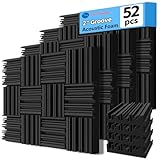
The primary advantage of acoustic foam is bulk affordability. When outfitting a brand-new space, you can purchase large bundles—such as a Focusound 52 Pack Acoustic Foam Panels (1″ x 12″ x 12″) for roughly $36.99, or a 52 Pack Acoustic Foam Panels in classic Black/Purple for $33.99—to cover key reflection points behind your monitors and primary speech directions without spending a fortune. For creators needing thicker material to address lower mid-range vocal reverberation, options like a 24 Pack 2” Thick Pyramid Acoustic Foam panel set (around $34.99) or TroyStudio Thick Acoustic Foam Panels (52 pieces of 2-inch dense tiles for around $66.99) offer significantly higher sound absorption per tile while keeping total wall treatment expenses low.
Foam is also exceptionally light, weighing only a few ounces per panel. This low mass makes it simple to stick onto lightweight mounting boards or hang using temporary adhesive pads. If your primary goal is dampening high-frequency vocal echo directly behind your desk setup on a limited budget, acoustic foam delivers immediate functional results.
Where Felt Panels for Streaming Room Wins
As streaming room design trends evolve in 2026, content creators are moving away from dark, industrial studio aesthetics toward clean, residential interior styling. This is where compressed PET felt panels excel. Manufactured from tightly felted polyester fibers (often derived from recycled plastics), felt panels operate as dense sound absorbers while acting as a sophisticated design element on camera.
From an aesthetic standpoint, felt panels completely transform a stream backdrop. Instead of looking like a soundproof booth, a wall treated with chamfered bevel-edge felt tiles or decorative wood-slat felt acoustic panels looks like a high-end architectural installation. Felt panels are available in muted earth tones, soft grays, and modern pastel shades that complement professional studio lighting setups without absorbing all ambient room light.
Durable physical construction is another major advantage for felt. Unlike polyurethane foam, which oxidizes, turns brittle, and slowly turns yellow or gray when exposed to sunlight, PET felt is UV-stable and highly resistant to physical impact. If a desk chair bumps into a felt wall, or a pet brushes past it, the material retains its shape without denting or tearing. Cleaning felt panels is straightforward: you can run a vacuum cleaner brush attachment directly across the surface to remove dust, or spot-clean minor stains with a damp microfiber cloth.
Cost Over 5 Years
When comparing the financial impact of acoustic foam vs felt panels for streaming room setups, looking solely at the initial purchase price can be misleading. Polyurethane foam carries a lower upfront price—typically ranging between $35 and $70 for enough tiles to cover 50 square feet. However, foam degrades rapidly under normal room conditions. Direct exposure to window sunlight, room humidity, and standard dust collection weakens polyurethane polymers over 2 to 3 years, causing tiles to lose elasticity, crumble at the edges, or discolor. Replacing damaged tiles and reapplying failed adhesives can double your initial investment over a 5-year period.
PET felt panels require a larger upfront investment, usually costing between $120 and $250 for an equivalent 50-square-foot treatment area. However, because felt panels are structurally rigid, UV-resistant, and washable, their functional lifespans routinely exceed 7 to 10 years without visual or acoustic degradation. Furthermore, felt panels can be unmounted from wall strips and rehung in a new studio or apartment without tearing, making their total 5-year cost of ownership surprisingly comparable to foam.
Which One for Your Home
Small Apartment or Bedroom Setup
If your streaming setup sits inside a small bedroom or studio apartment, space efficiency and visual integration are paramount. Slim PET felt panels (0.35″ to 0.5″ thickness) lie almost flat against the wall, preventing the room from feeling closed in while providing adequate high-mid frequency absorption. Felt panels also blend naturally into everyday living spaces when the stream camera is turned off.
Family Home with Kids or Pets
In a bustling household where the streaming room sees daily foot traffic, felt panels are the clear winner. Polyurethane foam tiles tear easily when snagged by pet claws or touched by young children, and their porous nature traps dander and pet hair that are difficult to vacuum out. Dense polyester felt withstands bumps, resists snagging, and can be easily vacuumed during routine house cleaning.
Rental Property
Renters need sound treatment that can be installed and removed without damaging delicate drywall paint. Polyurethane foam requires aggressive spray adhesives or thick double-sided foam tape to stay attached due to its porous back surface, often leaving torn drywall patches upon removal. PET felt panels have smooth, solid backing surfaces that bond cleanly to standard removable adhesive mounting strips, allowing clean removal when your lease ends.
Dedicated Long-Term Home Studio
If you own your home and have a dedicated room exclusively for content creation, audio production, or broadcasting, a hybrid approach often yields the best performance. Use dense PET felt panels or decorative felt wood-slat walls behind your desk and on camera-facing backdrop walls for a polished look. You can then apply deeper 2-inch acoustic foam tiles or specialized bass traps in hidden reflection spots, ceiling corners, or closet booths where audio absorption is critical but visual aesthetics are off-camera.
FAQ
Do felt panels absorb sound as well as acoustic foam?
Yes, density-for-density, PET felt panels absorb mid-to-high frequency sound waves just as effectively as standard 1-inch polyurethane foam. While 2-inch deep foam absorbs slightly lower frequencies due to its physical thickness, dense felt panels offer superior absorption per millimeter of depth due to their tightly packed fiber structure.
Can acoustic foam or felt panels stop sound from leaving my room?
No. Neither foam nor felt will soundproof a room or stop loud noises from passing through walls to adjacent rooms. Both materials are designed for interior sound absorption (reducing echo and echo reflections inside the room) rather than sound blocking, which requires heavy, dense structural mass like double drywall or mass-loaded vinyl.
How many panels do I need for a good streaming audio setup?
You do not need to cover every wall. For a standard 10′ x 10′ streaming room, treating 15% to 25% of the total wall surface area is usually enough to eliminate speech echo. Focus on primary reflection points: the wall directly behind your microphone, the wall directly behind your desk chair, and side walls at head height.
How do I clean dust out of streaming room wall panels?
PET felt panels can be easily cleaned using a vacuum cleaner with a soft brush attachment or wiped gently with a lint roller. Acoustic foam requires gentle care: vacuuming foam directly can tear the delicate open-cell edges, so compressed air or light hand-dusting is recommended to prevent structural damage.


