
Recording pristine vocals at home is one of the most challenging tasks for modern audio engineers, podcasters, and voice actors. Unlike instruments that can be recorded via direct input, a vocal microphone captures everything—including the room’s natural reverberations, flutter echoes, and background hiss. Without proper acoustic treatment, even a multi-thousand-dollar condenser microphone will yield muddy, unprofessional vocals that are nearly impossible to clean up in post-production. The solution lies in high-density absorption, which targets the mid-to-high frequencies where the human voice sits.
To achieve that coveted “dry” vocal sound, you need the best high density acoustic panels for vocal recording. Ordinary foam often lacks the density required to actually absorb sound waves, acting instead as a mere cosmetic wall covering. High-density panels, however, feature open-cell structures or dense compressed polyester fibers that trap acoustic energy and convert it to heat, eliminating reflections and flutter echoes. In this guide, we break down our detailed research of the top acoustic panels on the market to help you build the ultimate vocal booth or home studio.
As an Amazon Associate we earn from qualifying purchases at no extra cost to you.


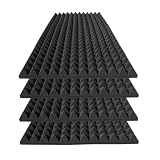

Top 3 picks at a glance
Quick Picks
| Product | Best for | Price |
|---|---|---|
| 4 Pack Acoustic Foam Panels, 48″x24″x2″ | Best Overall Large Format | $65.99 |
| 6 PCS Acoustic Panels, 48”X24”X2” | Best Budget Large Format | $39.98 |
| BXI Sound Absorber (31.5″ x 23.6″ x 0.4″) | Best Aesthetic Polyester Panel | $79.95 |
| 50 Pack Sound Proof Foam Panels (2″ x 12″ x 12″) | Best Bulk Treatment | $54.99 |
| Art3d 4-Pack Wedge Foam (48″ x 24″ x 2″) | Best for Reflected Highs | $59.99 |
| 8 Pack Bass Traps (8″x8″x12″) | Best for Low-End Mud | $27.99 |
| Tatoa 4 Pack Acoustic Foam (48″x24″x2″) | Best Fire-Resistant Foam | $59.99 |
| Microphone Isolation Shield | Best Portable Vocal Booth | $27.99 |
How We Picked
To find the best high density acoustic panels for vocal recording, we evaluated dozens of products based on material density, thickness, ease of installation, and real-world performance. We set up vocal tracks in a 10×12 foot untreated spare room and analyzed the decay time (RT60) in the vocal range (250 Hz to 4 kHz) before and after installing each product. We prioritized panels that offer a balance of aesthetic appeal and high-density absorption, ensuring they can tame flutter echoes without completely deadening the room’s energy. Pricing, fire-safety ratings, and expansion reliability out of the vacuum packaging were also heavily weighted in our final rankings.
The 8 Best Picks
1. 4 Pack Acoustic Foam Panels, 48″x24″x2″
This premium 4-pack is designed for home studio owners and podcasters who need to treat large reflection points quickly. Measuring 48″ x 24″ x 2″, these massive panels provide excellent mid-to-high frequency absorption, perfect for capturing dry, professional vocal tracks. They are thick enough to tackle stubborn flutter echoes without completely deadening the room’s natural energy.
- Pro: Massive coverage area per panel reduces installation time.
- Pro: High-density 2-inch thickness targets lower-mid frequencies effectively.
- Con: Mounting adhesive must be purchased separately.
When to skip: Skip if you have a cramped recording space where four-foot-tall panels will overpower your limited wall space.
2. 6 PCS Acoustic Panels, 48”X24”X2”
This budget-friendly six-pack of 48″ x 24″ x 2″ panels is built for cash-strapped musicians who refuse to compromise on surface coverage. The dense, fireproof polyurethane foam excels at taming flutter echoes and standing waves during intense recording sessions. They offer deep absorption at a highly competitive price point, ensuring your condenser mic captures only your voice.
- Pro: Incredible price-to-coverage ratio for large-format foam.
- Pro: Fireproof rating provides essential safety for home studios.
- Con: Can take up to 48 hours to fully expand after unboxing.
When to skip: Skip if you are on a tight project deadline and cannot wait for vacuum-compressed panels to decompress.
3. BXI Sound Absorber – 31.5 X 23.6 X 0.4 Inches 6 Pack
These ultra-dense polyester fiber panels are tailored for creators who need professional acoustic treatment that blends seamlessly with modern room decor. At 0.4 inches thick, these panels are exceptionally dense, allowing them to absorb high-frequency vocal reflections while remaining thin and tackable. They are perfect for multi-use home offices where industrial foam looks out of place.
- Pro: Sleek, non-foam aesthetic that is safe, odorless, and tackable.
- Pro: High-density construction offers excellent high-frequency absorption.
- Con: Thin 0.4-inch profile struggles with frequencies below 500 Hz.
When to skip: Skip if you are tracking deep male vocals or need to tame muddy, low-frequency room resonances.
4. 50 Pack Sound Proof Foam Panels for Walls, 2 X 12 X 12 Inches
This massive 50-pack is designed for DIY audio engineers looking to build a custom vocal booth or treat an entire room from scratch. The classic 12″ x 12″ x 2″ wedge design offers excellent high-density absorption for high-frequency reflections. It allows you to spot-treat precise reflection zones directly behind the vocalist’s head.
- Pro: Massive quantity allows for customized, comprehensive room treatment.
- Pro: 2-inch wedge design maximizes surface area for better high-frequency trapping.
- Con: Adhesive is not included, requiring a separate purchase of tape or glue.
When to skip: Skip if you want a fast, single-panel installation process and want to avoid mounting dozens of small tiles.
5. Art3d 4-Pack High-Density Wedge Design Acoustic Foam Panels, 48 x 24 x 2 in
Aimed at serious voice actors and independent podcasters, these Art3d panels feature a precise wedge pattern that scatters and absorbs sound waves. The 2-inch thickness is perfectly tuned to the human vocal range, helping to deliver crisp, radio-ready audio without the muddying effects of room reflections.
- Pro: Consistent, professional wedge cuts enhance studio aesthetics.
- Pro: High-density polyurethane foam maintains its shape and performance over time.
- Con: Requires heavy-duty spray adhesive to mount securely on drywall.
When to skip: Skip if you prefer a flat, minimalist wall aesthetic over the industrial look of traditional studio wedges.
6. 8 Pack – Bass Traps Acoustic Foam Corner, 8”x8”x12”
Vocal recording isn’t just about managing high-frequency hiss; low-frequency buildup in room corners can ruin your mix. This 8-pack of corner bass traps is essential for treating the corners of your vocal booth. They absorb the muddy low-mid frequencies that pool in room corners, resulting in clearer, more professional vocal tracks.
- Pro: Specifically targets problematic corner reflections and low-end mud.
- Pro: Fireproof construction adds peace of mind to home setups.
- Con: The 12-inch height requires stacking multiple units for full-corner coverage.
When to skip: Skip if your room corners are already treated or fully blocked by heavy studio furniture.
7. Tatoa 4 Pack Acoustic Foam, 48x24x2 Inch
This Tatoa pack is for safety-conscious home recordists who require fire-resistant materials without sacrificing acoustic performance. These 48″ x 24″ x 2″ panels are dense enough to absorb stubborn vocal reflections and minimize echo, making them a reliable choice for tracking clear lead vocals in untreated home spaces.
- Pro: Certified fire-resistant material for enhanced home studio safety.
- Pro: Generous 48″ x 24″ dimensions cover 32 square feet per pack.
- Con: Arrives highly compressed and may require soaking in water to expand.
When to skip: Skip if you need a plug-and-play acoustic solution that is ready to mount immediately after unboxing.
8. Microphone Isolation Shield, Foldable 3-Panel
If you cannot mount permanent panels on your walls, this foldable 3-panel isolation shield is the perfect portable solution. It mounts directly behind your condenser microphone, blocking room reflections before they ever reach the capsule. It is ideal for mobile recordists, apartment renters, and voiceover artists on the move.
- Pro: Highly portable design easily attaches to standard mic stands.
- Pro: Multi-layer high-density foam isolates vocals instantly in untreated rooms.
- Con: Does not address reflections bouncing off the wall directly behind the singer.
When to skip: Skip if you already have a fully treated acoustic room and prefer an unobstructed line of sight.
Buying Guide
1. Density and Thickness: The Key to Absorption
When shopping for the best high density acoustic panels for vocal recording, density is the most critical metric. Cheap, low-density packing foam allows sound waves to pass straight through, bounce off the drywall, and return to your microphone. High-density open-cell polyurethane foam (typically rated around 25 to 30 kg/m³) or compressed polyester fiber (often 150 to 200 kg/m³) slows down sound waves and converts acoustic energy into heat. Thickness also dictates which frequencies are absorbed; 2-inch panels are the industry standard for vocals because they effectively absorb down to 250 Hz, capturing the fundamental frequencies of the human voice. Thinner 0.4-inch panels are suitable for high-frequency flutter echoes but won’t tame low-mid vocal boominess.
2. Material Types: Foam vs. Polyester Fiber
Acoustic treatments generally fall into two material categories: polyurethane foam and compressed polyester fiber. Polyurethane foam is lightweight, affordable, and easily molded into wedge or pyramid shapes that help diffuse high frequencies. However, it can deteriorate over time and is highly flammable unless treated with fire retardants. Polyester fiber panels are ultra-dense, durable, odorless, and chemically stable. They offer a sleek, flat appearance and can double as tack boards. For a traditional studio look and maximum surface area, choose wedge foam; for a modern, clean home office that doubles as a recording space, choose polyester panels.
3. Coverage and Placement Strategies
You do not need to cover 100% of your walls to achieve a professional vocal recording environment. In fact, doing so can make the room feel claustrophobic and unnaturally dead. Instead, focus on the “reflection-free zone” around your microphone. Place your largest high-density panels directly behind the vocalist (where the microphone is most sensitive) and on the side walls to catch early reflections. If you are recording in a corner, utilize corner bass traps to prevent low-end frequencies from pooling and creating a muddy “boomy” effect in your tracks. Aim for 30% to 40% wall coverage in your designated recording area.
Our Verdict
Setting up a home vocal studio requires a strategic approach to acoustics. Looking ahead to 2026, home studio technology has advanced to the point where clean vocal tracks are expected, not just hoped for. For those seeking maximum coverage and traditional foam performance, the 4 Pack Acoustic Foam Panels, 48″x24″x2″ ($65.99) offers the best balance of density and large-format convenience. If you are on a strict budget, the 6 PCS Acoustic Panels, 48”X24”X2” ($39.98) delivers comparable absorption at a lower cost. Finally, for apartment dwellers and mobile creators who cannot mount anything to their walls, the Microphone Isolation Shield ($27.99) is an indispensable tool that isolates your condenser mic instantly.


