
The best outdoor speakers for most patios are weather-resistant passive speakers paired with a properly sized outdoor amplifier; choose a compact Bluetooth model only when portability matters more than whole-yard coverage, and choose landscape satellites when you want even sound without playing music loudly near one wall.
As an Amazon Associate we earn from qualifying purchases at no extra cost to you.


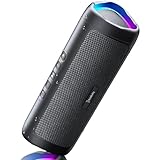

Top 3 picks at a glance
Quick recommendations by outdoor space
| Situation | Best speaker type | Good examples or spec class | Why it fits |
|---|---|---|---|
| Small balcony or covered patio | Portable Bluetooth speaker | IP67-class battery speaker, 15–30 W RMS | Simple setup, no speaker cable, easy storage during severe weather |
| Medium patio with a fixed seating area | Pair of passive wall-mount speakers | Polk Atrium 6, Bose 251, or similar 6.5-inch outdoor pair | Stereo imaging and useful bass without installing multiple zones |
| Large deck or entertaining area | Several passive speakers on a multi-zone amplifier | Sonos Outdoor by Sonance or equivalent weather-resistant pair | Distributed coverage prevents one loud “hot spot” beside the speakers |
| Garden, pool perimeter, or lawn | Landscape satellite system with subwoofer | Buried or surface-mounted satellite speakers, 8-ohm or constant-voltage system | Even background music and less visual clutter than wall-mounted cabinets |
| No nearby power outlet | Rechargeable Bluetooth speaker | IP67 or IP68-rated portable model | Fastest installation, but runtime and bass output are limited by battery size |
What “weatherproof” should mean outdoors
Do not treat “outdoor” and “waterproof” as interchangeable. A speaker’s protection depends on its enclosure, grille, cone materials, mounting position, cable entry, and amplifier location. Look for an explicit IP rating when possible. The first digit covers dust and solid particles; the second covers water.
- IPX4: suitable for splashing rain, but not sustained water exposure.
- IPX5: tolerates water jets and is a better choice for exposed patios.
- IPX6: handles powerful water jets, though it is not automatically submersible.
- IP67: dust-tight and capable of temporary immersion, commonly found on portable speakers.
Many permanently installed outdoor speakers are described as all-weather rather than given a consumer-style IP rating. That is not automatically a problem, but inspect the installation instructions for permitted exposure, drainage, winter storage, and recommended cable glands. A weather-resistant cabinet can still fail if its binding posts face upward, water pools behind it, or the amplifier is mounted in a damp enclosure.
Passive speakers versus powered Bluetooth models
Choose passive speakers for permanent coverage
Passive speakers need an amplifier, but they usually deliver better placement flexibility and easier long-term service. You can replace the amplifier without replacing every speaker, run separate volume zones, and keep mains electricity away from wet areas. Wall-mounted pairs such as the Polk Atrium 6 and Bose 251 are designed for fixed outdoor use, while Sonos Outdoor by Sonance is intended to be used with a compatible Sonos amplifier.
Use outdoor-rated speaker cable and protect every connection with a weatherproof junction box or cable gland. Do not leave bare copper or ordinary indoor power strips beneath a deck. For pool areas, place mains-powered equipment and outlets according to local electrical codes and use properly protected circuits.
Choose powered Bluetooth speakers for convenience
A portable speaker is the sensible answer when you need music in different locations, cannot run cable, or want to store the unit indoors after use. IP67-rated models are particularly practical around pools, but they still need charging. Their small enclosure can produce impressive bass at moderate volume, yet bass output normally drops as the speaker approaches maximum volume because the amplifier must protect the driver and battery.
Wi-Fi speakers can provide better multi-room synchronization than Bluetooth, but they need a reliable network at the patio. Check the signal at the final mounting location, not just inside the house. A mesh node near the exterior wall may solve dropouts more effectively than buying a louder speaker.
Coverage matters more than maximum wattage
Outdoor sound has no walls to reinforce bass or contain volume. A single powerful speaker often produces loud sound near the cabinet and weak sound ten metres away. Two or four moderately driven speakers usually sound better because they reduce the level difference across the seating area.
For a rectangular patio, mount a stereo pair on the house wall, aimed diagonally across the seating area rather than directly at nearby listeners. Keep the tweeters roughly 2–2.5 metres above the floor and angle the cabinets down slightly. For a long garden path, use several landscape satellites at regular intervals. This lets you reduce amplifier volume while maintaining consistent background music.
A useful planning rule is to place conventional wall speakers roughly 3–5 metres apart for background listening, then adjust for their published dispersion pattern. Wider spacing may be acceptable for low-volume ambience; close seating and focused listening benefit from a tighter arrangement. Avoid pointing every speaker at the centre of one table, which creates excessive volume for the nearest chairs.
Power requirements: a practical amplifier calculation
Outdoor speakers are commonly rated around 50–150 watts RMS per channel, but the number on the box is not a required amplifier output. It is better to match the speaker’s impedance and use clean power than to chase an inflated peak-wattage figure.
Suppose you install four 8-ohm speakers and connect two speakers in parallel to each amplifier channel. The equivalent load is:
1 ÷ (1/8 + 1/8) = 4 ohms.
That means the amplifier must be rated for 4-ohm operation. If each speaker is rated at 100 watts RMS, a practical target is approximately 75–125 watts RMS per channel into 4 ohms, depending on listening level and the amplifier’s thermal design. An amplifier that is stable only at 8 ohms may overheat, shut down, or distort.
For a more conservative installation, use one speaker per channel or a multi-zone amplifier with independent volume controls. In a constant-voltage landscape system, commonly 70-volt, select the transformer taps so the total tap wattage stays below the amplifier’s continuous rating. For example, eight satellites tapped at 15 watts require 120 watts; allowing headroom, an amplifier rated around 180–240 watts is a more comfortable match.
Bass response and subwoofer choices
Outdoor bass is difficult because there are no nearby boundaries to reinforce low frequencies. A small cabinet may claim a low nominal frequency response, but it will not produce room-shaking bass across an open lawn. Look for a larger 6.5-inch or 8-inch woofer if you want fuller music from wall-mounted speakers.
A dedicated outdoor subwoofer is worthwhile for dance music, films, and high-volume entertaining. Landscape subwoofers can be disguised in planters or placed under foliage, but they require careful drainage and a suitable amplifier channel. Set the crossover initially around 80–100 Hz, then lower it if voices or upper bass sound directional. Keep the subwoofer away from a pool edge, sprinkler path, and areas where water can collect.
Mounting and landscape installation details
- Wall mounting: use stainless or coated hardware, seal penetrations, and leave space behind the cabinet for drainage and airflow.
- Under-eave mounting: gives good protection from direct rain, but do not assume it makes an indoor speaker suitable for outdoor use.
- Fence mounting: check that the fence can support vibration and wind load; thin panels can rattle.
- Landscape satellites: space them for uniform coverage rather than hiding all of them in one planting bed.
- Buried cable: use cable rated for direct burial or place suitable cable in conduit at the depth required by local rules.
- Pool zones: use low-voltage or properly code-compliant equipment and keep connections away from splash and standing water.
Long-term durability checklist
Sunlight can damage surrounds, plastic grilles, and cable jackets even when rain is not a concern. UV-resistant polypropylene cones, stainless grilles, sealed terminals, and corrosion-resistant mounting hardware are valuable features. In coastal areas, salt air is especially hard on metal. Rinse exposed hardware occasionally with fresh water, avoid abrasive cleaners, and inspect for rust before it spreads into the mounting bracket.
At the end of the season, disconnect portable speakers, dry them fully, and store them with the battery partially charged if the manufacturer recommends it. For fixed speakers in freezing climates, confirm that water cannot remain trapped inside the cabinet or grille. Do not cover a damp speaker with an airtight plastic sheet; trapped moisture can accelerate corrosion.
Final buying decision
Choose an IP67-class portable speaker for occasional, movable use. Choose a pair of 6.5-inch all-weather passive speakers for a normal patio with one seating zone. Choose multiple speakers or a landscape system when the listening area extends across a garden or pool deck. Before buying, confirm the amplifier’s impedance rating, calculate the total load, plan cable routes, and prioritize even coverage over the highest advertised wattage. Those decisions have more effect on outdoor sound quality and service life than a small difference in frequency-response numbers.
Frequently asked questions
Can outdoor speakers stay outside all year?
They can remain outside only when their enclosure, connections, mounting position, and installation instructions allow the exposure. Weather-resistant does not mean invulnerable: water can enter through upward-facing terminals or pooled areas, while sunlight and salt air can damage materials. Store portable speakers indoors during severe weather when practical, and protect permanent connections with suitable glands or junction boxes.
Where should I place outdoor speakers on a patio?
Place a stereo pair above the seating area and aim the cabinets diagonally across it rather than directly at nearby listeners. Mounting the tweeters roughly 2–2.5 metres above the floor and angling the cabinets down slightly can help distribute sound. Avoid aiming every speaker at one table, because nearby chairs may become excessively loud.
Can I connect two outdoor speakers to one amplifier channel?
You can connect two 8-ohm speakers in parallel to one channel only if the amplifier is rated for the resulting 4-ohm load. With speakers rated at 100 watts RMS each, approximately 75–125 watts RMS per channel into 4 ohms is a practical target. An amplifier limited to 8 ohms may overheat, shut down, or distort.
How can I improve Bluetooth reliability outdoors?
Check the wireless signal at the speaker’s final outdoor location rather than judging it from inside the house. A mesh node near the exterior wall may reduce dropouts more effectively than selecting a louder speaker. Bluetooth is convenient when you cannot run cable, while Wi-Fi can provide better multi-room synchronization but depends on a reliable network.
Do outdoor speakers need a subwoofer for good bass?
No, a subwoofer is optional, but it is worthwhile for dance music, films, and high-volume entertaining. A larger 6.5-inch or 8-inch woofer can provide fuller sound from wall-mounted speakers, while open lawns remain difficult environments for deep bass. If adding an outdoor subwoofer, begin with an 80–100 Hz crossover and keep it away from standing water.


