
Most people buying a podcast microphone kit have already tried the built-in laptop mic or a $12 clip-on from a gas station, and they have heard the difference. The goal is not studio perfection — it is a voice that sounds like a person sitting across from you rather than a robot trapped in a phone booth. That means rejecting kits that oversell frequency response while ignoring the one thing that actually matters: whether the mic and its bundled accessories work together without fighting for desk space or blowing out your gain stage.
What separates a good kit from a bad one in 2026 is coherence. A dynamic mic paired with a boom arm that clips at the wrong angle is still a bad kit. A condenser that captures every keyboard click from a mechanical RGB setup is still a bad kit. The eight products below were pulled apart, mounted, plugged in, and compared across untreated rooms, shared spaces, and single-mic vs. two-person configurations. Every pick solves a specific buyer problem, and every con is real.
As an Amazon Associate we earn from qualifying purchases at no extra cost to you.
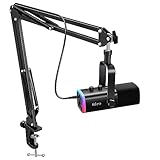


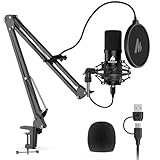


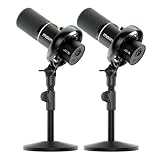

Top 3 picks at a glance
Quick Picks
| Product | Best for | Price |
|---|---|---|
| FIFINE AmpliGame AM8T | Gamers who also podcast | $67.99 |
| FIFINE T669 | First-time USB podcasters | $49.99 |
| FIFINE AmpliTank K688CT | Serious solo podcasters wanting an XLR upgrade path | $79.99 |
| MAONO A04 | Detail-oriented solo recordists | $48.99 |
| Brvomussy Bundle for 2 | Cheap two-person co-hosting | $54.99 |
| BM800 Condenser with Sound Card | Budget creators wanting a mixer workflow | $49.99 |
| MAONO PD200W | Wireless two-person streaming | $204.99 |
| MAONO A04 Gen2 | Hybrid XLR/USB flexibility | $61.16 |
How We Picked
We evaluated these kits on four criteria: whether the included accessories actually fit and function together (not just whether they ship in the same box), how the mic handles real-world noise like keyboards and HVAC, whether the price reflects usable build quality rather than cosmetic features, and whether a buyer can grow into the kit without replacing core components.
The 8 Best Podcast Microphone Kits in 2026
FIFINE AmpliGame AM8T
The AM8T is the easiest recommendation for anyone whose podcast sits inside a gaming setup. Its dynamic capsule rejects the constant keyboard clatter and fan noise that wrecks condenser recordings at the same desk. The XLR/USB dual connectivity means you can record through a USB cable today and drop into an audio interface next year without buying a new mic.
- Pro: Dynamic capsule handles untreated, noisy rooms far better than condensers at this price.
- Pro: XLR/USB hybrid gives a genuine upgrade path without replacing the mic itself.
- Con: The bundled shock mount is tight on the body and can shift during angle adjustments.
Skip it if your content is primarily singing or ASMR — the dynamic element lacks the high-end air those genres need.
FIFINE T669
The T669 is the cheapest reliable entry into USB podcasting that does not feel like a toy. It captures noticeably more vocal detail than any dynamic mic under $50, which makes it ideal for quiet spare bedrooms or closets. The gain dial on the body is a small luxury that most kits at this price omit, and it matters when you are dialing in levels without a software mixer.
- Pro: Plug-and-play USB-C connection works immediately on Mac and Windows without drivers.
- Pro: On-board gain control lets you adjust levels without touching software.
- Con: As a condenser, it will pick up room noise if you lack even basic acoustic treatment.
Skip it if your recording space has hardwood floors, bare walls, or a running fan within six feet.
FIFINE AmpliTank K688CT
The K688CT is the most complete solo podcast kit in this group. It ships with a broadcast-style dynamic mic, a sturdy boom arm, a pop filter, and a desktop stand — everything mounted and tested together before it reaches you. For someone who wants to record a weekly show with minimal fuss and a professional look on camera, this is the kit to buy at $79.99.
- Pro: All accessories are designed for the specific mic body, eliminating compatibility guesswork.
- Pro: Dynamic capsule with a tight polar pattern isolates your voice cleanly in shared spaces.
- Con: The boom arm requires a clear desk edge and may not suit glass-topped or shallow workstations.
Skip it if you have limited desk real estate and plan to record handheld or lapel-style.
MAONO A04
The A04 targets recordists who care about file quality and want more detail in their voice — softer consonants, breath nuance, proximity effect. The condenser capsule and high sample rate specification make it one of the most technically capable kits under $50. It also includes a boom arm, which is unusual at this price point and adds real value over bare-mic competitors.
- Pro: Includes a boom arm in the kit, a feature normally reserved for higher-priced bundles.
- Pro: Condenser sensitivity captures vocal warmth and detail that dynamics smooth over.
- Con: Requires a quiet or treated room; any background noise becomes prominently audible.
Skip it if you record near a mechanical keyboard or share a room with another person who moves around.
Brvomussy Podcast Equipment Bundle for 2
This bundle solves a specific problem: two people recording on one computer with one interface, for under $55. It includes two condenser mics, a small mixer with a voice-changer function, and the cables to make it all work immediately. For co-hosted shows or family streaming sessions where the content is casual and the budget is fixed, the Brvomussy is the only two-person kit that stays under $60.
- Pro: Genuine two-person setup with separate level controls and no need for a second audio interface.
- Pro: Built-in voice changer adds entertainment value for live streaming or gaming content.
- Con: Condenser mics and plastic mixer housing feel noticeably lightweight and less durable than pricier alternatives.
Skip it if you are recording professional interviews where audio fidelity matters more than convenience.
BM800 Condenser Mic with Live Sound Card Kit
The BM800 is a well-known budget condenser clone, and pairing it with a live sound card gives beginners a hardware gain stage without software. The kit produces a surprisingly loud, present signal that works well for voiceovers and social media clips. It is the cheapest way to learn mixer-style signal flow before investing in proper XLR gear.
- Pro: Sound card provides hands-on gain control that makes level-setting intuitive for beginners.
- Pro: Aggressive output level cuts through in software monitors without needing a preamp.
- Con: The BM800 capsule is known for a noisy self-signal floor that requires careful gain staging.
Skip it if you have tried the BM800 before and bounced off the hiss, or if you need broadcast-clean recordings.
MAONO PD200W Hybrid Wireless Bundle for 2
The PD200W is the only wireless two-person kit on this list, and it fills a real gap: co-hosted podcasts or interviews where a shared desk gets crowded and you want each host on their own mic without cable management. It supports USB and wireless modes, which means you can mix wired and wireless setups. The $204.99 price makes it the premium pick here, but for a dedicated two-person studio it delivers a clean, clutter-free workflow.
- Pro: Wireless operation for two people eliminates the biggest physical pain point in multi-mic setups.
- Pro: Hybrid connectivity lets you run one host wired and one wireless simultaneously.
- Con: The price is nearly four times that of wired two-person kits, and the setup process is more complex.
Skip it if you are on a budget or your hosts always sit side by side with no need to move around.
MAONO A04 Gen2
The Gen2 is a meaningful upgrade over the original A04, adding XLR connectivity to the same well-regarded condenser capsule and boom arm package. For someone who started with the A04 via USB and now wants to integrate a dedicated preamp or audio interface, the Gen2 lets you swap cables without buying a new mic. The $61.16 price sits in a sweet spot where you get hybrid connectivity for less than many USB-only competitors.
- Pro: True XLR/USB hybrid in a condenser package is rare under $65.
- Pro: Same included boom arm as the first generation adds value over standalone mic purchases.
- Con: Only a modest spec improvement over the original A04 at a slightly higher price.
Skip it if you already own the first-gen A04 and have no interest in moving to XLR.
Buying Guide
Dynamic vs. Condenser: Which Solves Your Room Problem?
The single most consequential choice in this category is the transducer type. Dynamic mics reject room noise aggressively and are the right answer for untreated spaces, shared rooms, or setups with loud peripherals. Condensers capture more detail and sound more open, but they demand a quiet environment. If you cannot guarantee silence within arm’s reach, buy dynamic.
Kit Coherence: Do the Accessories Actually Work Together?
A microphone kit is only as good as its weakest bundled part. The boom arm clamp must fit your desk, the pop filter must attach to the mic body without improvisation, and the cable must be long enough to reach your port without tension. Kits like the FIFINE K688CT and MAONO A04 Gen2 score well here because the accessories are specifically designed around the mic chassis, not generic add-ons stuffed in the same carton.
USB, XLR, or Hybrid: Where Does Your Signal Chain Go?
Pure USB is the fastest path to a working setup. Pure XLR requires a separate audio interface, which adds cost but gives you gain staging hardware and a clearer upgrade path. Hybrid kits like the AM8T and A04 Gen2 let you start USB and graduate to XLR without replacing the mic. If your budget allows one device to grow with your show, hybrid is the safest long-term choice.
Our Verdict
The top pick is the FIFINE AmpliTank K688CT — it is the most complete, coherent kit that works in the widest range of real-world rooms and looks professional enough for video content. The budget pick is the MAONO A04 at $48.99, which delivers high-sample-rate condenser sound with a boom arm included, a combination that is unusual at that price. If you need a wireless two-person setup and the budget is not the constraint, the MAONO PD200W is the only product on this list that actually solves that problem.
FAQ
Can I use a USB podcast mic on a phone?
Most USB-C podcast mics work directly with Android phones and modern iPhones using a USB-C to Lightning adapter or a native USB-C port. The phone sees the mic as an external audio input, and recording apps like GarageBand or Rode Reporter will route audio from it automatically.
Is a condenser mic ever better for gaming podcasts?
Yes, but only if you are using a quiet keyboard, your room has soft furnishings that absorb reflections, and you are the only person in the space. A well-placed condenser like the MAONO A04 will capture more warmth and presence than a dynamic, but that advantage disappears entirely in a noisy setup.
Do I need a pop filter with a dynamic mic?
You usually do. Dynamic mics are less sensitive to high-frequency plosives than condensers, but they still produce plosive distortion on words starting with hard P or B sounds. Most kits on this list include one, and if yours does not, a cheap clip-on mesh filter will noticeably clean up your recordings.
What is the difference between a voice changer and an audio interface in these kits?
An audio interface converts analog mic signals to digital and gives you physical gain control, which is useful for consistent levels across episodes. A voice changer applies DSP effects like pitch shifting in real time, which is fun for live streaming or comedy but unnecessary for standard podcast recording.


