
The best portable PA systems for most events are the Bose S1 Pro+ for fast setup, the EV EVERSE 8 for clearer speech and longer battery life, and the JBL EON ONE MK2 when you need an all-in-one mixer for several microphones and instruments; larger audiences are better served by a battery-free column system such as the Yamaha STAGEPAS 1K mkII.
As an Amazon Associate we earn from qualifying purchases at no extra cost to you.


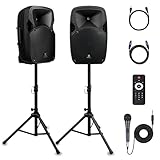
Top 3 picks at a glance
Best portable PA systems compared
| Model | Best for | Inputs and mixer | Battery runtime | Wireless range | Coverage and transport |
|---|---|---|---|---|---|
| Bose S1 Pro+ | Presentations, ceremonies, small acoustic events | Two combination mic/line channels, Bluetooth, optional wireless transmitters | Up to about 11 hours | Bluetooth is best kept within roughly 30 ft / 9 m for reliable operation | Wide, lightweight cabinet with handle; easiest to carry |
| Electro-Voice EVERSE 8 | Speech clarity, outdoor presentations, compact live music | Two combination inputs plus Bluetooth and app-controlled mixer | Up to about 12 hours at moderate use | Bluetooth control and audio are designed for typical room-scale distances; do not treat them as long-range microphone links | Rugged, weather-resistant portable cabinet; about 17 lb / 7.6 kg |
| JBL EON ONE MK2 | Small bands, DJs, panel discussions | Multiple mixer channels, combination inputs, Bluetooth and app control | About 6 hours, depending on volume | Room-scale Bluetooth operation; keep the source near the speaker | Column-style all-in-one design with stand and carrying options |
| Mackie Thump GO | Budget-conscious mobile events and music playback | Two-channel mixer, mic/line input, Bluetooth | Up to about 12 hours at moderate levels | Typical Bluetooth range is approximately 30–100 ft depending on obstacles | 12-inch speaker with telescoping handle; bulkier but useful for bass |
| Yamaha STAGEPAS 1K mkII | Large audiences and wide speech coverage | Integrated mixer with multiple inputs and Bluetooth | No internal battery; requires AC power | Use wired microphones for predictable event operation | Column array with subwoofer; more pieces and setup than a battery PA |
Runtime figures are manufacturer-style maximums rather than guarantees. Loud bass, high sound pressure, phantom power, wireless accessories, cold temperatures and an aging battery can reduce usable time substantially.
Head-to-head: which system fits your event?
Bose S1 Pro+: quickest setup
The Bose S1 Pro+ is the simplest choice when one person must carry, place and operate the system. Its compact cabinet works on a floor, table, stand or angled monitor position, and the rechargeable battery avoids a power-cable search at outdoor ceremonies. It is particularly effective for a presenter with one handheld microphone, background music and occasional announcements.
The optional wireless microphone transmitters make the system tidy, but they are an extra purchase and should not be confused with unlimited wireless range. For a speech in a small room, the S1 Pro+ is convenient; for a long aisle, large outdoor space or several microphones, its limited input capacity becomes more important than its portability.
EV EVERSE 8: best balance of speech and battery operation
The EVERSE 8 is a stronger fit when intelligible speech matters outdoors. Its 8-inch two-way design, digital processing and weather-resistant construction give it more headroom and control than many lifestyle-oriented battery speakers. The app-based mixer is useful for setting gain, equalization and effects before the event, rather than trying to adjust everything from a small rear panel.
Choose it for a school presentation, wedding ceremony, guided activity or mobile performer who needs a compact speaker that can tolerate transport and occasional exposure to light moisture. It is not a substitute for a large mains-powered PA when the audience is several hundred people or when strong low bass is central to the program.
JBL EON ONE MK2: best all-in-one mixer for several sources
The EON ONE MK2 is attractive when portability and input flexibility matter more than maximum battery duration. Its integrated mixer can accommodate a more complicated setup than a basic two-channel speaker: microphones, an instrument, playback and monitor-style adjustments can all be managed without a separate mixing console.
Its approximately six-hour battery rating is adequate for a typical presentation or a short performance, but it leaves less reserve for an all-day event. If the schedule includes sound checks, breaks, background music and multiple sessions, plan to recharge between segments or bring an AC power option.
Mackie Thump GO: best for affordable musical impact
The Thump GO provides a conventional 12-inch speaker format in a battery-powered cabinet. That larger driver can produce more convincing kick-drum and bass-guitar energy than compact column speakers, although it is heavier and does not provide the same broad, evenly distributed coverage.
It suits a solo performer, small DJ setup or outdoor gathering where the speaker will be aimed toward the audience. For a panel discussion, the system can work well, but careful microphone placement is essential because a conventional speaker on a stand can create feedback if the microphone is pointed toward it.
Yamaha STAGEPAS 1K mkII: best when AC power is available
The STAGEPAS 1K mkII is not a battery PA, but it belongs in this comparison because portability is not the same as cordless operation. Its column-array format spreads sound across a wide horizontal area, reducing the “loud in front, quiet at the sides” problem common with one small box. The subwoofer also gives music substantially more authority.
Use it for a larger indoor presentation, community event or live set where a wall outlet is available and transport space is acceptable. It is a better coverage solution than a single compact battery speaker, but it requires more setup, more storage space and a reliable power plan.
Decision matrix: choose by situation
| Your situation | Recommended direction | Why |
|---|---|---|
| One presenter, up to roughly 50 people, fast setup | Bose S1 Pro+ | Lowest carrying and setup burden, with enough input capability for speech and playback |
| Outdoor ceremony where speech must remain clear | EV EVERSE 8 | Better processing, weather resistance and long battery reserve |
| Two microphones plus music or an instrument | JBL EON ONE MK2 | More capable integrated mixing than a basic portable speaker |
| Small band or DJ needing bass from battery power | Mackie Thump GO | 12-inch format provides more low-frequency output, at the cost of size |
| More than about 100 people or a wide room | Yamaha STAGEPAS 1K mkII or a larger powered PA pair | Greater coverage and headroom; AC power is a worthwhile trade-off |
| All-day event with no outlet | EVERSE 8 or S1 Pro+ with a spare battery plan | Choose based on speech clarity and required runtime, not maximum volume alone |
How much battery runtime do you really need?
Do not select a battery PA whose advertised runtime merely matches the event length. A useful planning formula is:
Required runtime = program time + sound-check time + reserve.
For a six-hour event, allow 30 minutes for setup, 30 minutes for testing and at least 90 minutes of reserve:
0.5 + 6 + 0.5 + 1.5 = 8.5 hours.
That makes a speaker rated for six hours a poor fit unless it can run from AC or accept a replacement battery. A model advertised for 11–12 hours has a more realistic chance of completing the schedule, although sustained music at high volume can still reduce the result. For outdoor use, keep the speaker out of direct heat and avoid draining the battery completely before the main program begins.
Microphone inputs and wireless range
Count microphones, not just input sockets. A presenter with one handheld microphone and a laptop needs two usable sources. A panel with three microphones, playback and a backup wired source needs at least five channels, or a separate mixer feeding the PA. Combination XLR/¼-inch inputs are the most flexible because they accept standard microphones and line-level equipment.
Wireless microphone range is a separate specification from Bluetooth range. Bluetooth is suitable for music playback and, on some systems, remote control from a nearby phone or tablet. It is not a dependable replacement for a professional wireless microphone system across a large venue. For a speaker walking 100 feet from the PA, use a wireless microphone system with a stated operating range, antennas positioned correctly and fresh batteries.
For speech, begin with the microphone 5–10 cm from the speaker’s mouth, set input gain so normal speech is strong without clipping, and keep the PA in front of the microphone. If feedback starts, lower the offending channel slightly, move the microphone away from the speaker and reduce excessive low or high frequencies rather than simply turning down the entire system.
Coverage and transport durability
A single compact speaker is not automatically suitable for a large audience. Coverage depends on loudness, room reflections, audience layout and whether people are seated to the sides. A column array generally provides broader horizontal dispersion, while a conventional 10- or 12-inch speaker often delivers more focused output and stronger bass. For a long room, placing two speakers at the front sides can be more effective than making one speaker dangerously loud.
Transport durability also includes the parts around the speaker: handles, grilles, connectors, battery door and carrying case. A lightweight cabinet is valuable if you carry it upstairs, but a slightly heavier weather-resistant cabinet may be the safer choice for repeated outdoor work. Use a padded cover, protect the input panel from rain and never leave a lithium battery speaker in a hot vehicle for extended periods.
Frequently asked questions
Can I use Bluetooth as a replacement for a wireless microphone?
No—Bluetooth range and wireless microphone range are separate specifications. Bluetooth is suitable for playback or app control, but the article does not describe it as a microphone link. For an event where a presenter needs to move around, check the wireless microphone system’s own range rather than relying on the speaker’s Bluetooth distance.
What should I do if I need more microphone inputs than the speaker provides?
Use a separate mixer feeding the PA. The article notes that a panel with three microphones, playback and a backup wired source needs at least five channels; a basic two-channel speaker may not handle that setup by itself. Count every microphone and playback source before choosing.
Will one portable speaker cover a large outdoor audience?
A compact battery speaker may not provide enough coverage or headroom for a large audience. The article recommends a larger mains-powered PA for several hundred people and points to the Yamaha STAGEPAS 1K mkII or a larger powered PA pair for more than about 100 people or a wide room. The Yamaha requires AC power.
Can I leave a portable PA in light rain during an event?
The article describes the EV EVERSE 8 as weather-resistant and able to tolerate transport and occasional exposure to light moisture. It does not say that the speaker is waterproof or suitable for heavy rain, so plan to protect it from substantial water exposure.
How can I reduce feedback when using a microphone with a PA?
Keep the microphone from pointing toward the speaker. The article specifically notes that with the Mackie Thump GO, careful microphone placement is essential because a conventional speaker on a stand can create feedback if the microphone is aimed at it.
Bottom line
Buy the Bose S1 Pro+ when effortless portability is the priority, the EV EVERSE 8 when speech clarity and battery endurance matter most, the JBL EON ONE MK2 when you need the most capable integrated mixer in a compact package, and the Mackie Thump GO when battery-powered bass is worth carrying a larger cabinet. If the audience or room is large enough that coverage is the main concern, skip the battery requirement and choose the Yamaha STAGEPAS 1K mkII or a larger powered PA system instead.


