
Anyone who has ever blown a take because the signal clipped at the worst possible moment knows why 32-bit float recording changed the game. The core promise is simple: you never have to babysit your levels again. Whether a subject whispers into a lavalier or a street busker leans hard into an XY pair, the recorder captures it all without distortion or unusable noise floor. The problem for buyers in 2026 is that “32-bit float” on a spec sheet does not guarantee equal real-world performance across units.
What separates a great portable recorder from a mediocre one comes down to preamp quality, input flexibility, file management, and battery endurance under sustained use. A device might technically support float, but if its internal microphones sound thin or its menu system buries essential controls three layers deep, you are still losing time on location. The options below have been evaluated on how they handle those practical gaps, from entry-level handhelds to more capable multi-input field units.
As an Amazon Associate we earn from qualifying purchases at no extra cost to you.


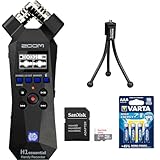

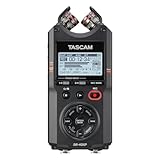


Top 3 picks at a glance
Quick Picks
| Product | Best for | Price |
|---|---|---|
| Zoom H1essential Accessory Bundle | First-time buyers wanting a complete kit | $164.98 |
| Zoom H4 Essential | Musicians needing more inputs and gain staging | $219.99 |
| Zoom H1essential Travel Bundle | Budget-conscious creators who want ready-to-go gear | $120.98 |
| Xvive XV1-R | The absolute lowest entry into 32-bit float | $89.99 |
| TASCAM DR-40XP | Interviewers and field recordists who need XLR inputs | $259.00 |
| Zoom H1 Essential (bare) | Solo podcasters who already own accessories | $109.99 |
| TASCAM DR-05XP | Voice and podcast recording on a tight budget | $109.00 |
| Zoom R4 | Musicians who want multitrack capture with built-in effects | $149.99 |
How We Picked
We evaluated each unit on four criteria: the quality of its built-in microphones relative to its price tier, input/output flexibility for external sources, usability under real recording conditions (button reachability, screen readability, menu depth), and accessory ecosystem maturity. A recorder that scores high on raw specs but forces you into a frustrating workflow on location fails the practical test we care about.
The 8 Best 32 Bit Float Portable Audio Recorders in 2026
Zoom H1essential Accessory Bundle
This bundle solves the most common beginner frustration: buying a recorder and then realizing you lack a windscreen, a cable, and a card. The H1essential itself delivers clean, low-noise internal mics and a genuinely usable 32-bit float pipeline that forgives level mistakes without drama. The padded case and 64GB card mean you can walk into a session and start rolling immediately.
- Comprehensive accessory set eliminates follow-up purchases
- Internal XY mics capture detailed stereo with minimal coloration
- Only two tracks limits capture of multi-source setups
Skip this if you already own micro SD cards and windscreens, or if you need more than a stereo pair of inputs.
Zoom H4 Essential
The H4 Essential steps beyond stereo capture with additional input options that matter for musicians tracking live performances or podcasters running multi-person setups. Its interface is more dense than the H1 series, which means a steeper initial learning curve, but once you have the layout mapped you get faster access to per-input gain and monitoring controls.
- Expanded input flexibility for external sources alongside internal mics
- Physical gain controls are well-tuned for quick adjustments mid-recording
- Notably pricier than the H1 tier for similar core float performance
Skip this if you only ever record yourself talking or playing a single instrument in stereo.
Zoom H1essential Travel Bundle
At the lowest price point among the Zoom bundles, this package pairs the same capable H1essential with a smaller 32GB card, AAA batteries, and a compact tripod. For a creator who wants a grab-and-go setup for desk recording, voice memos, or small interviews, the value is hard to argue with.
- Best dollar-per-feature ratio among the Zoom options listed here
- Includes a tabletop tripod that works well for stationary recording
- 32GB card fills quickly for long sessions without external storage management
Skip this if your sessions routinely exceed a few hours of continuous recording or you need XLR connectivity.
Xvive XV1-R
The XV1-R is the cheapest route to a working 32-bit float stereo recorder with onboard XY mics. It supports both WAV and AAC capture, doubles as a USB microphone for computer sessions, and includes an auto-record function that starts when sound hits a threshold. For the price, its preamps are competent rather than refined.
- Lowest absolute cost to enter the 32-bit float category
- USB microphone mode adds utility for remote interviews and VO work
- Built-in mics lack the low-end weight and transient detail of Zoom or TASCAM equivalents
Skip this if you demand reference-quality internal mics or plan to expand into multi-input recording later.
TASCAM DR-40XP
This is the unit for recordists who regularly connect external microphones and need proper XLR/TRS combo inputs on a handheld form factor. Its four channels allow simultaneous capture of a stereo pair plus two external sources, and the adjustable internal mics let you switch between cardioid and omni patterns for room ambience versus directional pickup.
- Dual XLR/TRS inputs provide phantom power and pro-level connectivity in a portable body
- Switchable mic patterns offer real creative control over spatial capture
- The higher price and bulkier chassis make it less pocketable than the Zoom H1 tier
Skip this if your workflow is strictly solo stereo capture with no external mics required.
Zoom H1 Essential (bare)
The stripped-down SKU at $109.99 is the same recorder that anchors the two bundle options above, minus accessories. If you already have a windscreen, a USB-C cable, and micro SD cards from a previous setup, this is the smartest way to buy the hardware without paying for duplicate items.
- Identical recording engine to the bundle versions at a lower standalone price
- Compact and light, fits easily in a jacket pocket or camera bag
- No included card, cable, or windscreen means additional purchases unless you already own them
Skip this if you are starting from zero and would rather consolidate into one purchase.
TASCAM DR-05XP
The DR-05XP gives TASCAM’s float recording pipeline in the most affordable handheld format they produce. Its internal stereo mics are adequate for voice-focused work, and the USB-C audio interface mode means it can serve double duty as a desktop input device for podcasting or remote sessions.
- USB-C audio interface function adds computer-based workflow flexibility
- Simple menu structure keeps essential controls accessible without scrolling
- Internal mics sound narrower than the Zoom H1essential in comparison
Skip this if your recordings frequently involve loud ambient environments where mic handling noise becomes an issue.
Zoom R4
The R4 is the outlier here: a multitrack recorder with two XLR/TRS combo inputs, built-in effects, rhythm tracks, and stereo bouncing, all in a compact handheld body. For a musician who wants to layer parts and capture a full performance without a laptop, its feature set is genuinely useful in ways no other unit on this list attempts.
- Onboard effects and rhythms reduce reliance on external processing during tracking
- XLR/TRS combo inputs support external mics with phantom power
- Two tracks only during multitrack bounce limits simultaneous instrument separation
Skip this if your primary need is clean stereo field capture rather than multitrack music production.
Buying Guide
Input Count and Connector Type
If you only record yourself speaking or playing, a stereo handheld with a built-in XY pair covers most needs. But the moment you want to add a lavalier for a second person or plug a dynamic mic into a noisy location, you need at least one XLR or TRS input with phantom power. The TASCAM DR-40XP and Zoom R4 solve this; the rest do not.
Internal Microphone Quality
32-bit float protects against clipping, but it cannot fix a mic that rolls off below 100 Hz or adds harshness in the upper mids. Compare the H1essential and DR-05XP directly on a podcast voice and the difference in tonal balance is audible. If you plan to rely on built-in mics for the majority of your sessions, prioritize units whose internal capsules you can hear before committing.
File Management and Storage
A recorder with a fast card reader slot and intuitive file naming saves you hours in post. Units that write timestamped folder structures and support exFAT for large continuous files reduce the friction of pulling clips into editing software. Check that the card format and capacity are compatible with your existing collection before buying.
Our Verdict
The Zoom H1essential Accessory Bundle is our top pick: it delivers proven float recording, excellent internal mics, and every accessory a new owner needs in one transaction at a fair price. For the tightest budgets, the Xvive XV1-R at $89.99 is the most credible low-cost entry point. However, if your sessions regularly involve external microphones or multi-person interviews, the TASCAM DR-40XP wins decisively despite its higher cost, because no other unit in this group combines XLR inputs, phantom power, and switchable patterns in a handheld form.
FAQ
Do I need 32-bit float for spoken-word recording?
You can survive without it, but float eliminates the risk of ruined takes from unexpected volume spikes. A guest who laughs too loud or a subject who leans away from the mic becomes a post-production fix rather than a re-record.
Can these recorders function as USB audio interfaces?
The TASCAM DR-05XP and Xvive XV1-R both advertise USB microphone or audio interface modes, letting you record directly into a computer. Check that your specific firmware version supports the mode before relying on it for a session.
How much storage do I actually need?
A 64GB card covers many hours of 24-bit or 32-bit float WAV at typical sample rates. For most solo or two-person recordings, even a 32GB card provides enough headroom for a full day of sessions before you offload.
Is 32-bit float the same as recording in very high gain?
No. Float encoding preserves both very quiet and very loud passages within a single file by using an expanded dynamic range representation. You still set gain to avoid extreme under-leveling, but you no longer risk irreversible clipping on peaks.


