
If you are starting a stream, buy audio first and video second. Viewers will watch a slightly soft 1080p image for an hour, but they will leave in 30 seconds if your voice is echoey, thin, or clipping every time you laugh. That does not mean you need an expensive camera and XLR rig on day one. It means you should spend in the right order.
For most new streamers, the sweet spot is a solid 1080p webcam and a USB dynamic microphone. Total cost is usually less than a single mirrorless camera body, setup takes 20 minutes, and it fixes the two problems that actually lose viewers: you look dark/blurry, and you sound like you are in a bathroom.
As an Amazon Associate we earn from qualifying purchases at no extra cost to you.

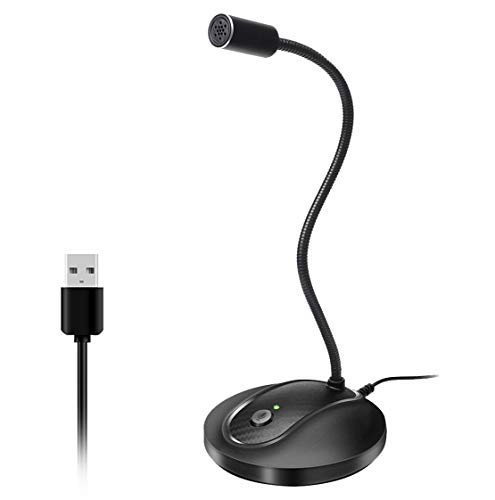

Top 3 picks at a glance
What to prioritize first
Lighting and room noise matter more than resolution. A cheap 1080p sensor with a $20 key light looks better than a 4K sensor in a dark room. A $80 dynamic mic two inches from your mouth sounds better than a $300 condenser mic picking up your keyboard, fan, and room echo.
Before you buy, check two things: your upload speed and your room. If your upload is under 10 Mbps, 4K video will not help you – Twitch and YouTube will compress it anyway. If your room has hard walls, a mechanical keyboard, and a loud PC, you want a mic that rejects noise, not one that captures more detail.
Webcams: when 1080p is enough
A basic 1080p webcam at 30fps is fine for facecam in the corner, Just Chatting, and office lighting. Look for autofocus, decent auto-exposure, and a 78-90 degree field of view. Wider than that and you show too much room. No autofocus and you go soft every time you lean forward.
The main failure mode is low light. Small sensors get noisy and smeary below about 300 lux. If your image looks grainy, move a lamp in front of you first. If that fixes it, you did not need a new camera. The second failure mode is auto white balance hunting under cheap LEDs, which turns your face orange then blue. Lock white balance in the camera software if you can.
A 4K webcam only makes sense if you crop and zoom a lot, you do product close-ups, or you record locally for YouTube while streaming at lower resolution. For live output, most platforms downscale to 1080p or 720p anyway. Do not buy 4K expecting viewers to see 4K.
If you just need something that works with OBS, Discord, and Zoom without drivers, start with a simple 1080p webcam for streaming and spend the savings on light and a mic arm.
When to step up to a mirrorless or DSLR
A mirrorless camera as a webcam gives you what no webcam can: a large sensor, real background blur, and clean performance in dim rooms. It is the right move for full-screen talking-head streams, podcasts, and creators who also shoot YouTube videos.
The trade-offs are real. You need continuous power with a dummy battery, a capture card or clean USB streaming mode, and a lens. Cheap kit lenses are slow indoors. Overheating is still a problem on long 4K streams, especially in warm rooms. Autofocus that hunts on video will ruin a stream faster than a soft webcam image.
Who should skip it? Anyone streaming gameplay with a small facecam, anyone on a laptop with limited USB bandwidth, and anyone who will not manually set exposure. A camera on full auto will pump brightness every time a bright game scene reflects on your face.
If you go this route, look for used last-generation bodies with clean HDMI, no 30-minute video limit, and good 1080p output. You do not need 4K60 for streaming. You need reliable 1080p60 without overheating. Search for a mirrorless camera with clean HDMI for streaming, then budget separately for a fast prime lens, dummy battery, and capture device.
Microphones: dynamic usually beats condenser for streamers
For untreated bedrooms, a USB dynamic microphone is the safest pick. It picks up what is close and rejects what is far. You can have a fan on, a keyboard clacking, and a room with echo, and still sound clear if the mic is 5-10 cm from your mouth on a boom arm.
A USB condenser microphone sounds richer and more detailed in a quiet, treated room, but it hears everything. If you cannot add rugs, curtains, or foam, and you will not use noise suppression, you will fight background hiss and room reverb the whole stream. Condensers also punish bad placement – too far away and you sound distant no matter how expensive it was.
XLR with an interface or mixer is better if you want multiple mics, live EQ/compression, or a podcast setup with two hosts. It is not automatically cleaner. A cheap interface with the gain cranked adds hiss, and ground loops can add hum. Only go XLR if you need the routing or you plan to upgrade mics later.
Biggest failure modes across all mics: plosives from breathing straight into the capsule, clipping from gain set too high, and desk vibration traveling up a stand. Fix them with a foam cover or pop filter, leave 6-10 dB headroom and use a limiter in OBS, and mount the mic on an arm, not the desk. Most streamers do well with a simple USB dynamic microphone for streaming plus a boom arm.
What to buy by budget
Under $150 total: Keep your current 1080p webcam, add a basic LED panel in front of you, and buy a USB dynamic mic with a cheap boom arm. This fixes 80 percent of quality problems. The cheaper option is genuinely fine here if you stream gameplay with a small facecam.
$250 to $500 total: Better 1080p or entry 4K webcam for cropping flexibility, USB dynamic mic, boom arm, key light, and closed-back headphones to prevent echo. Do not buy a mirrorless camera yet unless you already own one.
$800 and up: Mirrorless camera, fast f/1.8 prime, dummy battery, capture card, and either a high-end USB dynamic or XLR dynamic with interface. Only worth it if your face is full-screen most of the time or you repurpose the camera for recorded video.
| Setup | Typical cost | Strengths | Weaknesses | Best for |
|---|---|---|---|---|
| 1080p webcam + USB dynamic mic | $120-$250 | Easy setup, good noise rejection, low CPU load | Soft in low light, no real background blur | New gameplay and Just Chatting streamers |
| 4K webcam + USB condenser or dynamic | $250-$450 | Sharper crops, better for product demos | Needs good light, more USB/CPU load, platforms compress it | Creators who crop facecam and record locally |
| Mirrorless camera + XLR dynamic | $800-$1,500+ | Best low light, background blur, pro audio routing | Overheating risk, needs power/lens/capture, complex | Full-screen talk, podcasts, YouTube + streaming hybrid |
FAQ
Do I need 4K to look professional on Twitch?
No. Twitch transcodes most streams to 1080p or lower. Good lighting, correct exposure, and a stable 1080p60 feed look more professional than a noisy 4K feed in a dark room.
Why does my mic pick up my keyboard so loudly?
Your mic is probably too far away, gain is too high, or you are using a sensitive condenser. Move a dynamic mic closer, lower gain, add a noise gate in OBS, and use a boom arm instead of a desk stand.
Can I use a mirrorless camera with just USB?
Many newer cameras support USB webcam mode and it is fine for 1080p. For long streams, a dummy battery prevents shutdowns, and a capture card via clean HDMI is often more stable than USB with fewer dropouts.
Headset mic or desk mic for streaming?
A desk dynamic mic on an arm usually sounds fuller and is easier for viewers to listen to for hours. A headset mic wins if you move a lot, play standing VR, or have a very noisy room and need the capsule right at your mouth.


