
Your bedroom streams better than your acoustics. You’ve got an untreated room with bare walls, a hard floor, maybe a window catching street noise — and every cheap condenser mic you’ve tried has turned that into a cocktail of echo, hum, and your neighbor’s dog. That’s exactly why XLR dynamic microphones have become the default recommendation for bedroom streamers. Dynamics only pick up what’s close to them, so they naturally ignore the reflective slap off your walls and the rumble of your PC fans in a way that sensitive condensers never will.
The catch: the XLR market is crowded, and most reviews test in treated studios that look nothing like your setup. We focused this roundup specifically on how these mics behave in real, untreated bedrooms — off-axis rejection, handling noise, and whether the built-in features (gains, mute buttons, USB fallbacks) actually help when you can’t fix your room. Every pick here works over XLR, and most also run over USB, so you can start tonight without buying an interface.
As an Amazon Associate we earn from qualifying purchases at no extra cost to you. Product prices and availability are accurate as of the date shown and are subject to change.




Top 3 picks at a glance
Quick Picks
| Product | Best for | Price |
|---|---|---|
| FIFINE AmpliGame AM8 | Best overall for untreated rooms | $56.99 |
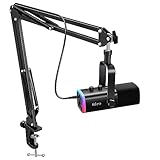
| FIFINE AmpliGame AM8T | Best bundle with boom arm and accessories | $67.99 |
| FIFINE AmpliTank K688 | Best for podcast-style recording | $67.99 |
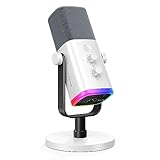
| FIFINE AmpliGame AM8W | Best white aesthetic build | $58.99 |
| MAONO PD200W | Best wireless hybrid flexibility | $99.99 |
| FIFINE AmpliTank K688CT | Best complete kit for new streamers | $79.99 |
| PUPGSIS XLR/USB Dynamic Mic | Best ultra-budget starter | $35.99 |
| Shure MV7X | Best premium upgrade | $199 |
How We Picked
We evaluated each microphone through the lens of one question: does it sound good in a bedroom nobody has treated? That means prioritizing dynamic capsules over condensers, favoring tight cardioid patterns that reject wall reflections, and rewarding onboard gain control and mute switches that save you from software fiddling mid-stream. We also weighted versatility — several of these mics run USB and XLR simultaneously, so you can grow into an audio interface without replacing your microphone. Price-to-completeness mattered too: a $36 mic that works today beats a $200 mic that needs another $150 of accessories. We did not test in acoustically treated spaces, and we don’t cite lab-grade frequency charts; instead we assessed usability, build, and real-world suitability for untreated rooms. Prices are listed as published and typically range from about $36 to $199 across this list.
The 8 Best Picks
1. FIFINE AmpliGame AM8 USB/XLR Dynamic Microphone — $56.99
The AM8 is the pick we’d hand to most bedroom streamers. The dynamic capsule shrugs off untreated-room echo, the tap-to-mute top button is genuinely useful mid-broadcast, and the RGB ring looks at home on a gaming desk. USB gets you streaming in five minutes; the XLR output means you can move to an interface later without buying a new mic.
- Clear, present vocal tone that cuts through untreated-room reflections
- Onboard gain dial and mute button for live control
- Requires decent gain levels on XLR interfaces without an inline booster
Skip it if you want a fully silent, RGB-free studio look — the lighting is on by default and can’t be fully disguised.
2. FIFINE AmpliGame AM8T XLR/USB Gaming Microphone Set — $67.99
This is the AM8 with everything you actually need in the box: an adjustable boom arm, a shock mount, a pop filter, and a desk stand, so there’s no second shopping trip before your first stream. For an untreated bedroom, the included shock mount matters more than most buyers realize — it tames desk thumps and keyboard vibration before they reach the capsule.
- Genuine all-in-one bundle — mic, arm, shock mount, pop filter included
- Only about $11 more than the bare AM8
- Bundled boom arm is functional but lighter-duty than a standalone $30 arm
Skip it if you already own a quality boom arm and shock mount; the standalone AM8 saves you money.
3. FIFINE AmpliTank K688 Dynamic Microphone — $67.99
The K688 leans more podcast than gaming: a larger dynamic capsule, a desktop-friendly form factor, and both USB-C and XLR outputs that can run at the same time for backup recording. In an untreated room, its tight pickup pattern does the heavy lifting, keeping wall reflections out of your track. It also includes a built-in headphone jack for zero-latency monitoring.
- Warm, podcast-appropriate vocal signature that flatters untreated rooms
- Dual USB/XLR operation lets you record a backup track simultaneously
- Stand footprint takes more desk space than boom-mounted alternatives
Skip it if your content is fast-paced gaming chatter where you want the mic off your desk and on an arm.
4. FIFINE AmpliGame AM8W XLR/USB Gaming Microphone — $58.99
The AM8W is the white-shell sibling of our top pick, functionally identical where it counts: same hybrid USB/XLR flexibility, same dynamic capsule that forgives bare walls, same onboard controls. If your setup is white-on-white, this is the rare XLR mic that matches without a paint job. It carries a $2 premium over the black AM8.
- Clean white finish that matches modern streaming setups
- Identical performance to the AM8 at a near-identical price
- White finish shows scuffs and dust more than black shells
Skip it if aesthetics don’t matter to you — the black AM8 at $56.99 is the same mic for slightly less.
5. MAONO PD200W Hybrid Wireless Podcast Microphone — $99.99
The PD200W is the outlier here: besides USB and XLR, it adds a wireless mode, letting you record from across the room without a cable run — handy if your bedroom layout puts the desk far from your PC. The dynamic capsule keeps untreated-room echo in check, and the metal build feels a tier above its price.
- Wireless mode frees you from cable-routing in awkward rooms
- Solid metal construction with a broadcast-style dynamic capsule
- At $99.99, costs notably more than equally capable wired-only picks
Skip it if your mic will sit within arm’s reach of your PC anyway — the wireless premium buys you nothing there.
6. FIFINE AmpliTank K688CT Podcast Microphone Kit — $79.99
The K688CT packages the K688’s USB/XLR dynamic mic with the accessories a first-time streamer forgets to budget for. If you’re setting up a bedroom studio from zero, the kit math is easy: a bare mic plus separately bought arm, mount, and filter usually exceeds $79.99 before you know it. Everything is color-matched and designed to work together out of the box.
- Complete kit at a price cheaper than buying pieces separately
- Same strong dual USB/XLR dynamic core as the standalone K688
- Accessory quality is serviceable rather than premium
Skip it if you’re upgrading an existing rig and only need the microphone itself.
7. PUPGSIS XLR/USB Dynamic Podcast Microphone — $35.99
At $35.99, this is the cheapest way into XLR-ready streaming without sounding like a toy. The dynamic capsule delivers the untreated-room benefit that matters most — rejecting wall echo and background noise — and USB mode means no interface purchase on day one. Build quality is lighter than the FIFINE competition, but for a first mic or a backup, it earns its price several times over.
- Lowest price on this list with genuine XLR/USB flexibility
- Dynamic capsule handles untreated rooms far better than budget condensers
- Lighter build and fewer onboard controls than pricier rivals
Skip it if you’re streaming regularly for an audience — the step up to $56.99 buys real durability and controls.
8. Shure MV7X XLR Dynamic Podcast & Recording Microphone — $199
The MV7X is the ceiling of this list and a genuine long-term investment. Built on the lineage of the industry-standard SM7B, its dynamic cartridge is famously forgiving of bad rooms, rejecting off-axis noise with authority. It’s XLR-only, so budget for an interface with healthy gain. At $199 it costs more than every other pick combined — but it will likely outlast your next three setup changes.
- Reference-class dynamic sound with excellent untreated-room rejection
- Broadcast-grade build expected to last many years of daily use
- XLR-only at $199 — interface and accessories are extra costs on top
Skip it if you’re starting out; the sub-$80 picks deliver most of the untreated-room benefit for a fraction of the price.
Buying Guide
Dynamic vs. Condenser in an Untreated Room
This is the single biggest decision, and for untreated bedrooms the answer is always dynamic. Condenser mics are more sensitive and capture a wider, more detailed image — including every flutter echo bouncing off your drywall, every PC fan, every hallway sound. Dynamics need you close to the capsule (roughly 2 to 6 inches) and fall off sharply beyond that, which is precisely the behavior a reflective room punishes you for lacking. Some dynamics, like the Shure MV7X, are specifically voiced to stay forgiving at close working distances.
USB, XLR, or Both?
Hybrid mics dominate this list for good reason. USB mode lets you plug into your PC directly and stream tonight with zero extra gear. XLR mode requires an audio interface (typically $50 to $150) but delivers cleaner preamp paths, gain control at your fingertips, and an upgrade path that doesn’t orphan your microphone. If you’re unsure, buy a hybrid: start on USB, and when you add an interface later, the same mic moves with you. Also check whether a mic supports both outputs simultaneously if backup recording matters to you.
Budgeting Beyond the Microphone
The mic is only part of the bill. A boom arm runs $20 to $40, a shock mount is often bundled (or $15 to $25 alone), and a pop filter adds $8 to $15. If you go XLR, add an interface. That’s why bundles like the AM8T at $67.99 or the K688CT at $79.99 represent strong value — the accessories are included at little or no markup. Set your expectations accordingly: a $56.99 mic with a $67.99 kit is often the cheaper overall path than a bare mic bought alone.
Our Verdict
For most untreated bedroom streamers, the FIFINE AmpliGame AM8 at $56.99 is the pick: a dynamic capsule that tames bare-wall echo, USB to start today, and XLR for when you grow. If you’re starting from an empty desk, spend the extra $11 on the AM8T bundle and get the arm and shock mount included. The PUPGSIS at $35.99 is a legitimate entry point for the tightest budgets, while the Shure MV7X at $199 is the one mic on this list you could carry through a decade of setup changes. Whichever you choose, going dynamic over condenser is the upgrade your untreated room needs most.
FAQ
Do I really need XLR if USB mics exist?
Not immediately — and that’s why hybrids dominate this list. USB gets you identical sound from the same capsule with no interface. XLR matters when you add an audio interface for better preamps, hardware gain control, and lower latency monitoring. A hybrid mic like the AM8 covers both stages without a repurchase.
How close should I sit to a dynamic microphone?
Aim for 2 to 6 inches from the capsule, slightly off-axis if plosives are an issue. In an untreated room, close positioning is your free acoustic treatment: the closer you are, the more your voice dominates the room’s reflections in the mix. Use the mic’s gain control to compensate for the short distance.
Will a pop filter and shock mount actually help in a bad room?
They help with different problems than echo. A pop filter tames plosive bursts (the “p” and “b” sounds), and a shock mount stops desk bumps and keyboard vibration from reaching the capsule. Neither treats wall reflections — only physical absorption or a tighter dynamic pattern does that — but both are cheap wins worth having.
Is the most expensive option worth it for a beginner?
Usually not. The Shure MV7X’s advantages compound over years of use and with a proper interface, but a beginner’s untreated room and learning curve will benefit just as much from a $56.99 dynamic hybrid. Start mid-range, learn your room’s behavior, and upgrade to premium hardware once your setup — and your skills — justify it.


