
Foam microphone windscreens take a beating. They sit millimeters from your mouth, absorbing saliva, skin oils, makeup, dust, and whatever else is floating in a karaoke bar or podcast studio. Clean them the right way and they’ll last for years and keep doing their job: blocking plosives, cutting breath noise, and protecting the mic capsule. Clean them badly — hot water, a dryer, harsh solvents — and you’ll end up with a shrunken, stiff, misshapen foam ring that no longer fits snugly, plus a microphone breathing in whatever residue you left behind. Worse, using the wrong cleaner (alcohol-heavy sprays, bleach) can degrade the foam’s open-cell structure and irritate the skin of the next singer. The good news: proper cleaning takes about ten minutes and requires supplies you already own.
What You Need
| Item | Why | Optional? |
|---|---|---|
| Mild dish soap (1–2 drops) | Breaks down saliva and skin oils without damaging open-cell foam | No |
| Lukewarm water (roughly 70–85°F) | Dissolves grime; hot water is what shrinks and warps foam | No |
| Small bowl | Holds the soap solution for a proper soak | No |
| Clean microfiber cloth or paper towels | Presses out water without snagging foam cells | No |
| Soft toothbrush | Loosens dried debris in the foam’s pores | Yes |
| Foam-safe electronics sanitizer spray or isopropyl alcohol wipes of 70% or lower, used sparingly | Extra sanitation for shared mics; overuse degrades foam | Yes |
| Mesh drying rack or clean towel | Air-drying surface; direct heat ruins foam | No |
Step-by-Step
1. Remove the windscreen from the microphone (30 seconds)
Grip the foam at its base — where it slides over the mic grille — and pull it straight off with a steady, gentle motion. Most handheld windscreens, like the common ones sized for standard ball-headed dynamic mics with roughly a 1.9 to 2.2 inch inner diameter, stretch over the grille. Don’t twist aggressively or yank from the top; slow, even pressure at the base keeps the foam from tearing. Never wash the windscreen while it’s on the mic — water reaching the capsule can kill the microphone entirely.
As an Amazon Associate we earn from qualifying purchases at no extra cost to you. Product prices and availability are accurate as of the date shown and are subject to change.

2. Rinse away loose debris (1 minute)
Hold the windscreen under a stream of lukewarm tap water and gently squeeze it a few times. You’ll often see the water run gray — that’s accumulated dust, skin cells, and dried saliva. Squeeze from the top down, like wringing out a sponge, but don’t wring with force. A quick pre-rinse like this makes the soap step far more effective.
3. Soak in soapy water (5 minutes)
Fill a small bowl with lukewarm water and add one or two drops of mild dish soap. Swish to create light suds, then submerge the windscreen and let it soak for about five minutes. For a heavily used shared mic, gently massage the foam with your fingertips every minute or so — you’re pushing soapy water through the cells, not scrubbing the surface. If you see visible gunk in the pores, a soft toothbrush in light circular strokes will lift it. Skip bleach, hydrogen peroxide soaks, and anything labeled antibacterial with harsh additives; these break down polyurethane foam.
4. Rinse thoroughly (1–2 minutes)
Rinse under lukewarm running water, squeezing gently repeatedly until no suds remain. Soap residue left in the foam will dry stiff and can transfer to the next user’s face. When in doubt, rinse longer — foam holds detergent deep in its cells.
5. Press out the water (1 minute)
Lay the windscreen flat on a clean microfiber cloth or paper towel, fold the cloth over it, and press down firmly with your palm. Rotate and repeat two or three times. Do not twist or wring — that permanently distorts the foam’s shape and the inner diameter, which is exactly what you need intact for a snug fit.
6. Air-dry completely (4–12 hours)
Stand the windscreen upright on a mesh rack or set it on a dry towel in a well-ventilated spot, away from direct sunlight and heaters. Full drying usually takes four to twelve hours depending on foam thickness — most handheld windscreens are around 0.2 to 0.4 inches thick and dry on the faster end of that range. Never use a hair dryer, tumble dryer, or radiator: heat shrinks foam permanently. The windscreen must be bone-dry before it goes back on the mic; trapped moisture against the grille invites corrosion and odor.
7. Optional sanitize, then refit (2 minutes)
For mics shared between multiple people — karaoke nights, conference rooms, classrooms — a light pass with a foam-safe sanitizer spray or a 70% isopropyl wipe, applied after drying and allowed to flash off for a minute, adds hygiene without soaking the foam. Then slide the windscreen back onto the mic from the base until it seats evenly over the grille. It should fit snugly with no gaps; a stretched-out windscreen that slides around won’t block plosives.
Mistakes to Avoid
Hot water and heat drying. This is the number one killer of foam windscreens. Water above roughly 110°F and any tumble-dryer or hair-dryer heat cause permanent shrinkage — a windscreen that once fit a 2-inch grille may no longer stretch over it at all.
Harsh chemicals. Bleach, acetone, undiluted alcohol, and abrasive cleaners degrade open-cell polyurethane, turning soft foam brittle or gummy. If you must sanitize, keep alcohol at 70% or lower and use it sparingly on the surface, not as a soak.
Wringing or twisting. Squeeze, press, and blot instead. Twisting distorts the inner diameter and creates a loose fit that defeats the windscreen’s purpose.
Reinstalling damp. Trapped moisture against the grille promotes rust on metal mesh and musty odors inside the foam. When it feels dry, give it another hour.
Washing the mic itself. Only the foam comes off for washing. Cleaning liquid reaching the capsule or switch is how working microphones die, and that’s a repair that can cost more than the mic is worth.
How Often
For a personal microphone used a few hours a week, clean the windscreen roughly once a month. For a shared mic in a studio, church, school, or karaoke setup, wipe it down with a foam-safe sanitizer between users and do a full soap-and-water wash weekly, or after any visibly sweaty or heavy session. Singers who perform regularly should clean after every few gigs — lipstick, foundation, and heavy salivary buildup penetrate foam quickly. And always do an immediate wash if someone sick has used the mic, or if the foam smells or shows visible discoloration.
When to Call a Pro or Replace
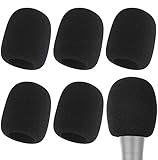
Foam windscreens are cheap consumables, so replacement is usually smarter than rescue. Replace the windscreen when the foam has hardened, crumbled, torn, thinned out, or permanently shrunk so it no longer grips the grille. Persistent odor that survives washing means bacteria have colonized the cells — let it go. A basic five-pack of quality foam covers runs around $6 to $8, which works out to roughly $1.20 to $1.60 per windscreen; the Mudder 5 Pack Foam Mic Cover Handheld Microphone Windscreen lists at about $7.99, and a comparable 6 Pack Foam Microphone Covers sells for around $5.99, so keeping spares on rotation costs almost nothing. A pro only enters the picture if moisture or debris has reached the microphone’s capsule itself — audible crackle, dropouts, or muffled output after a wet cleaning means the mic needs internal inspection, and most repair shops charge $40 to $100 for a capsule evaluation. As of 2026, well-made replacement windscreens remain far cheaper than any repair, so don’t gamble on degraded foam.
FAQ
Can I put a foam windscreen in the washing machine or dishwasher?
No. Machine washing agitates and twists the foam, and dishwasher heat and detergent will shrink and degrade it. Hand washing with mild soap and lukewarm water is the only reliable method.
How long does a foam windscreen take to dry completely?
Four to twelve hours in a ventilated room, depending on foam thickness and humidity. Pressing water out with a towel first cuts drying time significantly. Never apply direct heat to speed it up.
Can I use rubbing alcohol to clean my mic windscreen?
Only sparingly. A quick wipe with 70% or lower isopropyl alcohol after the windscreen is dry is acceptable for shared mics, but soaking foam in alcohol dries it out and shortens its life. Soap and water should do the heavy lifting.
Do all foam windscreens fit all microphones?
No. Handheld windscreens are sized to the mic head — most standard ball-grille dynamic mics need an inner diameter of about 1.9 to 2.2 inches, while smaller formats need smaller covers. Check your mic head’s diameter before buying, and note that multi-packs usually fit the common standard handheld size only.
Related guides
- What Size Pop Filter for Large Diaphragm Microphone? Size Guide With Measurements
- What Length Xlr Cable for Streaming Desk Setup? Size Guide With Measurements
- What Size Key Light for Small Streaming Room? Size Guide With Measurements
- How Much Ram for Streaming and Recording Gameplay? Size Guide With Measurements


