
If you wear glasses and stream, you already know the frustration: you get your camera, mic, and background dialed in, then playback shows two bright white circles hovering over your eyes. The choice between a led panel and a ring light is not just about brightness or color — it is about how light hits coated lenses, how much space you can give up in your room, and how much control you need to kill reflections without making your face look flat. Both can light you well, but they solve glare in very different ways.
Top 3 picks at a glance
Quick Verdict
For most glasses wearers who stream from home, a rectangular led panel gives you more glare-free control. You can move it 30 to 45 degrees off-axis, diffuse it, and raise it above eye level so the reflection falls outside your lenses. A ring light is cheaper, faster to set up, and wonderfully flattering for skin, but its signature circular shape is the exact shape that shows up as a distracting halo in glasses if it sits directly in front of you.
As an Amazon Associate we earn from qualifying purchases at no extra cost to you. Product prices and availability are accurate as of the date shown and are subject to change.

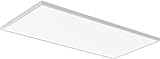

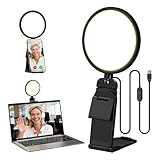
Choose a led panel if your priority is eliminating glare and you have room for a small stand or desk mount. Choose a ring light for streaming glasses glare if you want the simplest, most compact setup, sit close to your monitor, and are willing to position it carefully off-center or use it as a fill rather than a key light.
Side by Side
| Feature | Led Panel | Ring Light for Streaming Glasses Glare |
|---|---|---|
| Comfort and Eye Strain | Large diffused surface (typically 8 x 10 in to 11 x 14 in) is softer on eyes at 40-60% brightness. Easier for 2-4 hour sessions when angled off-axis. No hard circular reflection. | Direct circular source can feel harsher if centered. Eye-care models like the LitONES Ring Light for Computer diffuse the ring and run at lower output (8-12W) to reduce fatigue, but still need offset placement. |
| Durability | Metal or thick ABS housing, 50,000 hour LED lifespan. Panels like the Lithonia Lighting 2×4 LED Flat Panel Light are built for ceiling use with 5-year warranties. Portable panels last 3-5 years with careful handling. | Lighter plastic build, 30,000-50,000 hour lifespan. Ring and arm joints are the failure point. Desk-clip models like the Zoom Lighting for Computer typically last 2-4 years with daily use. |
| Price Range | $35 to $120. A 2-Pack LED Video Light Kit, NiceVeedi Studio Light with tripods and phone holders at $49.99 is common for dual-panel setups. Single portable panels run $35-$65. Architectural flat panels like the 2×4 Lithonia run $70-$110 each. | $19 to $65. Compact desk rings such as the LitONES Ring Light for Computer at $25.64 and the Zoom Lighting for Computer at $36.97 cover most streaming needs. Larger 18-inch rings reach $55-$75. |
| Maintenance | Wipe diffusion panel with microfiber. No bulbs to replace. Barn doors or softboxes add dusting but protect LEDs. | Wipe ring diffuser. Check USB or AC adapter and clamp tightness. No bulb changes. |
| Space Needed | Needs more room. Portable panel on tripod: tripod footprint 24-28 in wide, height 30-73 in. Desk-mounted panel: clamp plus 10-12 in arm. Ceiling flat panel is recessed and uses no floor space. | Very compact. Desk clip or weighted base takes 4-6 in of desk depth. Ring diameters 8-12 in for computer use, 18 in for floor stand. Arm folds flat against monitor. |
| Look on Camera | Creates soft, rectangular catchlight in eyes. More natural window-light look. Shadows fall to one side, gives face dimension. | Creates distinct circular catchlight. Very flattering, smooths skin and evens shadows when centered. Can look artificial if reflection is visible in glasses. |
| Resale and Versatility | High versatility for YouTube, product photos, and video calls. Retains value if it includes barn doors, NP-F battery plate, and bi-color 2800-6500K range. Flat ceiling panels add home value as permanent lighting. | Strong demand for WFH and streaming resale. Less versatile for product or room lighting, but easy to resell as a plug-and-play kit. |
| Best For | Glasses wearers who want maximum control, anyone streaming 5+ hours per week, or creators who need accurate color and adjustable brightness (10-100% dimming, 3200-5600K). | Beginners, tight setups, and anyone who wants a one-light, one-cable solution that looks good with minimal tweaking. |
Where Led Panel Wins
The biggest advantage of a led panel for glasses glare is geometry. A rectangular panel can be placed 3 to 4 feet away at a 30 to 45-degree angle and raised 12 to 18 inches above eye line. That angle bounces the reflection off your lenses and onto the ceiling or wall instead of straight back into the camera. A ring light centered on your lens does the opposite — it puts the brightest source exactly where your glasses will reflect it.
Diffusion is the second win. Most led panels ship with a built-in diffuser and optional softbox or honeycomb grid. That turns a 40W to 60W point source into a soft wash. Portable bi-color panels dim from 10% to 100% without flicker and shift from 2800K warm to 6500K daylight, so you can match room light and keep exposure low enough that reflections are dimmer. Ceiling options like the Lithonia Lighting 2×4 LED Flat Panel Light take a different approach: at 4000 lumens spread over 8 square feet, the light becomes ambient and shadowless, which virtually eliminates hot spots on lenses, though it offers less directional control for creative looks.
Control and scale matter for serious streaming. A two-panel kit, for example the 2-Pack LED Video Light Kit, NiceVeedi Studio Light, lets you use one panel as your angled key at 45% brightness and the second as a dim fill on the opposite side at 20%, which lifts shadows without adding a second reflection point. Panels weigh 1.5 to 3.5 pounds and mount to a 73-inch tripod, a desk arm, or a C-stand, so you can get them high and out of the reflection zone — something a monitor-mounted ring cannot do. As of early 2026, most sub-$60 portable panels also include USB-C power, NP-F battery options, and silent passive cooling, so there is no fan noise on mic.
Where Ring Light for Streaming Glasses Glare Wins
A ring light wins on simplicity and footprint, and it can still work for glasses if you break one rule: do not put it directly in front of your face. Move an 10-inch to 12-inch desk ring 18 to 24 inches to one side of your webcam and tilt it 15 to 20 degrees down, and the circular halo drops below or beside your lenses. Because the light wraps evenly around the camera axis, it is very forgiving when you lean in and out — helpful for gaming streams where you move a lot.
For small desks, the form factor is hard to beat. A model like the Zoom Lighting for Computer clamps to a desk or monitor, extends on a 20 to 28-inch gooseneck, and powers from a single USB-A port at 5V / 2A (10W max). Total weight is often under 1.2 pounds, and when you are done it folds to about 10 x 10 x 2 inches. You get stepless dimming and 3000K to 6000K color control from a dial on the cord, no tripod legs to work around, and no extra cables on the floor.
Ring lights also flatter skin with one source. The hollow center lets you place your webcam in the middle, so both eyes get equal fill and under-eye shadows disappear without a second light. Eye-care desk rings such as the LitONES Ring Light for Computer use a frosted diffuser and lower peak output to keep the source comfortable during long Zoom calls, which helps if you are sensitive to brightness but still need to look lit. If you stream with glasses and want that soft beauty look, using the ring as a low fill at 25-35% brightness while a window or ceiling light provides the key can give you the glow without the glare.
Cost Over 5 Years
Assume you stream or work on camera 15 hours per week, or about 780 hours per year.
A single portable led panel kit ($49.99 for a 2-pack, or $35-$65 for one panel) draws 30W to 50W. At 40W average and $0.16 per kWh, electricity is about $5.00 per year, or $25 over five years. Tripods and diffusers are included, and LEDs are rated to 50,000 hours, so you are unlikely to need replacements in five years. Five-year total: roughly $60 to $145 for one to two panels including power.
A dedicated ceiling led flat panel ($79.98 for the Lithonia Lighting 2×4 at 40W) is more efficient per lumen but is on longer if it lights the whole room. At 6 hours per day of room use plus streaming, it runs about 2,190 hours per year and costs about $14 per year in power, or $70 over five years. With no consumables, five-year total is about $150. It pays back differently — it replaces overhead lighting you would run anyway.
A desk ring light ($25.64 to $36.97 for computer sizes, $55-$75 for an 18-inch floor model) draws 8W to 15W. At 10W average for 780 hours per year, power is under $1.25 per year, or $6.25 over five years. Five-year total: about $32 to $82 including power. Even if you replace a worn gooseneck or clamp once for $12-$18, the ring remains the lowest cost to own. In short: rings are cheapest, portable panels cost slightly more but offer more control, and ceiling flat panels cost most upfront but double as home lighting.
Which One for Your Home
The right choice depends less on specs and more on your room and how you live in it.
Small Apartment or Tiny Desk
If your desk is 42 inches wide or less and you share the room as a bedroom, a ring light is the practical pick. A desk-mounted ring needs no floor space and sets up in 60 seconds. Place it just off-camera at 10 or 2 o’clock relative to your webcam, dim to 40%, and raise it 6 to 8 inches above eye level to keep the reflection out of your lenses. If you can spare a corner for a single compact led panel on a desk clamp instead of a tripod, you will get less glare, but measure first — a tripod base at 26 inches wide will dominate a studio apartment.
Family With Kids or Pets
Go led panel, preferably mounted high or on a wall. Floor tripods and low ring stands invite bumps from kids and pets, and a wobbling light briefly flares glare across your glasses every time it moves. A panel clamped to a shelf or wall mount at 6 feet high, angled down 30 degrees, stays out of reach and keeps reflections pointed at the ceiling. Choose a panel with a locking cold shoe and a metal housing rather than a thin gooseneck, and route cables along the wall.
Rental
Renters need no new holes and easy move-out. A portable led panel kit with 73-inch tripods or a clamp-on ring light both avoid permanent install, but the ring is easier to patch-free. Do not install a recessed 2×4 flat panel unless your lease allows it — it requires ceiling grid work and an electrician at $150-$300 install cost. For rentals, favor a 10-inch to 12-inch ring or a portable bi-color panel that runs on USB-C and stores in a closet. Both pack down to under 15 inches long for your next move.
Long-Term Home or Dedicated Streaming Room
If you own and have a dedicated office or basement studio, combine them. Install a dimmable ceiling led flat panel at 4000K for clean ambient light, then add one portable led panel as your angled key light for streaming. This gives you glare-free, shadowless base light for everyday use plus directional control when you go live. Over time, the ceiling panel improves the whole room for work and video, while the portable panel stays adjustable for camera work. A ring light can still serve as a hair light or background glow behind your monitor, but keep it off-axis when you wear glasses.
FAQ
How do I position any light to avoid glasses glare?
Raise the light 12 to 18 inches above your eyes and move it 30 to 45 degrees to one side. Then look at your camera preview while wearing glasses and nudge the light until the reflection slides off the lens. Dim to the lowest level that still exposes your face correctly — ISO 400-800 with an f/2.8 aperture in a dim room often lets you run a panel at 35-50% instead of 100%, which makes any remaining reflection much fainter.
Will an anti-reflective coating fix ring light glare?
It helps but does not eliminate it. Premium anti-reflective coatings cut reflection intensity by 60-80%, so a centered ring becomes a faint halo instead of a bright circle, but the shape is still visible on camera. Position still matters more than coating. If your glasses have strong reflections, tilt your frames down 5 degrees by adjusting the temple arms and move the light off-axis — that combination beats coating alone.
Is a bigger light always better for glasses?
Not always, but larger diffused sources are more forgiving. An 8 x 10 inch panel at 3 feet creates softer falloff than a 10-inch ring at the same distance, so small head movements do not suddenly pop a reflection. However, a huge 2×4 foot ceiling panel can wash out facial dimension. Most streamers do best with a portable panel in the 10 x 12 inch to 12 x 14 inch range with a softbox — large enough to be soft, small enough to shape.
Can I use both a led panel and a ring light together with glasses?
Yes, and many glasses wearers do. Use the led panel as your main key at 45 degrees off-center and 40-55% brightness, then add the ring light at very low power (15-25%) directly behind or beside the webcam as a gentle fill, or place it behind you as a background accent. Keep only one bright source facing your lenses at a time. Test with your actual glasses, since frame curvature and lens tilt change where reflections land.
Related guides
- Hard Drive vs Ssd for Long Term Footage Backup: Which Is Right for Your Home
- Acoustic Foam vs Polyester Panels for Streaming Room: Which Is Right for Your Home
- Stream Deck vs Keyboard Shortcuts for Scene Switching: Which Is Right for Your Home
- Boom Arm vs Desk Stand for Streaming Microphone: Which Is Right for Your Home
