This review analyzes published product information. We have not performed detailed research of this unit.
As an Amazon Associate, we earn from qualifying purchases.
A two-source starting point for creators
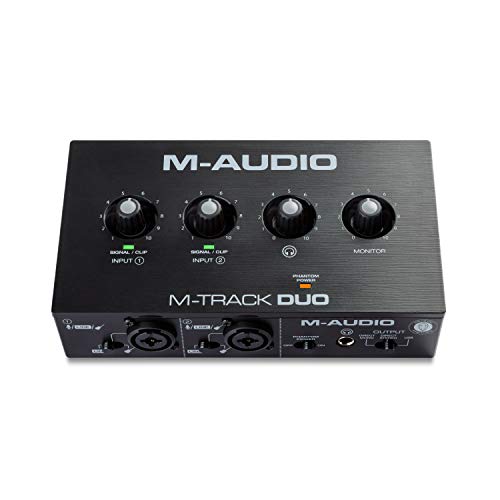
The M-AUDIO M-Track Duo makes the most sense when your recording plan begins with one or two physical sound sources. Its listed combination inputs accept microphones, line signals or instruments, while separate headphone and stereo outputs cover basic listening needs. For a creator moving beyond a computer’s built-in audio, that is a useful collection of connections. It is not, by itself, evidence of a complete streaming mixer.
This review evaluates the M-Track Duo USB Audio Interface from the supplied retailer specifications, not detailed research. The listing establishes the main input and output paths but leaves several workflow details unresolved. Those gaps matter especially if you need to combine a microphone, game sound, remote guests and music into different mixes.
The specified hardware at a glance
| Item | Listed specification |
|---|---|
| Model | M-AUDIO M-Track Duo USB Audio Interface |
| Computer compatibility | Mac or PC |
| Audio rate | 48 kHz; bit depth not supplied |
| Analog inputs | Two combo XLR / line / instrument inputs |
| Microphone facilities | Phantom power and Crystal preamps |
| Listening outputs | 1/4-inch headphone output and stereo 1/4-inch outputs |
| Monitoring selection | USB/Direct switch |
| Included software | MPC Beats |
| Dimensions | 4.34 × 7.5 × 2.13 inches |
| Listed weight | Approximately 0.66 pounds |
Build the input plan before choosing the interface
The two combo inputs are the Duo’s clearest advantage for a small creator setup. The listing explicitly supports guitar, vocal and line-input recording, so the relevant buying question is which two sources you want connected. A microphone and guitar, or two microphones for a local conversation, fit that input count. There is no need to invent a more elaborate use case to make the configuration useful.
The limit is equally important: these are two physical inputs, not an open-ended collection of channels. If your intended arrangement needs two microphones plus another analog source at the same time, the stated connections do not cover it. Count signal channels rather than devices; a stereo source can require two input channels if you intend to preserve its left and right signals.
Phantom power is listed, and the seller specifically mentions condenser microphones. That makes the Duo worth considering for a condenser-based desk, but the published listing information do not specify the phantom-power voltage or switching arrangement. Check the requirements of your exact microphone before treating compatibility as settled.
M-AUDIO’s Crystal preamps are also identified. The listing promotes their sound quality, but it provides no gain range, noise specification or maximum input level. Consequently, there is not enough evidence here to promise ample gain for a particular low-output microphone or clean handling of every line-level source. Those are compatibility checks, not demonstrated defects.
Direct monitoring helps one part of the signal path
The USB/Direct switch is a meaningful inclusion for recording. The seller describes the direct option as zero-latency monitoring. In practical buying terms, a direct monitoring path is intended to let you hear the incoming signal without relying on the computer’s processed return. That can be preferable when software monitoring makes speaking or playing feel disconnected.
It should not be read as a promise that the entire streaming chain has no delay. Software processing, routing and delivery are separate issues, and the listing supplies no round-trip latency measurements. If you want to hear software effects while recording, the direct path alone does not establish that workflow.
The evidence also names a switch, not a continuously adjustable input/playback blend control. It does not explain whether computer playback and direct input can be heard together, how the two inputs are presented in headphones, or what independent level controls are available. Creators who need a precise balance between their voice and a backing track should resolve those questions before choosing the Duo.
Outputs and the physical desk
A 1/4-inch headphone output and stereo 1/4-inch outputs give the interface distinct connections for headphones and an external listening system. That is useful for a desk where headphones serve recording sessions and speakers serve editing. The listing does not, however, establish separate mixes for those destinations or independent output-volume control.
Check the connectors on your existing headphones and speakers rather than assuming everything plugs straight in. Headphones with a different plug size will need an appropriate adapter, and the supplied evidence does not say one is included. The output description also does not specify balanced operation, so cable selection should follow confirmed connection details rather than assumptions.
The listed dimensions and roughly 0.66-pound weight suggest an interface that is easy to allocate space for or move between work areas. Allow additional room for attached cables. USB connector type, included cable and power requirements are not documented here, leaving the exact computer-side hookup to verify.
Streaming software and sensible upgrade priorities
The listing states Mac and PC compatibility and a 48 kHz audio rate. It does not provide supported operating-system versions, driver requirements or bit depth. Those omissions mean compatibility with your particular computer and application remains a check, not a guarantee.
MPC Beats is included, giving music-oriented buyers a software addition to consider. Its inclusion does not establish stream-routing tools. In particular, loopback, application-specific mixing and separate audience and headphone mixes are not documented. If those are central to your workflow, prioritize confirmation of routing features over the seller’s broad streaming claims.
For a wider comparison, use our guide to audio interfaces for streaming with your required inputs and monitoring paths already written down. More inputs, documented microphone gain or explicit software routing may be more consequential upgrades than a different recording-rate specification.
Frequently asked questions
Can the M-Track Duo record two microphones at the same time?
Yes, its two combo XLR / line / instrument inputs can accommodate two microphones for a local conversation. Phantom power is listed, and the seller specifically mentions condenser microphones. However, the published listing information do not specify the phantom-power voltage or switching arrangement, so you should check the requirements of your exact microphones before treating compatibility as settled.
Does the M-Track Duo include loopback or separate streaming mixes?
The article does not establish that the M-Track Duo includes loopback, application-specific mixing, or separate audience and headphone mixes. Its listing identifies a USB/Direct switch and basic headphone and stereo outputs, but those details do not prove advanced stream routing. If those functions are central to your workflow, confirm them before choosing the interface.
Can I hear computer playback and direct input together?
The published listing information does not explain whether computer playback and direct input can be heard together. It identifies a USB/Direct switch and describes the direct option as zero-latency monitoring, but it does not document a continuously adjustable input/playback blend control. Creators who need a precise balance between voice and backing tracks should resolve this question before buying.
What cables or adapters might I need for the M-Track Duo?
You may need an adapter if your headphones use a different plug size, because the listing does not say one is included. You should also check your speakers’ connectors and cable requirements rather than assuming they plug in directly. USB connector type, the included cable, power requirements, and balanced operation are not documented in the supplied evidence.
Is the M-Track Duo suitable for a microphone and guitar setup?
Yes, a microphone and guitar fit the stated plan because the interface has two combo inputs supporting microphones, line signals, and instruments. Phantom power and Crystal preamps are listed, but gain range, noise specifications, and maximum input level are not supplied. The article therefore supports the connection arrangement, while particular microphone compatibility still requires checking.
Verdict: useful connections, with routing to verify
The M-Track Duo is a plausible fit for creators who need up to two analog sources, headphone listening and stereo outputs in a small USB interface. Its strongest supported appeal is connection flexibility. Choose it on that basis only after checking microphone requirements and monitoring behavior; do not assume the listing’s streaming positioning includes advanced mix management.
Sources: Supplied retailer listing for the M-AUDIO M-Track Duo. Specifications and manufacturer claims above come from that listing; sound quality and operational performance were not independently researched.
Check the exact product and current offer on Amazon