
Buried in the Advanced settings of OBS is a Video section with “Color Format,” “Color Space,” and “Color Range,” usually left at NV12, 709, and Limited. Most streamers never touch them, and mostly that is correct. But knowing what NV12 means helps you diagnose washed-out or crushed colours, and tells you when it is safe to change.
As an Amazon Associate we earn from qualifying purchases at no extra cost to you.

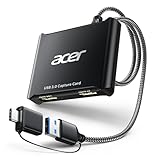


Top 3 picks at a glance
What color format controls
Color Format is how OBS packs pixel data before it reaches the encoder. NV12 is a specific arrangement of brightness (luma) and colour (chroma) information using 4:2:0 chroma subsampling with 8 bits per channel. In plain terms, it stores full detail for brightness but shares colour data across small pixel groups, which the human eye barely notices while cutting the data load significantly.
Why NV12 is the default
Streaming platforms decode 4:2:0 8-bit video, and hardware encoders are optimised for exactly this format. NV12 hands the GPU encoder data in the shape it wants, so it is the fastest, most compatible choice and the reason it ships as the default.
The related settings
| Setting | Default | Use case |
|---|---|---|
| Color Format | NV12 | Standard streaming and recording |
| Color Format | P010 | 10-bit HDR recording only |
| Color Space | 709 | Standard HD (Rec.709) content |
| Color Range | Limited | Correct for most video pipelines |
| Color Range | Full | Only if your whole chain uses full range |
The setting people most often break is Color Range. Video traditionally uses Limited range (levels 16-235). If you switch OBS to Full range but the platform or player expects Limited, blacks look grey and highlights blow out. Unless you have a specific, tested reason, leave Color Range on Limited and Color Space on 709.
When to change from NV12
Only switch to P010 if you are recording true 10-bit HDR footage for editing and your GPU, source, and editor all support it. For live streaming to Twitch, YouTube, or Kick, NV12 is the right answer every time.
Diagnosing a color mismatch
When colours look wrong, change one setting at a time so you can see what each does. Start by confirming Color Range is Limited and Color Space is 709, then check that your capture card or camera is outputting the same range. A frequent culprit is a camera or capture device set to Full range while OBS expects Limited, or vice versa; the mismatch shows as either grey, lifted blacks or crushed, inky shadows.
Browser and game sources have their own quirks too. A browser overlay rendered in full range placed over limited-range video can look slightly brighter than the rest of the scene. Keeping the whole pipeline consistent, source, OBS, and encoder, avoids these subtle shifts. Once everything agrees on NV12, 709, and Limited, your colours reproduce faithfully and you can stop chasing phantom contrast problems.
Frequently asked questions
Will switching to a higher color format improve my stream?
No. Streaming platforms deliver 8-bit 4:2:0 to viewers regardless, so encoding in a heavier format like P010 for a live stream just adds load with no visible benefit. Reserve higher formats for local HDR recording that you will edit and master separately.
My stream colors look washed out. Is NV12 the cause?
Usually not NV12 itself, but the Color Range setting. A mismatch, such as OBS set to Full while the output expects Limited, produces exactly that faded, grey-black look. Set Color Range back to Limited and Color Space to 709 and the contrast typically returns to normal.
Bottom line
NV12 is the correct, high-compatibility color format for streaming and standard recording, and you should leave it there. The setting to watch is Color Range: keep it on Limited with the 709 color space unless you have deliberately built a full-range pipeline. Only reach for P010 when you are genuinely recording 10-bit HDR.


