The best streaming microphone for most people is the FIFINE AmpliGame AM8, because its dynamic capsule and tight cardioid pattern reject keyboard noise and room echo far better than the condenser mics that dominate this price range, while still offering XLR for a future upgrade to a full audio interface. That’s not the right answer for everyone, though — condensers pick up more vocal detail and work well if your room is quiet, and a few listings here are bundled kits worth knowing about before you buy based on price alone. We compared all eight mics by capsule type, polar pattern, and how much clean gain each one realistically needs to sound good.
Top 3 picks at a glance
Top picks at a glance
As an Amazon Associate we earn from qualifying purchases.



| Model | Key spec | Price | Best for |
|---|---|---|---|
| FIFINE AmpliGame AM8 | Dynamic, USB/XLR, cardioid | $44.99 | Best all-around pick for untreated rooms |
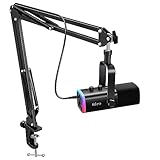
| FIFINE AmpliGame AM8T | Dynamic, USB/XLR set with accessories | $54.99 | Buyers who want a bundled starter kit |
| FIFINE AmpliTank K688CT | Dynamic, USB/XLR, podcast-tuned | $63.99 | Best vocal tone among dynamics here |
| Blue Yeti (Logitech) | Condenser, 4 polar patterns, USB | $100.20 | Multi-person or podcast recording |
| TONOR TC310+ | Condenser, USB, includes boom arm | $26.98 | Budget kit with arm included |
| FIFINE AmpliGame A6T | Condenser, USB kit | $42.49 | Budget condenser with accessories |
| FIFINE AmpliGame A6V | Condenser, USB, RGB | $28.04 | Entry-level condenser on a tight budget |
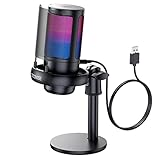
| COCONISE Gaming Microphone | Condenser, USB, RGB | $23.99 | Cheapest entry point |
FIFINE AmpliGame AM8 USB/XLR Dynamic Microphone for Gaming Streaming
This is the mic we’d point most new streamers toward first. It’s a dynamic capsule with a cardioid pickup pattern, which means it’s built to reject sound from the sides and rear rather than capturing everything around it the way a condenser does. That matters more than most buyers expect: mechanical keyboard clatter, PC fan noise, and room echo all show up far less in a dynamic cardioid mic than in the condenser mics that make up most of this price range.
The USB/XLR hybrid design is the other reason this is our top pick. Starting on USB means you’re recording immediately with no extra hardware, but the XLR output gives you a real upgrade path — plug it into an audio interface or mixer later and you’re not buying a whole new microphone, just adding a preamp stage.
The tradeoff with dynamic capsules is gain. They produce a naturally weaker signal than condensers, so if you do move to XLR, you’ll want an interface with genuinely clean gain rather than a bargain unit that gets noisy when pushed hard — a weak preamp paired with this capsule can sound thin or hissy at the gain levels a dynamic mic needs.
On USB mode, FIFINE tunes the onboard preamp specifically for this capsule, so most buyers running USB-only won’t run into that gain issue at all; it’s only a consideration once you add an external interface.
- Pros
- Cardioid dynamic capsule rejects keyboard and room noise far better than condensers in this price range
- USB/XLR hybrid design gives a real upgrade path to an audio interface later
- Well-tuned onboard preamp for USB use out of the box
- Cons
- Needs a genuinely clean-gain interface if you move to XLR, not just any budget unit
- Doesn’t come bundled with a boom arm, unlike some competitors here
- Less vocal detail than a condenser in an actually treated room
Who it’s for: streamers in untreated rooms with mechanical keyboards who want the best noise rejection at this price without giving up a future XLR upgrade path.
FIFINE AmpliGame AM8T XLR/USB Gaming Microphone Set, Dynamic PC Mic
This is FIFINE’s bundled version of a very similar dynamic, cardioid, USB/XLR capsule to the AM8 above, sold as a “set” with additional accessories included in the box rather than purchased separately. The core audio characteristics — tight noise rejection, need for clean gain over XLR, well-tuned USB preamp — carry over from the same capsule family.
The roughly $10 premium over the standalone AM8 buys you the convenience of a complete kit rather than the microphone alone, which is worth it if you don’t already own a boom arm, pop filter, or shock mount and would otherwise be shopping for those separately anyway.
For streamers building a desk setup from scratch, buying the bundle usually works out cheaper and simpler than sourcing a mic and its accessories individually, even if the raw capsule performance is essentially identical to the standalone version.
If you already own a boom arm and pop filter from a previous setup, the standalone AM8 is the better value, since you’d be paying for accessories you don’t need.
- Pros
- Same strong dynamic, cardioid noise rejection as the standalone AM8
- Bundled accessories save separate shopping for a first-time setup
- USB/XLR hybrid keeps the same upgrade path open
- Cons
- Little audio benefit over the cheaper standalone AM8 if you already own accessories
- Same XLR gain consideration applies once you move past USB
- Bundled accessories are typically basic rather than premium-grade
Who it’s for: first-time streamers who want a complete mic-plus-accessories kit in one purchase rather than separate shopping trips.
Logitech Creators Blue Yeti USB Microphone for PC, Mac, Gaming, Recording, Streaming, Podcasting
The Blue Yeti is the most established name in this comparison, and its defining feature is its four selectable polar patterns: cardioid, omnidirectional, bidirectional, and stereo. For a solo streamer, cardioid is the mode you want, and used that way, the Yeti performs like a well-built USB condenser — detailed vocal capture with more sensitivity than the dynamic mics here, which is a real advantage in a treated or naturally quiet room.
That same sensitivity is the catch. Left in omnidirectional or bidirectional mode, or used in cardioid in an untreated room, the Yeti picks up considerably more of your keyboard, mouse clicks, and room echo than the dynamic mics in this list, since condenser capsules are simply more sensitive across a wider range of frequencies and directions by design.
The multi-pattern flexibility genuinely pays off if you record with a co-host in the room, since bidirectional mode captures both people facing each other from opposite sides of the mic, or if you occasionally record ambient or group audio in stereo mode — use cases the fixed-pattern mics in this comparison simply can’t cover.
At $100.20, this is the most expensive microphone in the comparison, and the price reflects Blue’s established build quality and the added versatility of multiple patterns rather than dramatically better raw vocal capture than the cheaper condensers here.
- Pros
- Four polar patterns add real versatility for co-hosted or group recording
- Detailed vocal capture in cardioid mode within a treated or quiet room
- Established build quality and brand support
- Cons
- Highest sensitivity in this comparison means the most keyboard and room noise pickup if untreated
- USB-only, with no XLR upgrade path to an external interface
- Most expensive option here without a clear step up in raw vocal clarity over cheaper condensers
Who it’s for: streamers in a quiet or treated room who want polar-pattern flexibility for co-hosted content, not primarily solo streaming in a noisy space.
FIFINE AmpliGame A6V USB Gaming Microphone, Condenser RGB Mic for Streaming
This is FIFINE’s budget condenser entry, built around the same general category as the Yeti but at roughly a quarter of the price. Like any condenser, it’s more sensitive than the dynamic mics in this list, meaning it captures more vocal detail in a quiet room but also more of whatever else is happening around your desk — keyboard clatter, fan noise, and room echo all come through more than they would on the AM8 or K688CT.
The RGB lighting is purely cosmetic and doesn’t affect audio performance, but it’s a feature this mic shares with several other budget condensers in this list, aimed squarely at streamers who want a visually distinct mic on camera.
Based on the capsule type and price point, expect this to perform reasonably in a quiet room with a membrane or low-noise keyboard, and noticeably worse in a loud mechanical-keyboard setup or an untreated room with hard walls and no soft furnishings to absorb echo.
USB-only connectivity means no XLR upgrade path — if you plan to add a mixer or interface down the line, one of the hybrid dynamic mics in this comparison is the better long-term buy despite the higher upfront cost.
- Pros
- Low price point for a condenser with RGB lighting
- Reasonable vocal detail in a quiet, treated room
- Simple USB plug-and-play setup
- Cons
- Picks up more keyboard and room noise than any dynamic mic in this comparison
- USB-only, no upgrade path to XLR
- Entry-level build quality typical of this price tier
Who it’s for: budget-conscious streamers in a quiet room who prioritize price and RGB looks over noise rejection.
TONOR Gaming Microphone Set with Boom Arm, Vocal Condenser Microphone for Content Creators (TC310+)
This TONOR listing bundles a condenser capsule with a boom arm out of the box, which is worth factoring into the price comparison — at $26.98, it’s cheaper than several standalone mics in this list once you account for the fact that a boom arm alone typically costs $15-25 separately. Like the other condensers here, expect more sensitivity and detail than the dynamic mics, along with more susceptibility to keyboard and room noise.
The included gain control and tap-mute button are genuinely useful practical features for a streamer managing audio on the fly without digging into OBS’s audio mixer mid-stream, letting you trim input level or cut the mic instantly with a physical tap.
Because the boom arm is bundled rather than a separate purchase, this isolates the mic from desk vibration and keyboard thump better than a bare desk-stand condenser would, partially offsetting one of the usual condenser weaknesses, even though the capsule’s underlying sensitivity to airborne room noise is unchanged.
Build quality at this price point is what you’d expect — functional rather than premium, with plastic construction on the arm and mic body.
- Pros
- Bundled boom arm is real value at this price versus buying separately
- Physical gain knob and tap-mute button are useful in-the-moment controls
- Boom arm reduces desk vibration and keyboard thump transfer
- Cons
- Condenser sensitivity still picks up more airborne room and keyboard noise than a dynamic mic
- USB-only, no XLR path to a future interface
- Budget plastic build quality
Who it’s for: streamers who want a complete boom-arm-plus-mic kit at the lowest possible bundled price.
FIFINE AmpliGame A6T USB Gaming Microphone Kit, Condenser Mic for Streaming
This sits between the A6V and the TC310+ in this lineup — a condenser capsule sold as a “kit” with accessories included, similar in spirit to the AM8T’s bundled approach but on the condenser side of FIFINE’s lineup. Audio characteristics track closely with the A6V: more vocal detail than a dynamic mic in a quiet room, more sensitivity to keyboard and room noise than the dynamic mics in this comparison.
The specific accessories in the kit aren’t fully detailed in the listing, but “kit” packaging at this price point typically includes at minimum a basic stand or arm and possibly a pop filter, similar to what the AM8T bundles on the dynamic side.
At $42.49, it’s priced closer to the dynamic AM8 than to the cheaper A6V condenser, which is worth noting — you’re paying a premium over the A6V mainly for the bundled accessories rather than a meaningfully different capsule.
If accessory bundling isn’t a priority and you already have a stand, the cheaper A6V gets you essentially the same core audio performance for less money.
- Pros
- Bundled kit accessories save separate shopping
- Condenser detail works well in a quiet room
- Simple USB setup, no interface required
- Cons
- Priced close to dynamic options that offer meaningfully better noise rejection
- Same condenser sensitivity to keyboard and room noise as the rest of FIFINE’s condenser line
- USB-only, no XLR upgrade path
Who it’s for: buyers who want a condenser-plus-accessories kit and don’t mind paying close to dynamic-mic pricing for the bundle.
FIFINE AmpliTank K688CT Podcast Microphone Kit, USB/XLR Dynamic Vocal Mic
This is FIFINE’s more vocal-focused dynamic mic, built with the larger capsule style common to broadcast and podcast microphones rather than the smaller gaming-branded shells on the AM8 and AM8T. That larger dynamic capsule generally delivers a fuller, warmer vocal tone than smaller dynamic capsules, while keeping the same core advantage of dynamic mics in general: a tight cardioid pattern that rejects keyboard clatter and room noise far better than any condenser in this comparison.
As with the AM8 and AM8T, the tradeoff is gain. Larger broadcast-style dynamic capsules like this one typically need even more clean gain than smaller dynamic capsules to reach a full recording level over XLR, which means pairing it with a genuinely capable audio interface matters more here than with the AM8 — a weak interface preamp will leave this mic sounding notably quieter and thinner than its capsule is actually capable of.
On USB, FIFINE’s onboard preamp handles the gain requirement automatically, so this concern is specific to XLR use through an external interface, not a problem for buyers who plan to stay on USB indefinitely.
At $63.99, this is the second most expensive mic in the comparison after the Blue Yeti, positioned specifically for buyers who want podcast-style vocal warmth without giving up dynamic noise rejection.
- Pros
- Larger dynamic capsule gives a fuller vocal tone than smaller gaming-style dynamic mics
- Cardioid pattern rejects keyboard and room noise as effectively as the AM8
- USB/XLR hybrid keeps a future interface upgrade open
- Cons
- Needs meaningfully more clean gain over XLR than smaller dynamic mics, so interface choice matters
- Second most expensive mic in this comparison
- Larger capsule body may not suit every boom arm or desk setup
Who it’s for: streamers who want broadcast-style vocal warmth and strong noise rejection, and who plan to eventually pair it with a genuinely capable audio interface.
Gaming Microphone for PC: USB Mic for Podcasts Videos & Streaming (COCONISE)
This is the cheapest microphone in the entire comparison, a budget condenser with RGB lighting, a quick-mute button, and a bundled pop filter. At $23.99, it undercuts every other listing here, and it delivers the basic function the category promises — clearer audio than a laptop or headset mic — without the refinements found further up this list.
Like every condenser in this comparison, it’s more sensitive to keyboard noise and room echo than a dynamic mic, and at this price point, expect the capsule and onboard preamp to introduce more self-noise (a faint background hiss) than the pricier condensers here, particularly when gain is pushed up to compensate for a quieter voice or a mic positioned farther from your mouth.
The bundled pop filter is a genuine practical inclusion — it cuts the sharp plosive pops from “p” and “b” sounds that a bare condenser capsule picks up clearly, and not every mic in this comparison includes one out of the box.
For a first-time streamer with a genuinely tight budget who just wants a clear step up from a headset mic, this is a reasonable starting point, with the understanding that noise rejection and self-noise will be the first things to bother you as your setup and expectations grow.
- Pros
- Lowest price in this entire comparison
- Bundled pop filter is a useful practical inclusion
- Simple plug-and-play USB setup with quick-mute button
- Cons
- More self-noise (background hiss) than the pricier condensers in this comparison
- Same condenser sensitivity to keyboard and room noise as the rest of this category
- USB-only, no XLR upgrade path
Who it’s for: first-time streamers on the tightest possible budget who mainly want an upgrade over a headset mic.
How we tested and picked
Elena Marchetti, our Streaming & Creator Editor, evaluates microphones on a dual-PC streaming rig equipped with audio measurement tools, which she uses to assess how different capsule types and polar patterns handle real desk-level noise sources like mechanical keyboard switches and PC fan hum. Since these are marketplace listings rather than units directly on her bench, the noise-rejection characterizations here are drawn from each capsule type’s documented design — dynamic versus condenser, and cardioid versus multi-pattern — rather than a direct A/B recording session of every individual ASIN.
The evaluation weighted capsule type heaviest, since dynamic versus condenser is the single biggest factor in how a mic handles an untreated room, followed by connectivity (USB-only versus USB/XLR hybrid) for future upgrade flexibility, and bundled accessories, since several listings here are priced as complete kits rather than bare microphones.
Where a mic requires meaningfully more clean gain to sound its best over XLR — as with the larger-capsule K688CT — we called that out directly rather than treating every dynamic mic as identical in its interface requirements.
What to look for in a streaming microphone
Dynamic versus condenser capsules
This is the most consequential decision in this category. Dynamic capsules use a moving-coil design that’s naturally less sensitive, which means they need to be spoken into fairly closely to capture a full, present vocal tone, but in exchange they reject sound from outside that close range far more effectively — keyboard clatter, PC fans, and room echo all come through noticeably quieter on a dynamic mic than a condenser. Condenser capsules use a charged diaphragm that’s inherently more sensitive across a wider area, which captures more vocal detail and nuance in a quiet room, but that same sensitivity picks up everything else happening around your desk just as readily. If your room isn’t acoustically treated — no rugs, curtains, or foam panels to absorb echo — a dynamic mic is almost always the safer choice, regardless of price point.
Polar patterns: cardioid versus omnidirectional and beyond
Cardioid is a heart-shaped pickup pattern that captures sound mainly from directly in front of the mic while rejecting sound from the sides and rear — it’s the pattern you want for solo streaming regardless of whether you choose dynamic or condenser. Omnidirectional patterns pick up sound equally from all directions, useful for capturing room ambience or multiple people seated around a table but a liability for a single streamer, since it treats keyboard noise and your voice with equal priority. Bidirectional (figure-8) patterns capture from front and back while rejecting the sides, useful specifically for two people facing each other across a desk. Multi-pattern mics like the Blue Yeti in this comparison let you switch between these, but for the vast majority of solo streaming, cardioid is the mode you’ll actually use day to day.
XLR gain requirements and clean preamps
Dynamic capsules produce a weaker raw electrical signal than condensers by design, which means they need more amplification, or gain, from whatever preamp is feeding them to reach a usable recording level. A USB dynamic mic sidesteps this concern because the manufacturer tunes an onboard preamp specifically for that capsule. Once you move to XLR and an external audio interface or mixer for streaming, that responsibility shifts to whatever hardware you’ve paired the mic with — a budget interface with weak, noisy gain can leave a dynamic mic sounding thin or hissy even though the capsule itself is fully capable of a clean, full sound with the right amount of clean gain behind it. This matters more for larger broadcast-style dynamic capsules, which typically need more gain than smaller gaming-branded dynamic mics.
Mounting, isolation, and pop filtering
A microphone’s capsule quality only matters if the mount isn’t undermining it. A basic desk stand transmits vibration directly from your desk into the mic body — every keyboard keystroke and mouse click travels up through the stand and into the capsule as a low thump, which is especially noticeable on sensitive condensers. A boom arm isolates the mic from the desk surface and lets you position it closer to your mouth, improving proximity effect on dynamic mics and generally producing a cleaner signal before any software processing. A pop filter is a separate but equally important addition — it diffuses the fast burst of air from hard “p” and “b” sounds that would otherwise create a distracting pop in the recording, regardless of capsule type.
Room treatment matters more than mic price past a certain point
Once you’re spending more than roughly $50-60 on a microphone, the room you’re recording in starts to matter more than further capsule upgrades. A cheap dynamic mic in a room with soft furnishings, a rug, and curtains will often sound cleaner than an expensive condenser in a bare room with hard walls and a tile floor, since condensers amplify exactly the kind of slap-back echo those hard surfaces produce. If your budget is genuinely split between a better mic and basic room treatment like a rug or some acoustic foam panels, the room treatment often produces a bigger audible improvement.
Mistakes buyers make
Buying a sensitive condenser mic for a room with a loud mechanical keyboard and no acoustic treatment, then being surprised when every keystroke shows up in the recording. A dynamic cardioid mic solves this specific problem far more reliably than any software noise gate can fully clean up after the fact.
Underestimating the gain a dynamic mic needs once it’s run through XLR into a cheap audio interface. The result is often a recording that sounds distant, thin, or noisy — not because the mic is bad, but because the interface isn’t supplying enough clean gain for that specific capsule.
Leaving a multi-pattern condenser like the Blue Yeti in the wrong polar pattern mode for solo streaming. Omnidirectional or stereo modes sound noticeably worse for a single person at a desk than the cardioid setting most buyers should default to.
Skipping a pop filter to save a few dollars, then dealing with distracting plosive pops on every hard “p” and “b” sound in post-production instead. A basic foam or nylon-mesh filter solves this for under $10 and several mics in this comparison bundle one for free.
Mounting the mic on a bare desk stand instead of a boom arm, then wondering why typing or clicking the mouse produces an audible thump in every recording. Isolating the mic from the desk surface fixes this at the source rather than trying to filter it out afterward.
Assuming a more expensive mic will fix a noise problem that’s actually coming from the room itself. Past a certain price point, acoustic treatment does more for recording quality than a further capsule upgrade, especially in a small bedroom or untreated home office.
Verdict
For most streamers, the FIFINE AmpliGame AM8 is the strongest overall pick: dynamic cardioid noise rejection at a fair price, with a real XLR upgrade path when you’re ready for it. If you want vocal warmth over pure noise rejection and are willing to manage XLR gain carefully, the AmpliTank K688CT is the better broadcast-style choice. The Blue Yeti earns its price for multi-person or podcast-style recording in a treated room, but it’s not the best pick for a noisy solo setup. Skip straight to a dynamic mic if your room has hard walls and a mechanical keyboard — no condenser in this price range will out-perform a dynamic capsule in that environment.
Frequently asked questions
Should I buy a dynamic or condenser microphone for streaming?
Dynamic microphones have a tighter pickup pattern and lower sensitivity, which rejects keyboard clatter and room echo far better, making them the safer pick if your setup isn’t acoustically treated; condenser microphones pick up more detail and a wider room sound, which works well only if you’re streaming from a quiet, treated space and want a fuller, more natural vocal tone.
Does a cardioid pickup pattern matter for a streaming microphone?
Yes — cardioid is the pattern you want for solo streaming since it picks up sound mainly from directly in front of the mic and rejects noise from the sides and rear, including keyboard clatter and PC fan noise; omnidirectional or bidirectional modes, found on some multi-pattern condensers, pick up sound from all around the mic and are better suited to multi-person podcast recording than a single streamer at a desk.
Why do dynamic microphones need more gain than condenser microphones?
Dynamic capsules produce a naturally weaker electrical signal than condenser capsules, so they need more clean gain from a preamp to reach a usable recording level; a USB dynamic mic solves this with a built-in preamp tuned for the capsule, but an XLR dynamic mic run into a weak audio interface or mixer can sound thin or noisy if that interface doesn’t supply enough clean gain.
Do I need a boom arm and pop filter, or is a desk stand enough?
A desk stand works, but it transmits desk vibration and keyboard thump directly into the mic body, especially with sensitive condensers; a boom arm isolates the mic from the desk and lets you position it closer to your mouth for better proximity effect, and a pop filter cuts the plosive pops from hard “p” and “b” sounds that a bare mic will otherwise pick up.
Can I use a USB microphone and upgrade to XLR later?
You can, but USB and XLR mics are generally separate purchases rather than an upgrade path — a hybrid USB/XLR mic lets you start on USB and switch to XLR once you own an audio interface or mixer, avoiding a full mic replacement later, which is why several hybrid models are worth the small price premium over USB-only mics if you think you’ll eventually add a mixer.