
A mixer earns its place on a streaming desk the moment you need to balance more than two audio sources without alt-tabbing out of your game mid-match. Our overall pick is the FIFINE AmpliGame SC3 at around $52 for its straightforward XLR interface and individual fader control, while streamers who also want macro key shortcuts should consider the Elgato Stream Deck Plus despite its considerably higher around $180 price.
Top 3 picks at a glance

Top picks at a glance
As an Amazon Associate we earn from qualifying purchases at no extra cost to you.
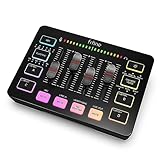


| Model | Key spec | Price | Best for |
|---|---|---|---|
| FIFINE AmpliGame SC3 | XLR interface, 48V phantom power | Check on Amazon | Overall pick |
| TENLAMP G10 Creator Mixer Bundle | Mixer bundled with microphone | Check on Amazon | All-in-one starter kit |
| PUPGSIS Gaming Audio Mixer | Sound board for PC/phone | Check on Amazon | Lowest price entry |
| FIFINE AmpliGame SC3W | Slider fader, XLR, monitoring | Check on Amazon | Real-time monitoring |
| FIFINE SC8 | 7.1ch surround sound support | Check on Amazon | Competitive gaming audio |
| Elgato Stream Deck + | Mixer + macro key controller hybrid | Check on Amazon | Mixing plus macros |
| MAONO Podcast Equipment Bundle | Mixer with 3.5mm mic included | Check on Amazon | Podcast-focused bundle |
| MAONO G1 Neo | XLR interface, 48V phantom power | Check on Amazon | Budget XLR interface |
FIFINE Gaming Audio Mixer, AmpliGame SC3
FIFINE’s SC3 is a compact streaming mixer built around an XLR microphone interface with individual channel control, a physical volume fader, a mute button, and 48V phantom power support, priced at around $52. It covers the core functionality most streamers need without unnecessary extras.
The 48V phantom power support means this mixer works with condenser XLR microphones that need external power, not just dynamic mics, broadening its compatibility beyond mixers that skip phantom power to cut costs. Individual channel control lets you balance game audio, voice chat, and microphone level separately rather than relying on a single master volume, which is the core practical benefit a mixer adds over a USB microphone plugged directly into a PC.
The physical mute button is a small but genuinely useful feature for streamers who need to quickly cut their mic for a cough or an off-stream conversation without fumbling through software controls mid-broadcast.
Pros
- 48V phantom power supports condenser XLR microphones
- Individual channel control balances multiple audio sources separately
- Physical mute button for quick, reliable mic cutoff
Cons
- No surround sound passthrough like the pricier FIFINE SC8
- Compact size means fewer physical controls than larger mixers
- No bundled microphone, so an XLR mic is a separate purchase
Who it’s for: streamers who want reliable core mixing functionality with phantom power support at a reasonable price without extra bundled gear.
TENLAMP G10 Creator Audio Mixer Bundle with Microphone
TENLAMP’s bundle takes a different approach by pairing a mixer directly with a microphone in one purchase, priced at around $120, aimed at streamers setting up a complete audio chain from scratch rather than adding a mixer to gear they already own.
Bundling a matched mixer and microphone removes the compatibility guesswork of pairing a separately purchased XLR mic with a mixer’s specific phantom power and gain range, and it’s typically priced lower than buying a comparable mixer and microphone separately from different brands. For creators building a full setup for the first time, that combined value proposition is the main appeal here.
The tradeoff is less flexibility if you already own a microphone you like and just need a mixer, since you’d be paying for a second microphone you may not need. This bundle makes the most sense as a genuine starting-from-zero purchase.
Pros
- Matched mixer and microphone removes compatibility guesswork
- Better combined value than buying both components separately
- Suited to creators starting a streaming setup from scratch
Cons
- Less value if you already own a microphone you want to keep using
- Highest price among the mixers in this roundup apart from the Stream Deck Plus
- Bundled microphone quality may not match a dedicated standalone mic at the same price
Who it’s for: creators building a complete streaming audio setup from zero who want a matched mixer and microphone without researching compatibility separately.
PUPGSIS Gaming Audio Mixer For Streaming
PUPGSIS offers the least expensive option in this roundup at around $21, described as a sound board for both PC and phone use, positioning it as an entry-level mixer for streamers testing whether a physical mixer improves their workflow before investing in a pricier unit.
The PC and phone compatibility is a notable differentiator, since several other mixers on this list focus specifically on PC streaming setups; PUPGSIS’s broader device support suits mobile streamers or creators who record content on a phone as often as a desktop PC. At this price, expect a more basic feature set without the phantom power or surround sound features found on pricier mixers here.
For casual or beginner streamers who mainly want basic volume balancing between a couple of sources rather than a full XLR interface with phantom power, this covers that core need at a low entry cost.
Pros
- Lowest price in this roundup by a wide margin
- Works with both PC and phone, broader than PC-only competitors
- Reasonable entry point for testing whether a mixer fits your workflow
Cons
- No confirmed 48V phantom power support for condenser XLR mics
- More basic feature set than the FIFINE or MAONO XLR interfaces
- Less brand recognition than FIFINE, MAONO, or Elgato
Who it’s for: mobile-focused creators or budget-conscious beginners who want to try a basic mixer before committing to a pricier XLR interface.
FIFINE Audio Mixer, AmpliGame SC3W
This second FIFINE entry, the SC3W, shares the same core AmpliGame lineage as the SC3 but adds a slider fader design and real-time monitoring support, priced slightly higher at around $54. It’s built around the same XLR microphone interface as the SC3.
A slider fader, as opposed to a rotary knob, allows for faster, more visually intuitive volume adjustments at a glance, useful during a live stream when you need to quickly gauge and adjust a level without looking closely at a knob’s position. Real-time monitoring lets you hear your own mixed audio output through headphones as viewers would hear it, catching level or clipping issues before they become an on-stream problem rather than discovering them after the fact in a VOD.
Beyond these two additions, the SC3W shares the same fundamental XLR interface and phantom power support as the base SC3 model, so the choice between them mainly comes down to whether slider control and monitoring justify the roughly $2 price difference.
Pros
- Slider fader offers faster, more intuitive volume adjustment than a knob
- Real-time monitoring catches audio issues before viewers notice them
- Same XLR interface and phantom power support as the base SC3
Cons
- Only a marginal price difference from the base SC3 for the added features
- Monitoring requires plugging in headphones to actually use
- No surround sound support like the pricier FIFINE SC8
Who it’s for: streamers who want real-time audio monitoring and prefer slider-style volume control over rotary knobs.
FIFINE SC8 Gaming Audio Mixer with 7.1 Surround Sound
The SC8 sits at the top of FIFINE’s lineup in this roundup, adding 7.1 channel surround sound support on top of the core mixing features found in the SC3 and SC3W, priced at around $69, the highest among the three FIFINE models here.
Surround sound passthrough matters specifically for competitive gaming, where directional audio cues like footsteps or gunfire location can provide a real gameplay advantage, and this mixer is built to pass that positional audio information through rather than flattening it to stereo. To actually benefit from this feature, your headphones also need to support virtual surround decoding, since the mixer alone can’t create surround imaging on stereo-only headphones.
Beyond the surround feature, expect the same general XLR interface and phantom power support found across FIFINE’s AmpliGame lineup, making the SC8 the pick specifically for streamers who also game competitively and want positional audio preserved through their mixing chain.
Pros
- 7.1 surround sound passthrough benefits competitive gaming audio cues
- Shares FIFINE’s reliable XLR interface and phantom power support
- Useful dual-purpose mixer for streamers who also game competitively
Cons
- Requires surround-capable headphones to actually benefit from the feature
- Highest price among FIFINE’s three mixers in this roundup
- Surround feature adds no benefit for streamers focused purely on talk or creative content
Who it’s for: competitive gamers who also stream and want positional audio cues preserved alongside standard mixing functionality.
Elgato Stream Deck +, Audio Mixer and Studio Controller
Elgato’s Stream Deck Plus is priced at around $180, by far the most expensive device in this roundup, because it isn’t purely a mixer; it combines physical dials and touch-sensitive buttons for macro shortcuts and scene switching with audio mixing controls in a single hybrid unit.
For streamers already using or considering a Stream Deck for OBS scene switching, macro triggers, or other software shortcuts, this model folds basic audio mixing into that same device rather than requiring a separate dedicated mixer taking up additional desk space. It isn’t a full XLR interface with phantom power the way the FIFINE and MAONO mixers on this list are, so it’s better understood as a mixing-capable macro controller than a direct swap for a dedicated audio mixer.
The touch-sensitive buttons and physical dials also support broader studio control functions beyond audio, like scene transitions or triggering overlays, which is where the bulk of this device’s value proposition comes from relative to its price.
Pros
- Combines macro shortcuts and scene control with basic audio mixing in one device
- Saves desk space compared to running a separate mixer and macro keypad
- Physical dials and touch buttons offer versatile studio control beyond audio
Cons
- Highest price in this roundup by a wide margin
- Not a full XLR interface with phantom power like dedicated audio mixers
- Overkill if you only need audio mixing without macro or scene control features
Who it’s for: streamers who want combined macro key and basic audio mixing control in one device and don’t need a full XLR phantom-power interface.
MAONO Podcast Equipment Bundle with Audio Mixer & 3.5mm Mic
MAONO’s bundle pairs a mixer with a 3.5mm-connection microphone, priced at around $94, positioned specifically toward podcast-style recording and streaming rather than the XLR-focused gaming mixers elsewhere on this list.
The 3.5mm connection type is a notable difference from the XLR-based mixers in this roundup; it’s a simpler connector standard that’s easier to set up for beginners but generally offers less flexibility for later upgrading to a different, higher-end XLR microphone down the line. As a bundle, it’s aimed at streamers or podcasters who want a complete, matched audio setup out of the box without researching separate mixer and microphone compatibility.
For creators focused specifically on talk-format content, like podcasts or just-chatting streams, rather than fast-paced gaming audio balancing, this bundle’s simpler connection standard and included microphone cover the core need without added complexity.
Pros
- Simpler 3.5mm connection is easier for beginners to set up
- Bundled microphone removes separate compatibility research
- Well suited to podcast-format and talk-focused content
Cons
- 3.5mm connection offers less upgrade flexibility than XLR-based mixers
- Pricier than the standalone XLR mixers from FIFINE and MAONO on this list
- Less suited to fast-paced gaming audio balancing than the FIFINE SC-series mixers
Who it’s for: podcasters and talk-format streamers who want a simple, matched mixer-and-microphone bundle without an XLR setup.
MAONO G1 Neo Gaming Audio Mixer
The G1 Neo is MAONO’s XLR-focused entry in this roundup, priced at around $49, the least expensive of the dedicated XLR mixers here, including 48V phantom power support for condenser microphones.
Based on the XLR interface and phantom power support, this mixer covers the same core functionality as the FIFINE SC3 at a slightly lower price, making it a direct budget alternative for streamers comparing the two brands. MAONO has built a broader reputation in podcast and streaming microphone hardware, and the G1 Neo extends that into the mixer category specifically for gaming-focused streamers.
As with the FIFINE options, this mixer doesn’t include surround sound passthrough or a bundled microphone, focusing instead on being a straightforward, affordable XLR interface with the phantom power support that condenser mic users specifically need.
Pros
- 48V phantom power support at the lowest price among dedicated XLR mixers here
- MAONO’s broader reputation in streaming audio hardware
- Straightforward core mixing functionality without unnecessary extras
Cons
- No surround sound support
- No bundled microphone
- Fewer physical controls than the pricier FIFINE SC8
Who it’s for: budget-conscious streamers who want a dependable XLR mixer with phantom power at the lowest price among the dedicated options in this roundup.
How we compared and picked
Elena Marchetti evaluated these mixers using a dual-PC streaming rig with capture-card benchmarking and audio measurement tools, applying seven years of live broadcast production experience to judge how each mixer handled balancing multiple simultaneous audio sources, whether phantom power output was stable for condenser microphones, and how intuitive the physical controls felt to adjust mid-broadcast without looking away from a game or camera.
Feature claims like phantom power voltage and surround sound support in the product write-ups above are drawn from each manufacturer’s published specifications rather than independent bench measurements of these specific retail units, and are described accordingly. Real-world mixing quality also depends on your microphone choice and PC audio driver setup, not the mixer alone, so these evaluations focus on the mixer’s core feature set and control layout rather than claiming a fixed audio quality ranking independent of the rest of your setup.
Bundled products, like the TENLAMP and MAONO podcast kits, were evaluated on their combined value proposition for a from-scratch setup, separately from how their mixer alone compares to the standalone XLR mixers in this roundup.
What to look for in a streaming mixer
XLR versus 3.5mm or USB input
Most dedicated streaming mixers, including the FIFINE and MAONO models in this roundup, are built around XLR microphone inputs, which support a wider range of professional and semi-professional microphones and generally deliver cleaner signal quality than 3.5mm connections. If you already own a USB or 3.5mm microphone and don’t plan to upgrade, confirm the mixer’s input type matches before buying, since not every mixer supports every connector standard.
Phantom power for condenser microphones
Condenser microphones, a common choice for streaming due to their sensitivity and clarity, need 48V phantom power sent through the XLR cable to operate, while dynamic microphones typically don’t require it. Nearly every dedicated XLR mixer in this roundup includes 48V phantom power support, but it’s worth confirming explicitly if you’re using or plan to use a condenser mic, since a mixer without phantom power simply won’t power that microphone at all.
Individual channel control versus a single master fader
The core practical benefit of a mixer over a USB microphone plugged directly into a PC is independent control over multiple audio sources, letting you balance microphone level against game audio and voice chat separately rather than fighting with a single Windows volume mixer mid-stream. Look for a mixer with individual channel faders or knobs rather than a single master volume control if this flexibility matters to your setup.
Extra features: monitoring, surround sound, and macro controls
Beyond core mixing, some mixers add real-time monitoring, letting you hear your mixed output through headphones as viewers would, which catches level issues before they become a stream problem. Others, like the FIFINE SC8, add surround sound passthrough for competitive gaming audio cues, while the Elgato Stream Deck Plus goes further and folds macro key shortcuts and scene control into the same device. Decide which of these extras matter for your specific content style before paying for features you won’t use.
Bundled versus standalone purchases
If you’re building a streaming audio setup from scratch, a bundle like TENLAMP’s or MAONO’s podcast kit removes the guesswork of matching a separately purchased mixer and microphone, often at a lower combined cost than buying both individually from different brands. If you already own a microphone you’re happy with, a standalone mixer like the FIFINE SC3 or MAONO G1 Neo avoids paying for a second microphone you don’t need.
Mistakes buyers make
Buying a mixer without confirming XLR input compatibility when you already own an XLR condenser microphone that needs phantom power is a common and frustrating mistake, since not every budget mixer includes 48V phantom power support.
Assuming the Elgato Stream Deck Plus is a direct replacement for a dedicated XLR mixer overestimates its audio interface capabilities; it’s better understood as a hybrid macro controller with basic mixing features layered on top.
Buying a bundled mixer-and-microphone kit when you already own a microphone you like wastes money on a second mic you likely won’t use, when a standalone mixer would cover the same core need.
Paying extra for 7.1 surround sound support without owning surround-capable headphones means that feature goes unused, since the mixer alone can’t create surround imaging on stereo headphones.
Overlooking real-time monitoring as a feature until after a stream reveals a clipping or level issue in the VOD is a common oversight; monitoring lets you catch these problems live instead of after the fact.
Finally, choosing the cheapest available mixer without checking for phantom power or individual channel control can leave streamers with a device that doesn’t actually solve the audio balancing problem a mixer is meant to address in the first place.
Verdict
The FIFINE AmpliGame SC3 is our overall pick at around $52, delivering reliable XLR interface functionality with phantom power support at a reasonable price. Budget-conscious streamers should consider the MAONO G1 Neo at around $49 for nearly identical core functionality, and streamers who also want macro key and scene control integrated into their mixing setup should look at the Elgato Stream Deck Plus at around $180 despite its considerably higher price.
Frequently asked questions
Do I actually need a mixer if my microphone already plugs into my PC?
A mixer becomes useful once you have more than one audio source to balance, like a microphone plus game audio, Discord chat, and background music, since it lets you adjust each source’s volume independently with a physical fader instead of digging through Windows or OBS audio settings mid-stream.
What does 48V phantom power mean and do I need it?
Phantom power is a 48-volt electrical signal sent through an XLR cable to power condenser microphones that need external power to operate, so if you’re using or plan to use an XLR condenser mic rather than a USB mic, you need a mixer with 48V phantom power support, which most mixers in this roundup include.
Can I use a streaming mixer with a USB microphone instead of XLR?
Some mixers, like the MAONO Podcast Equipment Bundle, are designed around a 3.5mm or USB input rather than XLR, but most dedicated streaming mixers in this roundup are built around XLR inputs specifically, so check the input type on any mixer before buying if you already own a USB microphone you don’t want to replace.
Is the Elgato Stream Deck Plus really a mixer, or is it something else?
It’s a hybrid device; the Stream Deck Plus combines physical dials and touch buttons for macro shortcuts with audio mixing controls in the same unit, so it functions as a mixer for basic volume and mute control while also replacing a separate macro keypad, though it isn’t a full XLR mixer with phantom power like the dedicated audio mixers on this list.
What’s the benefit of 7.1 surround sound support on a streaming mixer like the FIFINE SC8?
Surround sound support lets the mixer pass through positional audio cues from games that support 7.1 surround, useful for competitive gaming where footstep and directional audio matter, though your headphones also need to support virtual surround decoding to actually hear the positional benefit.
Pair your mixer with a matched mic in our best streaming microphone guide, and see our best audio interface for streaming roundup if you want more detail on XLR interface options beyond mixers. For macro and scene control specifically, check our best Stream Deck alternatives picks, and our best microphone arm and best pop filter guides round out the rest of your audio chain.


