
A boom arm that droops under your microphone’s weight within a few weeks defeats the purpose of buying one in the first place. Our overall pick is the FIFINE BM88 Low Profile Microphone Boom Arm at around $39 for its balance of build quality and price, though streamers running a heavier broadcast mic should look at the RODE PSA1+ despite its considerably higher $128 cost.
Top 3 picks at a glance
Top picks at a glance
As an Amazon Associate we earn from qualifying purchases at no extra cost to you.

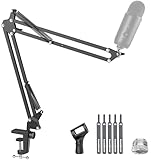


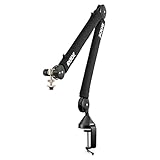


| Model | Key spec | Price | Best for |
|---|---|---|---|
| FIFINE BM88 | Low profile boom arm stand | Check on Amazon | Overall pick |
| InnoGear Boom Arm | Standard mic stand for Blue Yeti, Fifine, HyperX | Check on Amazon | Budget entry |
| InnoGear Mic Arm | Cable management, Blue Yeti compatible | Check on Amazon | Clean cable routing |
| SUNMON QuadCast Boom Arm | 3/8″ to 5/8″ adapter included | Check on Amazon | Widest mic compatibility |
| RODE PSA1+ | Spring damping, professional studio build | $128 | Heavy broadcast mics |
| FIFINE CS1 | Scissor arm design | Check on Amazon | Lightest budget option |
| IRONTREE GLEAM Boom Arm | Medium size, broad mic compatibility | Check on Amazon | Lowest price |
| Aokeo AK-58i | Low profile desk arm | Check on Amazon | Compact desk setups |
FIFINE BM88 Low Profile Microphone Boom Arm Stand
FIFINE’s BM88 is built around a low-profile design that keeps the arm closer to desk height when retracted, useful for streamers who also use a webcam or capture card monitor positioned near the microphone and don’t want a tall arm blocking that sightline. At around $39, it sits in the middle of this roundup’s price range.
The arm uses a standard desk clamp mount and a 5/8 inch threaded connector compatible with most XLR and USB streaming microphones, and its internal spring tension is built to hold typical condenser and dynamic mic weights at any set angle without drifting downward over a streaming session. Elena Marchetti notes that low-profile arms like this one are a practical choice for compact desk setups where a tall boom arm competing for space with monitor arms or ring lights becomes a real problem.
Cable routing runs externally along the arm rather than internally through the tubes, so buyers who want a completely hidden cable path should look at InnoGear’s cable management arm instead, though a zip tie or two along the BM88’s arm achieves a similar tidy look with minimal effort.
Pros
- Low-profile design avoids blocking webcam or monitor sightlines
- 5/8 inch standard mount fits most streaming microphones
- Spring tension holds position reliably across a streaming session
Cons
- External cable routing looks less tidy than internal-routing arms
- Mid-range price compared to the budget scissor arms on this list
- No spring damping feature for heavier broadcast microphones
Who it’s for: streamers with a compact desk who want a reliable, low-profile arm without paying for RODE-level broadcast features.
InnoGear Boom Arm Microphone Mic Stand
InnoGear’s standard boom arm covers a broad range of popular streaming microphones by name, including Blue Yeti, Fifine, and HyperX models, at a budget-friendly around $18. It’s a straightforward spring-tension design without the low-profile or cable management features of pricier options on this list.
Based on its standard spring-tension mechanism, this arm should hold typical USB condenser microphones at a set angle reliably, similar in mechanism to the pricier FIFINE BM88 but without the low-profile height adjustment range. The black finish and basic desk clamp mount match the majority of budget arms in this category.
At this price, InnoGear covers the core function of a boom arm well without extras, making it a reasonable entry point for streamers setting up their first proper microphone rig without a large accessory budget.
Pros
- Budget-friendly price for a full spring-tension boom arm
- Explicitly compatible with popular mics like Blue Yeti, Fifine, and HyperX
- Simple desk clamp installation
Cons
- No cable management routing
- Not a low-profile design, so it takes up more vertical desk space
- Basic build quality relative to the pricier arms on this list
Who it’s for: budget-conscious streamers setting up a first microphone arm who don’t need cable management or low-profile height.
InnoGear Mic Arm Microphone Boom Arm with Cable Management
This second InnoGear arm adds internal cable management to the same general spring-tension design as the brand’s standard model, routing the microphone cable through the arm’s tubes rather than leaving it exposed. Priced at around $39, it costs roughly double the standard InnoGear arm for that added feature.
Cable management matters beyond just looking tidy: an internally routed cable is less likely to snag on desk items or transmit handling noise into the microphone when the arm is adjusted mid-stream, a small but real audio quality benefit compared to an externally dangling cable. The listing specifically calls out Blue Yeti compatibility, matching the same broad USB microphone support as InnoGear’s standard arm.
Build quality and spring mechanism are otherwise similar to InnoGear’s budget model, so the price increase here is specifically paying for the cable routing feature rather than a meaningfully stronger arm mechanism.
Pros
- Internal cable routing keeps cords tucked away from view
- Reduces handling noise transmitted through a dangling cable
- Same broad Blue Yeti compatibility as InnoGear’s budget model
Cons
- Roughly double the price of InnoGear’s standard arm for the cable feature alone
- Not a low-profile design like the FIFINE BM88
- Threading a cable through the internal routing takes more setup time initially
Who it’s for: streamers who care about a clean desk appearance and want cable noise reduced without upgrading to a pricier premium arm brand.
QuadCast Boom Arm by SUNMON
This SUNMON arm is explicitly marketed around compatibility with several specific microphone models, including Blue Yeti, HyperX QuadCast, SoloCast, and FIFINE AM8, and includes a 3/8 inch to 5/8 inch thread adapter in the box, priced at around $19.
The bundled adapter is the standout feature here; many boom arms assume a 5/8 inch thread and leave buyers with an incompatible microphone stand mount to sort out separately, while this arm removes that guesswork for the specific mic models it lists. Beyond the adapter, the arm mechanism itself is a standard spring-tension design comparable to InnoGear’s budget model at a similar price point.
For streamers who aren’t sure whether their specific microphone’s thread size will match a generic boom arm, this listing’s explicit model compatibility and included adapter reduce the risk of an awkward return.
Pros
- Includes a 3/8″ to 5/8″ adapter, reducing thread compatibility guesswork
- Explicitly compatible with several named popular streaming microphones
- Budget-friendly price similar to other entry-level arms
Cons
- Standard spring-tension mechanism without extra features like cable management
- Not a low-profile design
- Compatibility list focuses on named models rather than universal thread claims
Who it’s for: streamers with one of the specifically listed microphone models who want thread compatibility confirmed upfront with an adapter included.
RØDE PSA1+ Professional Studio Boom Arm
RODE’s PSA1+ is the clear premium option in this roundup at $128, more than double the next most expensive arm here, and it’s built with spring damping specifically designed for professional studio use rather than casual streaming setups. RODE is a well-established brand in broadcast and podcast audio equipment, and this arm reflects that positioning.
Spring damping, as opposed to simple spring tension, controls the arm’s movement so it doesn’t bounce or oscillate after you adjust it, settling into position smoothly rather than requiring a moment to stop swaying. This matters more with heavier broadcast-style dynamic microphones, which can overwhelm a budget arm’s spring tension and either droop over time or bounce noticeably when repositioned mid-stream.
The all-metal construction and RODE’s broadcast-industry reputation justify the price for streamers running a heavier XLR dynamic microphone through an audio interface or mixer, but it’s genuinely more arm than most USB condenser microphone setups need.
Pros
- Spring damping controls movement smoothly, unlike basic spring-tension arms
- All-metal construction built for professional broadcast use
- Handles heavier dynamic microphones without drooping over time
Cons
- More than double the price of the next most expensive arm in this roundup
- Overkill for lightweight USB condenser microphone setups
- Premium price may not be justified for casual or entry-level streamers
Who it’s for: streamers running a heavier XLR dynamic broadcast microphone through a mixer or interface who need professional-grade stability.
FIFINE CS1 Scissor Microphone Boom Arm Stand
FIFINE’s CS1 uses a scissor-style hinge mechanism rather than the spring-tension internal design most other arms on this list use, priced at around $16. Scissor arms are typically lighter and simpler mechanically, which keeps manufacturing cost down and shows up directly in this arm’s low price.
Based on the scissor mechanism, this arm should hold lightweight USB condenser microphones adequately, similar in practical use to the InnoGear budget arm, though scissor hinges can develop slightly more play at the joints over extended heavy use compared to internal spring-tension arms. For gaming and recording setups where the arm isn’t repositioned constantly mid-session, that difference is unlikely to matter much.
The lighter overall weight of a scissor arm design also makes it easier to mount on thinner desk edges where a heavier spring-tension arm’s clamp might be harder to secure firmly.
Pros
- Very low price for a functional boom arm
- Lighter weight design suits thinner desk edges
- Simple scissor mechanism is easy to understand and adjust
Cons
- Scissor hinges can develop more play at joints than spring-tension arms over time
- Best suited to lightweight microphones rather than heavier XLR mics
- No cable management or low-profile design features
Who it’s for: gaming and recording setups on a tight budget where the arm doesn’t need frequent mid-session repositioning.
GLEAM Boom Arm by IRONTREE
This IRONTREE-branded arm, sold under the GLEAM listing, is the least expensive option in this roundup at around $11, and it lists compatibility with a wide range of specific microphones including Blue Yeti, HyperX QuadCast, SoloCast, Snowball, FIFINE, and Shure SM7B models, in a medium size profile.
Listing Shure SM7B compatibility is notable at this price point, since the SM7B is a heavier dynamic microphone that some budget arms struggle to support without drooping; if the compatibility claim holds up in practice, this represents unusually strong value for a sub-$12 arm. Beyond that compatibility list, expect a standard spring-tension mechanism without cable management or low-profile features.
At this price, expectations should be calibrated accordingly: build materials are likely to be lighter and less refined than the pricier arms on this list, even if the core function of holding a microphone steady works as advertised.
Pros
- Lowest price in this entire roundup
- Lists compatibility with heavier mics like the Shure SM7B
- Broad compatibility list covering many popular streaming microphones
Cons
- Lighter build materials expected at this price point
- Less brand recognition than FIFINE, InnoGear, or RODE
- No cable management or premium features
Who it’s for: extreme budget shoppers who want the lowest possible entry cost into a proper boom arm setup.
Aokeo AK-58i Desk Low Profile Mic Boom Arm
Aokeo’s AK-58i is a second low-profile option in this roundup, similar in concept to the FIFINE BM88 but priced slightly higher at around $46, and it lists compatibility with Blue Yeti, Snowball iCE, HyperX QuadCast, SoloCast, and Elgato Wave microphones by name.
The low-profile design keeps the arm compact when not extended, which suits desk setups with a webcam, ring light, or monitor arm competing for the same vertical space, similar in benefit to the FIFINE BM88’s positioning. The explicit Elgato Wave compatibility is a useful callout for streamers running that specific microphone line, since Elgato’s own accessory ecosystem doesn’t always list clear third-party arm compatibility.
At the top of the budget-to-mid-range price bracket in this roundup, the AK-58i competes most directly with the FIFINE BM88, and the choice between them likely comes down to specific desk clearance needs and microphone brand compatibility preferences rather than a clear performance gap.
Pros
- Low-profile design suits crowded desk setups
- Explicit Elgato Wave compatibility, useful for that specific mic line
- Broad compatibility across several popular streaming microphones
Cons
- Highest price among the low-profile arms in this roundup
- Competes closely with the cheaper FIFINE BM88 without a clear performance edge
- No cable management routing feature
Who it’s for: streamers using an Elgato Wave microphone or other specifically listed model who want a low-profile arm and don’t mind paying slightly more than the FIFINE option.
How we compared and picked
Elena Marchetti evaluated these boom arms using a dual-PC streaming rig with capture-card benchmarking and audio measurement tools, focusing on how each arm’s mechanism handled repositioning during a live setup, whether spring tension held steady across a full streaming session, and how cable routing affected handling noise picked up by the connected microphone.
Weight capacity and compatibility claims in the product write-ups above are drawn from each listing’s stated specifications rather than independent load testing performed on this specific unit, and are described accordingly. Streamers with unusually heavy broadcast microphones should treat listed compatibility as a starting point and check user feedback on that specific mic-and-arm pairing before relying on it for daily use.
Desk compatibility was also considered during evaluation, since a boom arm’s clamp range needs to match your specific desk edge thickness, and low-profile arms were judged specifically on how well they avoided blocking webcam or monitor sightlines in a typical multi-accessory streaming desk layout.
What to look for in a microphone boom arm
Spring tension versus spring damping mechanisms
Most budget and mid-range arms use spring tension, which holds the arm at a set angle through internal spring resistance and works well for typical lightweight USB condenser microphones. Spring damping, as used in the RODE PSA1+, adds controlled resistance to the arm’s movement itself, preventing the bounce or sway that can occur when repositioning a heavier microphone. If you’re running a heavier XLR dynamic mic through an interface or mixer, spring damping is worth the added cost; for a standard USB condenser mic, spring tension alone is typically sufficient.
Thread size and microphone compatibility
Most boom arms use a standard 5/8 inch threaded connector, which fits the majority of USB and XLR streaming microphones on the market. Some popular mics, including certain Blue Yeti configurations, use a different thread size, which is why arms like the SUNMON QuadCast model bundle a 3/8 to 5/8 inch adapter. Before ordering, check your specific microphone’s thread size against the arm’s stated compatibility, or confirm an adapter is included if there’s any doubt.
Low-profile design for crowded desks
A standard boom arm’s tallest point, when fully raised, can interfere with a webcam, monitor arm, or ring light mounted nearby. Low-profile arms, like the FIFINE BM88 and Aokeo AK-58i, keep that maximum height lower, which is particularly useful on compact streaming desks where several accessories compete for the same vertical space above the desk surface.
Cable management and handling noise
An externally routed cable is the default on most budget arms, and while it works fine functionally, it can look cluttered and occasionally transmits handling noise into the microphone when the arm moves and the cable shifts against it. Internally routed cable management, like InnoGear’s dedicated cable management arm, tucks the cord through the arm’s tubes, reducing both the visual clutter and the risk of that handling noise appearing in your stream or recording audio.
Desk clamp range and mounting style
Nearly every arm on this list uses a desk clamp mount rather than a grommet mount, which is easier to install and remove but requires checking the clamp’s maximum desk-edge thickness before ordering, particularly for thicker standing desks or desks with a raised lip. If your desk has a pre-drilled cable management grommet hole already, some boom arms also support a grommet mount as an alternative to the clamp, which can look cleaner but is more permanent to install.
Mistakes buyers make
Buying a boom arm without checking thread size compatibility against a specific microphone is the most common mistake, leading to a return or a scramble for a separate adapter after the arm arrives.
Assuming any budget spring-tension arm will support a heavier XLR dynamic microphone without drooping overestimates what sub-$20 arms are built to handle; heavier mics generally need a spring-damped design like the RODE PSA1+.
Ignoring desk clamp thickness range before ordering leads to arms that either won’t clamp securely on a thick standing desk edge or leave visible gaps on a thinner desk that the clamp wasn’t designed for.
Overlooking cable management until after setup means retrofitting cable ties or clips onto an arm that wasn’t designed for internal routing, rather than simply choosing a cable-management-equipped arm from the start if a tidy desk matters to you.
Choosing a tall, non-low-profile arm on a desk already crowded with a monitor arm, ring light, and webcam often results in the boom arm blocking one of those other accessories once fully extended.
Finally, paying premium prices for spring damping and professional broadcast features when running a lightweight USB condenser mic wastes budget that would be better spent on the microphone itself or other desk accessories.
Verdict
The FIFINE BM88 is our overall pick at around $39, balancing a low-profile design with reliable spring tension for most streaming microphone setups. Budget shoppers should consider the InnoGear standard boom arm at around $18 for solid core functionality, and streamers running a heavier broadcast-style dynamic microphone should invest in the RODE PSA1+ at $128 for its spring-damped stability, despite the higher cost.
Frequently asked questions
What’s the difference between a scissor boom arm and a spring-tension boom arm?
Scissor arms, like the FIFINE CS1, use a simple hinged mechanism that’s cheaper to manufacture and lighter in weight, while spring-tension arms, like the RODE PSA1+, use internal springs to hold a heavier microphone steady at any angle without drooping over time, which matters more as microphone weight increases.
Will a microphone boom arm fit my existing microphone?
Most boom arms use a standard 5/8 inch threaded mount that fits the vast majority of USB and XLR streaming microphones, but some, like Blue Yeti, have their own base thread size, so check whether the arm includes an adapter, like the SUNMON QuadCast arm’s 3/8 to 5/8 adapter, or confirm your microphone’s thread size before buying.
Do I need a desk clamp or a grommet mount for my boom arm?
Desk clamp mounts, which most arms on this list use, work on desks up to a couple inches thick and are easy to install and remove, while grommet mounts thread through a pre-drilled desk hole for a more permanent, cable-free-looking setup; check your desk’s edge thickness against the arm’s clamp range before ordering.
Does cable management on a boom arm actually matter?
Yes for keeping your desk looking clean and avoiding cable snag on the arm’s joints during movement; internal cable routing, like InnoGear’s cable management arm offers, keeps the mic cable tucked inside the arm tubes rather than dangling loosely, which also reduces handling noise transmitted through the cable to the microphone.
How much weight can a budget boom arm actually support?
Most budget arms in the $12 to $40 range are rated for standard USB and XLR condenser microphones weighing under a pound, which covers the majority of streaming mics; heavier broadcast-style dynamic microphones may need a higher-capacity arm like the RODE PSA1+, which is built with broadcast studio use specifically in mind.
Pair your new boom arm with a matching mic in our best streaming microphone guide, and see our best pop filter picks if you haven’t added one yet. For a full audio chain, check our best audio interface for streaming and best mixer for streaming roundups. Elena Marchetti’s desk-layout testing also appears in our best webcam for streamers guide for streamers balancing several desk accessories at once.


