
The best travel tripods for lightweight camera kits are the Peak Design Travel Tripod Carbon for the smallest premium pack, the aluminum Peak Design Travel Tripod for value, the Manfrotto Befree Advanced for fast everyday setup, and the Gitzo Traveler Series 1 for photographers who prioritize long-term durability over price.
As an Amazon Associate we earn from qualifying purchases at no extra cost to you.

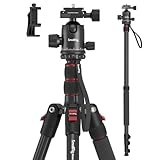


Top 3 picks at a glance
Best travel tripods ranked
| Tripod | Folded length | Weight | Maximum height | Rated load | Typical market range |
|---|---|---|---|---|---|
| Peak Design Travel Tripod Carbon | 38.5 cm / 15.2 in | 1.27 kg / 2.81 lb | 152.4 cm / 60 in | 9.1 kg / 20 lb | Usually $550–$700 |
| Peak Design Travel Tripod Aluminum | 39 cm / 15.4 in | 1.56 kg / 3.44 lb | 152.4 cm / 60 in | 9.1 kg / 20 lb | Usually $300–$400 |
| Manfrotto Befree Advanced | 40 cm / 15.7 in | 1.49 kg / 3.28 lb | 150 cm / 59.1 in | 8 kg / 17.6 lb | Usually $220–$300 |
| Ulanzi Zero Y | 42 cm / 16.5 in | 1.1 kg / 2.4 lb | 156 cm / 61.4 in | 18 kg / 39.7 lb | Usually $250–$350 |
| Gitzo Traveler Series 1 | 42–43 cm / 16.5–16.9 in | About 1.1–1.3 kg / 2.4–2.9 lb | About 150–160 cm / 59–63 in | 10–12 kg / 22–26 lb | Usually $700–$1,000 |
| 3 Legged Thing Leo 2.0 | About 35 cm / 13.8 in | About 1.5 kg / 3.3 lb | About 145 cm / 57 in | 30 kg / 66 lb | Usually $400–$550 |
Specifications can vary by head, material, and regional package. Load ratings are manufacturer figures, not a guarantee of vibration-free images. A long telephoto lens, an extended center column, or strong wind can make a tripod behave as if it is carrying much more than the camera’s actual weight.
1. Peak Design Travel Tripod Carbon: best overall for a small premium kit
The carbon-fiber Peak Design Travel Tripod remains one of the easiest choices when folded size matters as much as stability. Its legs and center column nest tightly, and the included fitted case is shaped for travel rather than being a loose drawstring bag. The integrated ball head is compact, while the quick-release plate is designed to work with common Arca-type clamps.
It reaches roughly 152 cm without requiring a bulky center column, and the manufacturer rates it for up to 9.1 kg. In practice, it suits mirrorless bodies with standard zooms, compact full-frame kits, and moderate telephoto lenses. Its fastest advantage is deployment: the leg locks, center column, and head controls are accessible without unpacking a separate head.
Choose the carbon version if you regularly walk between locations or have strict airline and backpack weight limits. The aluminum model is heavier but offers nearly the same working dimensions for substantially less money.
2. Peak Design Travel Tripod Aluminum: best value for maximum portability
The aluminum Travel Tripod is the sensible alternative when the carbon model’s weight saving does not justify the price. It folds to approximately 39 cm and reaches 152.4 cm, so it occupies very little space in a camera backpack. The trade-off is a weight of about 1.56 kg, roughly 290 grams more than the carbon version.
That difference matters during a full day of walking, but it is not usually decisive for car travel, city breaks, or short hikes. The compact head, included case, phone holder, and low-angle configuration add more practical value than a conventional tripod with a similar folded length.
This is the strongest pick for photographers using a camera and lens combination below about 3 kg, especially when the tripod must fit beside a laptop or gaming handheld in a travel bag.
3. Manfrotto Befree Advanced: best for familiar controls and quick setup
The Manfrotto Befree Advanced is a conventional travel tripod with reverse-folding legs, a compact ball head, and a fast setup process that feels familiar to photographers who already use Manfrotto equipment. Depending on the exact kit, it includes a 200PL-style quick-release plate and a travel bag.
It folds to about 40 cm, weighs approximately 1.49 kg, and reaches around 150 cm. Its rated capacity of 8 kg is adequate for most mirrorless bodies and standard zooms. The design is less space-efficient than the Peak Design tripod, but its controls are easy to understand and replacement plates and accessories are widely available.
Pick the Befree Advanced when your priority is a balanced price, quick leg adjustment, and a traditional tripod layout. It is also a good choice for users who do not want an unusual integrated head or a proprietary-feeling operating system.
4. Ulanzi Zero Y: best height-to-weight specification
The Ulanzi Zero Y is unusually light for a tripod that can extend to roughly 156 cm. At about 1.1 kg, it offers an attractive combination of height and packability, while its manufacturer-rated load capacity is listed at up to 18 kg. That large capacity number should be interpreted cautiously: a heavy camera may be supported structurally, but a tall, extended setup can still vibrate or become unstable.
Its included ball head and Arca-compatible quick-release system make it convenient for mirrorless kits. The tripod is particularly appealing for travel portraits, landscape work, and video setups where a taller working height reduces the need to bend over. The folded length is around 42 cm, so it is not the smallest option here.
Choose it when low weight and maximum height are more important than the shortest possible folded package. For a lightweight camera and normal lens, it provides more vertical reach than many smaller travel tripods.
5. Gitzo Traveler Series 1: best premium durability
Gitzo’s Traveler Series 1 targets photographers who want a compact tripod without giving up carbon-fiber construction, refined leg locks, and long-term serviceability. Exact dimensions vary by generation and included head, but Series 1 kits generally fold to roughly 42–43 cm, weigh around 1.1–1.3 kg, and reach approximately 150–160 cm.
The legs reverse around the center column for storage, and the center column can usually be configured for low-angle shooting. Gitzo’s build quality and twist-lock feel are the main reasons to pay more; its value is less about an unusual feature and more about predictable operation over years of use.
This is the right choice for frequent travelers who use expensive full-frame equipment and want a refined tripod that will remain part of the kit through multiple camera upgrades. It is harder to justify for occasional vacation photography.
6. 3 Legged Thing Leo 2.0: best for flexible configurations
The 3 Legged Thing Leo 2.0 is a compact, configurable tripod that can be adapted for low-angle work and different head arrangements. Its published load rating is far above what most travel photographers need, but the useful feature is flexibility rather than the headline capacity. Depending on the configuration, it can be used with a removable center column and compatible monopod-style arrangements.
It folds to approximately 35 cm and weighs around 1.5 kg, making it one of the shorter options while remaining suitable for larger mirrorless bodies. Its maximum height is roughly 145 cm, slightly lower than the tallest choices in this comparison.
Choose the Leo 2.0 if you shoot architecture, close-up subjects, or landscapes that require frequent low-angle changes. It is less compelling if your only requirement is the fastest possible setup.
Which travel tripod fits your situation?
| Your situation | Best match | Why |
|---|---|---|
| Smallest premium carbon kit | Peak Design Carbon | Short folded package, low carry weight, integrated head and case |
| Lowest price for similar dimensions | Peak Design Aluminum | Nearly the same height and folded size as the carbon model |
| Conventional controls and accessories | Manfrotto Befree Advanced | Familiar layout and widely available compatible plates |
| Lightest option with high maximum height | Ulanzi Zero Y | About 1.1 kg while reaching roughly 156 cm |
| Long-term premium ownership | Gitzo Traveler Series 1 | Carbon construction, refined locks, and strong service reputation |
| Frequent low-angle or modular shooting | 3 Legged Thing Leo 2.0 | Flexible column and leg configurations in a short package |
How to calculate the load you actually need
Add the camera body, lens, battery grip, filter holder, microphone, and any plate-mounted accessory. For example:
- Camera body: 0.8 kg
- Standard zoom: 0.9 kg
- Battery, plate, and small accessories: 0.3 kg
- Total equipment weight: 2.0 kg
Do not automatically buy a tripod rated for only 2 kg. A useful travel margin is at least 2x the calculated load, giving this example a target rating of 4 kg or more. For a long lens, panoramic head, or windy location, 3x is safer. The extra margin helps the tripod remain rigid when the center column is extended and when the camera’s weight is positioned away from the head’s center.
Features that matter more than the headline load rating
- Folded length: Measure it against the bag or carry-on compartment, not just the tripod’s product category.
- Weight: A 300-gram saving is meaningful on a day-long hike but less important for vehicle-based travel.
- Head compatibility: Arca-type plates simplify switching between a tripod, L-bracket, and camera strap system.
- Center-column design: A short or reversible column helps with ground-level compositions, while an extended column reduces stability.
- Leg-lock speed: Flip locks are quick to verify visually; twist locks can pack more cleanly and often offer a slimmer profile.
- Included travel features: A fitted case, phone holder, spare plate, tool, and removable monopod function can prevent extra purchases.
Final verdict
For most lightweight mirrorless kits, the Peak Design Travel Tripod Carbon is the strongest all-round choice because it combines a short folded length, low weight, useful height, and a complete travel package. The Peak Design Aluminum is the better value, while the Manfrotto Befree Advanced is preferable if you want conventional controls. Choose the Ulanzi Zero Y for the most height per kilogram, the Gitzo Traveler Series 1 for premium ownership, and the 3 Legged Thing Leo 2.0 for modular low-angle work.


