
The best camera monopods for most travelers are the Benro SupaDupa Pro for low weight, the Manfrotto XPRO 5 for sports and video stability, and the Gitzo Series 4 Traveler for premium wildlife work where rigidity matters more than price.
A monopod cannot replace a tripod for long unattended exposures, but it is faster to deploy, easier to carry, and much more useful in crowded venues, on trails, or beside a sports field. The right choice depends on the balance between collapsed length, maximum load, foot design, and locking speed—not simply the largest load rating.
As an Amazon Associate we earn from qualifying purchases at no extra cost to you.
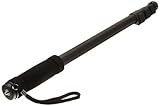


Top 3 picks at a glance
Best camera monopods compared
| Model | Weight | Collapsed length | Maximum height | Published load capacity | Foot design | Best suited to |
|---|---|---|---|---|---|---|
| Benro SupaDupa Pro MSD46C | About 0.6 kg | About 46 cm | About 180 cm | About 5 kg | Pivoting rubber foot, compact support base | Travel, hiking, mirrorless kits |
| Manfrotto XPRO 5-Section | About 1.0 kg | About 61 cm | About 203 cm | About 5 kg | Rubber foot; video versions use a wider fluid-style base | Sports, events, video |
| Gitzo Series 4 Traveler GM4552L | About 0.7 kg | About 54 cm | About 190 cm | Up to about 25 kg | Large rubber foot with interchangeable options | Professional wildlife and heavy lenses |
| Sirui P-424FS | About 1.4 kg | About 62 cm | About 190 cm | About 10 kg | Retractable feet and removable support base | Heavy video rigs and demanding outdoor work |
Specifications can vary slightly by regional version, head, and included base, so treat the figures as selection guidelines rather than laboratory measurements. A head, quick-release plate, and larger foot can add several hundred grams to the carry weight.
Head-to-head: which monopod fits your use?
Best for travel: Benro SupaDupa Pro
The Benro SupaDupa Pro is the most travel-friendly choice in this group because its short collapsed length and sub-700-gram weight are easy to justify in a daypack. Its multiple sections let it reach near eye level while remaining compact enough for train travel and hiking.
Its pivoting foot helps keep the rubber contact point planted when you tilt the camera, but it is still a single-leg support rather than a self-standing tripod. Use it to reduce arm fatigue and stabilize framing; do not walk away from an unattended camera mounted on it.
This class of monopod is ideal for a mirrorless body with a standard zoom, telephoto lenses around 70–300mm, or a small video camera. With a long, front-heavy lens, extend only the thicker upper sections first and keep the bottom section retracted when possible.
Best for sports: Manfrotto XPRO 5
The Manfrotto XPRO 5 favors speed and working height over minimum packed size. Its five-section design reaches roughly 2 meters, which is useful when photographing over barriers or tracking athletes from a standing position. The aluminum construction also tolerates frequent setup and knocks better than many ultralight carbon-fiber alternatives.
Its flip locks are fast to inspect: a glance shows whether each section is closed. That matters during a game, when a twist lock can appear tight while a section is not fully secured. For video, choose the version with the broader fluid-style base if you need smoother pans. A conventional rubber-foot version is lighter and better when you mainly shoot stills.
The trade-off is weight. At about 1 kg before adding a head and camera, it is noticeably less pleasant than a carbon travel monopod during an all-day hike. It makes more sense when the monopod stays beside a sideline, shooting position, or event bag.
Best for wildlife: Gitzo Series 4 Traveler
The Gitzo Series 4 Traveler is aimed at photographers carrying a professional body and a large telephoto lens. Its high load rating and rigid carbon-fiber construction provide a larger safety margin than an ultralight travel model, especially when the lens collar is mounted directly to the monopod.
Do not interpret the maximum load as a promise of vibration-free images at that weight. A 600mm lens creates leverage, and wind, shutter movement, and an unstable surface can still introduce blur. The Gitzo’s advantage is reduced flex and better control while you support the lens, not tripod-like isolation.
For wildlife, pair it with a compatible gimbal or a low-profile tilt head. Keep the camera’s center of gravity close to the monopod axis, tighten the lens collar, and avoid extending the thinnest section unless you need the extra height.
Best for heavy video rigs: Sirui P-424FS
The Sirui P-424FS is the practical choice when a camera, cage, monitor, microphone, and video head push beyond the comfort zone of lightweight monopods. Its support feet and removable base give it more usable stability for controlled video moves and locked-off shots.
That extra hardware makes it substantially heavier and bulkier. It is better transported in a vehicle or carried for short distances than packed for an ultralight trip. The feet also improve stability only on suitable surfaces; they do not make the monopod safe to leave standing unattended.
Foot designs: the detail that changes real-world performance
- Fixed rubber foot: light, simple, and dependable on pavement, indoor floors, and hard-packed ground. It is the best default for still photography.
- Spiked or interchangeable foot: useful on soil, grass, and loose ground. A spike can be awkward or damaging indoors, so a rubber option is valuable.
- Pivoting foot: keeps contact while the monopod angles forward or sideways. It helps with panning and reframing but introduces moving parts that must be locked correctly.
- Three-foot support base: gives a wider stance for video and temporary hands-off framing. It is not a substitute for a tripod in wind, crowds, or on uneven slopes.
For field sports on a flat touchline, a fixed or pivoting rubber foot is usually enough. For wildlife on soft ground, choose a model with a replaceable foot. For video, a three-foot base is worthwhile only if its extra weight does not stop you from bringing the monopod at all.
Flip locks versus twist locks
Flip locks are faster for repeated height changes and easier to check visually. They are especially convenient for sports, where you may lower the camera quickly to move locations. They can catch on straps, however, and occasionally need tension adjustment.
Twist locks have a clean exterior and are less likely to snag in a backpack. They can be excellent for travel and wildlife, but require a deliberate quarter-turn or half-turn check on every section. Carbon-fiber tubes should not be overtightened; secure the lock, then stop.
Whichever system you choose, extend the upper, wider sections first. Wider tubes resist bending better, so this simple habit improves stability without adding weight.
A practical decision matrix
| Your situation | Prioritize | Best match | Why |
|---|---|---|---|
| Air travel and daily walking | Under 0.8 kg; under 55 cm packed | Benro SupaDupa Pro | Lowest carrying penalty with useful working height |
| Football, tennis, or trackside shooting | Fast locks; 180 cm or more; rigid upper tube | Manfrotto XPRO 5 | Quick height changes and strong event-oriented design |
| Large wildlife telephoto | Rigidity; high load margin; compatible head | Gitzo Series 4 Traveler | Less flex for a heavy lens and professional body |
| Camera cage and video accessories | 10 kg-class capacity; support base | Sirui P-424FS | More stable platform for a heavier rig |
How to choose the correct load rating
Add the camera body, lens, battery grip, plate, head, monitor, microphone, and any counterweight. Then choose a monopod with at least twice that total as its published capacity. For example:
Body 0.9 kg + lens 1.5 kg + head 0.4 kg + accessories 0.3 kg = 3.1 kg. A 5 kg-rated monopod is the minimum sensible class, while a 10 kg-rated model gives more useful stiffness for a front-heavy setup.
This is not a guarantee of sharpness; it is a margin against flex and accidental overload. Mount the lens collar instead of the camera base whenever the lens provides one, because that keeps the load closer to the support axis.
Setup tips for sharper photos
- Place the foot slightly ahead of your stance and lean the monopod gently toward yourself. This creates a stable triangle between the foot and your two feet.
- Extend the thickest sections first. Leave the narrowest tube retracted unless height requires it.
- Keep the camera strap controlled so wind cannot pull it sideways.
- For shutter speeds near the danger zone, use electronic first-curtain or electronic shutter where your camera and subject allow it. A monopod reduces movement but does not remove subject motion.
- On soft ground, press the foot down before composing and check that it has not slowly sunk between frames.
Final buying advice
Choose the Benro SupaDupa Pro if carrying comfort determines whether you bring support at all. Choose the Manfrotto XPRO 5 for fast-paced sports and frequent height changes. Choose the Gitzo Series 4 Traveler for a heavy wildlife lens where rigidity and low weight are both important. Choose the Sirui P-424FS when video accessories and a support base matter more than backpack size.
The best camera monopods are therefore not the ones with the biggest load number. They are the ones whose collapsed length, foot behavior, lock system, and stiffness match the way you actually shoot.


