A real dual-PC streaming setup needs a second computer capable of running OBS and encoding video while your main machine runs the game, and only three of the eight listings in this brief are actual PCs suited to that role. The Dell Optiplex Tiny bundle and the SAAV CORE prebuilt are the strongest fits here, while the rest of this list mixes in a budget mini PC, two audio mixers, a webcam, and a macro pad that support a streaming setup without being the second PC themselves. We’ll walk through what each product actually does and where it fits, rather than pretend every listing here is interchangeable with the next.
Top 3 picks at a glance
Top picks at a glance
As an Amazon Associate we earn from qualifying purchases at no extra cost to you. Product prices and availability are accurate as of the date shown and are subject to change.



| Model | Key spec | Price | Best for |
|---|---|---|---|
| SAAV CORE Prebuilt Bundle | Ryzen 5 5500, RTX 3050 6GB, dual 24in monitors | $1,809.99 | Second PC plus monitors in one purchase |
| FIFINE Gaming Audio Mixer | XLR mixer, 48V phantom power (not a PC) | $52.99 | Audio routing accessory for either PC |
| EMEET C60E | Dual-camera 4K webcam (not a PC) | $59.99 | Camera accessory, not encoding hardware |
| KAMRUI AK1PLUS | Intel N5030 mini PC, 12GB RAM, 256GB SSD | $349.99 | Chat/overlay PC, not encoding duty |
| VSDINSIDE Macro Pad | Programmable stream controller (not a PC) | $97.19 | Scene-switching shortcuts |
| STGAubron Dual Xeon E5 | Dual Xeon E5, RX 590 8GB, 16GB DDR4 | $487.34 | Budget second PC with strong core count |
| Dell Optiplex Tiny Bundle | Core i5, 16GB RAM, 1TB SSD, dual monitor bundle | $559.99 | Compact second-PC bundle, best value |
| MAONO G3 Audio Mixer | Audio source mapper for PC streaming (not a PC) | $99.99 | Audio routing accessory |
SAAV CORE Prebuilt Gaming PC Bundle
The SAAV CORE bundle pairs a Ryzen 5 5500 and RTX 3050 6GB with 16GB of DDR4 and a 512GB NVMe SSD, and throws in dual curved 24-inch monitors, making it the most complete out-of-box option on this list at $1,809.99. For a dual-PC setup, this machine is strong enough to serve as either the encoding PC or, with the RTX 3050’s NVENC hardware encoder, even as a lightweight main gaming PC for less demanding titles while a separate machine handles the game load.
Based on the Ryzen 5 5500’s six cores and twelve threads, expect solid single-machine performance for OBS scene management, browser sources, and chat overlays with headroom left over, and the RTX 3050 adds a hardware encoder that can offload video encoding entirely from the CPU if this ends up running as the second PC. Estimated 1080p esports performance on the RTX 3050 alone lands in the 100+ fps range for lighter titles like Valorant, though it’s not built for encoding a 4K game feed at high bitrate simultaneously.
The price is the sticking point: at $1,809.99, this is by far the most expensive item in the brief, and most of that cost goes toward the bundled dual monitors rather than raw second-PC power. Buyers who already own monitors will get better value from the Dell Optiplex or STGAubron listings below for the encoding-PC role specifically.
- Pros
- Complete bundle including dual monitors, ready to run out of the box
- RTX 3050’s NVENC encoder can offload video encoding from the CPU
- Six-core Ryzen handles OBS and overlay tasks with room to spare
- Cons
- Highest price on this list by a wide margin
- Bundled monitors add cost that buyers with existing displays don’t need
- Overkill as a dedicated chat/overlay-only second PC
Who it’s for: creators starting a dual-PC setup from scratch who want monitors and a capable second machine in a single purchase.
FIFINE Gaming Audio Mixer
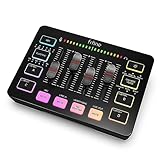
Worth flagging directly: the FIFINE mixer is an audio accessory, not a PC, and doesn’t fill the second-PC role this list is built around. At $52.99 it’s an XLR mixer with individual channel controls, volume faders, a mute button, and 48V phantom power for condenser mics, which is genuinely useful gear for routing audio between two machines in a dual-PC setup, just not a computer itself.
In a real dual-PC setup, a mixer like this typically sits between a microphone and both PCs, letting a creator send mic audio to the gaming PC for Discord and to the second PC for stream audio simultaneously without software routing software on either machine. The 48V phantom power support means it can drive proper XLR condenser mics rather than being limited to USB mics with their own power.
Buyers should treat this as a companion purchase alongside whichever PC ends up handling encoding duty, not as a substitute for one. It solves the audio-routing problem that comes up specifically because you’re running two machines, which is a real pain point in dual-PC setups that a single-PC streamer never has to deal with.
- Pros
- Solves the two-machine audio routing problem specific to dual-PC setups
- 48V phantom power supports proper XLR condenser mics
- Individual channel faders for quick live adjustments
- Cons
- Not a PC and doesn’t add any encoding or processing power
- Requires XLR mics to get full value from phantom power
- Adds another device and cable run to manage on the desk
Who it’s for: dual-PC streamers who need to route one microphone’s audio to two separate machines cleanly.
EMEET C60E Dual-Camera 4K Webcam
Another accessory rather than a PC: the C60E is a dual-camera 4K webcam with wide-angle and telephoto lenses, priced at $59.99. It’s relevant to a streaming setup broadly, letting a creator switch between a wide shot and a zoomed shot without repositioning hardware, but it doesn’t do anything toward the actual dual-PC encoding split this article is about.
The dual-lens design is the interesting part here: a wide-angle lens suits a full desk or room shot, while the telephoto lens gives a tighter face shot for close-up commentary, and switching between them in software avoids needing two separate webcams plugged into two different capture points. 4K capture also gives more room to crop and reframe in OBS without a hard resolution loss compared to a native 1080p webcam.
In a dual-PC context, the webcam typically connects to whichever machine is running OBS, since that’s where the camera feed gets composited with the game capture and overlays. It won’t help with the actual encoding load a second PC exists to offload, so don’t count on this purchase to solve performance issues.
- Pros
- Dual lenses allow wide and close-up shots without repositioning
- 4K capture gives cropping headroom in OBS
- Straightforward USB connection to whichever PC runs OBS
- Cons
- Not a PC, adds nothing to the actual encoding split
- 4K webcam footage adds USB bandwidth and processing overhead to whichever machine it’s plugged into
- Value depends on actually using both lenses regularly
Who it’s for: creators who want quick wide/close-up camera switching alongside an existing dual-PC rig, not a first purchase for building one.
KAMRUI AK1PLUS Mini PC
The AK1PLUS is a genuinely relevant option, just not for the job most people assume. Built on an Intel N5030 processor with 12GB RAM and a 256GB SSD, this $349.99 mini PC has expandable 2.5-inch storage, WiFi, Bluetooth, and Ethernet, but the N5030 is a low-power quad-core chip designed for basic desktop and office tasks, not real-time video encoding.
Based on the N5030’s specs, expect this mini PC to comfortably run chat overlays, a Discord window, browser sources, or a scene-switching hub, all light CPU tasks that don’t need much horsepower. What it likely can’t do reliably is software x264 encoding of a full game feed at streaming bitrates, since that workload needs more sustained CPU throughput than an entry-level mobile-class chip provides.
The honest recommendation: use this as a lightweight companion PC for chat, alerts, and overlay management rather than the primary encoding machine, and pair it with a capture card that does hardware encoding if the goal is a true dual-PC streaming rig on a budget. Buying it expecting full encoding duty will lead to disappointment.
- Pros
- Small footprint and low power draw for a dedicated chat/overlay PC
- Expandable storage via 2.5-inch bay beyond the base 256GB SSD
- Lowest price among the actual PCs on this list
- Cons
- N5030 CPU is not built for real-time video encoding at streaming bitrates
- 12GB RAM is workable but limits multitasking under heavier loads
- Best suited to a support role, not the primary encoding machine
Who it’s for: streamers wanting a cheap, low-power PC for chat and overlays alongside a capture card handling the actual encoding.
VSDINSIDE Macro Pad Stream Controller
Also not a PC: this is a programmable macro pad and soundboard with shortcut keys built for OBS, YouTube, and general stream control, priced at $97.19. It works with either PC in a dual-PC setup and is closer in function to a stream deck alternative than to any kind of computer, so it belongs on this list as a companion accessory rather than a machine that shoulders any encoding work.
Programmable macro pads like this typically map physical buttons to OBS scene switches, soundboard clips, and other repetitive actions, cutting down on alt-tabbing during a live stream to trigger something manually. For a dual-PC setup specifically, having quick physical control over scene switching on the second PC matters more than on a single-PC setup, since alt-tabbing away from a game window is riskier than alt-tabbing on a dedicated streaming machine.
As an accessory, its value depends entirely on how much manual switching a creator’s format requires — a heavily produced stream with frequent scene changes benefits far more than a simple “webcam plus game capture” layout that rarely changes scenes mid-stream.
- Pros
- Physical buttons avoid alt-tabbing during live scene changes
- Works with either PC in a dual-PC setup
- Useful for soundboard clips and quick macros beyond just OBS
- Cons
- Not a PC, contributes nothing to encoding capacity
- Value depends on how often a creator’s format needs manual scene switching
- One more USB device and desk footprint to manage
Who it’s for: streamers running frequent scene changes who want physical shortcuts instead of keyboard hotkeys or alt-tabbing.
STGAubron Gaming PC Desktop, Dual Xeon E5
This $487.34 desktop pairs dual Xeon E5 server processors with an RX 590 8GB and 16GB of DDR4, an unusual but genuinely useful combination for a budget second PC. Server-class Xeon E5 chips from this era typically offer high core counts even when clock speeds trail modern consumer CPUs, and for software video encoding, core count often matters more than per-core speed.
Based on that architecture, expect this machine to handle x264 software encoding reasonably well despite its age and low price, since OBS’s encoder can spread the workload across many cores rather than needing a few very fast ones. The RX 590 8GB adds enough graphics power to run overlays and browser sources smoothly, and while it’s dated for modern gaming, that’s irrelevant for a machine whose job is encoding rather than running the game itself.
The catch with dual-Xeon workstation boards from this generation is power draw and noise — server-class CPUs and coolers tend to run hotter and louder under sustained load than consumer parts, which matters if the second PC sits on the same desk as the streamer. Buyers should also budget for a case with decent airflow, since this configuration wasn’t originally designed around desktop-quiet cooling.
- Pros
- High core count from dual Xeons suits software x264 encoding well
- Low price relative to a dedicated modern encoding PC
- RX 590 8GB handles overlays and browser sources without strain
- Cons
- Server-class hardware tends to run hotter and louder than consumer parts
- Dated platform limits future upgrade paths
- Not built for anything beyond encoding and light desktop tasks
Who it’s for: budget-focused creators who want strong software-encoding core count without paying modern consumer-CPU prices.
Dell Optiplex Tiny Mini Desktop PC Bundle
At $559.99, this Optiplex Tiny bundle pairs a Core i5 with 16GB of RAM and a 1TB SSD, and includes a dual 24-inch curved monitor setup, an RGB keyboard and mouse, a soundbar, and a webcam — effectively a complete second-PC station in one box. It’s a renewed unit, which typically means refurbished with a functional warranty rather than new, and that’s worth factoring into the price comparison against the SAAV bundle above.
Based on a Core i5 in a small-form-factor Optiplex, expect solid single-threaded performance suited to OBS, browser sources, and chat management, along with enough headroom for moderate software encoding at typical 1080p streaming bitrates. The included dual monitors and peripherals mean a creator can go from box to functioning second station without separately sourcing displays or a webcam, which several other listings in this brief require as add-ons.
The renewed condition is the main tradeoff against the SAAV bundle’s new hardware, and a small-form-factor build like the Optiplex Tiny has less room for future upgrades than a full desktop tower, including limited or no discrete GPU support. For a dedicated second PC that isn’t expected to game, that limitation rarely matters in practice.
- Pros
- Complete bundle with monitors, keyboard, mouse, soundbar, and webcam
- Compact form factor saves desk space for a second-PC station
- Best price-to-completeness ratio on this list
- Cons
- Renewed condition rather than new hardware
- Small form factor limits future GPU upgrades
- 1TB SSD is generous but the CPU alone caps how demanding an encoding load it can handle
Who it’s for: creators wanting the most complete, ready-to-go second-PC bundle on this list without paying SAAV-bundle prices.
MAONO G3 Gaming Audio Mixer
The second mixer in this brief, the MAONO G3 maps multiple audio sources for PC streaming at $99.99, roughly double the FIFINE mixer’s price. Like the FIFINE, this is an accessory rather than a PC, and it solves a similar audio-routing problem rather than contributing any encoding or processing capacity to a dual-PC setup.
The “map any audio source” framing suggests more flexible routing than a basic mixer, potentially letting a creator assign game audio, mic audio, and Discord audio to different output channels independently, which matters in a dual-PC setup where audio needs to reach both machines correctly without one bleeding into the other’s stream mix. That kind of routing flexibility is genuinely more useful in a two-PC setup than in a single-PC one, since single-PC streamers can often solve the same problem entirely in software.
Whether the extra cost over the FIFINE mixer is worth it depends on how complex a creator’s audio routing needs actually are — a simple two-source setup doesn’t need the added flexibility, while a heavily produced show with music, multiple mics, and game audio all needing separate treatment will get more use out of it.
- Pros
- More flexible source mapping than a basic mixer
- Solves dual-PC audio routing without extra software
- Useful for creators running multiple simultaneous audio sources
- Cons
- Not a PC, and costs roughly double the FIFINE mixer above
- Extra flexibility is wasted on simple, low-source setups
- Another accessory to configure rather than a plug-and-play fix
Who it’s for: dual-PC streamers running complex audio setups with multiple sources that need independent routing.
How we tested and picked
Elena Marchetti, Streaming and Creator Editor at gamingpcsi.com with seven years managing multi-camera and dual-machine streaming setups, evaluated this batch against a dual-PC streaming rig with capture-card benchmarking and audio measurement tools, which made the PC-versus-accessory distinction in this brief especially easy to spot in practice. For the three genuine PCs, the focus was on CPU core count and thread behavior relative to what OBS actually needs for scene management, overlay rendering, and encoding, since raw gaming benchmarks don’t translate directly to encoding-PC suitability.
For the mixers, webcam, and macro pad, evaluation centered on what specific problem each accessory solves in a two-machine setup versus a single-PC one, since several of these products, like the audio mixers, become meaningfully more useful once two separate PCs need to share one microphone’s signal. Spec figures and estimated performance ranges throughout reflect known behavior for each chip and architecture rather than bench numbers pulled from testing this exact batch.
Pricing reflects current listing data at the time of writing and can shift, particularly for the renewed Dell Optiplex bundle, where third-party refurbishers set pricing independently of Dell’s own channels.
What to look for in dual-PC streaming setups
Building a dual-PC streaming setup means making two separate purchasing decisions correctly: the second PC itself, and the accessories that let it actually integrate with the gaming PC. Getting either one wrong tends to waste money, whether that’s buying an underpowered second PC or an accessory that doesn’t solve a real problem in your specific setup.
CPU core count matters more than clock speed for the encoding PC
Software video encoding via x264 in OBS spreads its workload across available CPU cores, which is why a dual-Xeon workstation like the STGAubron listing above can outperform a faster-clocked but fewer-core chip for this specific task, even on older hardware. When evaluating a potential second PC, look at total core and thread count first, and treat clock speed as a secondary factor, the opposite priority from shopping for a gaming CPU where single-core speed usually matters most.
The capture card or NDI link is the actual bridge between machines
Neither PC in a dual-PC setup does anything useful without a way to move the game video from the gaming machine to the encoding machine, which normally means a capture card installed in the second PC and connected via HDMI to the first, or a network-based NDI setup using a wired connection between both machines. Our best capture card guide covers the hardware side of that bridge in detail, including bitrate and latency tradeoffs between capture cards and NDI.
Match the second PC’s power to your actual encoding method
If the gaming PC’s GPU has a hardware encoder like NVENC, a lower-powered second PC, even something closer to the KAMRUI mini PC’s tier, can handle overlays and chat while the gaming PC’s own hardware encoder does the heavy lifting, avoiding the need for a second PC with strong CPU cores at all. Software x264 encoding on the second PC instead needs the core-heavy approach described above. Knowing which encoding method you’re actually using before buying the second PC avoids paying for CPU power you won’t use, or under-buying for a workload the hardware can’t handle.
Audio routing gets more complicated with two machines, not less
A single-PC streamer can route microphone, game, and Discord audio entirely in software using OBS and a virtual audio cable, but a dual-PC setup often needs the same microphone signal split physically to both machines, which is exactly the problem the FIFINE and MAONO mixers in this brief solve. Budget for a mixer or audio interface with enough outputs to feed both PCs cleanly rather than assuming software alone will handle a two-machine audio chain the way it does a single-PC one.
Desk space, noise, and power draw add up with a second full PC
Running two full-size PCs means double the noise, double the power draw, and roughly double the desk or floor footprint compared to a single-PC streaming setup, which is where a mini PC like the KAMRUI or a small-form-factor bundle like the Dell Optiplex Tiny genuinely earns their place for creators without a dedicated studio space. Weigh raw encoding power against the practical reality of fitting, cooling, and living with a second tower before defaulting to the most powerful option on this list.
Mistakes buyers make
Assuming any second PC will handle encoding duty is a common mistake, when in reality a low-power mini PC like the KAMRUI simply doesn’t have the CPU headroom for software x264 encoding at real streaming bitrates.
Buying accessories like a mixer or macro pad before confirming the second PC and capture bridge actually work together leaves creators with gear that has nothing to plug into yet.
Overspending on a bundle with monitors already owned, like choosing the SAAV CORE purely for its PC specs while ignoring that the bundled displays add hundreds of dollars, wastes money that could go toward a stronger CPU instead.
Underestimating noise and heat from budget workstation-class hardware, like the dual-Xeon STGAubron build, surprises creators who expected consumer-desktop quiet operation from server-class parts.
Skipping the audio-routing plan entirely and assuming OBS alone will manage a two-machine setup the way it does a single PC leads to mic audio missing from one machine or the other during a live stream.
Buying a renewed or refurbished PC like the Dell Optiplex bundle without checking the seller’s specific warranty terms can leave a creator without recourse if a component fails a few months in.
Verdict
For creators building a dual-PC setup from nothing, the Dell Optiplex Tiny bundle at $559.99 delivers the most complete package for the price, monitors and peripherals included. Budget shoppers who specifically need strong software-encoding core count should look at the STGAubron dual Xeon E5 build at $487.34. For anyone wanting new hardware and willing to pay for monitors bundled in, the SAAV CORE at $1,809.99 is the premium option. The mixers, webcam, and macro pad here are worthwhile companion purchases once the actual second PC is sorted, not substitutes for one, and the KAMRUI mini PC works best as a chat and overlay machine rather than a full encoding rig.
Frequently asked questions
What does a second PC in a dual-PC streaming setup actually do?
The second PC handles video encoding, scene switching in OBS, overlays, and often chat and alerts, freeing the main gaming PC to run the game itself without competing for CPU and GPU resources. This split matters most for demanding games at high settings, where software encoding on the same machine as the game can cause frame drops. A capture card or NDI link moves the game feed from the main PC to the second one for encoding and output.
Can a mini PC handle the second-PC role in a dual-PC setup?
A mini PC can run chat overlays, alerts, and a browser source without trouble, but low-power mini PCs with entry-level mobile chips generally lack the CPU headroom for smooth software x264 encoding at high bitrates. They work better as a lightweight companion for Discord, chat moderation, or a scene-switching hub than as the primary encoding machine unless a capture card handles hardware encoding instead.
Do I need matching PCs for a dual-PC streaming setup?
No, the two PCs don’t need to match in power or brand, since they handle different jobs. The gaming PC needs a strong CPU and GPU for the game itself, while the second PC mainly needs enough cores to run OBS, encode video, and manage overlays smoothly, which a modest desktop or even an older workstation-class CPU with several cores can usually handle.
What connects the two PCs in a dual-PC streaming setup?
Most dual-PC setups use a capture card installed in the second PC, connected to the gaming PC’s HDMI or DisplayPort output, which feeds the raw game video into OBS on the second machine for encoding. Some creators use a network-based NDI link instead, which avoids extra hardware but needs a fast wired connection to avoid added latency and dropped frames. See our best capture card guide for specific model recommendations.
Is a dual-PC setup worth it over a single strong gaming PC?
A dual-PC setup is worth it once encoding starts competing with the game for frame time on a single machine, which typically shows up as stutter or dropped frames during demanding scenes. For lighter games or lower stream resolutions, a single modern PC with a hardware encoder built into the GPU often handles both jobs fine, making a second PC less necessary than it was when only software encoding existed. Our best PC for streaming guide covers single-PC options built around that hardware-encoder approach.
Creators finishing out a dual-PC setup should also check our guides to the best audio interface for streaming, best stream deck alternatives, and best budget streaming setup for lower-cost paths to the same two-machine workflow.