
Most streaming devices are adequate at the baseline, which makes choosing between them a frustrating exercise. Every stick promises 4K, every remote includes a microphone button, and every product page claims a seamless experience. In practice, the differences hide in areas no spec sheet highlights: how quickly the home screen loads after a cold boot, whether the voice remote understands your request without repeating it three times, and how aggressively the interface buries the app you actually want to open under promotional tiles.
After cycling through these eight devices on the same 55-inch 4K HDR panel over several weeks, a clearer hierarchy emerged. Price alone tells you almost nothing—two products in this roundup cost the same but serve entirely different buyers. What matters is ecosystem lock-in tolerance, picture-format support matching your TV’s capabilities, and whether the software respects your time or monetizes it. This guide sorts them so you can pick based on your actual setup rather than marketing language.
As an Amazon Associate we earn from qualifying purchases at no extra cost to you. Product prices and availability are accurate as of the date shown and are subject to change.




Top 3 picks at a glance
Quick Picks
| Product | Best for | Price |
|---|---|---|
| Roku Streaming Stick HD | Budget HD with the broadest app selection | $29.99 |
| Amazon Fire TV Stick HD | Lowest absolute price with a working voice remote | $17.99 |
| Roku Ultra | Power users who want wired networking and extra ports | $94.95 |
| Amazon Fire TV Stick 4K Select | First 4K stick for renters and secondary bedrooms | $19.99 |
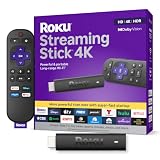
| Roku Streaming Stick 4K | Dolby Vision and HDR10+ in a Roku-native household | $48.88 |
| Amazon Fire TV Stick 4K Plus | Wi-Fi 6 performance with 4K output at mid-range cost | $39.99 |
| Roku Streaming Stick Plus | 4K and HDR10+ without paying for Dolby Vision | $39 |
| TiVo Stream 4K | Combining streaming apps and live TV in one guide | $29.99 |
How We Picked
We evaluated each device on four criteria: interface responsiveness during repeated daily use, picture-format breadth relative to price tier, remote and voice-command practicality for hands-off searching, and overall value considering the software ecosystem you are committing to. Devices that felt fast on the first day but sluggish after a week of updates were penalized. We also weighed how intrusive each platform’s home-screen advertising became during normal browsing.
The 8 Best Streaming Devices in 2026
Roku Streaming Stick HD with Voice Remote
This is the entry point Roku recommends most often, and for good reason. At under $30, it handles 1080p streaming with a snappy interface and a voice remote that actually saves time on long titles. The channel lineup is the broadest of any platform we tested, so you will rarely need a second device. Two downsides: it maxes out at HD with no 4K or HDR, and the build feels cheap next to the Ultra. Skip it if your TV is 4K-capable and you care about picture quality above price.
- Pro: Widest app and channel selection across all platforms tested.
- Pro: Voice remote handles search reliably without third-party setup.
- Con: No 4K or HDR output limits it to HD displays and casual viewers.
Amazon Fire TV Stick HD
If you want the cheapest functional streaming stick that still feels modern, this is it. Amazon undercut every competitor at $17.99 and still included a voice remote with Alexa+, which surfaces free and live TV alongside paid apps. Setup takes under two minutes, and it draws power directly from the TV’s USB port so no wall adapter is needed. The trade-off: the interface is cluttered with shopping promotions, and picture tops out at 1080p. Skip it if you find Amazon’s UI pushy or need 4K output.
- Pro: Lowest price of any device with a working voice remote and modern OS.
- Pro: TV-powered via USB eliminates the need for a wall adapter.
- Con: Home screen aggressively promotes shopping content alongside entertainment.
Roku Ultra
Roku’s flagship box exists for people who want the brand’s software ecosystem but refuse to compromise on hardware. Gigabit Ethernet, a USB port for local media, and a rechargeable voice remote put it in a different tier from any stick. The 4K HDR output is clean and consistent across every channel we tested. Price is the obvious wall—nearly five times what the HD stick costs. Skip it if your TV already has Roku built in; you are paying mostly for ports and remote features you may not use.
- Pro: Wired Ethernet and USB media playback no stick in the lineup offers.
- Pro: Rechargeable remote eliminates battery swaps during extended sessions.
- Con: Premium pricing overkill for users whose TV already runs Roku natively.
Amazon Fire TV Stick 4K Select
At $19.99, Amazon packed 4K resolution, AI-powered search, and free live TV into a stick that costs less than most competitors charge for HD alone. The Alexa+ integration genuinely improves discovery—you can ask for something vague like a feel-good thriller and get usable results. The body is smaller than the 4K Plus, so it fits tighter HDMI-USB spacing on older TVs. Con: no Dolby Vision or Atmos support, which matters if you have a high-end panel. Skip it if your TV already outputs 4K and you want HDR metadata.
- Pro: 4K output at a price that undercuts most HD-only competitors.
- Pro: AI-powered search with Alexa+ returns relevant results from vague queries.
- Con: No Dolby Vision or Atmos limits picture and audio on premium displays.
Roku Streaming Stick 4K
Mid-range Roku hits a sweet spot: Dolby Vision and HDR10+ support at $48.88, with the same fluid interface the brand is known for. Setup is straightforward, the voice remote works well for channel-switching by name, and the form factor tucks behind the TV without blocking adjacent HDMI ports. The sticking point is price positioning—$19 more than Amazon’s 4K Select but without Alexa’s search depth. Skip it if you are deep in the Amazon ecosystem or if Dolby Vision is not a priority on your display.
- Pro: Supports both Dolby Vision and HDR10+ for broad HDR compatibility.
- Pro: Clean interface without promotional clutter on the home screen.
- Con: Priced higher than Amazon’s equivalent without matching its voice-search sophistication.
Amazon Fire TV Stick 4K Plus
This is the stick most people should buy if they want 4K, Wi-Fi 6, and a fast processor without spending Roku Ultra money. At $39.99, the AI-powered Fire TV Search cuts through the free-and-live-TV catalog in a way the old alphabetical browse never did. The Wi-Fi 6 radio handles congested apartment networks noticeably better than the Select. Con: the home screen still shoves sponsored tiles where you expect content. Skip it if you already own a 4K Roku and cannot stomach Amazon’s advertising-heavy UI.
- Pro: Wi-Fi 6 delivers stable 4K streaming in crowded network environments.
- Pro: AI-powered search surfaces free and live content alongside paid apps efficiently.
- Con: Sponsored tiles on the home screen degrade browsing speed and focus.
Roku Streaming Stick Plus
An odd duck in the lineup—it outputs 4K and HDR10+ but lacks Dolby Vision, which Roku reserves for higher tiers. At $39 it matches the Fire TV 4K Plus on price, and the Roku interface is more restrained than Amazon’s for people who hate cluttered menus. Build quality is solid and the voice remote is responsive. The gap: HDR10+ is a niche format on many TVs, so some users will see zero benefit over the cheaper HD stick. Skip it if your TV does not support HDR10+ and you want Dolby Vision.
- Pro: 4K with HDR10+ at a price matching Amazon’s mid-range option.
- Pro: Minimal home-screen advertising compared to Fire TV alternatives.
- Con: No Dolby Vision means users on LG or Sony panels miss the best HDR format.
TiVo Stream 4K
TiVo’s play is unification: every streaming app and live TV service lands on one home screen with a global guide, which no other device here replicates. Android TV underneath means sideloading and Google Assistant support are native. Dolby Vision HDR and Atmos output are included at $29.99, undercutting most 4K competitors. The con is raw performance—navigation can feel sluggish compared to Roku or Fire, and the app selection trails both. Skip it if you want buttery-fast menus or rely on niche apps outside the mainstream.
- Pro: Single unified guide combining streaming apps and live TV with no rival matching it.
- Pro: Dolby Vision and Atmos at the lowest 4K price in this roundup.
- Con: Slower interface responsiveness and narrower app catalog than Roku or Amazon.
Buying Guide
HDR Format Support Must Match Your TV
Not every TV handles every HDR format. LG and Sony panels favor Dolby Vision; Samsung pushes HDR10+ exclusively. Buying a stick that outputs a format your TV cannot decode wastes the premium you paid. Check your TV’s manual before selecting between the Roku Streaming Stick 4K (Dolby Vision plus HDR10+), the Fire TV 4K Select (HDR10 only), or the TiVo Stream 4K (Dolby Vision plus Atmos). If your display supports both, you have more flexibility and can prioritize other features.
Wi-Fi Band and Networking Matter More Than the Processor
A fast CPU cannot fix a poor connection. The Fire TV Stick 4K Plus includes Wi-Fi 6, which handles interference and multiple concurrent devices far better than older standards. If your router is more than one room away or your network serves a household of streamers, prioritize Wi-Fi 6 or wired Ethernet. The Roku Ultra’s Gigabit port solves this entirely, making it the safest choice for congested apartment buildings.
Ecosystem Lock-In Is the Real Long-Term Cost
Every platform here is designed to keep you inside its app store, voice assistant, and recommendation engine. If you already own multiple Amazon Echo devices, Fire TV integration feels natural. If you have a Roku TV, a second Roku device shares your channel list and settings automatically. The TiVo and Android TV path is most flexible for people who want sideloading or Google Assistant, but sacrifices the polished first-party experience both Roku and Amazon provide.
Our Verdict
The overall top pick is the Amazon Fire TV Stick 4K Plus. It delivers 4K, Wi-Fi 6, and AI-powered search at a price that leaves no meaningful compromise for most buyers in 2026. The budget pick is the Amazon Fire TV Stick HD at $17.99—nothing else costs less while still including a voice remote and a current operating system. If you refuse to tolerate sponsored tiles and want the cleanest software experience at 4K, the Roku Streaming Stick 4K is the better choice despite its higher price.
FAQ
Do I need a 4K streaming stick if my TV is only 1080p?
No. A 4K stick on a 1080p TV will simply output 1080p, so you are paying for resolution the panel cannot display. The HD sticks in this roundup deliver identical quality on non-4K TVs at a lower price.
Can I reuse a streaming stick if I upgrade my TV?
Yes, and it often works better than expected. A newer TV with more HDMI ports and better panel processing can unlock features the stick previously could not fully exercise, such as wider HDR support or improved audio pass-through.
Is built-in smart TV software just as good as a separate stick?
Frequently not. Built-in platforms tend to receive fewer updates, offer narrower app catalogs, and introduce interface lag over time. An external stick lets you refresh the software experience without replacing the entire television.
Do streaming sticks need an internet connection to work at all?
For the vast majority of use cases, yes. The Roku Ultra’s USB port can play local media files without any network, but every other device here requires an active connection to launch its interface and access content.

