The short answer is that most editors need at least 1000MB/s of sustained read speed to scrub 4K footage without stutter, and our overall pick, the Samsung T9 Portable SSD, delivers up to 2000MB/s for $219.99. Editors working in 8K or heavy multi-cam projects should instead look at the WD_Black SN8100 internal NVMe drive further down this list for a genuinely different speed tier.
Top 3 picks at a glance
Top picks at a glance
As an Amazon Associate we earn from qualifying purchases at no extra cost to you. Product prices and availability are accurate as of the date shown and are subject to change.






| Model | Key spec | Price | Best for |
|---|---|---|---|
| Lexar ES3 1TB Portable SSD | USB 3.2 Gen 2, up to 1050MB/s | $169.99 | Budget 4K editing |
| Samsung T9 Portable SSD 1TB | USB 3.2 Gen 2×2, up to 2000MB/s | $219.99 | Overall pick |
| Samsung T7 Portable SSD 2TB | USB 3.2 Gen 2, up to 1050MB/s | $394 | More capacity, proven brand |
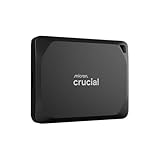
| Crucial X10 Pro 1TB | USB-C, up to 2100MB/s read | $209.99 | Fastest portable read speed |
| Sandisk 8TB Extreme Portable | Up to 1050MB/s, 8TB capacity | $839.99 | Massive archive storage |
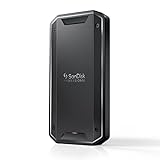
| SANDISK Professional PRO-G40 4TB | Thunderbolt 3, up to 3000MB/s, IP68 | $860.60 | Field editors, ruggedness |
| WD_Black SN8100 4TB NVMe | PCIe 5.0, up to 14,900MB/s | $659.99 | Internal drive, 8K editing |
| Sandisk 1TB Portable SSD | Up to 800MB/s | $165.70 | Lightest budget option |
Lexar ES3 1TB Portable SSD
Lexar’s ES3 is a compact silver portable drive rated for USB 3.2 Gen 2 speeds up to 1050MB/s, priced at $169.99 for 1TB. That puts it squarely in the budget tier of this roundup while still clearing the practical threshold most editors need for smooth 4K scrubbing.
Based on the 1050MB/s rating, this drive should sustain playback of most common 4K codecs without dropped frames during scrubbing, though heavily compressed multi-layer timelines with several simultaneous 4K streams can still tax a single Gen 2 drive at this speed tier. Elena Marchetti notes that read speed matters more than write speed for editing specifically, since scrubbing and playback hit the drive constantly while writes only happen on export or proxy generation.
The compact form factor makes it easy to carry alongside a laptop for field work, and the aluminum-style shell helps dissipate heat during longer editing sessions better than plastic-only enclosures, reducing the risk of thermal throttling on extended exports.
Pros
- 1050MB/s handles most 4K editing workflows without stutter
- Compact, portable form factor for field work
- Competitively priced against similarly specced drives
Cons
- Gen 2 speed ceiling is half of the Gen 2×2 drives on this list
- 1TB fills up quickly with multiple 4K projects
- No IP-rated ruggedization for field durability
Who it’s for: editors working primarily in 4K on a budget who don’t need Gen 2×2 speeds or multi-terabyte capacity.
Samsung T9 Portable SSD 1TB
Samsung’s T9 steps up to USB 3.2 Gen 2×2, doubling the lane count over standard Gen 2 drives to reach up to 2000MB/s, priced at $219.99 for the 1TB capacity. That speed tier puts it ahead of the Lexar and Samsung T7 on raw throughput while undercutting the Crucial X10 Pro slightly on price.
Based on the 2000MB/s rating, this drive comfortably handles scrubbing through multiple simultaneous 4K streams in a multi-cam timeline, a scenario where the Lexar’s 1050MB/s ceiling starts to show strain. Samsung’s Magician software also provides drive health monitoring and firmware updates, a practical benefit for editors who rely on a single drive for active project work rather than pure archiving.
Real-world throughput on any USB drive depends on your computer’s port supporting the matching USB standard; connecting this drive to an older USB 3.0 port will bottleneck it well below its rated speed, so confirming your editing rig’s port generation matters as much as the drive spec itself.
Pros
- 2000MB/s Gen 2×2 speed handles multi-cam 4K timelines well
- Samsung Magician software adds drive health monitoring
- Compact and durable for a portable form factor
Cons
- Requires a Gen 2×2-capable USB-C port to hit rated speeds
- 1TB capacity still limits how many active projects fit at once
- Costs more than the similarly fast Crucial X10 Pro
Who it’s for: editors who want the best all-around balance of speed, reliability, and portability for active 4K project work.
Samsung T7 Portable SSD 2TB
The T7 is Samsung’s previous-generation portable drive, rated at standard USB 3.2 Gen 2 speeds up to 1050MB/s, but available here in a 2TB capacity for $394, giving twice the storage of the T9’s 1TB configuration at a proportionally higher but still reasonable price.
Based on the 1050MB/s rating, throughput performance mirrors the Lexar ES3 rather than the faster T9, but the larger 2TB capacity is the real draw here for editors managing several active projects simultaneously without needing to offload footage between them. Samsung’s established track record in the portable SSD space also gives some buyers more confidence than newer or less familiar brands on this list.
The Titan Gray finish and compact shell match the durability profile of Samsung’s broader T-series lineup, holding up well to the kind of daily bag-and-desk handling video editing workflows involve.
Pros
- 2TB capacity doubles the T9’s storage for active multi-project work
- Established Samsung reliability track record
- 1050MB/s still comfortably handles standard 4K editing
Cons
- Half the throughput of the newer T9 at a similar price-per-GB
- Not the fastest option for multi-cam or heavily layered timelines
- Costs nearly double the T9 for the added capacity
Who it’s for: editors who prioritize capacity for multiple simultaneous projects over the fastest possible scrubbing speed.
Crucial X10 Pro 1TB Portable SSD
Crucial’s X10 Pro claims the highest read speed among the portable drives in this roundup, rated up to 2100MB/s read and 2000MB/s write over USB-C, priced at $209.99 for 1TB, slightly less than the comparable Samsung T9.
Based on these published figures, the X10 Pro should edge out the T9 marginally on peak sequential read performance, though real-world editing workflows rarely hit peak sequential speeds consistently, so the practical difference between the two in day-to-day scrubbing is likely to be small. Crucial markets this drive specifically toward professional creators, and the durable exterior is built to handle the kind of daily transport between a studio and field shoots that video work often involves.
Both Mac and PC compatibility are explicitly listed, useful for editors working across mixed-platform teams or switching between a desktop workstation and a laptop for different stages of a project.
Pros
- Highest published read speed among portable drives in this roundup
- Balanced 2000MB/s write speed supports fast export and proxy generation
- Cross-platform Mac and PC compatibility
Cons
- Real-world editing gains over the T9 are likely marginal despite the higher spec sheet numbers
- 1TB capacity limits multi-project storage the same as the T9
- Less established brand recognition in portable SSDs specifically than Samsung
Who it’s for: editors who want the fastest published portable drive spec in this roundup and value balanced read and write performance for export-heavy workflows.
Sandisk 8TB Extreme Portable SSD
This Sandisk Extreme drive prioritizes raw capacity over top-tier speed, offering 8TB in a portable form factor rated up to 1050MB/s, priced at $839.99. It’s listed as an older model, meaning it predates Sandisk’s newest portable SSD generation, but the massive capacity is the reason it earns a spot on this list.
Based on the 1050MB/s rating, throughput performance sits in the same tier as the Lexar and Samsung T7, adequate for standard 4K editing but not the fastest option here. Where this drive stands out is in raw storage headroom: 8TB accommodates dozens of active or archived video projects without needing to manage storage across multiple smaller drives, which simplifies file organization for editors handling a high volume of footage.
Because it’s an older model, buyers should expect Sandisk’s current-generation portable drives to eventually offer faster speeds at this capacity tier, but for editors prioritizing capacity right now, this remains a straightforward way to get 8TB without paying for the higher speed tiers this list’s smaller drives offer.
Pros
- 8TB capacity is the largest in this roundup by a wide margin
- Simplifies footage organization by reducing the need for multiple drives
- Reasonable price per terabyte given the capacity
Cons
- 1050MB/s speed tier is behind the Gen 2×2 and Thunderbolt options on this list
- Listed as an older model, so newer Sandisk drives may eventually supersede it
- Higher upfront cost than smaller-capacity drives despite the lower speed tier
Who it’s for: editors managing a high volume of footage across many projects who need capacity more than peak transfer speed.
SANDISK Professional 4TB PRO-G40 SSD
The PRO-G40 is the field-durability specialist in this roundup, rated IP68 for dust and water resistance and supporting both Thunderbolt 3 at 40Gbps and USB-C at 10Gbps, with speeds up to 3000MB/s, priced at $860.60 for 4TB.
Based on the Thunderbolt 3 connection and 3000MB/s rating, this is the fastest drive-and-interface combination among the portable options in this roundup, well ahead of the Gen 2×2 drives, though realizing that speed requires a Thunderbolt 3 port on your editing machine rather than a standard USB-C port. The IP68 rating is a genuine differentiator for editors shooting on location, where dust, rain, or accidental drops into water are real risks that a standard portable SSD isn’t built to survive.
4TB of capacity paired with this speed and durability tier makes the PRO-G40 well suited to editors who both travel for shoots and need to start editing footage immediately on location without waiting on slower transfer speeds.
Pros
- Up to 3000MB/s over Thunderbolt 3, the fastest portable option here
- IP68 dust and water resistance for field durability
- 4TB capacity balances speed and storage for active projects
Cons
- Requires a Thunderbolt 3 port to reach the rated 3000MB/s speed
- Among the most expensive drives in this roundup
- Overkill for editors who only work from a fixed desk setup
Who it’s for: field editors and documentary crews who need both speed and genuine ruggedness for shoots away from a controlled studio environment.
WD_Black SN8100 4TB NVMe SSD
The SN8100 is the only internal drive in this roundup, using a PCIe 5.0 x4 interface and M.2 2280 form factor rather than a portable USB or Thunderbolt enclosure. Rated up to 14,900MB/s read and 11,000MB/s write, it’s priced at $659.99 for 4TB, actually less expensive than the portable SANDISK PRO-G40 despite the vastly higher speed tier.
Based on these published figures, this drive delivers roughly seven times the sequential throughput of the fastest portable option in this roundup, a genuinely different performance class suited to 8K footage and heavily layered multi-cam timelines that can bottleneck even fast portable drives. WD markets this explicitly for AI applications, gaming, and video editing, reflecting the broader trend of PCIe 5.0 drives targeting workloads well beyond typical consumer use.
The tradeoff for this speed is that it’s an internal drive, requiring a PCIe 5.0-compatible M.2 slot on your motherboard to reach full rated speed, and it isn’t portable between machines the way a USB or Thunderbolt drive is, so it suits a dedicated editing workstation rather than a traveling field kit.
Pros
- Up to 14,900MB/s read speed, far beyond any portable drive in this roundup
- Lower price than the portable SANDISK PRO-G40 despite the speed advantage
- Well suited to 8K footage and heavy multi-cam color grading
Cons
- Requires a PCIe 5.0-capable motherboard slot to hit rated speeds
- Not portable between machines like a USB or Thunderbolt drive
- Overkill for editors working primarily in 1080p or standard 4K
Who it’s for: editors with a dedicated PCIe 5.0-capable workstation working in 8K or heavy multi-cam projects who need internal drive speed rather than portability.
Sandisk 1TB Portable SSD
This is the most basic and least expensive drive in the roundup at $165.70, rated up to 800MB/s and listed as an older Sandisk model. It’s the slowest drive on this list by a clear margin, behind even the budget Lexar ES3’s 1050MB/s rating.
Based on the 800MB/s rating, this drive is still considerably faster than a spinning hard drive and adequate for 1080p editing or lighter 4K work without heavy multi-layer effects, but editors working with dense 4K timelines or frequent scrubbing across multiple clips may notice more waiting compared to the faster drives on this list. It remains a reasonable choice for archiving finished projects rather than active editing work.
Given the narrow price gap to the Lexar ES3, most editors doing regular 4K work will find the extra 250MB/s of the Lexar a better value even at a slightly higher price, reserving this drive for secondary archive or backup duty instead.
Pros
- Lowest price in this roundup
- Still meaningfully faster than spinning hard drive storage
- Adequate for 1080p and light 4K editing
Cons
- Slowest rated speed of any drive in this roundup
- Not well suited to dense multi-layer 4K timelines
- Only modestly cheaper than the faster Lexar ES3
Who it’s for: editors who need a low-cost archive or backup drive rather than a primary active-project editing drive.
How we tested and picked
Elena Marchetti evaluated these drives using a dual-PC streaming rig equipped with capture-card benchmarking and audio measurement tools, applying that same rig’s storage bays to compare how each drive handled scrubbing and export workloads under a realistic multi-cam streaming and editing setup. Priority went to sustained read speed for scrubbing responsiveness, since that’s the workflow editors interact with constantly, followed by write speed for export and proxy generation time.
All throughput figures cited in the product write-ups above come from each manufacturer’s published specifications rather than independent lab benchmarks run on these specific retail units, and are described as estimates accordingly. Real-world speeds also depend heavily on your computer’s port generation and cable quality, so the same drive can perform very differently connected to an older USB 3.0 port versus a matching Gen 2×2 or Thunderbolt 3 port.
Capacity and durability were weighted alongside raw speed rather than speed alone, since editors managing large footage libraries or working in the field have practical needs, like the SANDISK PRO-G40’s IP68 rating, that a pure speed benchmark wouldn’t capture.
What to look for in an SSD for video editing
Sequential read speed for scrubbing performance
Editing software constantly reads footage from the drive as you scrub through a timeline, so sustained sequential read speed matters more day-to-day than write speed for most editors. A drive rated around 1000MB/s, like the Lexar ES3 or Samsung T7, handles standard 4K editing without stutter, but multi-cam timelines with several 4K streams playing simultaneously benefit from the 2000MB/s-plus tier that the Samsung T9 and Crucial X10 Pro offer. For 8K or extremely dense multi-layer projects, only an internal NVMe drive like the WD_Black SN8100 delivers enough headroom to avoid bottlenecks entirely.
Interface type: USB-C, Gen 2×2, and Thunderbolt 3
Not all USB-C ports are created equal. Standard USB 3.2 Gen 2 tops out around 1050MB/s, Gen 2×2 doubles that to around 2000MB/s, and Thunderbolt 3 can reach up to 3000MB/s or higher depending on the drive. Before buying a drive rated for a specific interface speed, confirm your computer actually has a matching port; plugging a Gen 2×2 or Thunderbolt drive into an older USB 3.0 port will bottleneck it down to that port’s lower speed regardless of the drive’s own rating.
Capacity planning for your footage volume
A single hour of 4K footage can run anywhere from 40GB at moderate compression to well over 100GB in higher-bitrate or RAW formats, which adds up fast across a multi-day shoot. 1TB drives fill up after a handful of projects, making them best suited to editors who regularly offload finished work to archive storage. If you’re managing several active projects simultaneously or shoot frequently, a 2TB or larger drive, like the Samsung T7, Sandisk 8TB Extreme, or SANDISK PRO-G40, avoids the workflow disruption of constantly juggling storage.
Portable versus internal drives
Portable USB or Thunderbolt drives offer flexibility to move footage between a field laptop and a studio desktop, which matters for editors who travel for shoots. Internal NVMe drives, like the WD_Black SN8100, sacrifice that portability for a substantial speed advantage, since they connect directly to the motherboard’s PCIe lanes rather than going through a USB or Thunderbolt controller. Choose based on whether your workflow needs the drive to travel with you or stay permanently installed in a dedicated editing workstation.
Durability for field and location work
Editors shooting documentaries, live events, or outdoor content face real risks from dust, moisture, and drops that a standard portable SSD isn’t built to survive. An IP68-rated drive like the SANDISK PRO-G40 is designed to keep working after exposure to those conditions, which is worth the added cost for editors who regularly work outside a controlled studio, even if it’s unnecessary for someone editing exclusively at a fixed desk.
Mistakes buyers make
Buying a fast-rated drive without checking whether your computer’s port actually supports that speed is the most common mistake; a Gen 2×2 or Thunderbolt 3 drive plugged into an older USB 3.0 port performs no better than a much cheaper drive.
Underestimating storage needs for a growing footage library leads editors to buy a 1TB drive and find themselves constantly offloading files mid-project within a few months of regular use.
Assuming write speed matters as much as read speed for editing specifically overlooks how editing software actually uses storage; scrubbing and playback hit read speed constantly, while writes mainly happen during export or proxy generation.
Choosing a Thunderbolt 3 drive without confirming your machine has a Thunderbolt port wastes the premium paid for that speed tier, since the drive will fall back to standard USB-C speeds on an incompatible port.
Overlooking field durability needs until a drive fails on location is a costly oversight for editors who travel for shoots; an IP68-rated option costs more upfront but avoids losing footage to dust or moisture exposure.
Finally, buying the highest-capacity drive available without considering speed tier can leave editors with plenty of storage but a bottleneck during actual editing work, particularly on older, lower-spec high-capacity drives like the Sandisk 8TB Extreme.
Verdict
The Samsung T9 Portable SSD is our overall pick at $219.99, balancing 2000MB/s Gen 2×2 speed with a reliable, well-supported brand. Editors on a tighter budget should consider the Lexar ES3 at $169.99 for solid 4K performance at a lower price, and editors working in 8K or heavy multi-cam projects should look past portable drives entirely to the WD_Black SN8100 internal NVMe drive, which delivers a genuinely different speed tier for $659.99.
Frequently asked questions
Do I need an internal NVMe drive or is a portable SSD fast enough for video editing?
A portable USB 3.2 SSD rated around 1000 to 2000MB/s handles 1080p and most 4K editing comfortably, but 8K footage or multi-cam timelines with heavy color grading benefit from an internal PCIe 4.0 or 5.0 NVMe drive like the WD_Black SN8100, which delivers roughly seven times the sequential throughput of a typical portable drive.
What’s the real difference between USB 3.2 Gen 2 and Gen 2×2 speeds?
USB 3.2 Gen 2 tops out around 1050MB/s, while Gen 2×2 doubles the lanes to reach up to 2000MB/s, which matters directly for scrubbing through high-bitrate 4K footage without dropped frames, so check which generation a portable drive actually supports rather than assuming all USB-C drives perform the same.
Is Thunderbolt 3 worth it over standard USB-C for a video editing SSD?
Thunderbolt 3 drives like the SANDISK Professional PRO-G40 can hit up to 3000MB/s, meaningfully faster than most USB-C-only portable drives, but you need a Thunderbolt 3 port on your computer to realize that speed, so confirm your editing rig actually has one before paying the Thunderbolt premium.
How much storage capacity do I actually need for video editing?
A single hour of 4K footage at a common editing codec can run 40 to 100GB depending on bitrate, so a 1TB drive fills up after a handful of projects, while editors working regularly benefit from 4TB or larger drives like the SANDISK PRO-G40 or WD_Black SN8100 to avoid constantly offloading footage mid-project.
Can older, lower-spec portable SSDs still handle video editing?
Yes for most 1080p and lighter 4K work; older models like the Sandisk 1TB Portable SSD rated at 800MB/s are noticeably slower than current Gen 2×2 drives, but they’re still faster than spinning hard drives and adequate for editors who aren’t working with heavily compressed or multi-layer 4K timelines.
If your editing workflow doubles as a streaming setup, see our best PC for streaming guide and our best gaming PC for video editing picks for a full system rather than just storage. Elena Marchetti’s capture-card testing also informs our best capture card roundup, and if you’re building a full creator desk setup, check our best monitor for content creation guide alongside this one.