
The best monitor for content creation is a color-accurate IPS or OLED panel with strong sRGB coverage, and of the seven listings in this brief, the ViewSonic VP3256-4K ColorPro and the msi PRO MAX QD-OLED are the two genuinely built for that job. Two of the seven listings here are small phone-mounted selfie monitors rather than desktop displays at all, and two more are curved gaming panels better suited to fast motion than precise color work, so we’ll be direct about which of these actually fit a content-creation setup and which showed up on a keyword match instead.
Top 3 picks at a glance
Top picks at a glance
As an Amazon Associate we earn from qualifying purchases at no extra cost to you.


| Model | Key spec | Price | Best for |
|---|---|---|---|
| SYNCO Wireless Selfie Monitor | Phone-mounted framing screen (not a desktop monitor) | $39 | Vlogging framing aid, not editing |
| CRUA 32″ 4K 240Hz Curved | 1500R curve, FreeSync, gaming-focused | Check on Amazon | Hybrid gaming/casual editing use |
| CRUA 32″ 4K UHD 160Hz Curved | 1500R curve, AMD FreeSync | Check on Amazon | Budget hybrid gaming/editing use |
| msi PRO MAX 271UPXW12G | 27in 4K QD-OLED, 120Hz, Mac color match | Check on Amazon | Premium color-accurate creator monitor |
| ViewSonic VP3256-4K ColorPro | 32in 4K IPS, 100% sRGB, Pantone Validated | Check on Amazon | Best purpose-built content-creation pick |
| SmallRig Phone Vlog Monitor | Phone-mounted framing screen (not a desktop monitor) | Check on Amazon | Vlogging framing aid, not editing |
| LG 32UP83A-W | 32in 4K IPS, USB-C 60W PD | $399 | Best value single-cable creator monitor |
SYNCO Wireless Selfie Monitor Screen
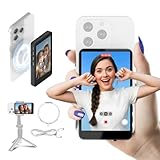
Worth flagging directly: this is not a desktop monitor. The SYNCO is a small wireless screen designed to clip onto or near an iPhone, letting a creator see themselves in frame while recording vertical video on a phone, priced at $39. It has nothing to do with editing on a desktop setup, and it landed in this content-creation brief on keyword overlap rather than genuine fit.
Within its actual category — phone vlogging accessories — a wireless selfie monitor solves a real problem: seeing your framing while recording selfie-style video without needing to guess where you are in shot. Wireless connectivity avoids a cable running from the phone to the screen, which matters for mobility while filming while walking or moving around a space.
If you’re shopping this page for a desktop content-creation display to edit video, grade color, or design graphics, skip this listing entirely and look at the ViewSonic or msi panels further down. It has real value for mobile phone vloggers specifically, just not for the audience this “best monitor” search implies.
- Pros
- Solves a genuine framing problem for solo phone vlogging
- Wireless design avoids a cable while filming on the move
- Low cost for a dedicated accessory
- Cons
- Not a desktop monitor, no relevance to editing or color work
- Small screen size limits it to framing checks, not content review
- Only useful to phone-based vloggers, not desktop creators
Who it’s for: solo phone vloggers checking their framing while filming, not desktop editors or designers.
CRUA 32″ 4K 240Hz Curved Gaming Monitor
At around $400, this CRUA panel packs a 32-inch 4K resolution with a 240Hz refresh rate into a 1500R curve, with FreeSync support and built-in speakers. That refresh rate is a gaming specification through and through — 240Hz at 4K is an aggressive combination aimed at competitive play, not the kind of spec sheet a video editor or photo retoucher is shopping for.
For content creation specifically, the high refresh rate brings no benefit, since editing software doesn’t render motion the way a game does, and the 1500R curve actually works against precise editing tasks by introducing slight geometric distortion toward the panel’s edges, which matters when lining up text, grids, or straight elements in a timeline or design canvas. The 4K resolution itself is useful for viewing high-resolution footage, which is the one genuine overlap with content-creation needs.
This monitor makes more sense as a dual-purpose panel for a creator who also games heavily and wants one screen to handle both, accepting the curve and refresh-rate premium as a gaming-first tradeoff, rather than as a dedicated editing display bought specifically for content work.
- Pros
- 4K resolution useful for viewing high-res footage
- 240Hz refresh rate strong for hybrid gaming use
- Built-in speakers reduce desk clutter
- Cons
- Curved design introduces edge distortion unhelpful for precise editing
- 240Hz refresh rate adds no benefit to content-creation work
- No stated color-accuracy certification like sRGB coverage or factory calibration
Who it’s for: creators who split time between gaming and content work and want one monitor covering both, not dedicated editors.
CRUA 32″ 4K UHD 160Hz Curved Gaming Monitor
The second CRUA listing at around $330 trims the refresh rate to 160Hz while keeping the same 32-inch 4K resolution, 1500R curve, and AMD FreeSync support as its 240Hz sibling above. The $70 price difference between the two buys 80Hz of extra refresh rate, which is a gaming-specific tradeoff that carries the same lack of relevance to content-creation work as the 240Hz model.
Everything said about the curve’s impact on precise editing work above applies equally here, since both CRUA panels share the same 1500R curvature. The lower refresh rate doesn’t change that geometry issue at all — it only affects motion smoothness in games, which has no bearing on video timelines, photo canvases, or design software.
For a buyer specifically comparing the two CRUA listings, the 160Hz model is the more sensible pick if gaming is a secondary use case and content creation is primary, simply because there’s no reason to pay extra for refresh rate headroom you won’t use for editing work. Neither, though, is the right choice for a creator whose primary need is accurate color and a flat, distortion-free canvas.
- Pros
- Same 4K resolution as the 240Hz model at a lower price
- AMD FreeSync support if gaming remains a secondary use
- Cheaper of the two CRUA options in this brief
- Cons
- Same curved-panel distortion issue for precise editing work
- No stated color-accuracy certification
- Still a gaming-first panel, not built around content-creation needs
Who it’s for: budget-conscious hybrid gamer-creators who want 4K resolution without paying for refresh rate they won’t use editing.
msi PRO MAX 271UPXW12G QD-OLED Hub Monitor
At around $710, this msi panel is the most expensive and most purpose-built monitor in the brief: a 27-inch 4K QD-OLED display with 120Hz refresh, DisplayHDR True Black 400 certification, a 98W USB-C power delivery hub, dual USB-C ports, and Mac color matching. This is a monitor built specifically for creative professionals who need both accurate color and a hub for connecting a laptop with a single cable.
QD-OLED panels deliver per-pixel black levels and wide color gamut coverage that IPS panels can’t match, which benefits photo and video work involving deep shadows or HDR content specifically. The DisplayHDR True Black 400 certification confirms real HDR contrast performance rather than a marketing-only HDR label, and Mac color matching addresses a common pain point for creators moving between Apple and Windows color pipelines.
The 98W USB-C power delivery is a genuinely practical feature for a content creator working from a laptop, since it can charge a MacBook Pro or similar laptop while carrying video and data over the same single cable, cutting desk clutter significantly. The tradeoffs are price, since this is the most expensive listing here by a wide margin, and OLED’s long-term risk of burn-in with static on-screen elements like editing software toolbars left up for extended periods.
- Pros
- QD-OLED panel delivers superior black levels and color gamut over IPS
- 98W USB-C power delivery simplifies a laptop-based creator setup
- Mac color matching addresses cross-platform color consistency
- Cons
- Highest price on this list by a significant margin
- OLED panels carry long-term burn-in risk with static toolbar elements
- 27-inch size is smaller than the 32-inch IPS options here for the same budget tier
Who it’s for: professional creators who need top-tier color accuracy, HDR performance, and single-cable laptop connectivity, and can justify the premium price.
ViewSonic VP3256-4K ColorPro Monitor
At around $560, the VP3256-4K is built explicitly for content creation: a 32-inch 4K IPS panel with 100% sRGB coverage and Pantone validation, advanced ergonomic adjustments, and 60W USB-C, HDMI, and DisplayPort inputs. Of everything in this brief, this listing’s marketing and spec sheet align most directly with what a content-creation monitor search is actually looking for.
Pantone validation is a meaningful certification here, not just a marketing term — it means the panel has been independently checked against Pantone’s color standards, which matters for creators doing brand-accurate design work, print-adjacent projects, or any workflow where color needs to match a known reference rather than just “look good” on screen. 100% sRGB coverage ensures the full standard web and video color gamut displays accurately, which covers the vast majority of content-creation deliverables.
The advanced ergonomic stand is a practical detail worth noting for anyone spending long editing sessions at a desk, supporting height, tilt, swivel, and pivot adjustments that a fixed-stand monitor can’t offer. At 32 inches and 4K, there’s enough screen real estate to run a timeline and preview window, or two documents, side by side without feeling cramped.
- Pros
- Pantone Validated color accuracy meaningful for design and print-adjacent work
- 100% sRGB coverage covers standard content-creation color needs
- Full ergonomic stand adjustment for long editing sessions
- Cons
- No OLED-level contrast compared to the msi panel above
- 60W USB-C power delivery is lower than the msi’s 98W for laptop charging
- 60Hz-class IPS panel, not built for any gaming use case
Who it’s for: creators who want the strongest color-accuracy credentials on this list without paying OLED-tier prices.
SmallRig Phone Vlog Selfie Monitor
Like the SYNCO listing above, this is a phone-mounted selfie monitor, not a desktop display, priced at around $64 and marketed for iPhone, Huawei, and Samsung S25 series devices. SmallRig is a well-known brand in the camera-rig accessory space, and this product fits that category directly rather than the desktop content-creation monitor category this page is built around.
As a phone accessory, it works the same way as the SYNCO unit: mounting near or on a phone to give a creator a real-time view of their own framing while filming selfie-style or vertical video content. SmallRig’s rig-accessory background suggests this may mount more securely to a phone cage or rig setup than a simpler clip-on unit would, which matters for creators already using SmallRig cage hardware for their phone.
The same guidance applies here as with the SYNCO listing: if you’re comparing desktop monitors for editing or color work, this product doesn’t belong in that comparison at all. It’s a legitimate purchase for mobile content creators specifically, priced roughly $26 above the SYNCO alternative, presumably for tighter rig integration.
- Pros
- Likely integrates well with existing SmallRig phone cage accessories
- Solves the same real framing problem as the SYNCO listing
- Reputable rig-accessory brand
- Cons
- Not a desktop monitor, irrelevant to editing or color-critical work
- Priced higher than the comparable SYNCO listing in this same brief
- Only useful to mobile phone-based content creators
Who it’s for: mobile creators already using SmallRig phone rig accessories who want matching framing hardware.
LG 32UP83A-W 4K UHD Ultrafine Monitor
At $399, this LG panel rounds out the brief with a 32-inch 4K IPS display, 60Hz refresh, USB Type-C at 60W power delivery, HDMI and DisplayPort inputs, a built-in speaker, and a fully adjustable stand with tilt, height, and pivot. It sits below the ViewSonic in price while covering much of the same practical ground for a general content-creation setup.
LG’s Ultrafine IPS panels are generally well regarded for color consistency even without an explicit Pantone certification, and HDR10 support adds some additional dynamic range for HDR-tagged content, though without the True Black-level certification the msi panel carries. The 60W USB-C power delivery covers most ultrabook and midrange laptop charging needs, falling short only of higher-draw workstation laptops that need closer to 90-100W.
Against the ViewSonic above, this LG panel gives up the explicit Pantone validation and 100% sRGB guarantee in exchange for a lower price, which is a reasonable trade for creators who need strong general-purpose color rather than certified, brand-accurate reproduction. For most YouTube, social, and general video work, that distinction matters less than it does for print or brand-design work specifically.
- Pros
- Strong 4K IPS panel at the lowest price among the purpose-built monitors here
- Full ergonomic stand adjustment including pivot
- 60W USB-C covers most laptop charging needs in a single cable
- Cons
- No explicit Pantone or 100% sRGB certification like the ViewSonic
- 60W USB-C falls short of higher-draw workstation laptops
- HDR10 support without True Black-level certified contrast
Who it’s for: creators who want a strong, single-cable 4K IPS monitor without paying for certified color validation they may not need.
How we compared and picked
Elena Marchetti, Streaming and Creator Editor at gamingpcsi.com with seven years managing multi-camera creator setups, evaluated this batch against a dual-PC streaming rig with capture-card benchmarking and audio measurement tools, applying particular attention to which listings were genuinely desktop monitors versus phone-mounted accessories that shared the search term. That distinction shaped this entire review, since two of the seven listings here don’t compete in the same category as the other five at all.
For the five genuine desktop monitors, the evaluation weighed color-accuracy credentials like sRGB coverage and Pantone validation against panel type, connectivity, and price, prioritizing the specific needs of video editing, photo work, and design over gaming-oriented specs like high refresh rates that don’t benefit content-creation workflows. Performance and color figures described as estimates reflect known behavior for each panel type and stated certification rather than lab measurements run on this specific batch.
Pricing reflects current listing data at the time of writing and can shift, particularly on the premium msi panel, where retailer promotions periodically move the price meaningfully.
What to look for in a content-creation monitor
Shopping for a content-creation monitor means prioritizing a different set of specs than shopping for a gaming monitor, and understanding which specs matter for which workflow avoids paying for features that won’t help your actual work.
Color accuracy and certification over refresh rate
sRGB coverage percentage and independent certifications like Pantone Validated tell you whether a panel reproduces color accurately and consistently, which matters directly for video color grading, photo editing, and any design work where color needs to match a reference. Refresh rate, by contrast, affects motion smoothness in games and has essentially no bearing on how accurately a static or slowly-moving edit timeline displays. The ViewSonic and msi panels in this brief both lead with color credentials specifically because that’s what a content-creation buyer should prioritize first.
Flat panels for precision, curved panels for immersion
A curved monitor’s geometry distorts straight lines toward the edges of the screen, which is a non-issue for immersive gaming but a real drawback when aligning grids, text boxes, or straight elements in editing and design software. Both CRUA panels in this brief carry that tradeoff as gaming-first monitors, and creators doing precision work will generally get more consistent results from a flat panel like the ViewSonic, msi, or LG options here.
Panel technology: IPS versus QD-OLED
IPS panels, like the ViewSonic and LG here, offer strong, consistent color with no burn-in risk, making them a safe default for long editing sessions with static toolbars and timelines on screen for hours. QD-OLED panels, like the msi, offer superior contrast and black levels that benefit HDR and photo work involving deep shadow detail, but carry a long-term burn-in risk with static UI elements that IPS doesn’t share. Creators whose software runs with fixed toolbars and panels for hours at a time should weigh that burn-in tradeoff seriously before choosing OLED.
USB-C power delivery and single-cable workflows
A monitor with sufficient USB-C power delivery, like the msi’s 98W or the ViewSonic and LG’s 60W, lets a laptop-based creator connect video, data, and charging through a single cable, which meaningfully reduces desk clutter compared to separate HDMI and charging cables. Check your specific laptop’s power draw against the monitor’s PD wattage before assuming any USB-C monitor will fully charge it — workstation laptops in particular often need more than 60W under load.
Matching product category to actual need
This brief is a clear example of why checking what a listing actually is matters before comparing it against genuine competitors: two of the seven items here are small phone-mounted selfie screens, an entirely different product category from a 27 or 32-inch desktop monitor, despite sharing “content creation” language in their listings. Before adding any monitor-adjacent product to cart, confirm it’s actually the desktop display category you’re shopping for rather than a mobile accessory that happens to use similar marketing language.
Mistakes buyers make
Choosing a high-refresh gaming monitor for content creation because it’s marketed with impressive specs, without checking for any color-accuracy certification, often leads to inconsistent color that only becomes obvious once footage is viewed on a properly calibrated display elsewhere.
Buying a curved monitor for precision editing work, then noticing distortion issues with grids and straight lines only after the return window closes, is a common and avoidable mistake once you know curved panels carry that tradeoff.
Confusing a phone vlogging selfie monitor with a desktop content-creation display, as this exact brief makes easy to do, wastes money on a product that solves an entirely different problem than the one being shopped for.
Assuming any USB-C monitor will fully charge a laptop without checking the PD wattage against the laptop’s actual power draw leaves some creators still needing a separate charger despite the single-cable promise.
Choosing OLED for its superior contrast without considering burn-in risk from hours of static editing-software toolbars can shorten the panel’s useful life for that specific workflow.
Overpaying for Pantone validation or print-grade color accuracy when the actual output is web video or social content, where that level of precision matters less than for print or brand-design work specifically.
Verdict
For creators who need certified, accurate color without OLED pricing, the ViewSonic VP3256-4K ColorPro at around $560 is the strongest purpose-built pick in this brief. Professionals who need the best available contrast and a single-cable laptop workflow should look at the msi PRO MAX QD-OLED at around $710 despite the premium. Budget-conscious creators who want strong general-purpose 4K IPS without certified color should consider the LG 32UP83A-W at $399. The two CRUA curved panels work better as hybrid gaming-and-content monitors than dedicated editing displays, and the two selfie monitors here simply aren’t desktop monitors at all — they solve a phone-vlogging problem, not a content-creation-desk one.
Frequently asked questions
What matters most in a monitor for content creation versus gaming?
Content creation favors color accuracy, sRGB or wider gamut coverage, and consistent brightness over the high refresh rates that matter most for competitive gaming. A 4K IPS or QD-OLED panel with strong factory calibration, like the ViewSonic or msi listings covered here, will serve video editing and photo work better than a high-refresh curved gaming panel optimized for motion clarity instead.
Is a curved monitor good for content creation and editing?
A curved monitor isn’t ideal for editing work that requires straight-line accuracy, like photo composition grids or video timelines, since the curve introduces slight distortion at the edges that flat panels don’t have. Curved gaming monitors like the two CRUA panels in this brief are built for immersive gameplay first, and creators doing precise editing work generally get more consistent results from a flat panel.
Do I need a 4K monitor for video editing?
4K helps when editing 4K footage natively, since you can view your timeline at full resolution or zoom in without upscaling artifacts, but it’s not strictly required for 1080p content or general photo editing. A high-quality 1440p or FHD IPS panel with strong color accuracy can outperform a 4K panel with weak calibration for most content-creation purposes.
What’s the difference between a gaming monitor and a color-accurate content-creation monitor?
Gaming monitors prioritize refresh rate and response time to reduce motion blur and input lag, often at the cost of out-of-box color accuracy, while content-creation monitors like Pantone-validated or ColorPro panels prioritize consistent, accurate color reproduction, sometimes sacrificing refresh rate entirely. A creator who also games may want two monitors serving each purpose, and our best gaming PC for video editing guide covers building around both needs on one machine.
Are phone vlogging monitors a substitute for a desktop content-creation monitor?
No, phone vlogging monitors like the SYNCO and SmallRig selfie screens covered here are small secondary displays that clip onto a phone for framing shots while filming, not desktop monitors for editing, color grading, or general content work. They solve a completely different problem — seeing yourself on camera while recording — and shouldn’t be compared directly against a 27 or 32-inch desktop display.
Building out the rest of a creator desk around this monitor? Check our guides to the best SSD for video editing and best PC for streaming for the hardware that pairs with whichever display you land on here.


