
Most people shopping for a streaming light ask the wrong question first. They ask “how big should my ring light be?” when the real question is “what am I lighting, and from how far away?” A 12-inch ring light two feet from your face behaves completely differently than the same light four feet away, and an 18-inch model squeezed onto a cluttered desk can be unusable no matter how good the specs look. This guide walks through the decisions that actually determine whether a ring light works for your setup — and the ones that just pad the spec sheet.
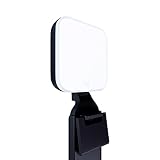
The most common mistakes we see: buying a ring light too small for the throw distance, ignoring color temperature range (a fixed 6500K-only light will make you look washed out), choosing a tripod that can’t support the head’s weight without tipping, and overspending on a huge ring when a clip-on panel would serve a seated, close-range streamer better. Ring lights also have a specific look — that circular catchlight in the eyes — and it’s worth knowing whether you want that look or whether a rectangular softbox-style light like the Logitech Litra Glow class of products suits you better.
As an Amazon Associate we earn from qualifying purchases at no extra cost to you. Product prices and availability are accurate as of the date shown and are subject to change.



Top 3 picks at a glance
Decide These 3 Things First
Before comparing any products, answer these three questions in order. They eliminate about 70% of the options on the market.
1. Where will the light sit, and how far from you? Ring lights are softest and most flattering at roughly 18–36 inches from your face. If you’re streaming from a desk with a laptop or monitor between you and the light, measure that distance. Under 24 inches, a 10–12 inch ring is plenty. At 3–4 feet, you want 14–18 inches. Beyond 5 feet — standing streams, full-body shots — you’re in 18-inch-plus territory, and even then a ring light may be underpowered.
2. What’s in frame? A tight head-and-shoulders webcam framing is forgiving; a 10-inch desk ring works. If you show products, crafts, or your hands in a wider framing, you need more coverage, meaning a larger ring (14 inches or more) or two smaller lights at angles.
3. Is this for streaming only, or multi-purpose? If the light also serves as your desk lamp for work, video calls, and reading — which is how most people actually live with these — prioritize eye-care diffusers, adjustable color temperature, and a clamp or low-profile base over raw diameter. If it’s purely a streaming key light, diameter and mounting stability rise to the top.
Ring Light Size: The Decisive Factor
Size isn’t about “more is better” — it’s about matching the light’s effective coverage to your throw distance. Here’s the working breakdown:
6–10 inches: Desk-range lights only. Effective at 12–24 inches from your face, which typically means clamped to the desk behind or beside your monitor. The LitONES-class laptop and monitor lights sit here, as does the Weilisi 10.2-inch desk model. Expect 5–10 watts. These are ideal for seated streamers, Zoom calls, and small desks. The catch: at this size, the circular catchlight in your eyes is subtle, and coverage drops off fast if you lean back.
10–12 inches: The sweet spot for most streamers. The UBeesize 12-inch is the archetypal example: enough output to sit 24–36 inches away on a floor tripod, enough coverage for a webcam or phone framing. Typical power draw is 10–20 watts. This size range covers roughly a head-and-shoulders framing at arm’s length and remains the best value in the category — most decent units cost $25–45.
14–18 inches: For standing streams, beauty content, two-person framing, or throw distances of 3–5 feet. You’ll pay $60–150 for a quality unit, and weight climbs to 3–6 pounds for the head alone, which demands a sturdier stand (more below).
Over 18 inches: Studio territory. Unless you’re lighting a set or doing full-body fitness content, you’re paying for coverage you won’t use, and these become awkward to store. Skip unless you have a specific, measured need.
One honest caveat: a ring light’s softness comes from its apparent size relative to the subject, not the number on the box. A 12-inch ring 20 inches from your face is softer than an 18-inch ring 5 feet away. Buy for your actual throw distance, not the biggest number you can afford.
Build Material and Construction
Ring lights under $40 are almost universally plastic, and that’s fine — what matters is which plastic and how it’s assembled.
Look for ABS housing with a metal or reinforced mount thread. The failure point on cheap ring lights is nearly always the joint where the head meets the stand: a thin plastic threaded collar that strips after a few months of angle adjustments. Metal collars, or at minimum thick-walled ABS with a metal insert, meaningfully extend lifespan. Check the listed head weight against the stand’s rated load — a 12-inch LED head typically weighs 1–2 pounds, and any stand rated for at least 3 pounds gives you margin.
Diffuser quality separates good budget lights from bad ones. Cheap units use bare LEDs or a thin frosted layer that produces visible LED hotspots and harsh shadows on your face. Better units — including most of the desk-clamp style lights — use a multi-layer diffuser that turns the ring into a continuous, even light source. If a product listing doesn’t mention diffusion or “eye-caring” construction, assume bare LEDs and budget accordingly.
Stand construction: Tripods in this category range from flimsy 0.6-pound aluminum tube units that wobble at 62 inches to weighted desk stands. For a 62-inch floor tripod like the one bundled with the UBeesize, look for leg spread of at least 20 inches and a weight of 2 pounds or more; anything lighter tips with a door draft. Desk clamp mounts (like the Weilisi’s C-clamp) sidestep tipping entirely if your desk edge is 0.5–2 inches thick — measure yours before buying.
Light Quality and Comfort
This is where budget units quietly fail, and where the price jump to the $50–60 tier (the Litra Glow class) buys real value.
Color temperature range: Fixed-temperature lights (usually 6500K daylight only) lock you into a cold, clinical look. Insist on adjustable color temperature between roughly 3000K (warm) and 6500K (daylight). Most adjustable units offer 3 or 5 presets; stepless adjustment is better but rare under $50.
Brightness adjustment and CRI: Look for at least 10 brightness levels (stepless 1–100% is ideal) and a claimed CRI of 90 or above — CRI measures how naturally skin tones render, and anything below 85 makes you look gray on camera. Note that manufacturer CRI claims aren’t independently verified at this price point, but a listed CRI under 85 is a reason to walk away.
Flicker: Cheap drivers can flicker at low brightness settings, which shows up as banding on camera and causes eye strain over long sessions. Quality units advertise flicker-free operation; if reviews mention banding on video at low brightness, that’s your answer.
Heat and eye comfort: LED ring lights run 5–20 watts and stay cool, but a diffused front panel matters for anything sitting 18 inches from your face for hours. Monitor-mounted and clamp-style desk lights live or die on this — if you’ll also use the light for work, diffusion and adjustable warmth aren’t optional.
Price Tiers: What You Get at Each Level
Budget ($25–40): This is the UBeesize/LitONES/Weilisi tier, and it’s honestly where most streamers should shop. Expect plastic construction, 10–12 inch diameters or compact desk formats, 3–5 color temperature presets, remote or inline controls, and bundled stands or clamps. Lifespan typically runs 1–3 years of heavy use. You trade stepless control, app integration, and premium diffusion for a price that makes experimentation cheap.
Mid-range ($45–90): You’re paying for better light quality: higher CRI (90+), flicker-free drivers, stepless dimming, sometimes app or software control. The Logitech Litra Glow at around $58 is representative — it’s not a ring at all, but a rectangular panel with Logitech’s software integration, and for desk-range streaming it often beats a ring on evenness of light. Expect 2–5 years of lifespan and better warranties.
Premium ($90–200+): Larger diameters (14–18 inches), metal construction, bi-color or RGB options, Bluetooth remote control, and app scene presets. Buy here only if your measured throw distance demands it or you’re producing content commercially.
Warranty and Support
Budget ring lights typically carry 12-month warranties; mid-range units like the Litra Glow often extend to 2 years. Read what the warranty actually covers — LED driver failures and mount breakage are the two common claims. Also weigh the brand’s review responsiveness: a $30 light from a brand that replaces defective units quickly beats a $60 light from one that doesn’t. Check whether replacement parts (stand, phone holder, remote) are sold separately; on budget units, losing a proprietary remote can brick half the functionality.
Delivery, Assembly, and Footprint
Almost everything in this category ships in one small box and assembles in under 10 minutes with no tools — screw the head onto the stand, clip on the phone holder, plug in USB or AC. Confirm the power connection before buying: USB-powered lights (5V) cap out around 10–15 watts and can underperform if plugged into a weak laptop port; AC adapters support the brighter 14-inch-plus units. Finally, measure your storage space. A 62-inch tripod with 20-inch leg spread is a permanent fixture in a small room; clamp and monitor-mount designs have essentially zero footprint, which is why they dominate small-desk setups heading into 2026.
Spec Checklist
| Spec | Budget ($25–40) | Mid ($45–90) | Premium ($90+) |
|---|---|---|---|
| Typical diameter/format | 10–12″ ring or desk/monitor mount | 10–12″ panel or 12–14″ ring | 14–18″ ring or pro panel |
| Power draw | 5–15W | 10–20W | 20–55W |
| Color temperature | 3–5 presets, 3000–6500K | Stepless or 5+ presets, 2900–6500K | Bi-color/RGB, app control |
| Claimed CRI | 80–90 | 90+ | 95+ |
| Brightness control | 10 levels | Stepless 1–100% | Stepless + presets/app |
| Mount | Basic tripod, clamp, or desk base | Sturdy tripod or weighted clamp | Heavy-duty stand, metal joints |
| Construction | ABS plastic | ABS with metal mounts | Metal housing and joints |
| Warranty | 12 months | 1–2 years | 2+ years |
Red Flags
- Fixed 6500K color temperature only — no warmth adjustment means an unflattering, clinical look and eye fatigue.
- No stated CRI, or a claim below 85 — expect muddy skin tones on camera.
- Stand rated below the head’s weight, or a tripod under 2 pounds for a 12-inch light — it will tip.
- Reviews mentioning flicker or video banding at low brightness.
- “18-inch” lights under $35 — the diameter is real but the output usually isn’t; undersized LEDs behind a big diffuser produce dim, uneven light.
- Proprietary remotes with no replacement availability.
- USB power on a large ring — a 14-inch-plus light pulling more than 15W needs AC, or it will run at a fraction of its rated brightness.
FAQ
Is a bigger ring light always better for streaming?
No. Softness depends on the light’s size relative to its distance from you. A 12-inch ring 24 inches from your face looks softer than an 18-inch ring 5 feet away. Match the size to your measured throw distance: 10–12 inches for under 3 feet, 14–18 inches for 3–5 feet.
What size ring light do most streamers actually use?
The 10–12 inch range dominates desktop streaming setups — it covers a head-and-shoulders webcam framing at typical desk distances, costs $25–45, and fits small rooms. Standing or full-body streamers move up to 14–18 inches.
Can I use a desk ring light for both streaming and office work?
Yes, and many people do. Choose a clamp or monitor-mount model with adjustable color temperature (3000–6500K), a diffused panel, and stepless or multi-level dimming. Formats like the 10-inch desk and monitor-mount lights are designed exactly for this dual use.
Ring light vs. panel light — which is better for streaming?
Ring lights give you the signature circular catchlight in the eyes and even frontal coverage, which suits beauty-style and talking-head content. Rectangular panel lights, like the premium streaming lights in the $50–60 range, often distribute light more evenly across a desk setup and integrate with streaming software. If you sit close to your monitor, a panel may serve you better; if you want the classic ring look or shoot from a floor tripod, stick with a ring.


