
Once a stream grows past a single microphone — add a co-host, game audio, Discord, music, and alerts — an audio interface stops being enough and a mixer starts to make sense. The next fork is whether to buy an analog mixer or a digital one. They can look similar on the desk, but under the hood they route and process sound very differently, and that shapes what your stream can do.
As an Amazon Associate we earn from qualifying purchases at no extra cost to you.


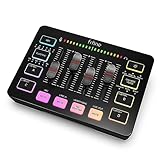
Top 3 picks at a glance
How each type handles sound
An analog mixer keeps audio as continuous electrical signals all the way through, using physical faders, knobs, and op-amp circuitry. What you set is what you get, in real time, with essentially zero processing latency. A digital mixer converts each input to digital, processes it with DSP, then converts back out. That conversion enables recallable presets, onboard effects, and — crucially for streamers — flexible internal routing and multiple independent mixes.
The routing difference that matters for streaming
The killer feature for streaming is multi-bus routing: sending different mixes to different destinations. You want the audience to hear game audio, but not the copyrighted track you are listening to, and you want your guest to hear a different blend than the stream. Digital mixers and stream-focused units handle this internal routing (often called “mix-minus”) with ease. Pure analog mixers can do mix-minus too, but it takes extra cabling and aux buses, and it is fiddlier to reconfigure mid-show.
Side-by-side
| Factor | Analog mixer | Digital mixer |
|---|---|---|
| Signal path | Continuous, real-time | Converted, DSP-processed |
| Latency | Effectively zero | A few ms |
| Presets / recall | None (set by hand) | Saved scenes |
| Onboard effects | Rare / minimal | EQ, compression, gate, FX |
| Multi-mix routing | Possible but cabling-heavy | Flexible, software-driven |
| Learning curve | Gentle | Steeper |
| Price band | $60–250 | $200–600+ |
Which fits your stream?
Choose analog if your needs are simple: one or two mics, an instrument, maybe a music source, all going to a single stream mix. Analog mixers are cheap, indestructible, and dead simple to learn — twist a knob, hear the result. The downside is that separating “what you hear” from “what the stream hears” requires manual aux routing that many beginners find confusing.
Choose digital (or a purpose-built streaming mixer) when you juggle many sources, want per-channel EQ and compression baked in, need clean mix-minus for guests, and value saving a full setup as a recallable scene. The extra millisecond or two of latency is inaudible for voice, and the workflow benefits are huge once you are running a busy multi-source show.
Do not overlook the software mixer option
There is a third path that sits between an interface and a hardware mixer: a virtual audio mixer running on your PC. Tools that create virtual audio devices let you route Discord, game audio, music, and your mic into separate channels and build stream-versus-monitor mixes entirely in software, for free. For many solo streamers this replaces a physical mixer completely.
Hardware vs software trade-offs
Software mixing costs nothing and is endlessly flexible, but it lives inside your CPU, adds a little configuration complexity, and gives you no physical faders to grab mid-stream. A hardware mixer — analog or digital — offloads the work, survives a PC hiccup, and gives you tactile control that is faster in the heat of a live show. Many creators run a hybrid: a small hardware unit for the mic and headphone monitoring, plus software routing for application audio like Discord and browser sources. If you are deciding your first purchase, start with software routing to learn how buses and mixes behave, then buy hardware once you know exactly which physical controls you keep reaching for. That way you spend money on the faders and processing you will actually use, rather than a channel strip that sits untouched. The right answer is whichever setup lets you separate what viewers hear from what you hear with the least friction.
FAQ
Do I even need a mixer, or is an interface enough?
A single-mic streamer usually needs only an interface. A mixer earns its place once you have multiple mics, live guests, or several audio sources that need independent level control and separate mixes for stream versus monitoring.
Is digital mixer latency a problem for live streaming?
No. Digital mixers add only a few milliseconds, far below what viewers or you can perceive on speech. It only becomes relevant in tight musical monitoring, where near-zero-latency analog paths have a slight edge.
Bottom line
Analog mixers are simple, affordable, and real-time — perfect for small setups. Digital mixers trade a few milliseconds and a steeper learning curve for recallable scenes, onboard processing, and the flexible mix-minus routing that busy multi-source streams depend on. Match the mixer to how many sources and separate mixes you actually run.


