
IRL (in real life) streaming trades a desk for the outdoors, and the camera you strap to a backpack or gimbal defines the whole show. Action cameras are popular for IRL because they are small, rugged, stabilized, and wide-angle, but not every action cam streams well. The features that make a great vlog camera are not always the ones that make a reliable live feed.
Top 3 picks at a glance

Streaming vs recording: a crucial difference
Many action cameras excel at recording to a card but are awkward to stream live from. For IRL, the camera usually feeds a phone or an encoder that pushes the stream over cellular. What matters is a clean video output (via USB or as a webcam), strong stabilization, dependable battery, and heat management during long continuous use, not just headline resolution.
As an Amazon Associate we earn from qualifying purchases at no extra cost to you.
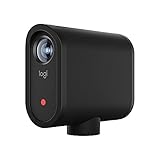
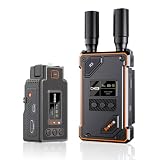
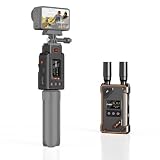


Stabilization is non-negotiable
Walking footage is unwatchable without stabilization. Modern electronic stabilization smooths out steps and hand shake so viewers are not seasick. Look for a camera whose stabilization stays on during live output, some disable it or crop heavily when streaming, so verify the streaming mode, not just the recording spec.
Key specs for IRL comparison
| Spec | Why it matters | Target |
|---|---|---|
| Stabilization | Watchable walking shots | Strong EIS, on while streaming |
| Battery life | Length of stream | 60-90 min, plus swaps/power bank |
| Field of view | Context vs distortion | Adjustable, avoid extreme fisheye |
| Low-light | Evening IRL | Larger sensor helps |
| Overheating | Continuous use | Good thermal design |
| Audio in | Clear commentary | External mic support |
Heat: the silent IRL killer
Streaming is continuous, high-load use, and small cameras trap heat. A camera that shoots great 20-minute clips may overheat after an hour of live streaming, especially in warm weather or direct sun. Prioritize models known for thermal endurance, and keep airflow around the camera.
The IRL signal chain
A typical rig is: action camera to phone (as webcam or via an app) to a cellular connection or a bonding device that combines multiple SIMs for stability. The camera provides the picture; the phone and bonding hardware provide the pipe. Budget for the whole chain, a power bank, a gimbal or chest mount, and an external mic all matter as much as the camera itself.
Audio you can actually hear
Wind and street noise destroy built-in mics. A camera or phone that accepts an external mic, paired with a wireless lavalier and a foam windscreen, is the difference between clear commentary and unintelligible mush. Do not overlook this, IRL audiences forgive imperfect video but not bad audio.
FAQ
Can I stream directly from an action camera without a phone?
Some cameras support direct RTMP streaming over Wi-Fi, but for mobile IRL you almost always need a phone or encoder plus a cellular connection for the internet link. The camera handles the image; the phone handles connectivity and overlays.
Do I need bonded cellular, or is one phone enough?
One phone on strong signal can work for casual IRL, but coverage drops and dead zones cause disconnects. Bonding multiple connections dramatically improves stability when you are moving through changing signal, which is worth it once you stream IRL seriously.
Bottom line
For IRL streaming, prioritize strong always-on stabilization, thermal endurance for continuous use, external mic support, and dependable battery over raw resolution. Plan the full chain, camera, phone or encoder, cellular or bonding, power bank, and windscreen mic, and you will deliver smooth, watchable, clear-sounding streams on the move.


