
Windows are the weak point of any streaming room. Glass reflects sound, so a bare window adds slap-back echo to your mic, and it lets outside noise leak in. Heavy acoustic curtains are a renter-friendly, no-drilling way to tame both problems at once. They will not turn a bedroom into a recording booth, but for the price they meaningfully improve how your voice sounds and how much traffic or lawn-mower noise your audience hears.
As an Amazon Associate we earn from qualifying purchases at no extra cost to you.
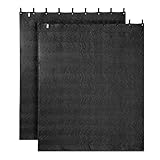
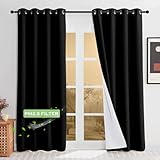


Top 3 picks at a glance
What “soundproof” curtains really do
Let us be precise: fabric curtains absorb mid and high frequencies and dampen reflections, they do not block low-frequency noise the way a solid wall does. Marketing calls them “soundproof,” but their real job is acoustic treatment and modest noise reduction. Expect them to soften echo noticeably and cut higher-pitched outside sounds; do not expect them to silence a bass-heavy neighbor.
Mass and thickness matter most
Heavier fabric absorbs more. Look for curtains with a stated weight, dense triple-weave or those with an internal mass layer perform best. A curtain around 1.5 to 2.5 kg per panel does far more than a thin blackout drape. Thickness and an air gap behind the curtain also help absorb lower frequencies.
How to compare options
| Type | Echo reduction | Outside noise cut | Price/panel |
|---|---|---|---|
| Thin blackout curtain | Slight | Minimal | $15-25 |
| Triple-weave heavy | Good | Modest | $30-60 |
| Mass-layer acoustic | Very good | Noticeable (mids/highs) | $60-120 |
Coverage beats a single panel
Sound leaks around gaps. Hang curtains wider and taller than the window, ideally floor to ceiling and past the frame on both sides, and let them bunch (more folds absorb more). A tight, flat panel exactly window-sized underperforms a generously sized, gathered one.
Using curtains as room treatment
Do not limit curtains to windows. Hanging a heavy curtain across a reflective wall behind you, or over a closet doorway you record inside, adds cheap broadband absorption. Many streamers combine curtains with a few acoustic panels at first-reflection points for a balanced, non-clinical sound.
Mounting without damage
Tension rods and over-door hooks avoid drilling for renters. For heavy mass-layer curtains, a properly anchored rod is safer, they are genuinely heavy. Leaving a few centimeters of air gap between curtain and wall improves low-frequency absorption compared to a curtain pressed flat.
Realistic expectations
Measured with a simple clap test, good acoustic curtains audibly shorten the echo tail. For your microphone, that means less roominess and a tighter, more professional voice, especially with a condenser in an untreated bedroom. For outside noise, you will hear a clear drop in higher-frequency sounds like birds and chatter, and a smaller drop in low rumble like trucks.
FAQ
Will curtains stop my neighbor’s bass or traffic rumble?
Not really. Low frequencies need mass and sealing that fabric cannot provide. Curtains excel at echo and mid/high noise. To fight bass, you need denser barriers and sealing gaps, which is a bigger project than curtains alone.
Are acoustic curtains better than foam panels?
They do different jobs. Curtains cover large areas cheaply and require no wall damage; foam and rockwool panels target reflection points more precisely. For a rented streaming room, curtains plus a handful of panels usually beats either alone.
Bottom line
Buy heavy, mass-layer acoustic curtains, hang them oversized and gathered with a small air gap, and use them on windows and reflective walls. They are a renter-friendly way to cut echo and higher-frequency outside noise for a better-sounding mic, just do not expect fabric to block low-end rumble.


