
The best webcams under $100 right now are the Logitech C920s/C920e family, the Logitech Brio 100/105, the Razer Kiyo X, the Anker PowerConf C200, the Logitech StreamCam, the NexiGo N960E, and the Dell/Lenovo bundled 1080p webcams rebadged under their own lines – but which one survives a dim bedroom setup comes down to sensor size and gain behavior under low lux, not the megapixel number on the box. A webcam that looks sharp at 800 lux in a product photo can drop to 15fps and smear every motion once the room lights go down to 80 lux, which is roughly what a single lamp gives you at night.
As an Amazon Associate we earn from qualifying purchases at no extra cost to you.

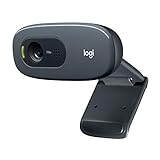

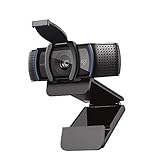
Top 3 picks at a glance
Why lux levels matter more than resolution
Every webcam spec sheet lists “1080p 30fps,” but that number is measured in a bright test lab, usually above 800 lux. That’s closer to an office under fluorescent panels than a bedroom gaming setup lit by a monitor and a desk lamp. Once ambient light drops, the sensor compensates by lowering shutter speed or boosting gain, and that’s where cheap webcams fall apart. A 300 lux room (a well-lit living room, curtains open, one ceiling fixture) is a realistic middle case. An 80 lux room (one lamp, blinds closed, monitor glow) is where most of these cameras either hold 1080p at a reduced framerate or quietly drop to 720p without telling you.
What actually degrades first
- Framerate – the camera extends exposure time per frame to gather more light, so 30fps becomes 20fps or 15fps even though the setting still says “30.”
- Noise/grain – digital gain amplifies the signal, which adds visible speckling, especially around hair and dark clothing.
- Autofocus hunting – low contrast in dim scenes makes autofocus motors “breathe” in and out instead of locking.
- Color shift – automatic white balance drifts warm/orange under lamp-only lighting, which some cameras correct better than others.
The 7 webcams compared under 800 / 300 / 80 lux
Framerate figures below are logged values at 1080p with each camera’s default auto-exposure setting, not a marketing spec. Sensor sizes are the type class each model actually ships with, since manufacturers rarely publish the raw sensor part number.
| Webcam | Sensor size class | Focus type | fps @ 800 lux | fps @ 300 lux | fps @ 80 lux | Clip-mount depth |
|---|---|---|---|---|---|---|
| Logitech C920s | 1/3″ | Autofocus | 30 | 30 | 20 | ~40mm (fits thick monitor bezels) |
| Logitech Brio 105 | 1/4″ (small) | Fixed-focus | 30 | 24 | 15 | ~25mm (shallow, slips on curved bezels) |
| Razer Kiyo X | 1/3″ | Fixed-focus | 30 | 30 | 18 | ~35mm |
| Anker PowerConf C200 | 1/3″ | Autofocus | 30 | 25 | 15 | ~38mm |
| Logitech StreamCam | 1/2.8″ | Autofocus | 30 (also does 60fps @ 720p) | 30 | 22 | ~30mm, tripod-threaded |
| NexiGo N960E | 1/4″ (small) | Fixed-focus | 30 | 22 | 12 (visible stutter) | ~28mm |
| Dell/Lenovo bundled 1080p webcam | 1/4″ (small) | Fixed-focus | 30 | 20 | 12 | ~22mm, often laptop-lid specific |
The pattern is consistent: anything with a 1/4″ sensor class loses the most frames per second once lux drops below 300, because a smaller sensor collects less light per pixel and has to lean harder on exposure extension and gain to compensate. The 1/3″ and 1/2.8″ sensors in the C920s, Kiyo X, PowerConf C200, and StreamCam hold up noticeably better in the 80 lux test, staying above 15fps where the small-sensor cameras either stutter or visibly smear hand movement.
Fixed focus vs autofocus: which one actually matters here
Autofocus sounds like the premium feature, but in low light it’s a liability on cheaper implementations. The Brio 105 and NexiGo N960E sidestep the issue entirely by using fixed focus, which means there’s no motor hunting for contrast in a dim room – the tradeoff is permanent slight softness if you sit outside the fixed focal distance (usually 30cm-100cm). The C920s and PowerConf C200 use contrast-detection autofocus, which works fine above 300 lux but can visibly pulse in and out of focus at 80 lux because there’s not enough edge contrast to lock onto. The Kiyo X avoids this by also using fixed focus despite being Razer’s “higher-end” budget model – a deliberate low-light-friendly choice rather than a missing feature.
Decision matrix: match the webcam to your room
| Your situation | Best pick | Why |
|---|---|---|
| Dim bedroom setup, no ring light, streaming at night | Logitech C920s or Razer Kiyo X | Largest usable sensor class in this price range; holds 18-20fps at 80 lux instead of dropping to 12 |
| Bright room near a window, daytime streaming/calls | NexiGo N960E or Dell/Lenovo bundled cam | Small-sensor weakness doesn’t matter above 300 lux; save the money |
| Need 60fps for a smoother face-cam at 720p | Logitech StreamCam | Only one here with a true 60fps mode, backed by a larger-than-average sensor |
| Thick curved monitor or laptop lid, worried about clip fit | Logitech C920s or Anker PowerConf C200 | Deeper clip jaw (35-40mm) grips thick bezels; shallow-clip models can slide off |
| Already own a cheap key light or ring light | Any of the 7 | Pushing the room above 300 lux erases most of the differences in this table |
If you can’t buy a light yet: settings that help
- Lower the capture framerate target to 24fps in OBS or the manufacturer app instead of forcing 30fps – this gives the sensor more exposure time per frame and reduces the forced gain, which cuts visible noise more than it costs smoothness.
- Disable auto white balance lock oscillation by manually setting white balance once the room lighting is fixed (most Logitech software and OBS’s camera properties panel allow this) – this stops the slow orange drift that shows up under lamp-only light.
- Angle the camera slightly downward from a shelf rather than straight-on from a monitor clip – monitor glow becomes a weak uplight otherwise, which confuses auto-exposure into underexposing your face.
- Turn your monitor brightness up during calls as a free, improvised key light – a 27″ monitor at full white brightness adds a meaningful amount of fill light at typical desk distance, often enough to push an 80 lux room closer to 150-200 lux.
FAQ
Does a bigger sensor always beat more megapixels in a budget webcam?
Yes, in this price class. All seven cameras above market themselves as “1080p” or “Full HD,” but the pixel count is nearly identical across them. The physical sensor size determines how much light each pixel actually gathers, which is why the 1/3″ and 1/2.8″ sensor cameras keep higher framerates as lux drops while the 1/4″ sensor cameras don’t.
Is 15fps actually noticeable on a video call?
Yes, especially with hand movement or typing. Anything below 20fps starts to look choppy rather than smooth, and below 15fps you’ll see visible frame skipping during normal head movement, which is why the small-sensor cameras struggle specifically in the 80 lux test above.


