
As an Amazon Associate we earn from qualifying purchases at no extra cost to you. Product prices and availability are accurate as of the date shown and are subject to change.

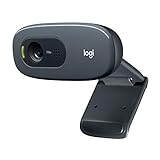


When you sit down to build a streaming setup, the real decision is not “which camera is better” in the abstract. It is whether you want a device that disappears into your life or one that becomes a small production studio on your desk. A clip on webcam mounts to your monitor, draws power over a single cable, and asks nothing of you beyond plugging it in. A DSLR asks for a tripod or mount, a capture card, a power solution, and enough desk real estate to make it all work — and in exchange gives you a look that most viewers immediately register as “serious.”
The comparison matters now more than it used to, because the gap has narrowed. Dedicated webcams have climbed from 720p sensors to 4K with AI tracking, while older DSLRs and mirrorless bodies have flooded the used market at prices that were unthinkable a few years ago. If you are setting up a corner of your home in 2026, both paths are genuinely viable. The question is which one fits your room, your budget, and your tolerance for fuss.
Top 3 picks at a glance
Quick Verdict
For most home streamers — people who join video calls, stream a few evenings a week, or play games with a facecam — a quality clip on webcam is the right call. It costs between $16 and $180 depending on how far up the ladder you go, installs in under five minutes, and never becomes a household object you have to negotiate with. Choose a DSLR or mirrorless camera only if streaming is a serious pursuit for you: you produce long-form content, you care about shallow depth of field and clean low-light footage, and you are willing to spend $600 to $2,000 all-in once you count the lens, tripod, capture card, and dummy battery. If you want DSLR-adjacent image quality without the rig, a studio-grade webcam like the Elgato Facecam 4K at $179.99 or the AI-tracking OBSBOT Tiny 2 Lite at $119 splits the difference remarkably well.
Side by Side
| Factor | Clip on Webcam | DSLR for Streaming |
|---|---|---|
| Typical price range | $16–$180 | $500–$2,500 with lens, capture card, mount, power |
| Setup time | 2–5 minutes, single USB cable | 1–3 hours; mount, focus, capture card, settings |
| Space needed | Clips to monitors 0.2–0.6 inches thick; adds roughly 2–3 inches of depth | Full tripod or desk mount; plan for 8–12 inches of camera depth plus lens clearance |
| Weight | 3–5 ounces | 1–2 pounds body plus 0.5–1.5 pounds lens |
| Power and cabling | One USB-A or USB-C cable, roughly 2–5 watts | Capture card USB, HDMI out, and AC adapter or dummy battery; 5–15 watts continuous |
| Comfort and daily use | Zero friction; open the app and you are live | Requires a startup ritual: power, app, focus check, framing |
| Maintenance | Occasional lens wipe | Firmware updates, sensor dust, lens care, battery health if not on AC power |
| Image look | Fixed wide lens, deep depth of field, everything in focus | Shallow depth of field, better low light, true optical zoom potential |
| Portability | Fits in a laptop pocket; travels with you | Camera bag territory; 3–6 pounds total with accessories |
| Resale value | Low; expect 20–30% of purchase price | Strong; quality bodies and lenses hold 50–70% of value for years |
Where Clip on Webcam Wins
The clip on webcam’s case is built on friction — or the lack of it. A camera that is already on your monitor, always powered, and always focused is a camera you will actually use. That sounds trivial until you have talked yourself out of going live because the tripod was in the closet.
Budget entry is the other decisive advantage. The Logitech C270 at $16.89 gets you plug-and-play 720p video calling that is entirely adequate for meetings and casual streams. Step up to the Logitech Brio 101 at $36 and you get full 1080p with better low-light behavior — a real threshold, because most home streaming happens in rooms lit by a single window or a lamp. These are prices where the decision stops being a purchase and becomes an experiment.
Even the premium end of the category stays sane. The Elgato Facecam 4K delivers 4K at 60 frames per second with manual control over exposure, white balance, and focus — the software equivalents of what a DSLR gives you through glass — and it still clips to a monitor and runs on one USB cable. The OBSBOT Tiny 2 Lite adds something no DSLR rig does at this price: motorized AI tracking, so the camera pans and tilts to keep you framed as you move, stand, or demonstrate something at a desk. That gimbal behavior is genuinely useful for fitness streams, cooking content, and unboxings.
Finally, there is the domestic argument. A webcam weighs four ounces, has no lens to catch fingerprints, sits above monitor height where a toddler or cat cannot reach it, and leaves your desk surface untouched. For most households, that matters more than f-stop.
Where DSLR for Streaming Wins
Image quality is the entire argument, and it is a real one. A DSLR or mirrorless body with an APS-C or full-frame sensor gathers several times more light than any webcam sensor, which translates into cleaner footage in dim rooms, smoother color gradients, and — with a lens like a 50mm f/1.8 — the softly blurred background that separates a streamer from a video call participant. If your content is talking-head heavy, that background separation is worth real watch-time.
Versatility compounds the value. The same camera that streams on Friday night shoots your family photos on Saturday, records b-roll for other videos, and holds resale value at 50 to 70% of its purchase price years later. A $700 used body and a $125 nifty-fifty lens are, in effect, a depreciating-but-liquid asset, not sunk cost.
Reliability over long sessions also favors the DSLR, provided you solve power. Running on AC through a dummy battery eliminates both the overheating shutdowns that plague some webcams during multi-hour streams and the anxiety of a dying battery mid-broadcast. Add a clean HDMI feed through a $20–$30 capture card and the image arriving in your streaming software is genuinely broadcast-grade.
What the DSLR cannot do is disappear. It needs a tripod with a footprint of roughly two feet, clearance for the lens, cables routed out of sight, and a minute of setup each session. It is a commitment, and it behaves like one.
Cost Over 5 Years
Clip on webcam path: Start with a $16–$36 model and you may replace it once or twice over five years as resolution expectations rise — call it $50–$110 total. Even going premium, a $179.99 studio webcam plus perhaps one replacement lands around $360 over five years. Cabling and mounts: essentially nothing.
DSLR path: A used body ($400–$800), a prime lens ($100–$250), a tripod ($60–$150), a capture card ($20–$30), and a dummy battery plus cables ($40–$60) put your entry at roughly $620–$1,300. Add lens temptation — almost inevitable — plus occasional cleaning and one firmware-era upgrade, and five years realistically costs $900 to $1,800. Offset that with $250–$500 of resale recovery if you sell the body and lens at the end.
The honest framing: the webcam path costs $300–$400 over five years; the DSLR path costs roughly $600–$1,500 net. You are paying a few hundred dollars more for a better image and a capable stills camera.
Which One for Your Home
Small apartment
Go clip on, almost without qualification. Desk space is your scarcest resource, and a DSLR tripod will consume a footprint you do not have. A Logitech Brio 101 at $36 or, if budget allows, the OBSBOT Tiny 2 Lite at $119 gives you tracking and framing flexibility without surrendering a single square foot. Mount, cable, done.
Family with kids or pets
Clip on again, and for durability reasons. A webcam above monitor height survives the chaos of a living room desk; a DSLR on a tripod is one tail-swipe or toy-sword incident away from a $700 repair bill. If a family member has serious streaming ambitions, the Elgato Facecam 4K provides DSLR-style manual control in a package that weighs under five ounces.
Rental or temporary home
Clip on, decisively. Nothing gets drilled, mounted, or bolted; the entire setup travels in a laptop bag when the lease ends. The C270 at $16.89 is a disposable-grade investment, and even the premium models leave no marks. A DSLR rig in a rental means furniture rearrangement, visible cabling, and a move-day puzzle you do not want.
Long-term home
This is the one scenario where the DSLR earns its place — if streaming is central to your life rather than occasional. A dedicated corner with a permanently mounted camera, wall-routed cables, and AC power means the setup cost of the DSLR is paid once and amortized over years of daily use. Pair a used mirrorless body with a fast prime, and you have a studio corner that also serves as the family’s best camera. If streaming is secondary even in a permanent home, the premium webcam path still delivers 80% of the result for 20% of the effort.
FAQ
Do I need a capture card for a webcam?
No. Clip on webcams output video directly over USB and appear as a standard camera in OBS, Zoom, and every streaming platform. Capture cards are only needed when converting an HDMI output — which is to say, a DSLR or mirrorless camera — into a USB signal your computer can use.
Can a webcam really look like a DSLR?
Close, with caveats. A 4K studio webcam like the Facecam gives you manual exposure and color control that gets you most of the way in a well-lit room. What it cannot replicate is shallow depth of field — the blurred background — because its small sensor and fixed wide lens physically cannot produce it. Good lighting on the subject and distance between you and your backdrop narrow the gap more than any camera upgrade.
Will a DSLR overheat during long streams?
Some do, some do not. Older DSLRs in video mode can shut down after an hour or so of continuous recording, while many newer mirrorless bodies handle extended sessions fine, especially with the LCD screen closed and AC power connected. Check your specific model’s video recording limits before committing — it is one of the most common regrets in the DSLR-to-stream pipeline.
Is a 1080p webcam good enough to stream in 2026?
For most viewers, yes. The majority of live stream consumption still happens at 1080p or below, and platforms compress everything anyway. A $36 Logitech Brio 101 in a well-lit room will look better than a $2,000 DSLR rig in a dim one. Lighting and placement beat resolution every time — which is exactly why the budget webcam remains the smart first purchase.


